






Reflecting on the cycle of life: Family photos transport mourners to a bygone era
Spotted Bear matriarch begins journey to the earth lodge villages


Life is a journey, and death is its invisible companion.
It’s been almost 10 years since I sat at a table with my sister-cousin, Faith Ann Skogstad, looking at old photos, igniting talk and memories of our aunt who’d passed away that fall. Faith Ann made a comment about how it seems we only look through a loose collection of family pictures when we’re preparing for a funeral.
Four years later, our family mourned Faith Ann’s death.
On Sunday, I once again sat at a table revisiting old photos with family and Faith Ann’s sister Deidre Shannon. This time, we were looking at pictures of her mom, Marian Stella Spotted Bear, who had died earlier that day. She was 85. We were intrigued by photos of my aunt as a baby sitting in a saddle atop a horse. Who was the person holding her in place but trying to stay out of the camera’s view? And, look, here’s Auntie as a teenager in the Haskell parade. She was so pretty.
My aunt, who was a free spirit, was the oldest of 10 Spotted Bear children, and three Benson siblings after my grandfather died and my grandmother remarried. As the eldest of 13 brothers and sisters, I am reminded by her death of a Fort Berthold Indian Reservation era – people, places and a way of life – that I never experienced. Marian was a teenager in the 1950s when the Corps of Engineers flooded the ancestral lands of the Mandan, Hidatsa and Arikara Nation.
Her birthplace of Elbowoods, North Dakota, now a fabled town, lies beneath a watery grave under Lake Sakakawea. The group of people who were born in Elbowoods continues to grow smaller every year. My mother, the late Gertrude “Gersty” Spotted Bear, was born there, too.
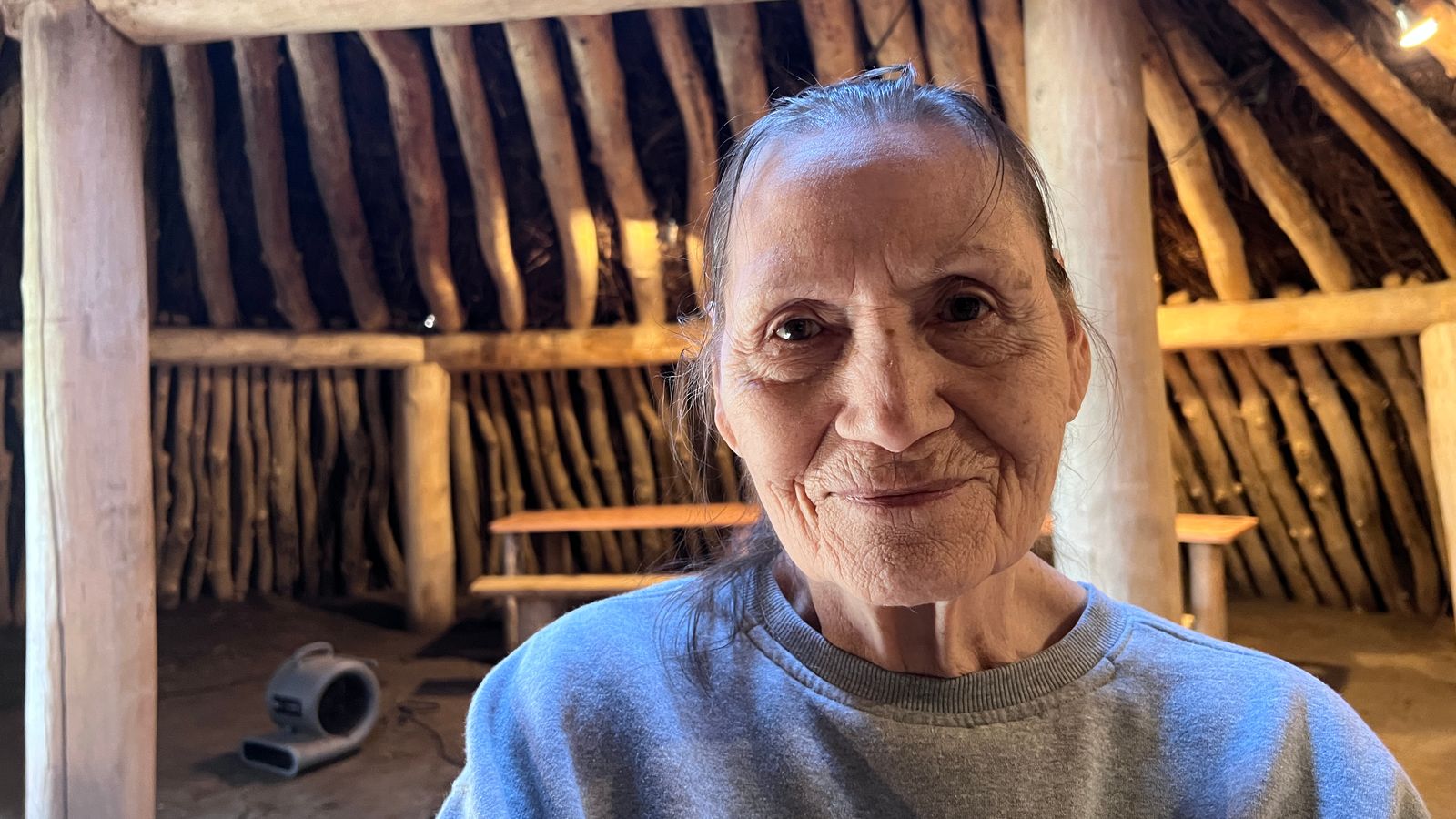
After our loved ones leave this world, we remember them in different ways. As family members and I recently sat at Deidre’s dining room table, we reminisced about all the people who shared a role in Aunt Marian’s life. We know that shortly after her birth, one of her grandmothers gave her the Indian name Hsehká' Sííka Íkiihįhe, meaning “Red Corn Mixed with Yellow Corn.” Either her Grandma Stella Tail Spotted Bear or her great-grandmother, Many Growths, named her.
We know that 85 years ago, an interracial marriage was a bit of a novelty for our Mandan-Hidatsa relatives. The Native community back then was really curious about what baby Marian would look like, born to a Mandan-Hidatsa father, Lorenzo Spotted Bear, and a Norwegian mother, Olive Sholass Spotted Bear. So much so that her grandmother gave her a name that was a testament to the blending of two distinct families.
My grandmother Ollie died in August 2003, the month after my mom died in a car accident – death, the invisible passenger.
I always remember my grandmother Ollie telling me one day that everyone she grew up with was no longer living. Those words stuck with me. Now, with the passing of my aunt, I’ve seen eight of my mom’s brothers and sisters leave this world for the next, a reminder that we’re all mortal beings and death will come. I understand this is the cycle of life.
It’s heartbreaking when life ends in the physical world.
But there is solace knowing our loved ones will be there to meet us as we begin our journey to the spirit world. As for the way of life our ancestors experienced, our Mandan-Hidatsa ways tell us we will return to them and our beloved earth lodge villages.
Jodi Rave Spotted Bear
(Mandan, Hidatsa/ Mniconjou Lakota)Founder & Editor in Chief
Spoken Languages: English
Topic Expertise: Federal trust relationship with American Indians; Indigenous issues ranging from spirituality and environment to education and land rights
Sharing Is Caring
This article is not included in our Story Share & Care selection.
The content may only be reproduced with permission from the Indigenous Media Freedom Alliance. Please see our content sharing guidelines.
© Buffalo's Fire. All rights reserved.
We provide independent Native-focused reporting that gives our communities the context and the facts they need to make informed decisions.
Respect The Fire
At Buffalo's Fire, we value constructive dialogue that builds an informed Indian Country. To keep this space healthy, moderators will remove:
- Personal attacks, harassment, or hate speech
- Spam, misinformation, or unsolicited promotion
- Off-topic rants and excessive shouting (All Caps)
Let’s keep the fire burning with respect.