






Crow Tribe coal swap clears Senate committee
Land exchange benefitting Signal Peak Energy moves forward over Senate Democrats’ concerns

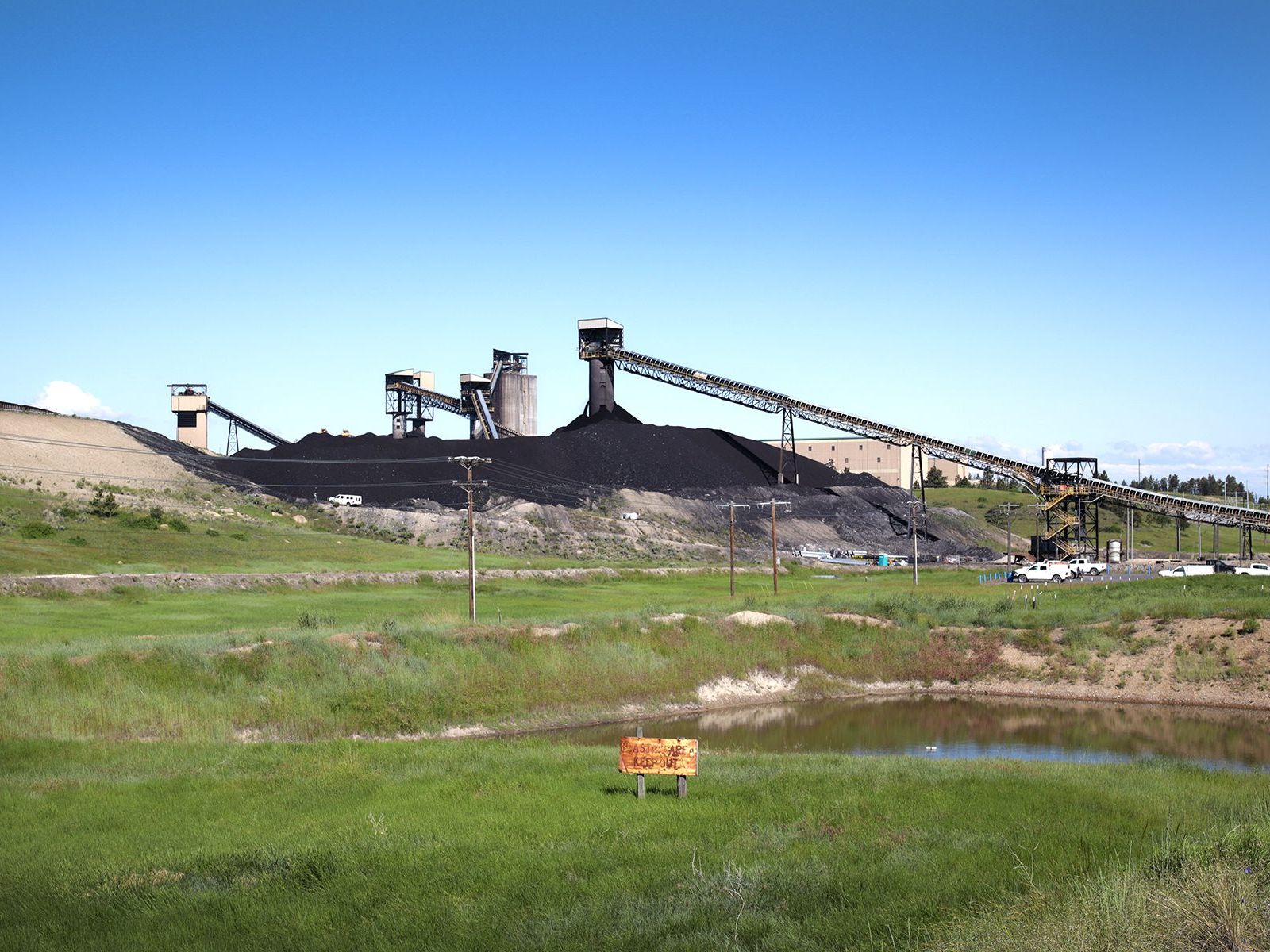

A federal coal land swap in south-central Montana intended to benefit Signal Peak Energy and, indirectly, the Crow Tribe received a key U.S. Senate vote Wednesday.
The U.S. Senate Indian Affairs Committee voted 6-5 along party lines Wednesday to advance a bill authorizing a coal swap between the Bureau of Land Management and the owners of Hope Ranch, a private property within the boundaries of the Crow Reservation. The Hopes would then have to agree to share coal revenue with the tribe.
The 4,530 subsurface acres of coal BLM is trading are located within the footprint of Bull Mountains Mine. Transferring ownership to the Joe and Barbara Hope Mineral Trust means the coal can be mined without meeting federal land standards of review. In exchange, the BLM would take ownership of 4,660 subsurface coal acres beneath Hope Ranch.
“This is a win-win for Montana,” U.S. Sen. Steve Daines, R-Montana, told the committee. “The Crow Tribe receives an important source of new revenue. We address long-standing in-holding issues. These miners in Roundup, hundreds of jobs, it assures their jobs will be there in the future.”
The agreement requires that the Hopes reach an agreement with the Crow Tribe to split whatever revenue is received from the coal mined by Signal Peak. Tribal Chair Frank White Clay attended the committee’s markup of the bill. The chair previously told the committee that the tribe has taken a $12 million hit in royalty payments because of cratering demand for Crow coal. White Clay earlier told the committee that mining by Signal Peak would generate $10 million a year for the tribe for 10 years.
The Hope Ranch acreage had coal potential that Signal Peak explored for mining in 2013, but never developed.
Senate Democrats on the committee objected to the vagueness of some terms of the swap.
“I hope my colleagues would agree that a land exchange involving public lands and resources shouldn’t move forward on a revenue-sharing handshake that we are not allowed to see,” said Sen. Brian Schatz, D-Hawaii, the Indian Affairs Committee’s ranking member.
Schatz wanted the agreement amended so the Crow Tribe was guaranteed at least $100 million over 10 years, or at least a 44% share of the profits, whichever term is most beneficial for the tribe. The senator also wanted assurances that Musselshell County would receive 12% of the royalties. When the swap was initially proposed in 2024, the county indicated that after the coal was in private hands, the local government would lose $32 million in federal coal royalties.
Daines told the committee that Musselshell County’s concerns about the land swap went away with the unseating of an incumbent county commissioner in the last election. Schatz’s attempt to set minimum payouts to the Crow Tribe was an affront to tribal sovereignty, he said.
“The Crow Revenue Act, evidenced by the first word, “Crow,” puts all the power in the Crow Tribe’s hands,” Daines said. “They get to negotiate a deal that they see as fair.”
The land swap legislation was originally proposed in May 2024, during the final year of President Joe Biden’s term. Mine owner Signal Peak has spent years in federal court battling repeated rulings that the federal government’s review of a proposed mine expansion violated the National Environmental Policy Act. Specifically, the court required the government to account for air pollution produced when the mined coal is burned by power plants to generate electricity.
Federal agencies dating back to the Obama administration repeatedly concluded that expansion permits for the mine didn’t require more rigorous environmental review. The years-long legal fight, which spanned the Obama, Trump and Biden presidencies, delayed the proposed 175-million-ton expansion. In 2025, President Donald Trump issued a “national energy emergency declaration” allowing approval of the Bull Mountain expansion with less scrutiny. Conservation groups sued, arguing that there was no domestic energy crisis related to the mine. The lawsuit is ongoing.
Tom Lutey has covered politics and investigations for Montana Free Press since 2024. He is also the author of Capitolized, MTFP's political newsletter. Originally from southwest Montana, Tom has written about the West for 30 years, mostly from Montana and Washington. He has covered legislatures, Congress, courts, energy, agriculture and the occasional militia group. He is a collector of documents and a devotee of the long game. He's happy to help with records requests. He can be reached at tlutey@montanafreepress.org.
Tom Lutey, Montana Free Press
Sharing Is Caring
This article is not included in our Story Share & Care selection.
The content may only be reproduced with permission from the Indigenous Media Freedom Alliance. Please see our content sharing guidelines.
© Buffalo's Fire. All rights reserved.
We provide independent Native-focused reporting that gives our communities the context and the facts they need to make informed decisions.
Respect The Fire
At Buffalo's Fire, we value constructive dialogue that builds an informed Indian Country. To keep this space healthy, moderators will remove:
- Personal attacks, harassment, or hate speech
- Spam, misinformation, or unsolicited promotion
- Off-topic rants and excessive shouting (All Caps)
Let’s keep the fire burning with respect.