


Elouise Cobell Day celebrates legacy of justice, accountability, Native leadership
University of Montana’s Payne Family Native American Center observes the day with panel discussion

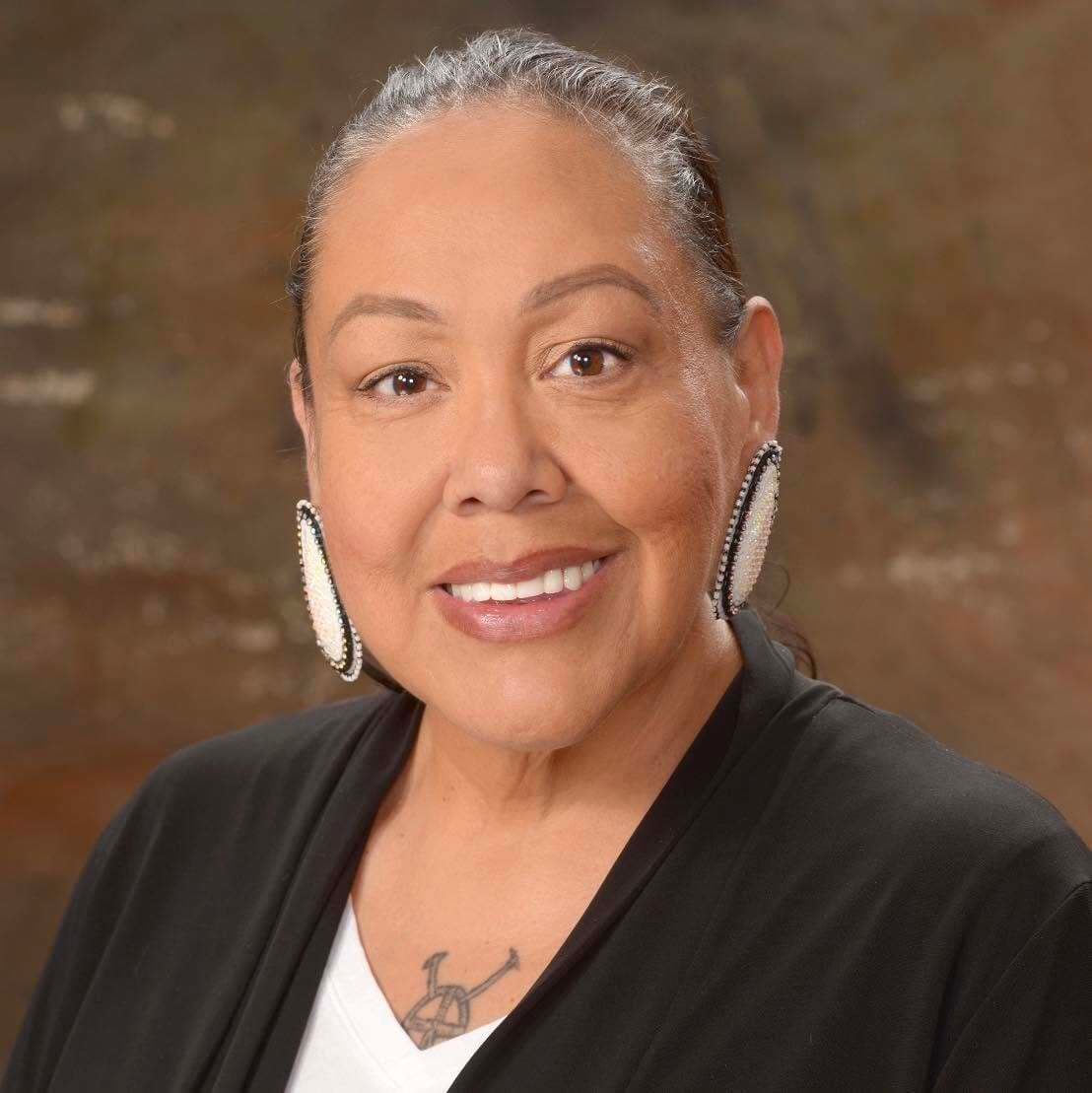
Across Montana, communities, educators, tribal leaders and students marked Elouise Cobell Day on Nov. 5, honoring a Blackfeet woman whose determination and leadership changed the course of Native American history and secured justice for hundreds of thousands of Indigenous people.
Elouise Cobell Day recognizes the life and achievements of Elouise Pepion Cobell, known as Yellow Bird Woman, whose relentless pursuit of accountability led to one of the largest class-action settlements in U.S. history and reshaped conversations about tribal sovereignty, federal trust responsibility and Native self-determination.
The observance was officially established in Montana in 2015 when then-Gov. Steve Bullock proclaimed Nov. 5 as Elouise Cobell Day. Since then, the annual commemoration has served as a reminder of Cobell's enduring impact on Native communities in Montana and throughout the nation.
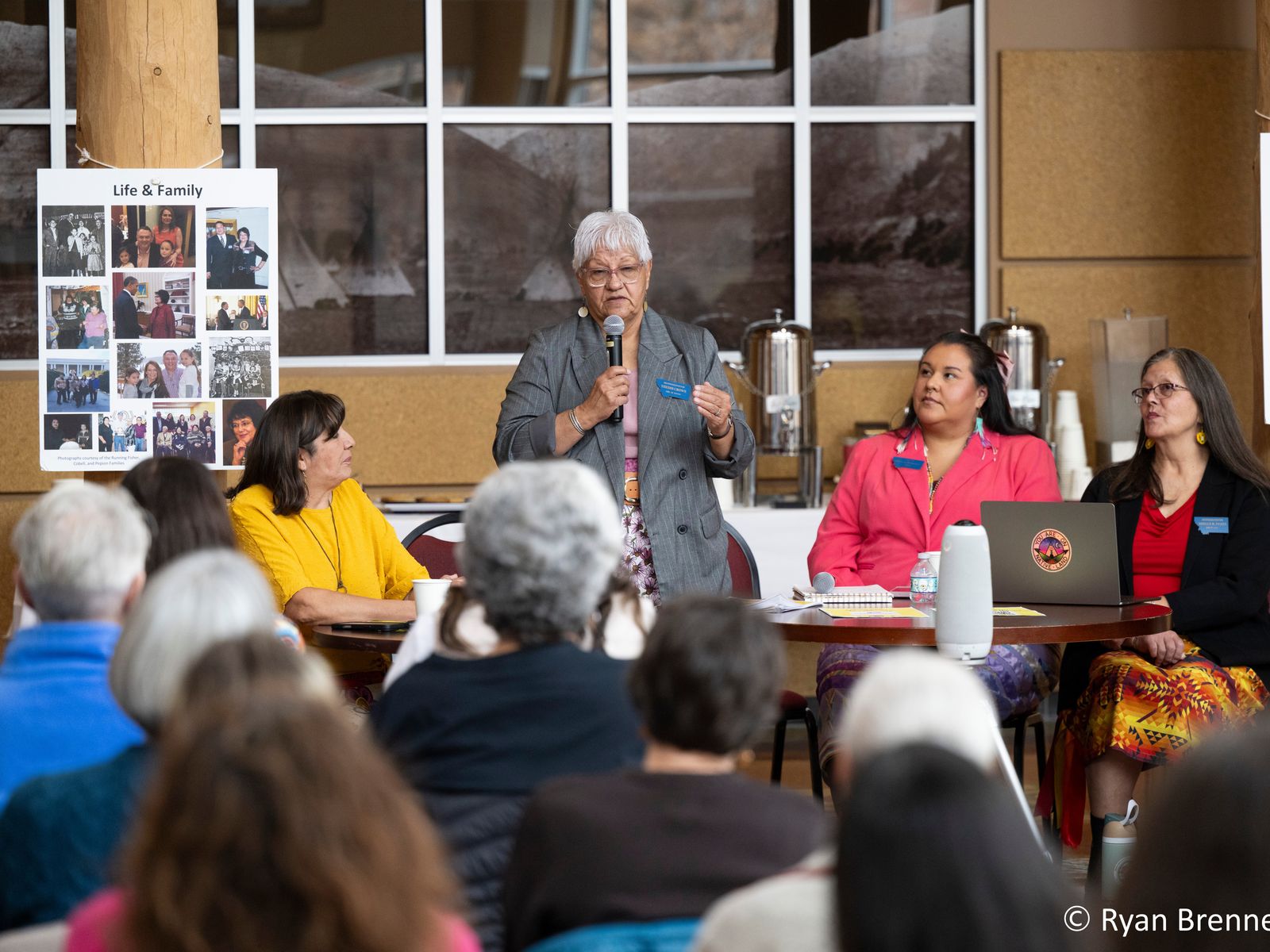
This year's Elouise Cobell Day observance at the University of Montana's Payne Family Native American Center focused on leadership and governance through a panel discussion titled "Accountability and Leadership: Elouise Cobell's Legacy in Native Women's Governance." The event brought together Native women serving in Montana government and public service to discuss leadership, representation and Cobell's continuing influence.
The discussion was moderated by Sen. Lea Whitford, a longtime educator and legislator from the Blackfeet Nation. Whitford, who has spent decades advocating for Native education and public policy, has served in the Montana Senate while also helping advance educational opportunities for tribal students. Her career reflects many of the same values of service and community leadership associated with Cobell's legacy.
Cobell was born Nov. 5, 1945, on the Blackfeet Reservation near Browning, and raised with eight siblings in a community where many homes lacked electricity and running water. Growing up, she listened to stories about tribal members who never received proper accounting of funds generated from oil, gas, grazing and mineral leases on Native lands. Those stories shaped her understanding of fairness and became the foundation of her life's work.
Her paternal ancestry included Mountain Chief, a respected Blackfeet leader who resisted unfavorable government agreements and advocated for his people during a period of dramatic change. Inspired by those examples of service and resistance, Cobell pursued an education in accounting and business.
While attending school, she interned with the Bureau of Indian Affairs, where she gained insight into federal trust systems. The experience raised troubling questions about how Native trust assets were managed and convinced her that tribes deserved greater transparency and accountability.
In 1976, Cobell was elected treasurer of the Blackfeet Nation. As she reviewed financial records, she identified discrepancies involving revenues from natural resource leases on tribal lands. Rather than accept incomplete explanations from federal agencies, she demanded answers and advocated for tribal members who depended on those revenues.
Cobell's leadership extended beyond government oversight. Believing economic self-sufficiency was essential to tribal sovereignty, she co-founded the Blackfeet National Bank, recognized as the first tribally owned national bank located on a reservation. She later helped establish the Native American Bank, a multi-tribal institution designed to support Indigenous economic development across the country.
Her commitment to financial literacy and economic empowerment gave Native communities new tools to build wealth and strengthen local economies. Those efforts would become a defining part of her legacy.
Yet Cobell is best known for the landmark federal lawsuit she initiated in 1996. Alongside other plaintiffs, she filed a case challenging the U.S. government's management of Individual Indian Money accounts that held revenue generated from trust lands owned by Native Americans.
The lawsuit, eventually known as Cobell v. Salazar, lasted more than a decade. Throughout the years of legal battles, appeals and negotiations, Cobell became the face of the effort, traveling across Indian Country, speaking with tribal citizens and raising support for the cause.
In 2009, the parties reached a $3.4 billion settlement. The agreement provided compensation for account holders, funded a land consolidation program to address fractionated ownership and created the Cobell Education Scholarship Fund to support future generations of Native students. The settlement received final court approval in 2011, just months before Cobell's death.
Despite the national attention surrounding the case, Cobell consistently maintained that her work was motivated by principle rather than personal recognition.
"I never started this case for fame or money," she told the Associated Press in 2010. "I started it because it was the right thing to do."
Her leadership earned widespread recognition. In 1997, she received a MacArthur Fellowship, often referred to as the "Genius Grant," and donated a portion of the award to support the trust litigation. She was later granted warrior status by the Blackfeet Nation, a rare honor reserved for individuals whose service significantly benefits the people. Other honors included an honorary doctorate from Montana State University and the Montana Trial Lawyers Association's Citizens Award.
In 2016, five years after her death, President Barack Obama posthumously awarded Cobell the Presidential Medal of Freedom, the nation's highest civilian honor.
Among the panelists at the Payne Family Native American Center on this year’s Elouise Cobell Day was Sen. Jacinda Morigeau, a member of the Confederated Salish and Kootenai Tribes. Morigeau has built a reputation as an advocate for Native families, education and community health. Her legislative work has frequently focused on lifting Indigenous voices in state government and encouraging greater Native participation in public service.
Also participating was state Rep. Thedis Crowe, a member of the Crow Tribe and a lifelong educator. Before serving in the Montana Legislature, Crowe worked extensively in education and community development. Colleagues often point to her commitment to youth leadership, cultural preservation, and creating opportunities for future generations as hallmarks of her public service.
The panel additionally featured state Rep. Shelly Fyant, a member of the Confederated Salish and Kootenai Tribes and one of Montana's most experienced Native lawmakers. Fyant has championed issues ranging from tribal-state relations to economic development and natural resource protection. Her years of legislative service have made her a prominent voice for Indigenous representation in the Montana government.
Event organizers said the gathering reflected the living legacy of Cobell's work. Each woman represents a generation of Native leadership that continues to advance the causes of accountability, sovereignty and public service that Cobell championed throughout her life.
Today, Cobell's influence remains visible through scholarships, educational programs and institutions such as the Elouise Cobell Land and Culture Institute at the University of Montana. More importantly, supporters say that her legacy endures with the Native leaders, students and advocates who continue to pursue justice on behalf of their communities.
As Montana commemorates another Elouise Cobell Day, many view the observance as both a celebration and a challenge: a celebration of a woman whose courage changed history, and a challenge to future generations to continue the work she began.
The event concluded with those who’d gathered singing "Happy Birthday" to Elouise Cobell.
Sharing Is Caring
This article is not included in our Story Share & Care selection.
The content may only be reproduced with permission from the Indigenous Media Freedom Alliance. Please see our content sharing guidelines.
© Buffalo's Fire. All rights reserved.
We provide independent Native-focused reporting that gives our communities the context and the facts they need to make informed decisions.
Respect The Fire
At Buffalo's Fire, we value constructive dialogue that builds an informed Indian Country. To keep this space healthy, moderators will remove:
- Personal attacks, harassment, or hate speech
- Spam, misinformation, or unsolicited promotion
- Off-topic rants and excessive shouting (All Caps)
Let’s keep the fire burning with respect.