






Granddaughter searches for missing grandfather nearly 50 years after disappearance
Francis Houle went missing from the Colorado Springs area in 1979


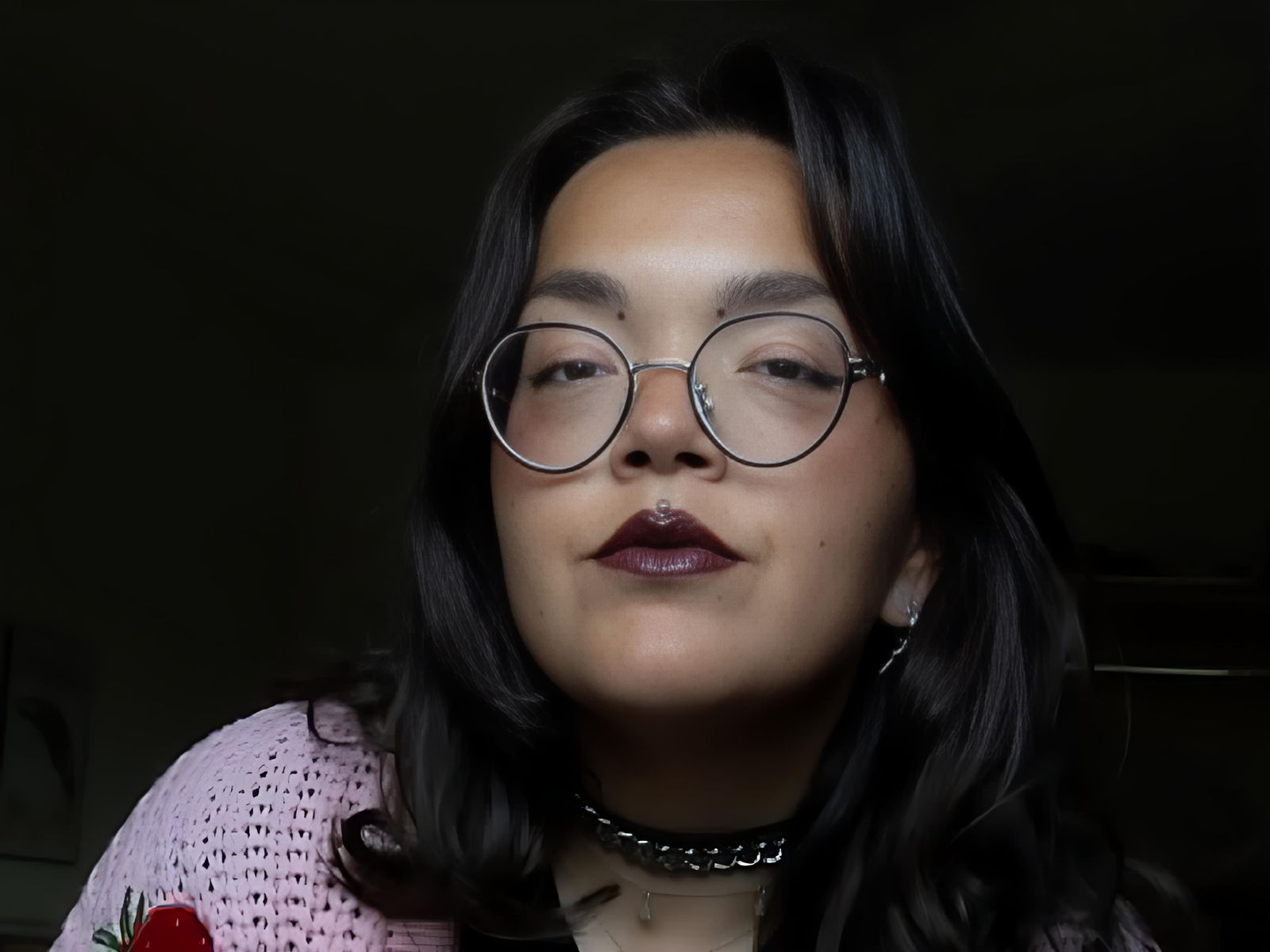
Samantha Houle sifts through a small stack of letters, carefully removing a card from an envelope. The paper is baby blue with a flower bouquet design in the upper left corner. The letter is dated Oct. 4, 1979.
“Well hi Claudia! Surprise. Surprise. Your daddy is fixing to write you a few lines to see how you are getting along.”
The letter wishes Claudia Barkie, Houle’s mother, a happy birthday. The letter, written by Houle’s grandfather, Francis Houle, ends with him wishing the kids would stop having birthdays “Because you know that makes me old too. Love you your Daddy.”
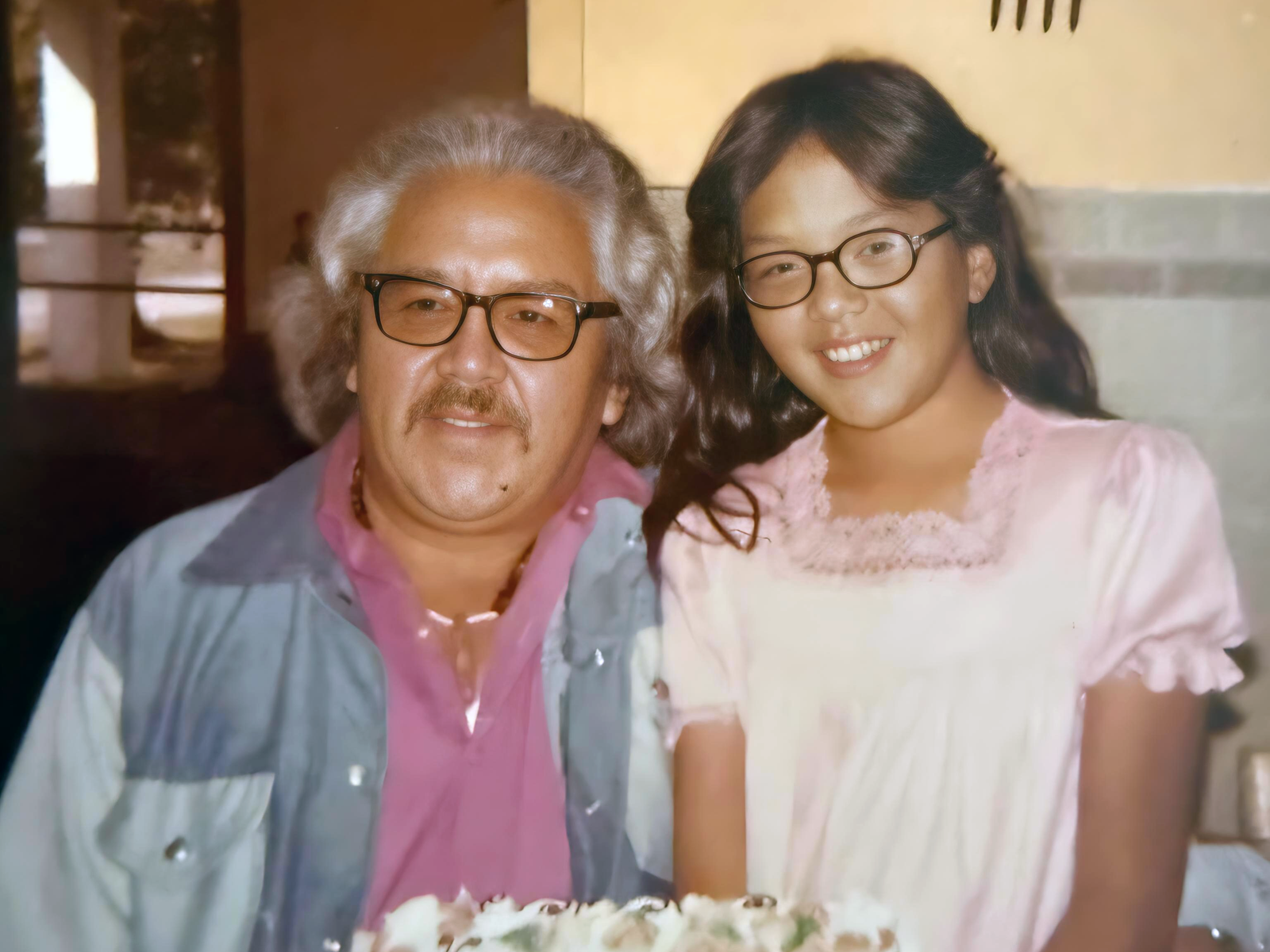
The letter is the last known connection to her grandfather. Despite never meeting him, Houle, 37, grew up hearing about him. She knows he was born and raised in Belcourt, North Dakota, and is a citizen of the Turtle Mountain Band of Chippewa Indians. She knows his name is Francis, but he goes by the nickname Frank. She knows he has three biological children, and he adopted two of his wife’s biological children, who took his last name.
She knows after he divorced her grandmother in 1972, when Barkie was about 13, he moved to Washington state to work as a laborer for a few years before moving to Colorado. His children came with him to Washington, but moved back to Williston, North Dakota, after he left for Colorado.
During his travels, he would write to his children in North Dakota, telling them he loved them.
What she doesn’t know is what happened to him after the letters abruptly stopped in 1979.
“I’ve read them a lot, and I just kind of felt sad for my mom,” Houle said, adding that it sounded like her grandfather had a lot of love for his kids. “The letters have been a big part of why I've been pushing over the years to find out as much as I can what happened to him.”
Barkie said she remembers her father as being very present and loving. “He always made me feel safe,” she said.
When the letters stopped, Barkie said her mother told her that her father likely took off and decided to move on with his life.
“I never believed that,” Barkie said. “My dad would never just up and not keep in some contact with one of his kids. I think she was trying to make us feel better, maybe that he was still out there.”
Prior to his disappearance, Barkie heard from her dad at least once a month, usually in the form of a letter or a card. Decades went by and the family never heard from him. His children grew up and eventually had children of their own.
Throughout the years, family members tried tracking him down without any luck.
In 2021, Houle, a Turtle Mountain citizen who describes herself as white-passing, found herself wanting to discover more about her Native American heritage after feeling like she “lived in my whiteness for so long.” She created an ancestry.com account and began mapping out her family tree. She found each of her deceased family members had a proper death certificate, except for her grandfather.
With no death certificate, no missing person report and no trace of her grandfather past 1979, Houle decided to start investigating. In September 2021, she began searching online for information about missing people and stumbled across NamUs, the FBI’s national missing person’s database. An employee at NamUs connected Houle with the Colorado Springs Police Department.
Houle said she gave the police what little information she had, but it wasn’t until four months later, in January 2022, that they issued a missing persons report.
The Colorado Springs Police Department did not respond to a request for comment regarding when the report was filed and if the investigation is still open.
“I feel like it shouldn't have taken that long,” Houle said, adding she had similar issues with filing a missing person’s report in Williston, where Francis Houle moved after having kids. Houle said her grandfather was added as a missing person on North Dakota’s Office of Attorney General website in 2022, but his race was reported as unknown, even though he was a tribal citizen.
She noticed he later disappeared from the database altogether. In Jan. 2026, he reemerged on the database as a missing Indigenous person.
Williston Police Department lieutenant detective Michael Wilson told Buffalo’s Fire that Francis Houle’s race was improperly classified on the attorney general website, so his missing persons entry was amended.
Wilson said additional questions would have to be directed to the public information officer, who did not answer questions by press time regarding when Francis Houle was originally added, taken down and re-added on the attorney general’s website.
With little new information from police, Houle began searching public records and using the letters to track her grandfather’s last known locations. She learned he was living with his niece before moving away and sending Barkie letters from a duplex in Colorado Springs. She said a child support document showed he was later living in a hotel in the same area.
The Williston Police Department assisted Houle in collecting DNA to compare with John Does in NamUs. Houle’s mother and uncle both gave samples of their DNA to test for potential matches, but a match has not been made.
Missing & Murdered Indigenous Relatives Task Force of Colorado also assists Houle, who said they “have really advocated for me over the years.”
Houle found the task force to be helpful, but she said she hasn’t had any luck getting information from police, adding if they had any findings beyond what she shared with them, she has not been notified. Houle said she contacted her tribe, but they can’t provide information unless she has a death certificate.
The Turtle Mountain Band of Chippewa Indians did not respond to a request for comment about Francis Houle’s case.
In many MMIP cases, it is common for multiple agencies to investigate. While it can be good to have extra eyes on a case, it can also lead to jurisdictional challenges and confusion about who is responsible for what.
Houle said the Colorado Springs Police Department, Williston Police Department and Colorado Bureau of Investigations are all involved in the case, yet Houle feels as if it’s up to her to find answers.
She described the process of searching for her grandfather as a waiting game: “It’s hard to keep up hope when you have to wait years between getting new information.”
“I tried to come to terms,” Barkie said. “I know he is gone, but I wish he wasn't. I wish he was in my life to see my kids.”
Barkie said her father, who would now be 92, is likely not alive due to his age and the amount of time without family contact.
Now, Houle is trying to locate remains for her grandfather so she can get a death certificate and bring her grandfather home.
Barkie said seeing her daughter advocate for her grandfather has made her incredibly proud.
“If it wasn’t for her, things would be at a standstill and nothing would be accomplished,” she said. “I can’t say enough of how much I appreciate her and her willingness to try to find results about my dad.”
Houle described the gap in knowledge about her Native American heritage as a “spiritual wound.”
“It’s something that I desperately want to get close to, but I’m not quite sure how to approach it,” she said.
While she is still learning about her Native American culture, Houle said searching for her grandfather has opened doors into discovering more about herself.
Corrections
A previous version of this article incorrectly stated that Francis Houle had two biological children. The text has been updated to reflect that he had three biological children.
Sharing Is Caring
This article is not included in our Story Share & Care selection.
The content may only be reproduced with permission from the Indigenous Media Freedom Alliance. Please see our content sharing guidelines.
© Buffalo's Fire. All rights reserved.
We provide independent Native-focused reporting that gives our communities the context and the facts they need to make informed decisions.
Respect The Fire
At Buffalo's Fire, we value constructive dialogue that builds an informed Indian Country. To keep this space healthy, moderators will remove:
- Personal attacks, harassment, or hate speech
- Spam, misinformation, or unsolicited promotion
- Off-topic rants and excessive shouting (All Caps)
Let’s keep the fire burning with respect.