







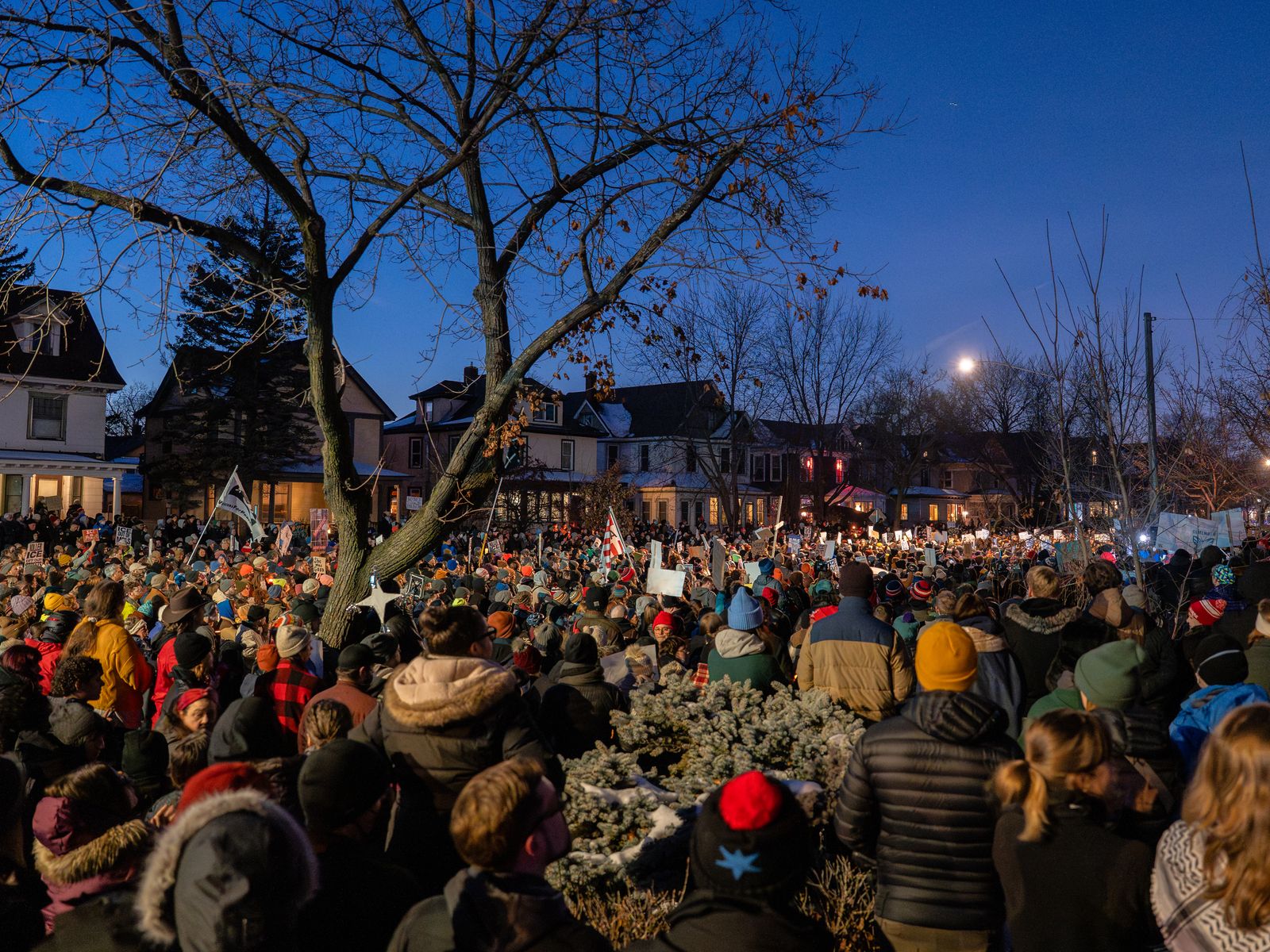
The chasm between right and left in America today is glaring. Conservative Americans are yearning for America to be “great again,” and in ways that violently reinstate their supremacy. On the other side of the political spectrum, liberal Americans are growing increasingly restless, experiencing the jarring pang of what must feel like moral American atrophy in the wake of the tragic executions of Renee Good and Alex Pretti — two white Americans who put their bodies on the line while shielding Indigenous, Brown, and Black bodies from ICE violence on Dakota lands in Minnesota.
And yet, a moment that may feel like a regression in American morality for white folks is perceived and experienced entirely differently for the Indigenous people of this land, many who have never known an America that was “great” or even moral. They’ve only experienced an America that was relentless in its brutal commitment to colonize, settle and exploit Indigenous lands while destroying Indigenous people and our lifeways, ultimately, paving the way for their American dream.
Thus, what is happening in America today isn’t a regression in morality, but it is the truth of these lands and this country, finally rising to the surface and on a scale for all to bear witness. Like a seismic shift in Earth’s surface, the Indigenous, Brown and Black experience is building pressure beneath a weakening American narrative, contributing to an inevitable rupture of society as we know it.
When award-winning singer and songwriter Billie Eilish proclaimed, “No one is illegal on stolen land,” live on the Grammy stage and in front of millions, she made visible to the masses a tagline frequently seen on the frontlines of Indigenous rights struggles. The phrase has been popular for at least the past two decades, with origins stemming from a fusion of influences — from the phrase, “no person is illegal,” to migrant justice campaigns in Canada, to border justice struggles near the U.S.-Mexican border, and perhaps, even inspired by hip hop artist KRS-One’s lyrics from the 1993 song, “Sound of Da Police,” where he says, “There could never really be justice on stolen land.”
By amplifying this statement, Eilish illuminated a truth that a growing number of Americans evidently wish to reckon with: America’s original sin of settler colonialism and genocide. According to a recent poll, a growing majority of Americans actually believe that the United States is losing its moral authority. While the slogan uplifted by Eilish challenges the morality of anti-immigration tactics —“No one is illegal…” — it also challenges the masses to reckon with what it truly means for all Americans to be beneficiaries of stolen Indigenous lands, especially amidst such volatile political times.
My dad, a historian and long-time advocate of Tribal rights, often says, “We have to rely on the good white people upfront.” My dad and I sometimes talk politics, but even more about the values that undergird who we are as human beings. His sentiment about what is necessary in these times is pragmatic — the “good white people” must be willing to stand up, because we cannot do it alone. They must push down walls, hold open doors and use their privilege, their bodies, their resources, their platforms and their access to lift up the voices of the oppressed and fight for the humanity of those of us who remain brutalized in the margins.
Like Renee Good, Alex Pretti and Billie Eilish, many Americans are no longer willing to stand for the brutality. They are taking action as allies and fellow human beings. Many, and definitely the good people continuing to organize in the streets of Minneapolis, are actively creating the better world that they seek.
Among the Dakota, the original Indigenous inhabitants of Minnesota, a profound yet simple philosophy serves as the basis for Dakota life: “Mitakuye Oyasin,” we are all related. This cultural understanding of the interconnectedness of all things kept the Dakota and many Indigenous nations alive and thriving for thousands of years through similar adages.
Today in Minnesota, everyday, people are actually embodying this Indigenous wisdom, treating every human as a relative — the stranger, the migrant, the houseless relative, the brown-skinned family next door. They are willing to defend and protect them with their own actions, offering up their own resources, their voices, their tears, and their prayers.
We are all related and inextricably connected — this is the wisdom that has the potential to revolutionize a society struggling and yearning for a world that is more humane. Be a good relative. It really is that simple.
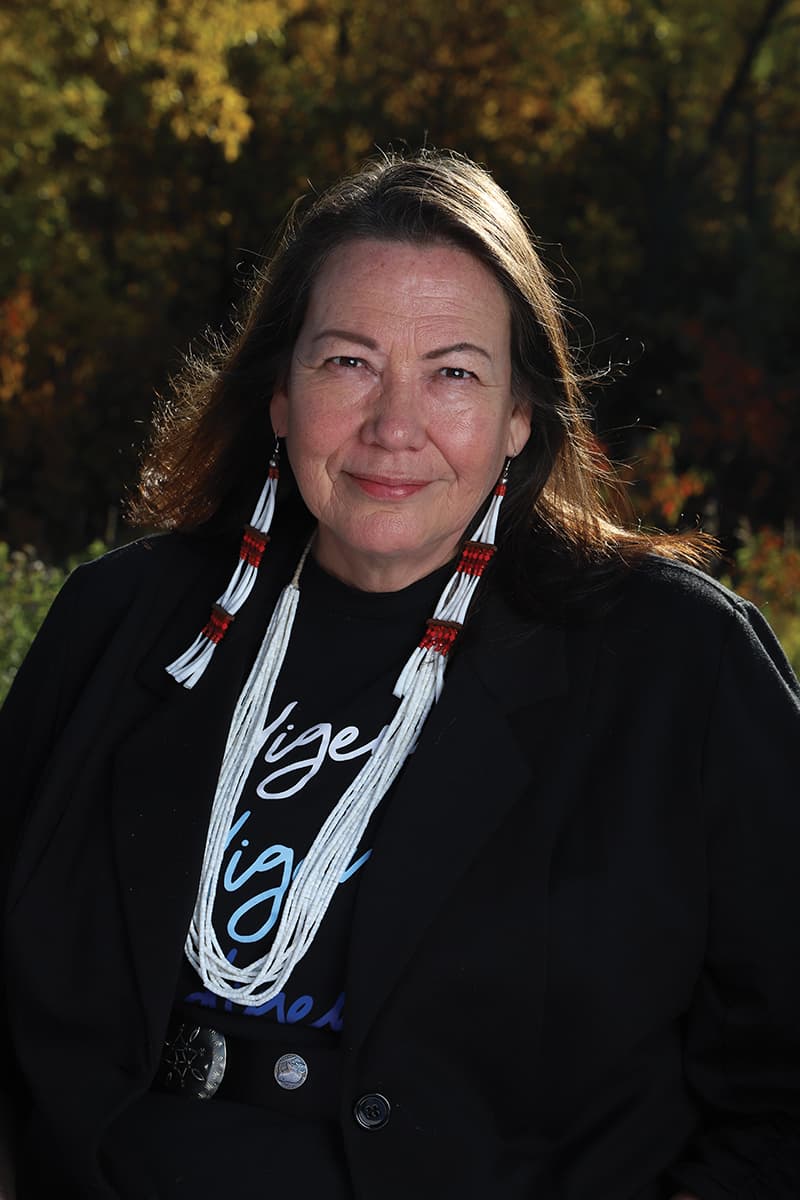
Sarah Sunshine Manning is a citizen of the Shoshone-Paiute Tribes of the Duck Valley Indian Reservation in northern Nevada and southern Idaho, and a descendant of the Chippewa-Cree Tribes of Rocky Boy, Montana. She is an award-winning journalist, educator, essayist, and multimedia producer. Her works highlight Indigenous self-determination, justice, and culture. She currently works as a communications strategist in the non-profit sector.
Sharing Is Caring
This article is not included in our Story Share & Care selection.
The content may only be reproduced with permission from the Indigenous Media Freedom Alliance. Please see our content sharing guidelines.
© Buffalo's Fire. All rights reserved.
We provide independent Native-focused reporting that gives our communities the context and the facts they need to make informed decisions.
Respect The Fire
At Buffalo's Fire, we value constructive dialogue that builds an informed Indian Country. To keep this space healthy, moderators will remove:
- Personal attacks, harassment, or hate speech
- Spam, misinformation, or unsolicited promotion
- Off-topic rants and excessive shouting (All Caps)
Let’s keep the fire burning with respect.