






MHA Nation appeals court upholds $250M withdrawal from People’s Fund
Ruling is a loss for transparency and justice, plaintiffs say

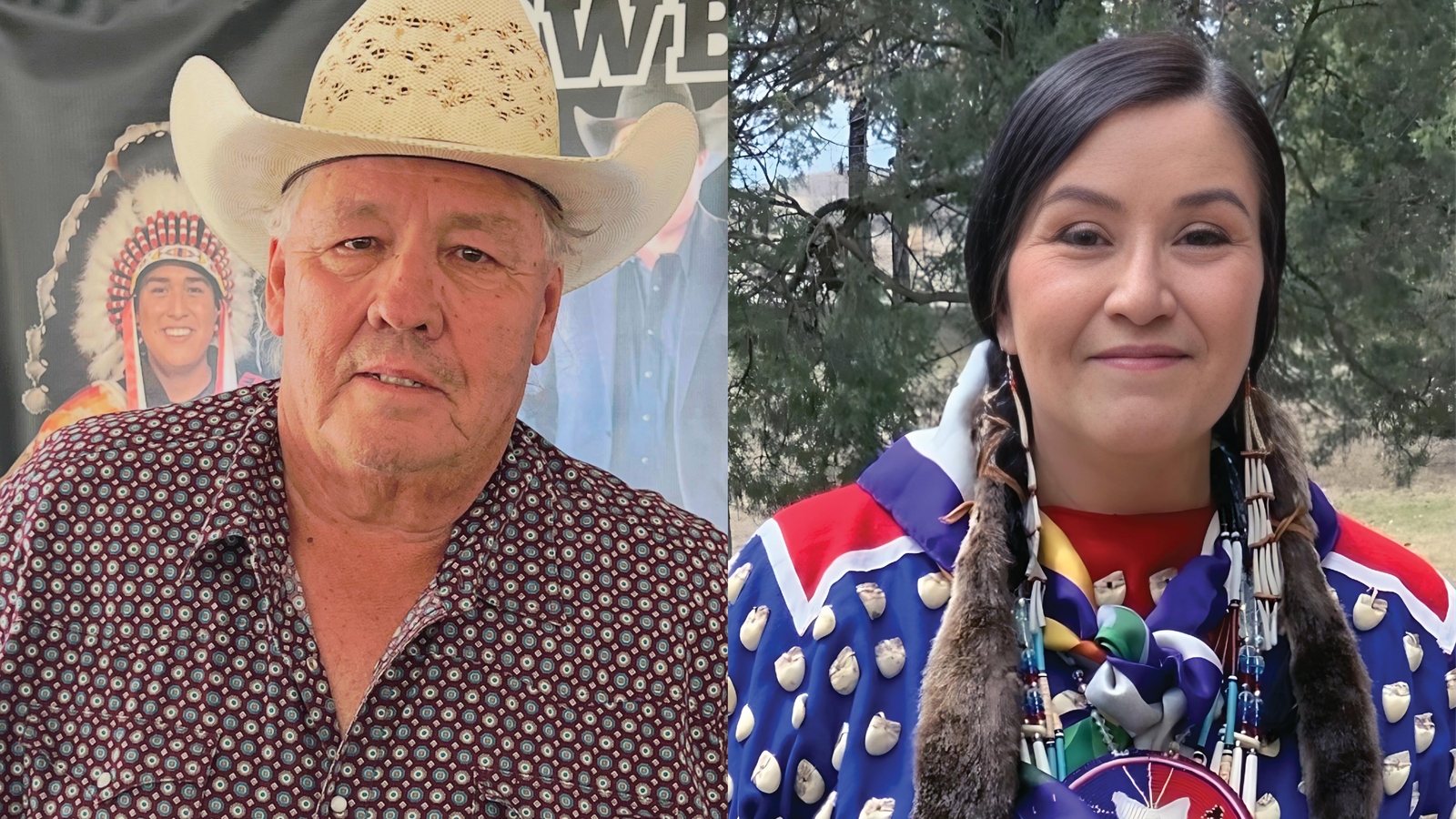
A tribal appeals court ruled that sovereign immunity gives Mandan, Hidatsa and Arikara Nation tribal leaders the right to invest People’s Fund money however they wish, without consulting tribal members. The decision has alarmed the plaintiffs, whose case against MHA Nation tribal leaders alleges mismanagement of oil and gas revenues set aside in the fund, an account created for the benefit of MHA citizens.
The appeals court issued the ruling Oct. 17, 2025, but tribal members — including the plaintiffs — were in the dark about it for four months. The tribe did not share the outcome, and Steven Kelly, the attorney for the plaintiffs, did not learn of the ruling until recently due to a mail-forwarding error.
“The council is using sovereign immunity against their own people,” said Terrance Fredericks, a plaintiff in the case. “Our sovereignty is what protects us. It’s an agreement with the federal government. Now we have a council that is abusing that power and that has to change, and the people have to change that.”
Carol Good Bear, a plaintiff in this case and in another suit against MHA Nation Tribal Chairman Mark Fox, is disheartened. “We are just a voice in the wilderness,” she said, “and because of the structure and what’s really taking place, it’s not productive to ask for justice.”
A question of fundamental rights
The suit revolves around the Mandan, Hidatsa and Arikara Nation Tribal Business Council’s vote on Aug. 22, 2024, to withdraw $250 million from the People’s Fund and reinvest it in TWG Global, a private equity firm based in Delaware. The diversified holding company offered a better interest rate for the deposit, according to court filings. The quarter-of-a-billion-dollar withdrawal, at the time, represented 28% of the People’s Fund’s $890 million holdings.
Kelly filed the suit in Fort Berthold District Court against the seven-member council, led by Tribal Chairman Mark Fox, on behalf of Fredericks and Good Bear.
The plaintiffs argued that the People’s Fund is the people’s property, protected by the Indian Civil Rights Act, and that removing money from the federal Bureau of Trust Fund Administration account, where it has always resided, without consulting the people is a deprivation of property without “due process of law,” including sufficient notice of meetings and the opportunity to comment.
The suit claims that the agenda for the public meeting at which the vote took place was “intentionally vague” and did not include an opportunity for public comment. Also at issue, the meeting was held in the tribe’s Northeast Segment Office in Parshall rather than in the tribal headquarters in New Town, where votes are usually taken.
The plaintiffs also state in the suit that the council did not allow time to gather signatures for a referendum before transferring the money. The tribe’s constitution provides the referendum as a tool for members to censure leadership decisions.
About two weeks after the Aug. 22 vote, just as they had started gathering signatures, tribal members learned that the council had completed the transfer of funds to TWG Global.
“At stake,” said Kelly, “is the fundamental right of tribal members to participate in decisions affecting their communal assets.”
In January 2025, MHA Nation District Court Judge B.J. Jones ruled that there was no deprivation of property and that sovereign immunity, which protects tribal leaders’ ability to conduct tribal business without undue disruption, gives tribal leaders the right to invest People’s Fund money as they see fit.
Fredericks and Good Bear appealed to the MHA Nation Supreme Court that spring. Three judges, appointed by the tribal council, heard oral arguments in August.
The appeals court upheld Judge Jones’s decision that tribal members are not deprived of a property right, noting the People’s Fund could continue to make the required annual disbursements to tribal members regardless of where the money was invested.
“This court finds no abuse of discretion nor errors of law by the District Court,” wrote Justices Michelle Parks, Kelly Stoner and James Maxson.
Depleting the People’s Fund
That sovereign immunity allows the tribal council to reinvest People’s Fund money without consulting tribal members is just one of the plaintiffs’ concerns. They are even more distressed that the ruling gives permission to the tribe to spend down the fund.
The appeals court agreed with the district court that the resolution that originally set up the People’s Fund “does not preclude the Tribal Business Council from ending the People’s Fund in the future if oil revenue dwindles to the point that the Fund is no longer sustainable.”
Kelly called the court’s conclusion “a fundamental misunderstanding of how the People’s Fund was designed to operate.”
He said that the People’s Fund was originally structured so that only the interest earned would be distributed, while the principal would remain intact for time immemorial.
“The intent was preservation,” he said, “not depletion.”
The plaintiffs also called out the court for not fully addressing the people’s constitutional right to referendum, saying tribal leaders need to allow time to circulate a petition for referendum before taking irreversible action, such as transferring People’s Fund money from its federal trust account.
“Neither the MHA District Court nor the tribe’s Supreme Court fully engaged with that issue,” Kelly said.
The plaintiffs were further frustrated that they were not given the chance to present evidence of a deprivation of property. Proving that the People’s Fund is the people’s property was central to their argument that the tribe’s transfer of fund money without consulting tribal members violated the Indian Civil Rights Act and therefore should not be shielded by the sovereign immunity doctrine.
While the court held two hearings in fall 2024, the plaintiffs maintain that they were not clearly designated as evidentiary hearings nor were the plaintiffs given adequate notice of the need to present evidence.
“When a court determines that certain factual showings are lacking, fundamental fairness suggests that parties should be given clear notice and opportunity to present that evidence,” Kelly said.
Tribal leaders, however, are satisfied that justice was done.
"Both the Trial Court and the MHA Nation's Supreme Court correctly ruled that the plaintiffs in this case have suffered no violations of their rights and no loss of property,” said MHA Nation Tribal Chairman Mark Fox in an emailed statement. “We believe the case was correctly decided by the MHA Nation Courts."
Looking to November
The plaintiffs are looking to the November tribal council elections to make change.
“We’re going to do our best to change the future for the better,” said Fredericks, noting that tribal members must take responsibility to elect leaders and adopt practices of openness and responsiveness
Carol Good Bear shared her larger concerns for Native people.
“With the federal government and the BIA’s lack of oversight and the local level tribal court systems handing down unjust rulings, and tribal leaders continual attempts to thwart the people’s power by never admitting and accepting a petition for a referendum, the bigger question is who is going to get justice?” she asked.
She wants to see leaders in Indian Country act with integrity and transparency, not bringing shame by attracting accusations of mishandling their people’s financial assets. Even with sovereign immunity, she said, the Tribal Council could have consulted tribal members before investing millions of the People’s Fund in an east coast private equity fund.“We need to tread lightly and walk softly and do our best for our children’s future,” she said. “Indians need to wake up and get their values back to cultural relevance. We could face worse things like termination. Our leaders exhibit behavior that displays no cultural teachings. The loss of tribal culture is synonymous to genocide.”
While initially contemplating taking the case to federal court, Kelly has decided against it.“This is the end of the case,” he said, adding, “I don’t believe this case will encourage or serve to motivate the Tribal Business Council to be more accountable in the future. If the people want that from their elected representatives, they will have to elect new people.”
Chairman Fox’s seat is up for election in November.
References
- 1.
- 2.
- 3.
- 4.
- 5.
- 6.
Corrections
This story originally misidentified Timothy Purdon as a former North Dakota attorney general. In fact, he served at the federal level as a United States Attorney for the District of North Dakota.
Sharing Is Caring
This article is not included in our Story Share & Care selection.
The content may only be reproduced with permission from the Indigenous Media Freedom Alliance. Please see our content sharing guidelines.
© Buffalo's Fire. All rights reserved.
We provide independent Native-focused reporting that gives our communities the context and the facts they need to make informed decisions.
Respect The Fire
At Buffalo's Fire, we value constructive dialogue that builds an informed Indian Country. To keep this space healthy, moderators will remove:
- Personal attacks, harassment, or hate speech
- Spam, misinformation, or unsolicited promotion
- Off-topic rants and excessive shouting (All Caps)
Let’s keep the fire burning with respect.