


On the campaign trail with Deb Haaland
Severe flooding highlights needs for rural infrastructure during final week of New Mexico governor’s race

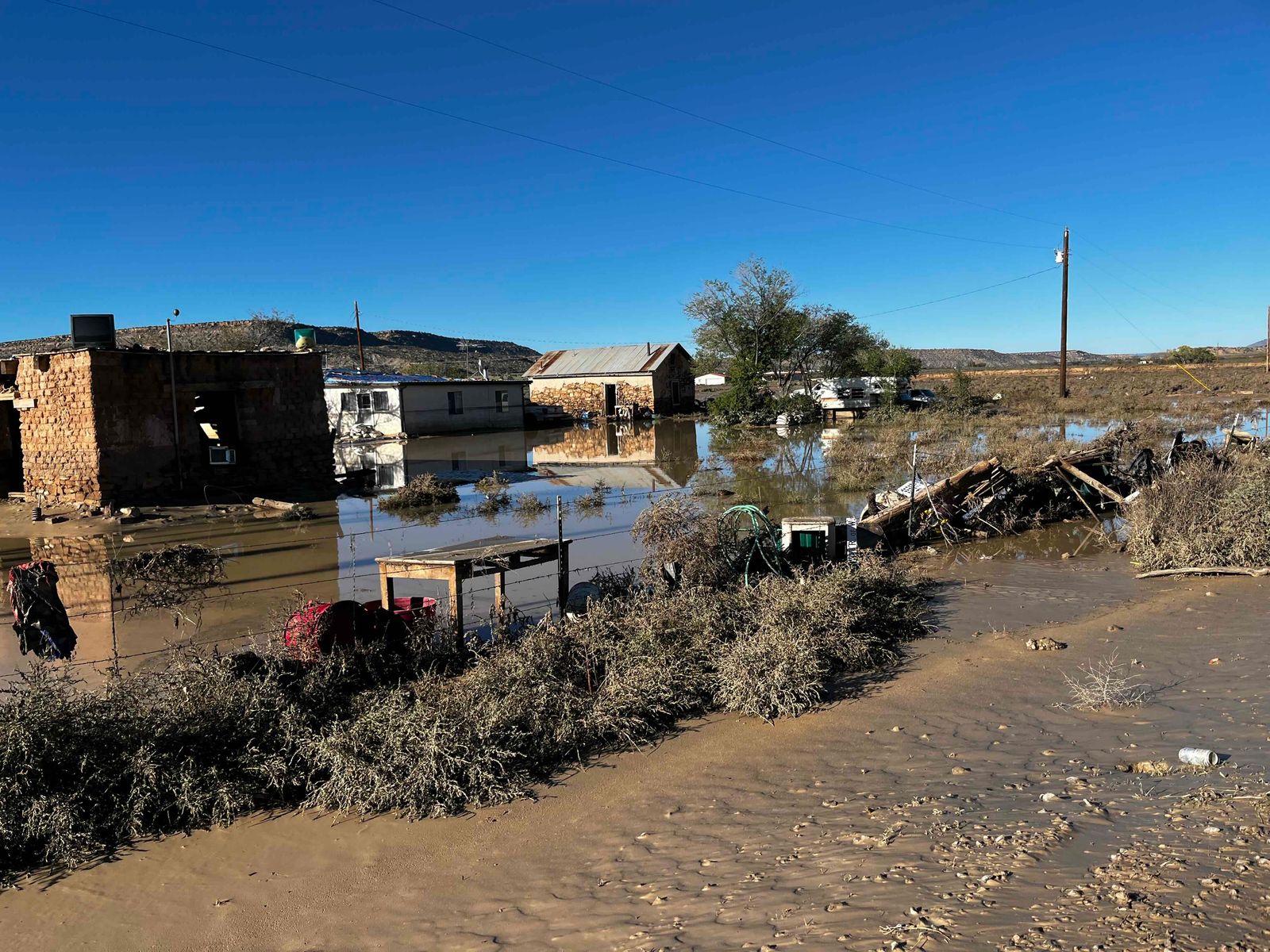
A week before Election Day, parts of New Mexico were under a state of emergency. Rural communities with large Native American populations were recovering from record rains that brought destructive flooding.
Both gubernatorial candidates, Republican Gregg Hull and Democrat Deb Haaland, were campaigning for votes around the disaster zones and had run donation drives for displaced people.
Hull went to the Four Corners to see flooding in Shiprock and Farmington, and his campaign distributed evacuation notices through its social media channels.
Haaland, who would be the first Native American woman to govern the state if she wins on Tuesday, took a trip Oct. 27 to Laguna Pueblo and the Navajo Nation to survey damage.
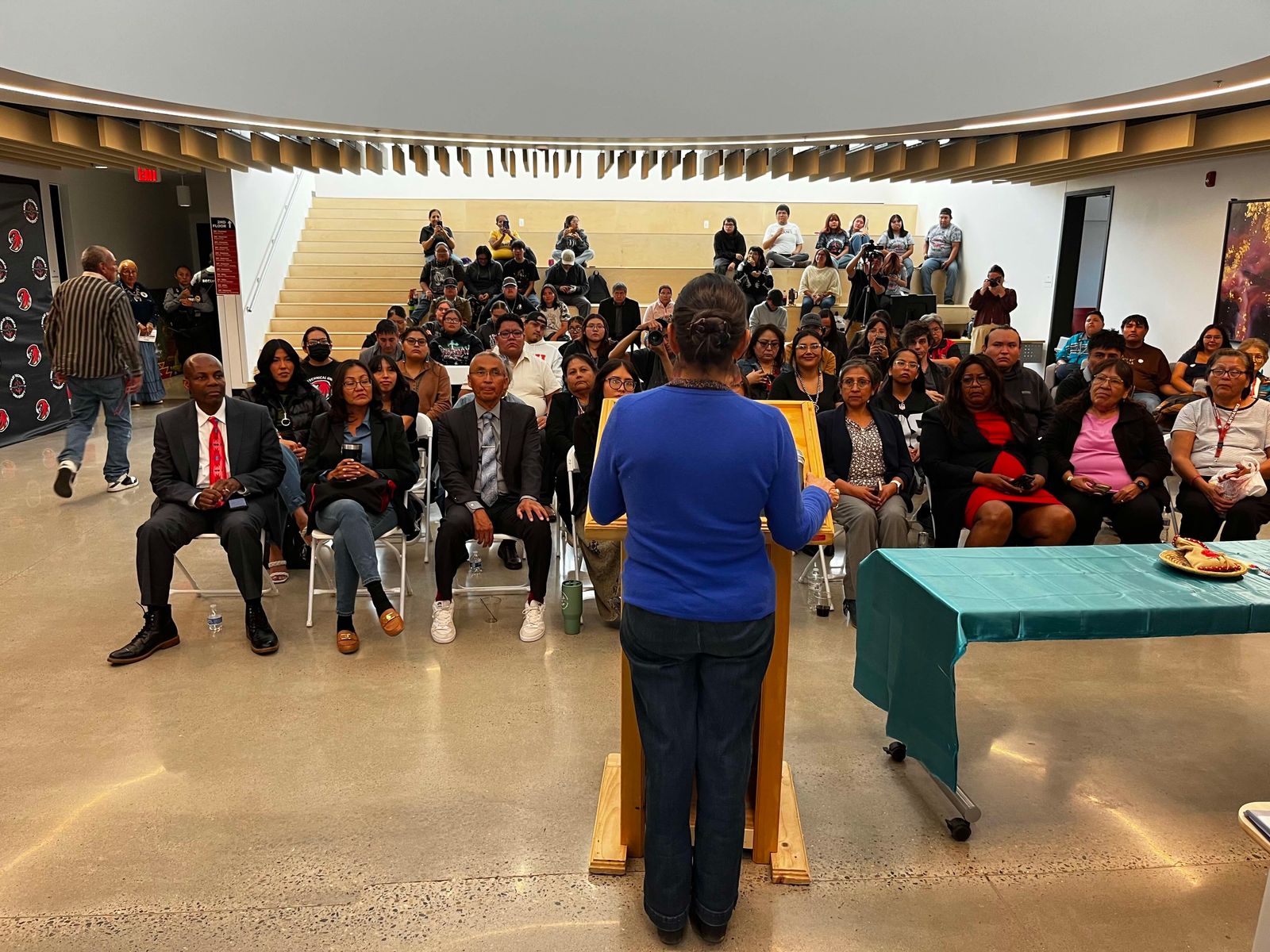
“We often as Native people pray for rain because sometimes it seems scarce,” she said to a crowd of Navajo voters. “All of the rain that we had at once was difficult for some communities to bear, and that tells me that we need some water infrastructure in New Mexico to handle those climate episodes.”
Although her statewide tour plan has been in motion since early 2025, people were still meeting her for the first time. On the trip she heard from people who have lived with legacy gaps in basic infrastructure, like water lines for homes or drainage systems to prevent flooding, and how the state could potentially have a larger role in recovery.
The Paraje village community center in Laguna Pueblo had hosted an event over the weekend. On Monday, it shifted into an emergency supply distribution point for people impacted by floods. Haaland dropped off donations and met with village elders.
“We had our feast day recently,” an older volunteer told her. “We didn’t see you.”
“I was there,” Haaland assured him, saying she’d kept a low profile to not draw attention away from the ceremony.
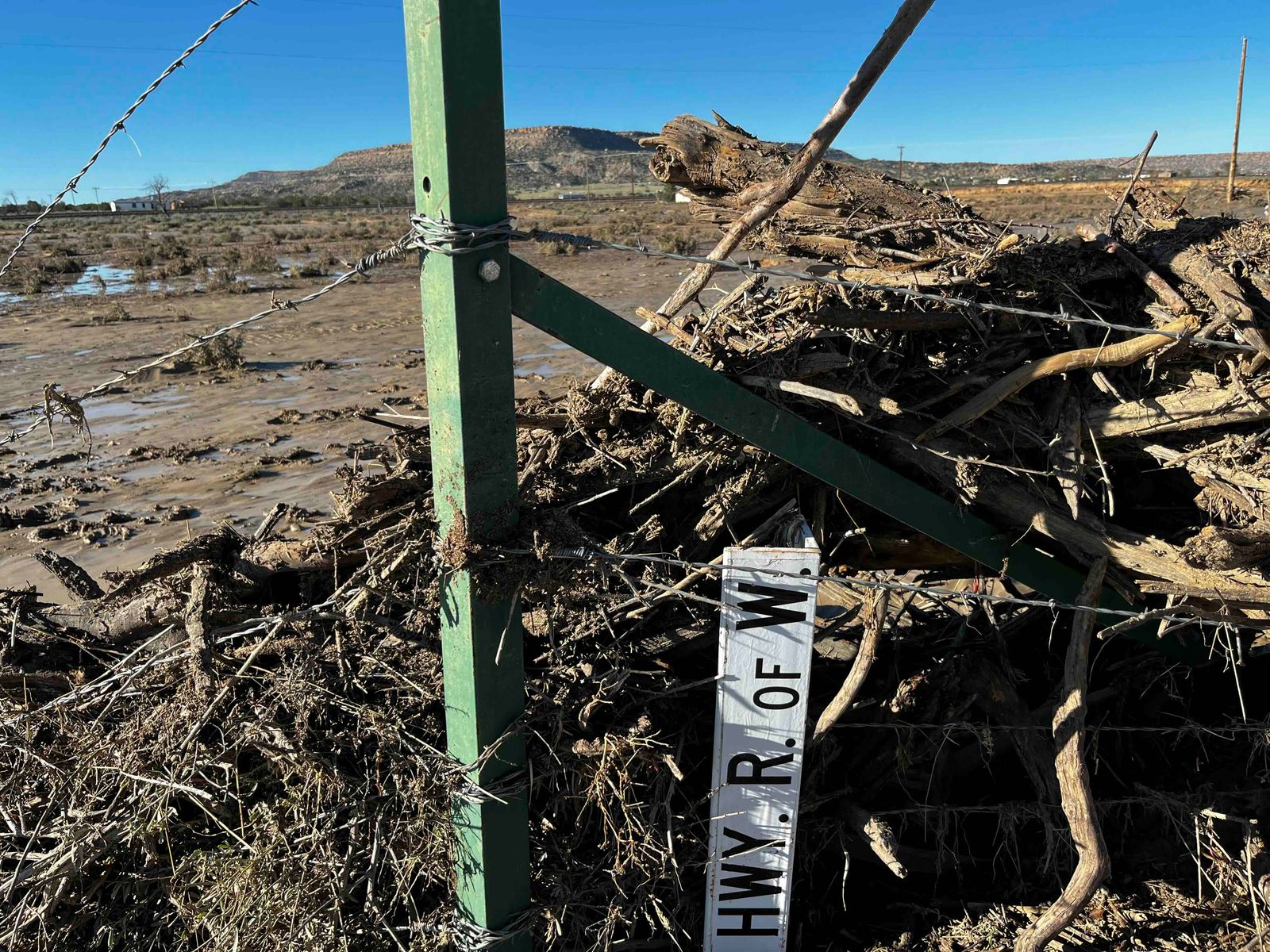
The center sits above a hill overlooking the Rio San Jose and did not suffer any major flood damage. Less than a mile down the road, flooding broke reservoirs. Water rushed with collected debris, like road signs, into a nearby cemetery and V. Lewis’s residential property. Lewis had returned to her home on Tuesday with her horses after a night at the Route 66 Casino Hotel, where she said she was fortunate to get one of the few rooms available for temporary shelter.
When Haaland arrived at her front gate, they discussed concerns about how to care for the horses and where Lewis would stay long term.
Haaland cusped Lewis’s hands. Tears formed in her eyes. “Please be well, and let us know what we can do to help,” she said.
Lewis said infrastructure to help with future flooding was necessary for the state. She said road construction in front of her home had taken out culverts that would have moved water back toward the river, away from her property. She pointed to a water line halfway up her front door. “I can’t go inside because I was told there was a chemical hazard from the flooding,” she said. “We need a lot.”
The day before, the White House had approved a request by New Mexico officials for federal emergency aid for damage in Navajo, Pueblo and Apache communities. The next governor will complete the administrative work of that federal aid, overseeing and approving any payments local governments, tribes and individuals receive for property damages and recovery.
More than 50 miles west of Lewis’s house, regulars at the Route 66 Senior Cafe in McKinley County arrived for lunch. Haaland and her campaign team brought in doughnuts and distributed leaflets. One woman grabbed a flier and asked, “Where is she?” Haaland was behind her talking to other voters and greeted the woman while other voters, including Virginia Begay and Tom McDonald, grabbed doughnuts.
Begay said she likes the routine and festivities around election day voting and didn’t have any concerns about access to the polls. She said flooding damage was minimal at her home, but she has family in other parts of the state who were more affected.
McDonald, a Navajo resident from the Casamero Lake Chapter Community, said he votes only on election day and that the early vote options, either in-person or by mail, wouldn’t give him the satisfaction of being with the community. He said the flooding forced him to move his livestock to another location to access feed.
“I always hear about things coming back around, like the water issues and infrastructure issues. It seems to always be set in stone but we don’t actually know what’s going on,” he said. “They say this is the last era for the baby boomers, we’re at the tip of the iceberg and we still have problems with road erosion. We have a lot of fixing, and the young folk will have to do it.”
Begay said she was surprised the candidate visited for lunch. “We don’t get those people to come here,” she said. “I don’t know why it took so long, but we are grateful.”
After lunch, Haaland and her team drove north to Crownpoint for a speech at Navajo Technical University. She spoke to voters there twice — inside a new student resource center and in the gym — about her vision for the state and how she intends to address infrastructure needs.
The university’s recent building renovations include several new classrooms, both for students doing STEM research and for those in the school’s popular culinary arts program, who served empanadas, egg rolls and bite-sized cakes.
The university’s vice president, Jason Arviso, said that flooding had impacted remote learners and that the school had provided resources to help displaced students and staff and those who’d lost power.
Arviso also said that school drones were used to survey damage across the state. Other post-flood recovery research, he said, will be done with university partners at Los Alamos National Laboratory and New Mexico Tech University.
“We're going to put sensors in the ground so we can start to monitor the soil and the air and other things affected by climate change,” he said.
He told Haaland that the school wants to see its federal support from broadband leveraged with more state dollars. Arviso presented her with a list of projects that he said need $66 million in state funding, including $5 million to help operate a recently built childcare center on campus that needs state accreditation before it can open.
Navajo Tech student body president Shinaeya Watson (Diné), who is studying cybersecurity, told Haaland that until the center opens, she must depend on family to help care for her toddler.
“Universal child care is a great idea, but we need facilities. I can’t find one now,” Watson said.
Haaland said she understood the importance of child care. “I was a single mother,” she told Watson, adding, “We’ll figure out how to get it open.”
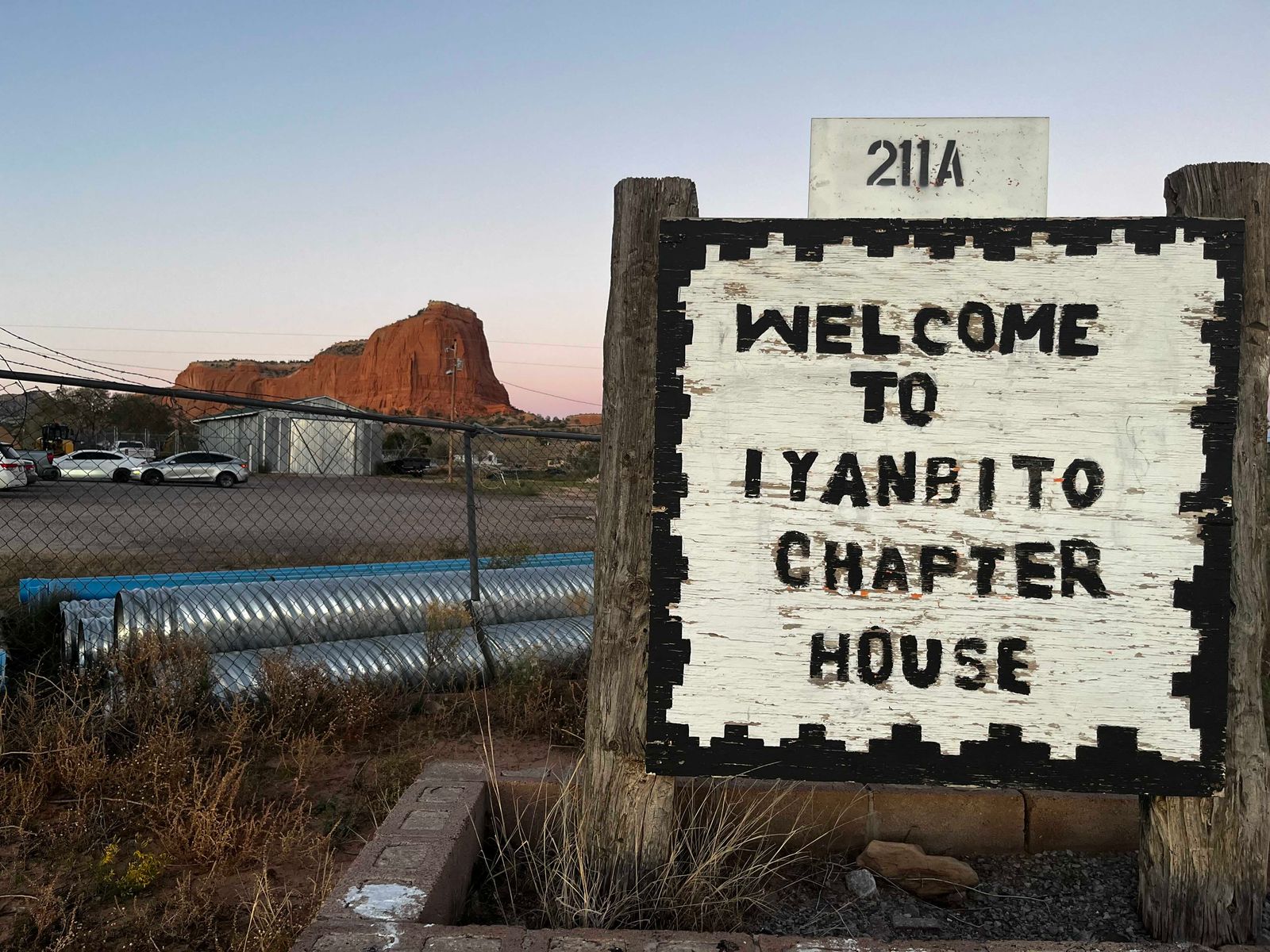
Later that day, during a candidate forum at the Iyanbito Chapter House on the Navajo Nation, where at least 400 residents don’t have running water or sewage systems, volunteers passed out frybread and mutton stew as she spoke.
She turned reverent and gave praise to the land in Iyanbito, named for the buffalo’s water the herds that once drank at streams in the area.
“It's so beautiful to look at that red mesa behind the chapter house and see the beauty of nature here,” she said. “I’m sure when you wake up in the morning and see that and feel very grateful, you feel blessed by Creator that you live in such a beautiful place. I want to keep New Mexico beautiful. Our children and grandchildren deserve to have what you all are able to experience.”
During the forum she was asked to provide support for a $20 million request to build water pipelines for Iyanbito. The forum was hosted in part by KGAK Radio, which broadcasts across much of the rural reservation under state of emergencies and flood watch.
Eastern Agency Navajo Council President Johnny Johnson told Haaland he represents 32 chapter houses in New Mexico that all need infrastructure support.
“We look forward to this work — in fact, we expect it,” he said. “We’ve been treated unfairly in the past. We would like you to say, ‘Here’s some money, go get your water. Here’s some more money for your electric grid.’"
References
- 1.
Sharing Is Caring
This article is not included in our Story Share & Care selection.
The content may only be reproduced with permission from the Indigenous Media Freedom Alliance. Please see our content sharing guidelines.
© Buffalo's Fire. All rights reserved.
We provide independent Native-focused reporting that gives our communities the context and the facts they need to make informed decisions.
Respect The Fire
At Buffalo's Fire, we value constructive dialogue that builds an informed Indian Country. To keep this space healthy, moderators will remove:
- Personal attacks, harassment, or hate speech
- Spam, misinformation, or unsolicited promotion
- Off-topic rants and excessive shouting (All Caps)
Let’s keep the fire burning with respect.