






Q&A: Kimberly Lining on what it takes to be a volunteer for an MMIP organization
MMIW Search & Hope Alliance coordinator discusses upcoming volunteer training and misconceptions about the role

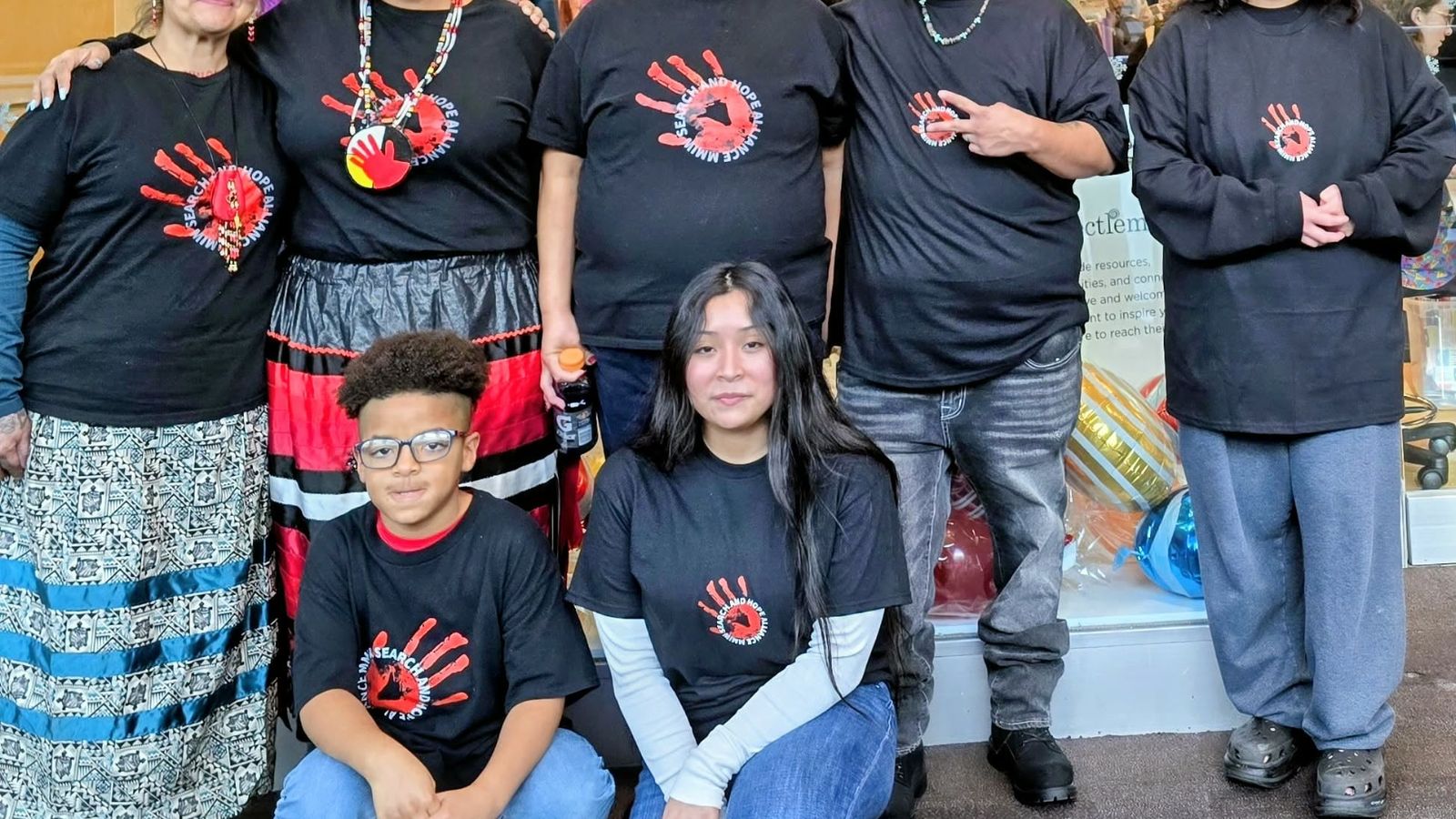
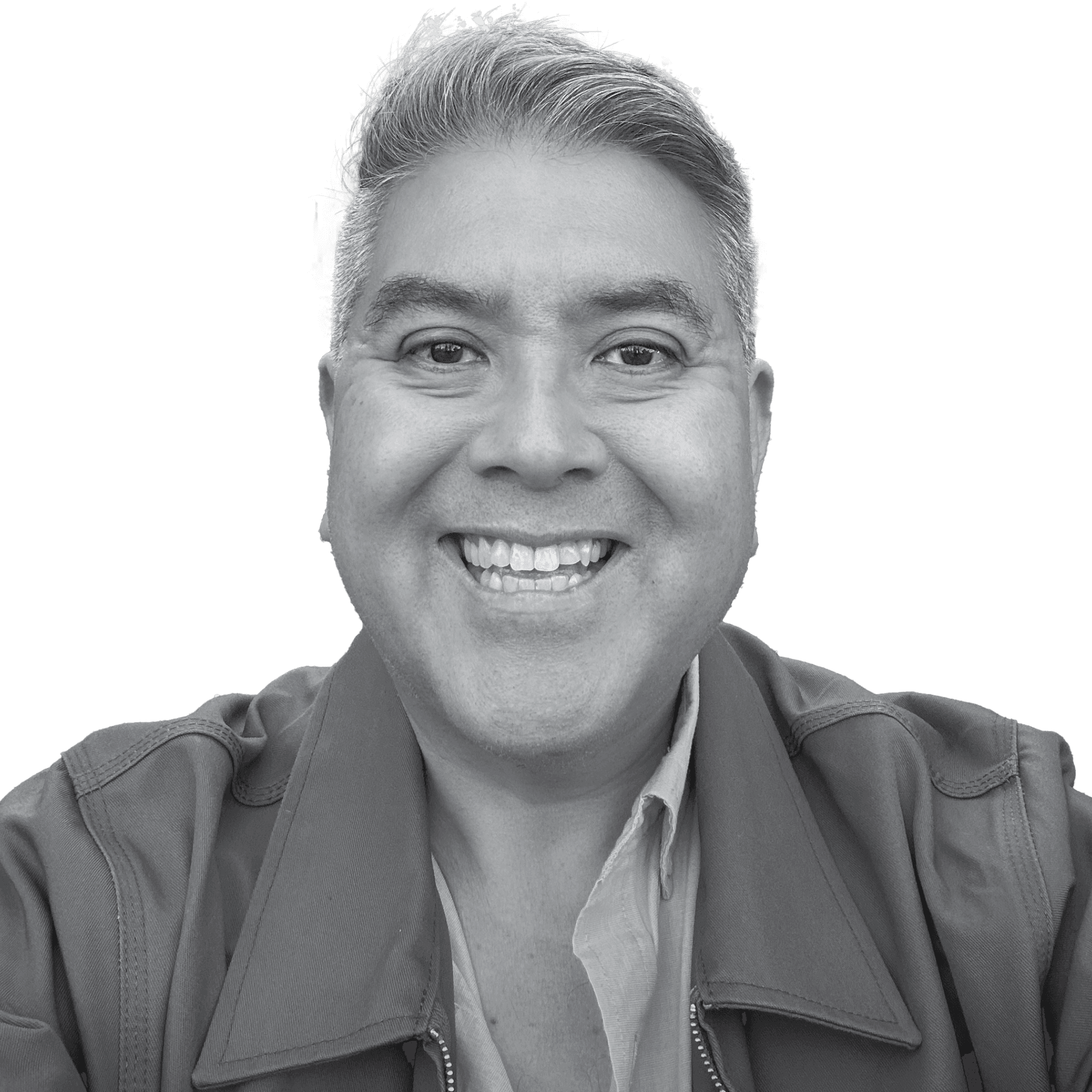
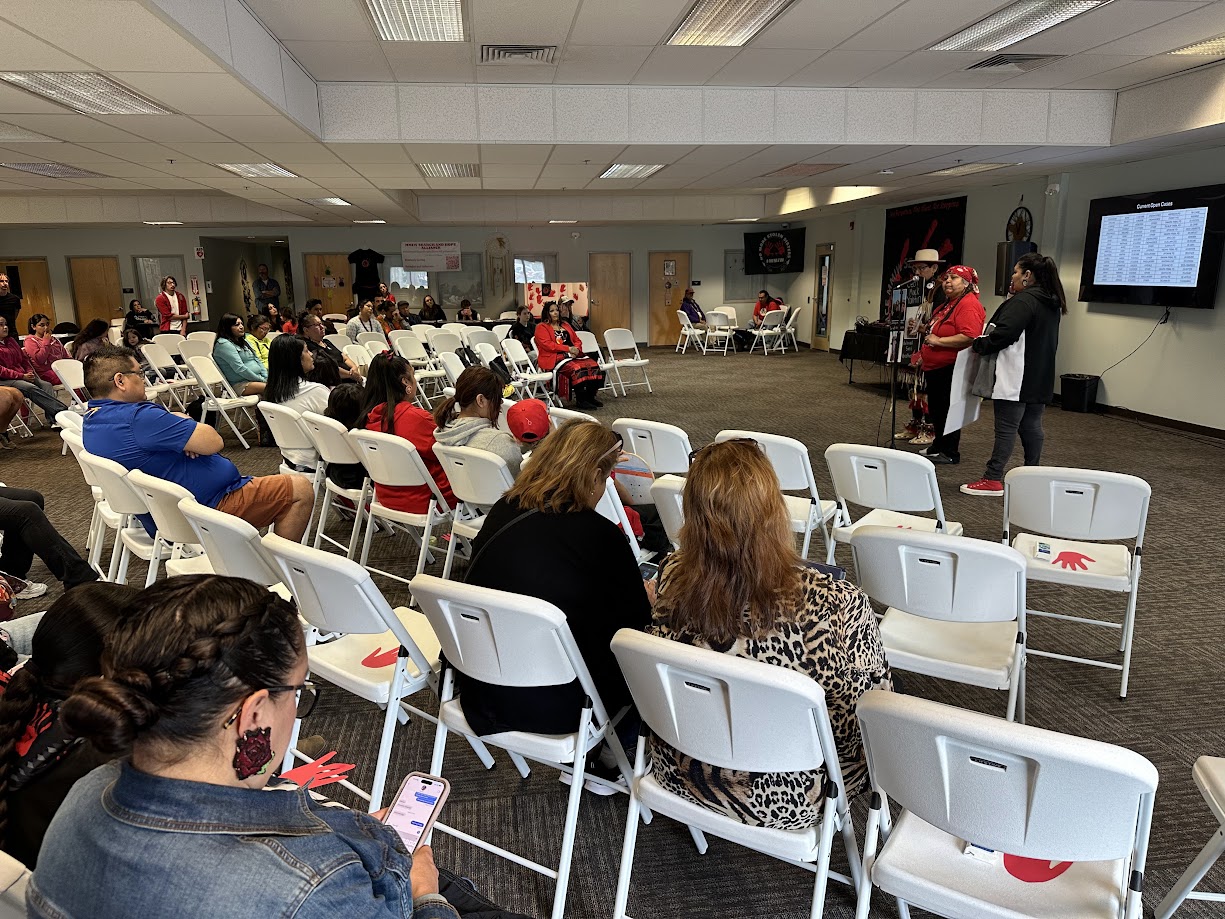
For roughly a year and a half, a group dedicated to tackling the MMIP crisis in Portland, Oregon, has held special events and outreach programs. Its founder, Kimberly Lining, often relied on volunteers to help with many different activities, including search teams.
I recently spoke with her about an upcoming training event and what people need to know before they commit to helping organizations such as hers.
I noticed that there is an invitation to do some training in early January, and this is for volunteers. What are some of the basic skills that you look for in your volunteers?
Well, the first one is just a willingness to serve as a community member, with an open mind and an open heart. And I really look for their willingness to listen, but also a willingness to hear about things that aren't always pleasant, and how they handle stress. How they handle dealing with confrontation because a lot of times we're dealing with devastated families. And sometimes their anger can be directed at us, and it's not personal. It's because the families are under so much pressure. So that's really what we're looking for.
We're also looking for physical agility. Do you have hiking experience? Can you physically, emotionally and mentally just kind of deal with the subjects at hand?
And I remember too, that when you were doing the search for a missing man here outside of Eugene, you had a volunteer with a drone. I figure that's nice to have too, someone with skills like that.
Yeah, specialty skills, for search and rescue. Any kind of drone skills, boating, diving. We always need divers. Those are really hard to come by. Survival training. Because we never want to be the rescuees when we're trying to be out there and recover. We always look for more certified cadaver dogs. But yeah, anybody that has a specialty like drone flying is always a big deal.
In the course of the roughly year and a half that your organization has been active, how many volunteers have you recruited and worked with?
Oh man, so many. We started with four, and now we're up at, probably, around 25 volunteers that continuously want to come to events and help out with searches, traveling. We have regular volunteers that come out and help with logistics, admin.
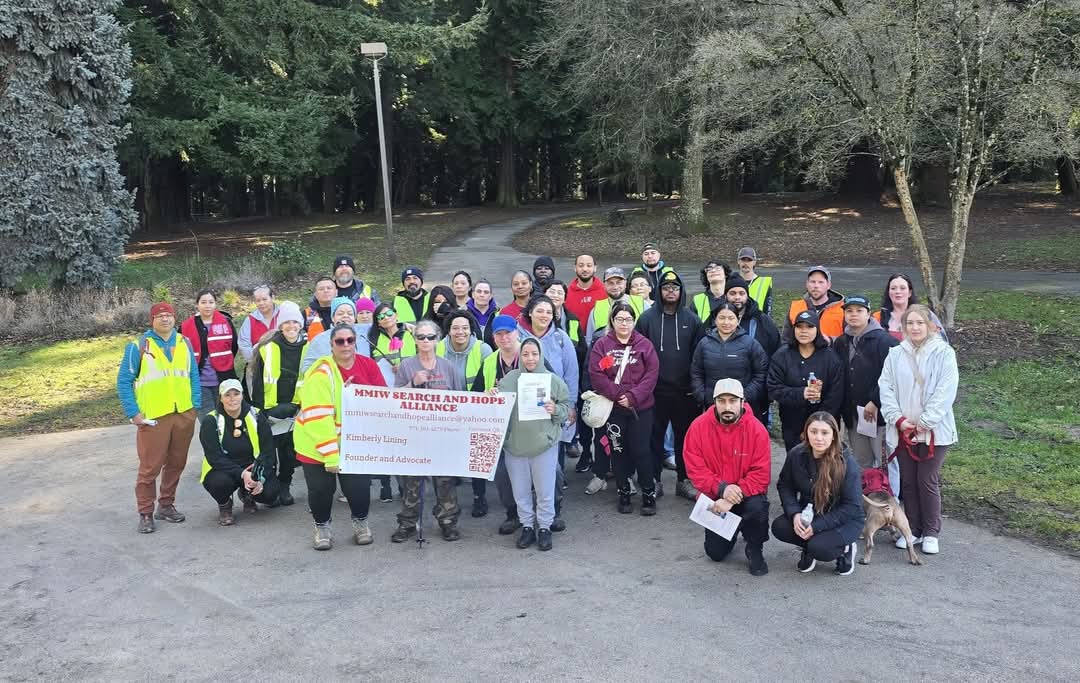
And the search training that you're going to be holding in January, can you give me an outline of what that will be?
Sure. So on the tenth of January, we're actually having a volunteer training, which will go over our mission, our goals, and what it's going to look like to do searches, because I think there's a lot of misconceptions out there. It's also asking our volunteers, “Hey, if you want to sign up with our group, just know we'll probably ask you to serve at least three times a year, whatever that looks like, whether it's an event or a search.”
We're also going to cover later January training that will be in a cadaver lab. I have a doctor at a university, he's going to let us come in and look at these cadavers, and they are embalmed so it will give our other volunteers a real idea of what we're facing when we're out there looking for remains; how to tell the difference between a human rib bone and an animal rib bone;what matter will look like. And it does touch on the side of, for lack of a better word, on the side of the goriness that you can come across.
And things that you're gonna see that you'll never be able to unsee. So it's really just kind of getting to the core of the ugly side, if that's a good word to use, of what we do.
Obviously the best outcome for any missing persons case is that they are found alive, but it is a reality that — perhaps through either malice or by accident — they have died and people come upon their body in various stages. I guess this is a way to work in the expectation that this is a possibility?
Right. And this is what it's going to look like. The bodies that we're going to be viewing are embalmed, so it won't really have all the different stages of decomp, but it's a pretty good idea of the shock value of finding a human that is not alive, and just kind of dealing with that and processing that. And it starts in a lab, and that will help them understand and process just death in general, but also what our bodies look like.
What are some of the more common misconceptions that people have when they volunteer?
I think a lot of times people don't understand how much physical activity is involved. Sometimes we'll be walking for miles and miles. Sometimes we'll be in the middle of the wilderness. Sometimes we'll be in the middle of downtown Portland with the devastation from drugs and mental health issues. I don't think people always grasp the concept of being in the trenches out there. So that's one of the main reasons I really want to do this.
So when they show up, instead of feeling like, “Oh, I'm just gonna walk down the street and hang up a few flyers,” this is what it's gonna look like. People also have a misconception that it's always going to look like true crime TV. Sometimes that is gonna happen, but most of the time it's not.
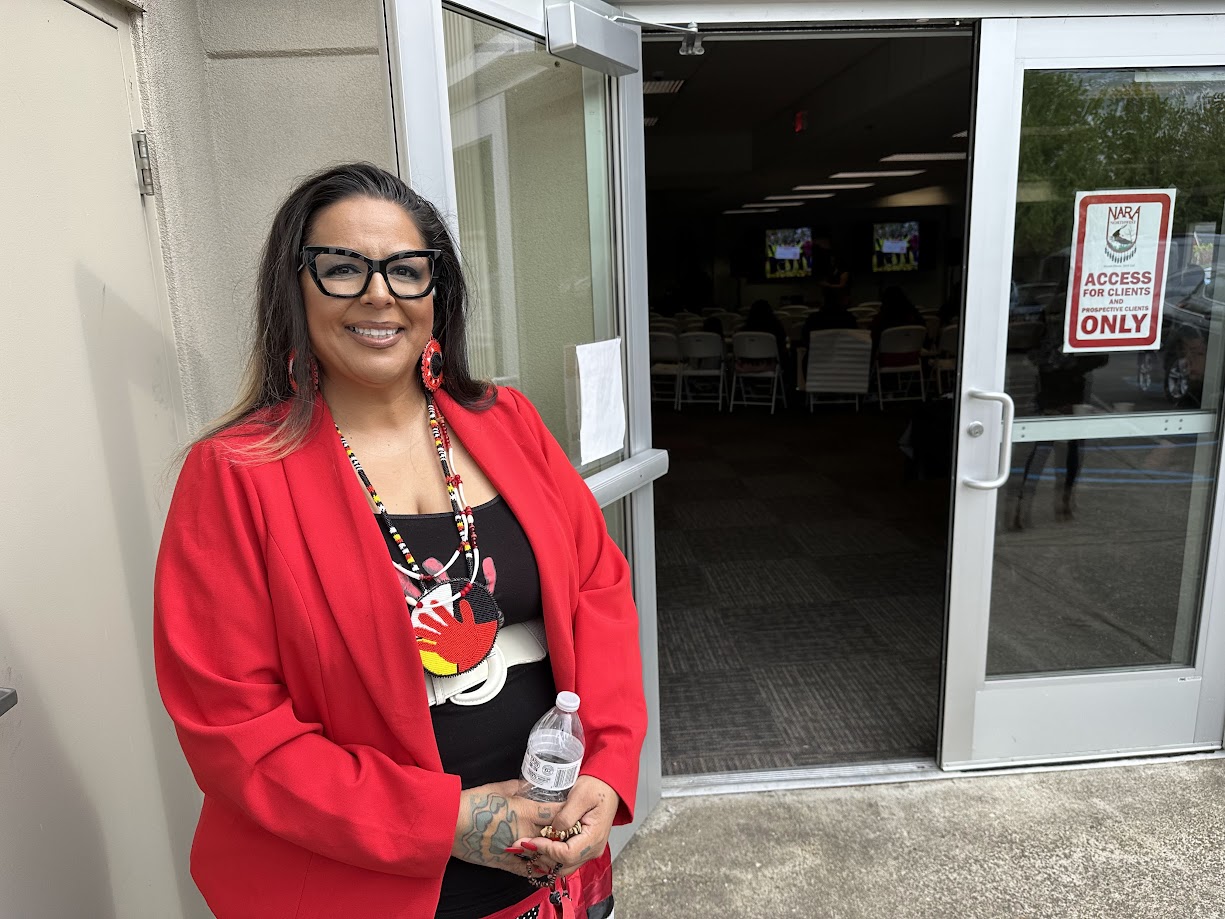
So it's just kind of breaking down stereotypes and really bringing the real world to our volunteers so that they can enter into each search with knowledge and the wisdom of saying, “Hey, this search is going to be a lot of work.”
I can hear some people saying,“Oh, that all sounds very discouraging,” but I would imagine that as a search coordinator, it's very important that your volunteers come in with these expectations and are girded for some of these unpleasant aspects of the search process so that during an actual search, there's no breakdown in people's focus and ability.
Right. And I think another common misconception is that we're consistently looking for dead bodies, and we're not. We find way more people alive than we do dead. So that's always a positive note.
Also, a misconception is that is all our organization does is searching. They miss out the part that we're also an advocacy service to give families of the murdered a voice.
We consistently are out here giving back to our community in so many positive ways. We just did a big event with Project Lemonade, where we took up donations of stuffed animals and brand-new socks, and we went in there and did a volunteer shift, and we're able to work with foster kids, kinship kids and tribal families.
We did a huge breakfast back a few months ago where we served over 350 people in the houseless community. So we're more than just going out there and searching. We're a whole 360 organization here to serve our community, wholly, fully and for free. We don't require money in exchange for our services.
You described how people can be trained and prepared for coming across a corpse. Is there training or things that you want them to be prepared for when they find a person alive? Because sometimes that person, when they're found, may not be in the best situation or the best condition, or the best frame of mind. They're alive, but they're still in trouble, so to speak.
Right. So nothing ever can really prepare you for a dead body, you know? No matter how many times I've been around death, every time for me it's still a shocking experience, and there's some sort of traumatic memory that's gonna come from that. Just kind of like our first responders have to deal with, right? It just never gets easier.
However, when we find someone alive and they're in a mental health crisis, our first inclination is to say, “Hey, come,” you know, and we don't want to do that. We approach them with a lot of love and compassion and say, “Hey, you know what? Are you hungry?” We figure out how we can connect with this person.
A lot of times they're struggling from an addiction. So we kind of look at that aspect. We offer them a resource. “Hey, do you need to get into detox? Would you like to go here? Do you want to speak to your family?” We really encourage the missing that we find to call home, call their family, and we offer to give them that resource: “You can use this phone. We can get you help.”
And in some cases, we have to call the police and say, “Hey, we found this person, and we need your assistance in helping them.”
It's the holiday season. Based on your experience, does there tend to be a trend of MMIP cases either spiking or dropping during the holiday season?
It definitely goes up during the holiday season, and there's not one reason. And the families of the missing and murdered, their devastation increases. So the need for resources, the need for sweats, the need for grief counseling increases, because they're not with their loved ones or their loved one is desperately suffering from an addiction. They just can't get through to them or their loved one has passed away. Or they're just missing without a trace.
Lastly, Kimberly, describe your perfect volunteer. If there was any one person who embodied all the right physical, emotional and intellectual characteristics, what would that person be like?
There's no perfect volunteer. But as far as search volunteers — great volunteers — what we look for is: knowledgeable about land and water, having the physical ability to be out there for a couple days at a time, being able to travel. When it comes to events and admin, we look for someone to show up and just have so much love and compassion in their heart. I mean, there is a point where we have to stand up for ourselves. But they have to deal with conflict resolution in a very professional way.
When they show up to events, to be professional and represent not just themselves but the people and the community that we're serving.
Kimberly, was there anything else you wanted to add?
I am a firm believer in that we cannot continue to just speak amongst ourselves. When it comes to our volunteer training, you do not need to be Indigenous or have tribal ties. I believe that in order for us to really raise real awareness, we have to reach to the outside communities. The Native community, the Indigenous community, we know there is a problem with missing, murdered Indigenous people. However, the outside communities who we’re trying to reach, that's where the awareness takes place. So I just really want to reach outside communities.
Editor’s note: This interview has been edited for length and clarity.
Sharing Is Caring
This article is not included in our Story Share & Care selection.
The content may only be reproduced with permission from the Indigenous Media Freedom Alliance. Please see our content sharing guidelines.
© Buffalo's Fire. All rights reserved.
We provide the independent reporting that non-Native, extractive outlets often overlook. We give our communities the context and the facts they need to make informed decisions.
Respect The Fire
At Buffalo's Fire, we value constructive dialogue that builds an informed Indian Country. To keep this space healthy, moderators will remove:
- Personal attacks, harassment, or hate speech
- Spam, misinformation, or unsolicited promotion
- Off-topic rants and excessive shouting (All Caps)
Let’s keep the fire burning with respect.