






Theodore Roosevelt Presidential Library: The irony of this celebration 'could not be sharper’
Roosevelt promoted conservation — something the Trump administration is actively working against, organizations say



President Donald Trump and U.S. Department of the Interior Secretary Doug Burgum will be in Medora, North Dakota, on Wednesday to promote the Theodore Roosevelt Presidential Library, which opens July 4.
Visitors attending the event will get to see Roosevelt’s legacy celebrated by the very people and administration dismantling it, according to several leaders of North Dakota conservation organizations.
On June 30, representatives from the North Dakota Wildlife Federation, the Dakota Resource Council and the Center for Western Priorities, along with the former superintendent of Theodore Roosevelt National Park, spoke to the press and voiced their concern about the policy changes Secretary Burgum has undertaken during Trump’s second administration.
“We think Teddy Roosevelt’s legacy is something that absolutely should be celebrated, especially in the state of North Dakota, the place where he found his conservation ethic. But we also think it demands honesty,” Scott Skokos, the executive director of the Dakota Resource Council, said.
Roosevelt’s legacy, to be cemented by the library, is more complicated than just his conservation record, however.
Theodore Roosevelt National Park sits on land that was once within the original boundaries of the Three Affiliated Tribes' 1851 Fort Laramie Treaty. As Roosevelt’s influence expanded, the MHA treaty lands continued to shrink under federal policies. The Mandan, Hidatsa and Arikara Nation is now located on the Fort Berthold Indian Reservation, near the northeast section of the national park.
As president, Roosevelt promoted policies that harmed Native people, including signing multiple Tribal Land Transfers that displaced Native communities.
“Those policies were very devastating for Indigenous peoples,” MHA citizen Loren White said in an interview with the North Dakota Monitor. “We still deal with the policies and the long-lasting effects from them on a daily basis.”
Roosevelt also often repeated racist rhetoric. “I don’t go so far as to think that the only good Indians are the dead Indians, but I believe nine out of every 10 are,” Roosevelt said during a January 1886 speech in New York. “And I shouldn’t like to inquire too closely into the case of the tenth.”
He was playing off language coined by Philip Sheridan, who became commander of the Department of the Missouri in 1883: “The only good Indian is a dead Indian.”
“The administration wants parks to look good on the surface. They want the restrooms to be cleaned, they want someone there to protect visitors. But behind the scenes, things aren’t going well.”
The leadership of the Theodore Roosevelt Presidential Library has said they are committed to confronting head-on Roosevelt’s beliefs on race and Native people, according to reporting from the North Dakota Monitor.
MHA Nation Chairman Mark Fox said Roosevelt’s descendants told him that Roosevelt’s beliefs shifted as he got older, and that he eventually disavowed statements he’d made as a younger man about Native people.
“They should not have been made, but they were, and you can’t change history,” Fox told the North Dakota Monitor. “He continued to grow as a man and as a leader, and changed his views later in life. And we assume that that’s true because that’s what his family said, and we have no reason to believe otherwise.”
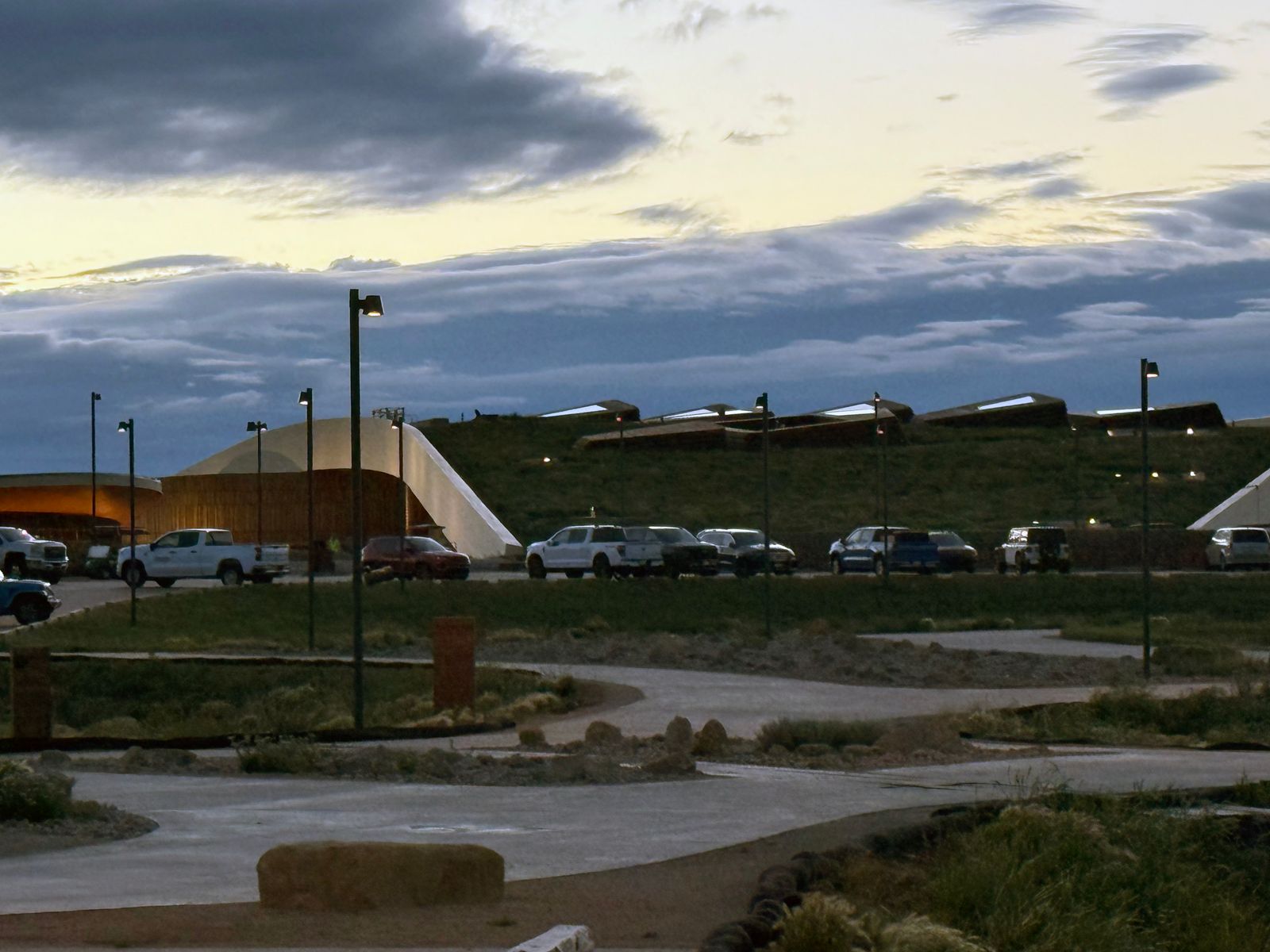
Although Roosevelt’s legacy is multifaceted, his commitment to conservation is the reason the presidential library was built in North Dakota, where hydraulic fracking has changed the landscape of the western part of the state. Conservation is a main focus of the exhibits, according to the library’s website.
Skokos commented on Burgum’s involvement with the library’s upcoming grand opening.
“Doug Burgum, our former governor, championed this library for several years while he was governor,” Skokos said. “He has spent the last year, unfortunately, in Washington, D.C., systemically dismantling the conservation legacy that Roosevelt set out and accomplished as president.”
The policies that Burgum has lobbied for include eliminating federal renewable energy development projects, such as solar and wind farms, slashing huge portions of the National Park Service budget, opening public lands for gas and oil drilling and promoting changes that would allow for the potential selling off and privatization of public lands, according to Department of the Interior memos and orders.
“Teddy Roosevelt, of course, created the Forest Service and staffed it with civil servants and scientists, replacing a corrupt, industry-driven approach to forest management,” Aaron Weiss, the executive director of The Center for Western Priorities, said. “Donald Trump has done the opposite. He’s hollowed out the Forest Service, it’s lost a quarter of its staff since he took office for the second time, and he’s handed the keys to our national forests over to the timber industry.”
Another Department of the Interior entity that lost millions of dollars in budget cuts is the National Park Service.
Valerie Naylor, who served as Theodore Roosevelt National Park’s superintendent from 2003 until her retirement in 2014, said she was concerned.
“Theodore Roosevelt said there could be no greater issue than that of conservation in this country, and he also said that the conservation of natural resources is the fundamental problem.”
“Many parks are running on 50% of their staff or less,” she said. “The administration wants parks to look good on the surface. They want the restrooms to be cleaned, they want someone there to protect visitors. But behind the scenes, things aren’t going well. Theodore Roosevelt National Park is in the middle of one of the most active oil and gas areas in the country, and it takes a lot to keep track of which potential projects could affect the park from industrial encroachment. It requires vigilance and appropriate staffing, and right now, Theodore Roosevelt National Park does not have the right people for that.”
Weiss pointed out that while Teddy Roosevelt created 230 million acres of protected public lands, including five national parks, Trump has eliminated protections for more than 86 million acres of public lands — the equivalent of 70 Grand Canyons or 38 Yellowstones.
“The irony of this celebration tomorrow could not be sharper,” Weiss said. “Donald Trump and Doug Burgum are going to cut the ribbon on a library honoring America’s first true conservation president, but Doug Burgum’s own record reads like a checklist assault on everything that Teddy Roosevelt built.”
Dave Brandt, a board member for the North Dakota Wildlife Federation, explained that he is not and never has been affiliated with any political party, and that for many hunters and anglers like himself, the issue is straightforward — conserving public lands for future generations.
“As someone who grew up and still relies very heavily on our country’s public lands to pursue my outdoor passion, given what is happening recently, I personally find the involvement of Secretary Burgum and President Trump with the dedication of the long overdue Theodore Roosevelt Presidential Library not only puzzling but extremely hypocritical,” Brandt said.
He also spoke about Roosevelt’s passion for hunting, one that Brandt shares.
“The legacy that he entrusted you and I with is the unmatched system of public lands that makes hunting and fishing and just about any other pursuit in the great outdoors possible for everyday, ordinary Americans,” Brandt said. “Well, that legacy is under threat. So it’s time for us to let our voices be heard.”
Theodore Roosevelt National Park was established in 1978 when President Jimmy Carter signed a law that established the park with the name and boundaries it has today.
Former park superintendent Naylor said that she fell in love with the park when she saw it for the first time as a teenager on a road trip with her parents.
“It’s one of my favorite places on Earth,” she said. “But I’m worried, because the park is at risk, along with really all the other national parks and monuments in the country due to the current practices of the Department of the Interior.”
“Teddy Roosevelt is the one who ended the Gilded Age, using his power to protect public lands and stop the exploitation of America’s natural resources”
Naylor pointed to Roosevelt as an example of a leader who understood the value of public lands.
“Theodore Roosevelt said there could be no greater issue than that of conservation in this country, and he also said that the conservation of natural resources is the fundamental problem,” Naylor said. “Unless we solve that problem, it will avail us little to solve all the others. But Secretary Burgum recently said that all the people who are trying to stop activity on federal lands don’t understand the financial impact of it.”
Naylor said that Burgum, when asked about the development of public lands, said he wished the world could be more financially literate so they would agree with his choices.
Roosevelt, however, who was one of the wealthiest presidents in United States history, surely understood the value of the land — both monetarily and otherwise, Naylor said.
“Wouldn’t it be great if we could have the world be a little more financially literate? Well, Theodore Roosevelt was definitely financially literate, and he’s the one that introduced the concept of conserving natural resources for future generations, something that is at the heart of the National Park Service mission today,” Naylor said. “Secretary Burgum’s view of making the most profit possible off of public lands and developing them for energy dominance is all about financial gain.”
Weiss echoed Naylor’s sentiment.
“Teddy Roosevelt is the one who ended the Gilded Age, using his power to protect public lands and stop the exploitation of America’s natural resources,” Weiss said. “Donald Trump and Doug Burgum are using their power to do the opposite.”
Brandt also pointed to Burgum’s prioritization of profit.
“Our previous governor, Secretary Burgum, is a billionaire businessman who only seems to see profit and margins on a balance sheet,” Brandt said. “Teddy seemed to like colorful words, and I believe that he would have a name for someone who views these assets as something to be monetized and sold to the highest bidder or utilized for the benefit of only a few at the cost of all the other tangible and intangible benefits that they offer Americans.”
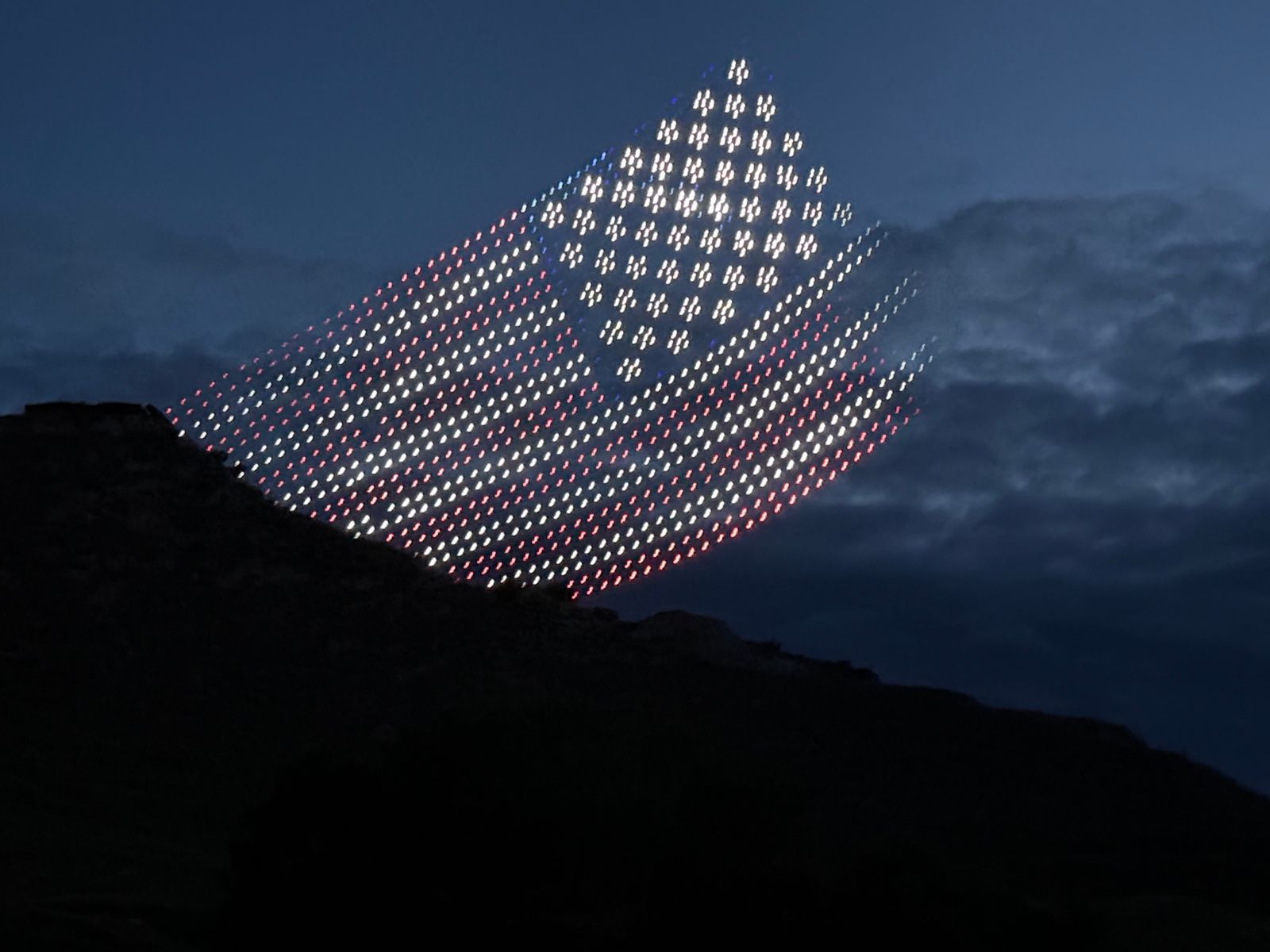
The Theodore Roosevelt Presidential Library’s opening will feature a drone light show as well as an inaugural ceremony.
Sharing Is Caring
This article is not included in our Story Share & Care selection.
The content may only be reproduced with permission from the Indigenous Media Freedom Alliance. Please see our content sharing guidelines.
© Buffalo's Fire. All rights reserved.
We provide independent Native-focused reporting that gives our communities the context and the facts they need to make informed decisions.
Respect The Fire
At Buffalo's Fire, we value constructive dialogue that builds an informed Indian Country. To keep this space healthy, moderators will remove:
- Personal attacks, harassment, or hate speech
- Spam, misinformation, or unsolicited promotion
- Off-topic rants and excessive shouting (All Caps)
Let’s keep the fire burning with respect.