





The Daily Spark
Small sparks from Indian Country, built to catch fire
North Dakota Native Vote hosts winter open house
Thursday event in Bismarck focuses on civic engagement, Indigenous voices
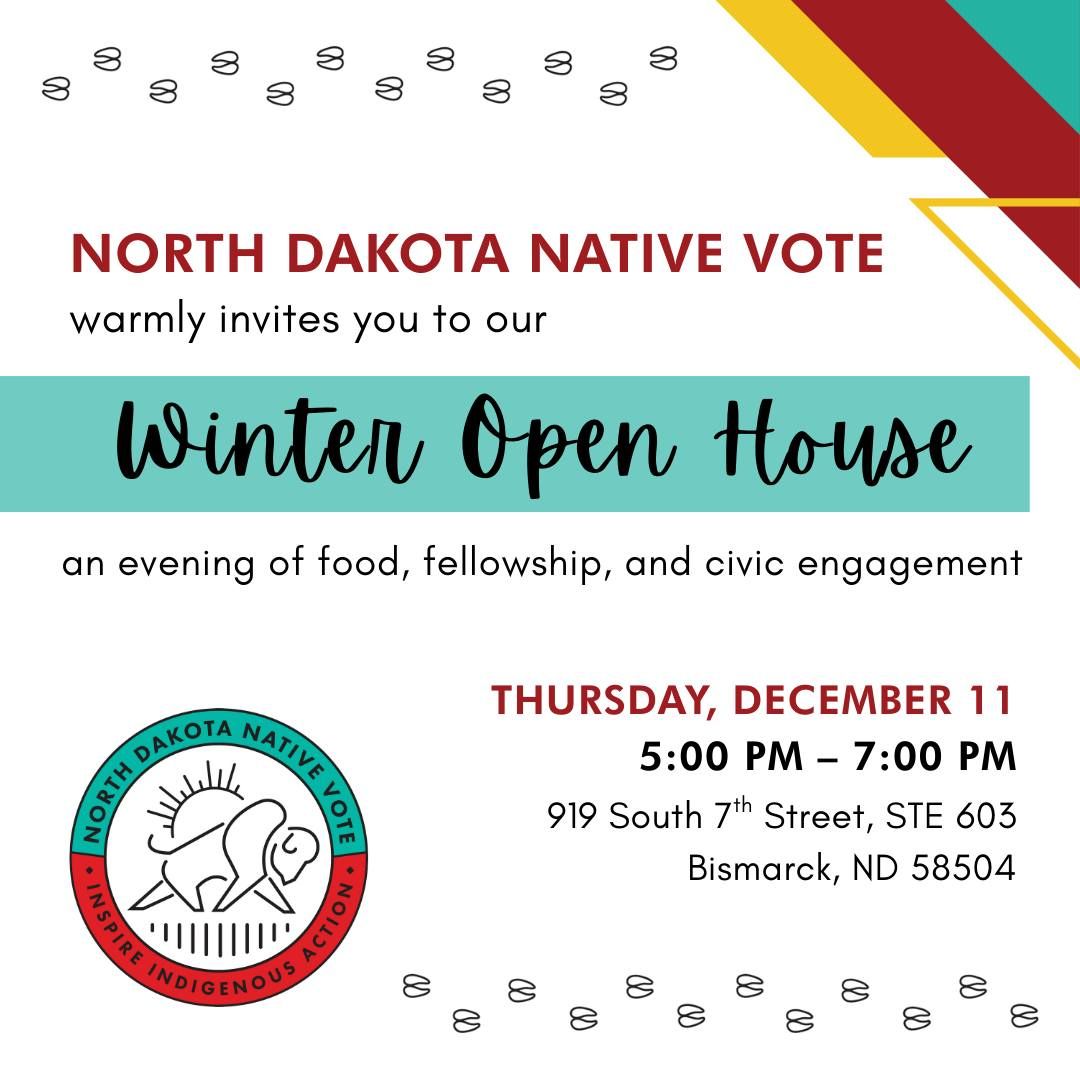
North Dakota Native Vote is holding an open house on Dec. 11. The two-hour event will offer “opportunities to connect with people who care about protecting Native voting rights, uplifting Native voices, and building community power,” according to an announcement on Facebook. Traditional foods and hot drinks will be served. The event is open to the public and takes place from 5-7 p.m. at 919 South 7th St., in Bismarck.
Alaskan Alutiiq artist wins award for traditional carvings
Jerry Laktonen receives $50,000 Rasmuson Foundation grant for bringing ‘intention and integrity’ to Alutiiq culture
Jerry Laktonen, an Alaskan Alutiiq artist, has won the Distinguished Artist Award for his traditional Alutiiq carvings. The award, which is part of the Rasmuson Foundation’s Individual Artist awards program, includes a $50,000 grant.
Laktonen has been carving since the 1940s, and his work has been featured at the Smithsonian’s National Museum of the American Indian, according to reporting by ICT.
“Jerry Laktonen brings intention and integrity to every piece he creates,” Gretchen Guess, president and Chief Executive Officer of Rasmuson Foundation, was quoted as saying. “He has worked tirelessly to ensure Alaska Native artists are recognized and respected. His commitment to authenticity has left a lasting mark on both his community and the field. Artists like Jerry Laktonen remind us that culture is not only preserved. It is lived, shared, and continually reimagined.”
Controversial language to federally recognize Lumbee Tribe placed in Congressional defense bill
The Eastern Band of Cherokee Indians slams the inclusion of the 55,000-member group in the $900 billion spending package, calling it an inappropriate vehicle for sovereignty
Congress is poised to vote on the latest national defense spending agreement soon, and this version would grant federal recognition to the Lumbee Tribe in North Carolina, The Assembly reports.
Tribal chairman and North Carolina state representative John Lowery celebrated the move, when the $900 billion bill was released Dec. 8.
“We move forward with hope and determination, standing shoulder-to-shoulder with our friends in Congress and the White House to secure final passage,” Lowery said in a Facebook post the night before.
The Lumbee have 55,000 citizens, which makes them the largest Native tribe east of the Mississippi River. They’ve been seeking full federal recognition for more than a century. Congress granted the Lumbee partial recognition in 1956, but that’s not enough to allow them to develop casinos or to make them eligible for federal dollars.
While past efforts have failed, President Trump directed the U.S. Dept. of the Interior to explore paths toward recognition after assuming office this year. Other allies include Republican U.S. Senator Thom Tillis of North Carolina, who tried last year to block recognition of the Wounded Knee Massacre Memorial and Sacred Site in South Dakota. More recently, Tillis urged U.S. Attorney General Pam Bondi to investigate the Eastern Band of Cherokee Indians’ cannabis operation in western North Carolina, where the tribe runs a casino.
The Eastern Band — which is the only one in North Carolina with full federal recognition — is against the Lumbee Fairness Act. They argue the Lumbee people descend from several tribes who mingled with white and Black settlers, and lack both a shared history and identity.
The Assembly says the Eastern Band’s principal chief, Michell Hicks, stated that his tribe was “deeply disappointed and alarmed” that Congress put Lumbee recognition in this latest defense bill.
“A national defense bill is not the appropriate place to consider federal recognition, particularly for a group that has not met the historical and legal standards required of sovereign tribal nations,” said Hicks.
The Vatican returns Indigenous artifacts, now at Canadian museum
The 62 repatriated items — including a kayak, soup ladle and ulu knife — are currently undergoing origin research in Quebec and are not yet open to public viewing
First Nations, Inuit and Métis leaders reclaimed dozens of artifacts from the Vatican on Saturday, Dec. 6, according to AP News. Pope Leo XIV gave back the 62 items after years of Indigenous leaders calling for their return. They are now at the Canadian Museum of History in Quebec but are not on display as each artifact is studied for its origin.
The returned artifacts include an Inuit kayak, soup ladle, needle casings and an ulu knife. It’s unclear how the kayak was acquired by the Vatican, Inuit Tapiriit Kanatami President Natan Obed said at an event on Tuesday where the artifacts were revealed. But, he was quoted as saying, their return is “part of reconciliation.”
DNA testing in Rapid City for relatives with missing loved ones
The Bureau of Indian Affairs will host “Voices of the Unnamed” at the Civic Center on Dec. 18–19, offering families a chance to aid identification efforts.
The Bureau of Indian Affairs’ Missing and Murdered Unit will be offering voluntary DNA testing at its event “Voices of the Unnamed.” The testing will take place on Dec. 18 and 19 in room 206 at the Civic Center, 444 N. Mount Rushmore Rd., in Rapid City, South Dakota.
Family members with missing loved ones can get their DNA tested to check against unidentified human remains. Families can request removal of their DNA at any time, and it will be destroyed.
For more information, contact BIA MMU agents Allison Morrisette and Savannah Peterson at allison.morrisette@state.sd.us and savannahj.peterson@bia.gov
Tribal college receives multimillion dollar gift
The historic funds will be used to improve physical infrastructure and expand student services on the Fort Peck Indian Reservation in Montana
A northeast Montana community college is celebrating its largest gift ever in its nearly half century history.
In a Nov. 25 press release from Craig Smith, president of Fort Peck Community College, the $11 million gift from the MacKenzie Scott Foundation was called a “momentous milestone.”
Smith said, “We are truly grateful to the MacKenzie Scott Foundation for this transformative gift, which will accelerate several projects that have been in our long-term plans for our campus.”
Smith added that the investment will strengthen FPCC’s physical infrastructure and also allow “our administration, faculty and staff to enhance services to our students and our communities across the Fort Peck Indian Reservation for generations to come.”
FPCC will mark its 50th anniversary in 2028. Its website describes the institution as a tribally controlled community college, chartered by the Tribal Executive Board of the Assiniboine and Sioux Tribes of Fort Peck Indian Reservation in 1978.
In closing, Smith said that on behalf of the FPCC board of directors, administration, faculty, staff and students, “I express the deepest gratitude to MacKenzie Scott and her Foundation for the contribution made to our institution, along with her contributions to other tribal colleges and Indian Country across the nation.”
Intertribal Agriculture Council hosts its annual conference in Las Vegas
Event highlights include trade show exhibitors and panels on environmental stewardship
Tribal leaders, farmers, ranchers and agricultural organizations are gathering in Las Vegas, Nevada, Dec. 9-11 for the Intertribal Agriculture Council Annual Conference. Speakers will share resources about topics including regenerative farming, food sovereignty, land management and agriculture financing during the three-day event held at the Virgin Hotels Las Vegas. Attendees can also connect with businesses at the conference trade show, which features exhibitors including Farm Aid, InterTribal Buffalo Council and Women in Ranching.
Registration for Tuesday is sold out. To register for Wednesday and Thursday or for more information about the event, visit the IAC conference website.
Buffalo’s Fire environment reporter, Gabrielle Nelson, is attending the conference. Contact her at gabby@buffalosfire.com to introduce yourself or to offer story tips.
Natural gas operator fined for Clean Air Act violation on Fort Berthold Reservation
Targa Badlands LLC was ordered Friday to pay a $500,000 fine and perform 500 hours of community service for a Clean Air Act violation that affected the Mandan, Hidatsa and Arikara Nation, according to North Dakota Monitor. The company pleaded guilty earlier this year in U.S. District Court in North Dakota after failing to install required hazardous air pollutant monitoring systems at the Johnson Compressor Station near Mandaree between 2018 and 2022. Combustion engines at the site produce pollutants such as benzene and formaldehyde, Assistant U.S. Attorney Jonathan O’Konek said during the plea hearing.
Judge Daniel Traynor also imposed three years probation and a $400 fee. Prosecutors said Targa self-reported and installed monitoring equipment. MHA Nation Chair Mark Fox said in a statement quoted by North Dakota Monitor that tribal leaders appreciated the community service aspect of the sentence but were disappointed by the lack of consultation.
College Fund and Pendleton open blanket design contest for tribal college students
The American Indian College Fund and Pendleton Woolen Mills are accepting submissions for the sixth annual Tribal College Blanket Design Contest, according to Daily Montanan.
Native American and Alaska Native students attending a tribal college or university may submit up to two designs by Jan. 15. The first-place winner’s design will be featured internationally and added to Pendleton’s American Indian College Fund collection. The top three winners will receive scholarships and cash prizes.
Crow Tribe considers legislation to redefine membership
Crow Tribal Chairman Frank Whiteclay has proposed legislation that would redefine tribal membership by granting all existing members 100% Crow “blood,” according to Montana Free Press.
Under current policy, members must have one-quarter Crow ancestry to enroll. Whiteclay said the change would “break a cycle of lost enrollment” and strengthen tribal identity. The tribe currently has 14,289 enrolled members, a decline of more than 300 since 2020.
Tribal Secretary Levi Black Eagle was quoted as saying the proposal, which will be discussed by the Legislature in January, aims to use “the leeway we have within that system and flex our sovereignty.” He said blood quantum limits personal choice and belonging.
Jill Doerfler, an American Indian studies professor at the University of Minnesota Duluth, said tribes using blood quantum “have an expiration date,” because the system reduces eligibility over generations.
New Mexico awards $3.2 million for outdoor recreation projects
The New Mexico Economic Development Department announced $3.2 million in grants for 18 outdoor infrastructure projects across 13 counties and three tribal communities, according to Source New Mexico.
The Trails+ Grants program will fund projects including bike parks, trail restoration and new campgrounds. The Navajo Townsite Community Development Corporation received $33,000 to build a kids’ bike pump track in McKinley County. The Zuni Youth Enrichment Project received nearly $100,000 to renovate nine trailheads and add cultural signage. Pueblo de San Ildefonso, in partnership with Rio Arriba County, received $85,534 to hire Indigenous youth to maintain trails near Fishing Lake.
According to EDD Secretary Rob Black, the projects will support 105 jobs and improve more than 700 miles of trails statewide.
States decide how tribes benefit from $50B rural health fund
The Trump administration’s $50 billion Rural Health Transformation Program excludes federally recognized tribes from applying directly for funding, leaving it to states to determine whether to include tribal priorities, according to KFF Health News.
Some states, including Idaho, Nevada and Oregon, proposed setting aside 3% to 10% of their allotments for tribes, while Washington proposed $20 million annually. Others, such as North Dakota, identified tribes as partners but declined to reserve a portion of funds.
Liz Malerba, policy director for the United South and Eastern Tribes Sovereignty Protection Fund, said federal programs work better when tribes can access funding directly. “Even in a scenario where tribal consultation is required, the quality and quantity of that tribal consultation on a state-by-state basis is all over the place,” Malerba, a citizen of the Mohegan Tribe, was quoted as saying.
According to KFF Health News, states will be notified of their federal allotments by year’s end.
Washington tribe appoints its first Tribal Conservation Law Enforcement Officer
Saturday gathering combines political organizing with community charity
The Samish Indian Nation is launching a tribal law enforcement program to protect its tribal citizens and natural resources, according to goSkagit. While other tribal law enforcement agencies work directly on reservation, Samish does not have a dedicated reservation, just trust lands spread across the region. The program’s first appointed officer, Brandon Bravo, is working with local jurisdictions, Skagit County officials and neighboring law enforcement agencies to build the Tribal Conservation Law Enforcement Program from the ground up.
Bravo is working on a 911 communication system as well as grant funding to expand the program. Samish Chairman Tom Wooten said the program is a show of tribal sovereignty and reflects the tribe’s commitment to partnering with state and local authorities.
Dem-NPL to host grand opening for new Central North Dakota office
Local leaders establish a new community hub to foster organizing and support the Bismarck Dream Center
The Bismarck/Mandan District of the North Dakota Democratic-NPL Party has announced that it will host a grand opening for its new Central North Dakota office on Dec. 7 at the Kennedy Memorial Center. The event will run from 2 to 4 p.m., with a ribbon-cutting ceremony scheduled for 3 p.m.
According to an email from Chair Bob Valeu, the new office will serve as a hub for civic engagement, organizing and community building. Families and community members are invited to attend, with refreshments provided. Guests are encouraged to bring nonperishable food items to support the Bismarck Dream Center’s mission of helping families in need. The Kennedy Memorial Center is located at 1902 East Divide, Suite 101, in Bismarck.
California Tribe regains some land lost over 170 years ago
Southern Sierra Miwuk Nation welcomes the return of ancestral grounds near Yosemite National Park
The Southern Sierra Miwuk Nation, a tribe from Central California, is regaining land lost over 170 years ago when Yosemite National Park was formed, according to reporting by The Sacramento Bee. The land is being transferred by Pacific Forest Trust, which obtained it two decades ago and began restoration practices for the land return.
“Having this significant piece of our ancestral Yosemite land back will bring our community together to celebrate tradition and provide a healing place for our children and grandchildren,” Southern Sierra Miwuk Nation’s Tribal Council Chair and elder Sandra Chapman was quoted as saying. “It will be a sanctuary for our people.”
Indigenous people are disproportionately impacted by lethal gun violence, new study reveals
Violence Policy Center report highlights alarming homicide and suicide rates, warning that underreporting masks the true scale of the crisis
A nationwide study by the Violence Policy Center finds that Indigenous communities experience high rates of gun deaths.
In 2023, Indigenous people were twice as likely as white people to die by homicide —- both gun-related and not gun-related — according to the study, which examined the most recent data from the Centers for Disease Control and Prevention and the Federal Bureau of Investigation. That year there were 553 reported gun deaths in the Indigenous community — 246 homicides and 260 suicides. Indigenous communities face overall suicide and firearm suicide rates that are the second highest in the nation, surpassed only by the white population.
Previous VPC research shows the rate of Indigenous women killed by males since 2015 is the second highest in the nation, violence that is gaining international awareness in Missing and Murdered Indigenous Women movements. Because of numerous unreported and misclassified deaths among Indigenous women and the community at large, the study warns that the real number of Indigenous people killed by guns is likely higher than reported.
Josh Sugarmann, the executive director of the Violence Policy Center, states in a press release about the study’s findings that Indigenous communities face “a continuing crisis of lethal gun violence that outside of impacted communities rarely receives the attention it demands.” He calls for advocates, organizations and policymakers to use the report to help reduce gun violence in Indigenous communities.
Tribal college students can submit blanket design to win money
Sixth annual competition offers $7,000 prize package and international distribution for winning student artist
Sitting Bull College to hold holiday market
Fort Yates event will feature traditional medicine, beadwork, and crafts from local vendors
Sitting Bull College in Fort Yates, North Dakota, will hold a holiday market Dec. 11 at the college auditorium. The market will feature traditional medicine, beadwork, baked goods and more.
Interested vendors can contact Melanie Howard at Melanie.Howard@sittingbull.edu or 701-854-8061. More information can be found on Sitting Bull College’s Facebook page.
Teachers push for inclusion of Indigenous history
"Reclaiming Native Truth" initiative seeks to combat erasure and modernize school curricula across the U.S.
Indigenous history in the U.S. didn’t start with Columbus’s “discovery” in 1492, nor the arrival of Pilgrims at Plymouth Rock in 1620.
Spectrum News 1 reports that educators are taking part in a national project called “Reclaiming Native Truth,” which aims to teach accurate and culturally sensitive history about the Native people who were in what is now the U.S. before colonization.
A Native teacher, Trish Corcoran of Rochester, New York’s Harley School, told Spectrum News 1 that there are 27 states that don't have any Native American curriculum in their schools, “but those that do, it's pretty narrow.” Corcoran —who is Tonawanda Onondowaga Seneca, Bear Clan— added that most of that curriculum is in the 1800s or earlier. “So that would give you an idea of why 87% of high school students think we're all dead.”
Organizers with "Reclaiming Native Truth" reported that nearly half of Americans say what they learned in school was inaccurate, while 72% believe it’s necessary to improve school curricula on Native American history. Many others weren’t even aware Native people still exist today.
“It's really important for everybody to know more about everyone,” Corcoran told Spectrum 1 News. “It makes us all stronger and better to be in community with one another.”
Prehistoric canoe ‘parking lot’ found in Wisconsin lake
Archaeologists and tribal preservation officers uncover a 5,000-year-old underwater network that functioned like a modern "ride-share" system
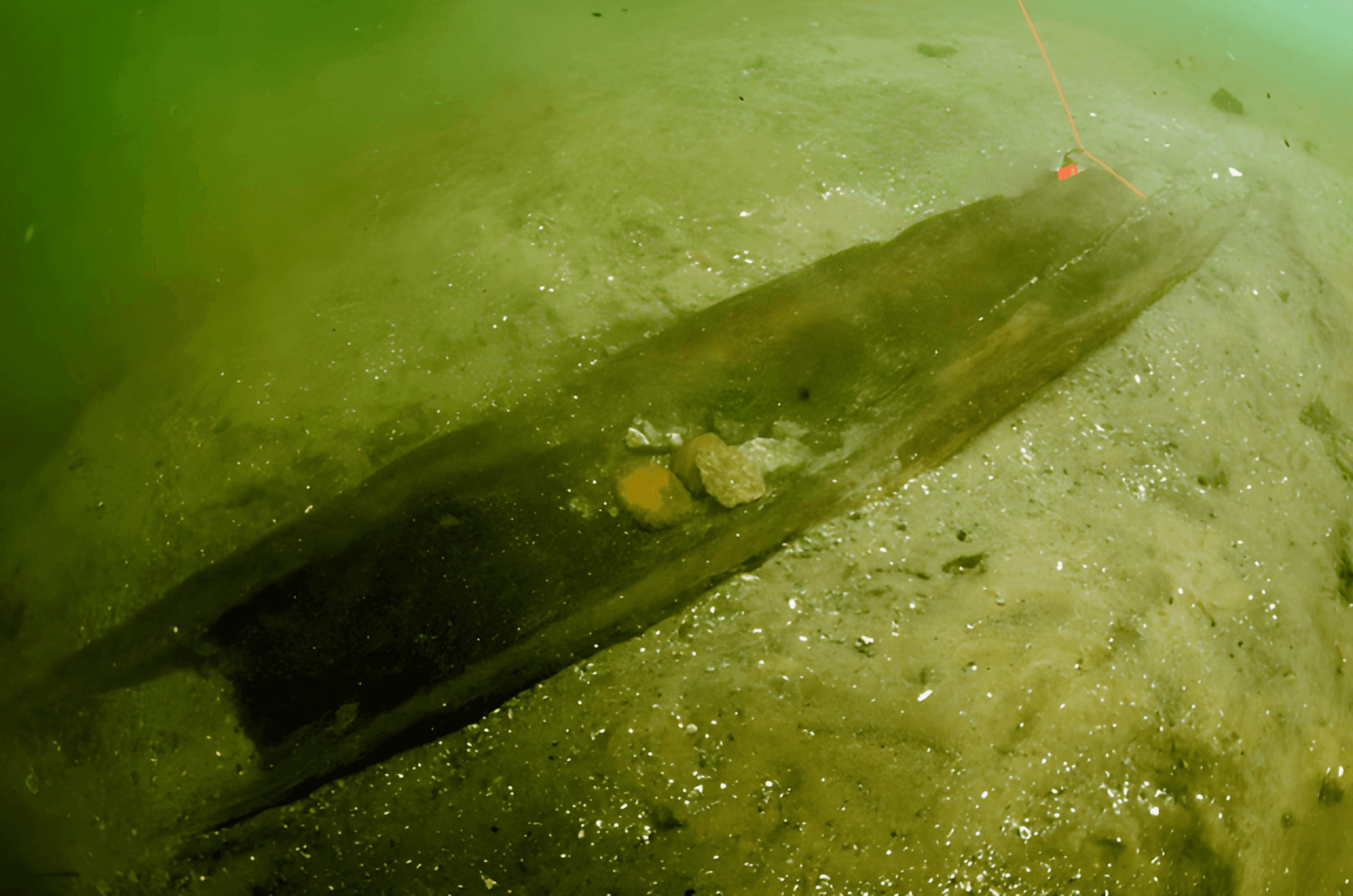
Archaeologists have found 16 canoes submerged in Lake Mendota, in Madison, Wisconsin. The Associated Press reports that they range from 1,200 to 5,200 years old and that researchers believe early Indigenous people deliberately left them near a network of trails for anyone to use as they needed, comparable to a modern bike-share service.
The Wisconsin Historical Society made the announcement. The organization’s maritime archaeologist, Tamara Thomsen, said users would usually bury canoes in sediment in waist- to chest-deep water to keep them from drying out or freezing.
The discoveries began in 2021 and were accomplished with the help of Sissel Schroeder, a UW-Madison professor who specializes in Native American culture, and preservation officers with the Ho-Chunk Nation and the Bad River Band of Lake Superior Chippewa.
It’s believed that early Indigenous travelers may have been going to Lake Wingra, a large lake on the south side of Madison, Amy Rosebrough, the state archaeologist, said in a Wisconsin Historical Society release. Rosebrough added that the Madison area is part of the Ho-Chunk Nation’s ancestral homeland, and one of the springs that feeds into it was believed to be a portal to the spirit world.
AP reported that the Ho-Chunk’s tribal preservation officer, Bill Quackenbush, said in a news release, “The canoes remind us how long our people have lived in this region and how deeply connected we remain to these waters and lands.”