






The Daily Spark
Small sparks from Indian Country, built to catch fire
Ohio State's new policy restricts land acknowledgments
University policy draws criticism from American Indian Studies faculty
Faculty at Ohio State University can no longer make land acknowledgments unless they are directly tied to course subject matter, according to a new policy from the Office of University Compliance and Integrity. The change is one of several adopted in response to a state law passed in March that eliminates diversity, equity and inclusion offices at public universities, Inside Higher Ed reported.
The policy states that acknowledgments are “considered statements on behalf of an issue or cause” and cannot be used at university-sponsored events, in syllabi, on websites or through other official channels. Ohio State spokesperson Ben Johnson told Inside Higher Ed the policy “does not categorically prohibit land acknowledgements” and that faculty “retain their academic freedom” when relevant to class content. Faculty in the American Indian Studies program and members of the Ohio State AAUP have criticized the restrictions and sought clarification.
UTTC Tribal Summit: Providing culturally relevant programs to Native people in Urban areas
Native Inc. provides human trafficking prevention services, raises MMIP awareness, and more
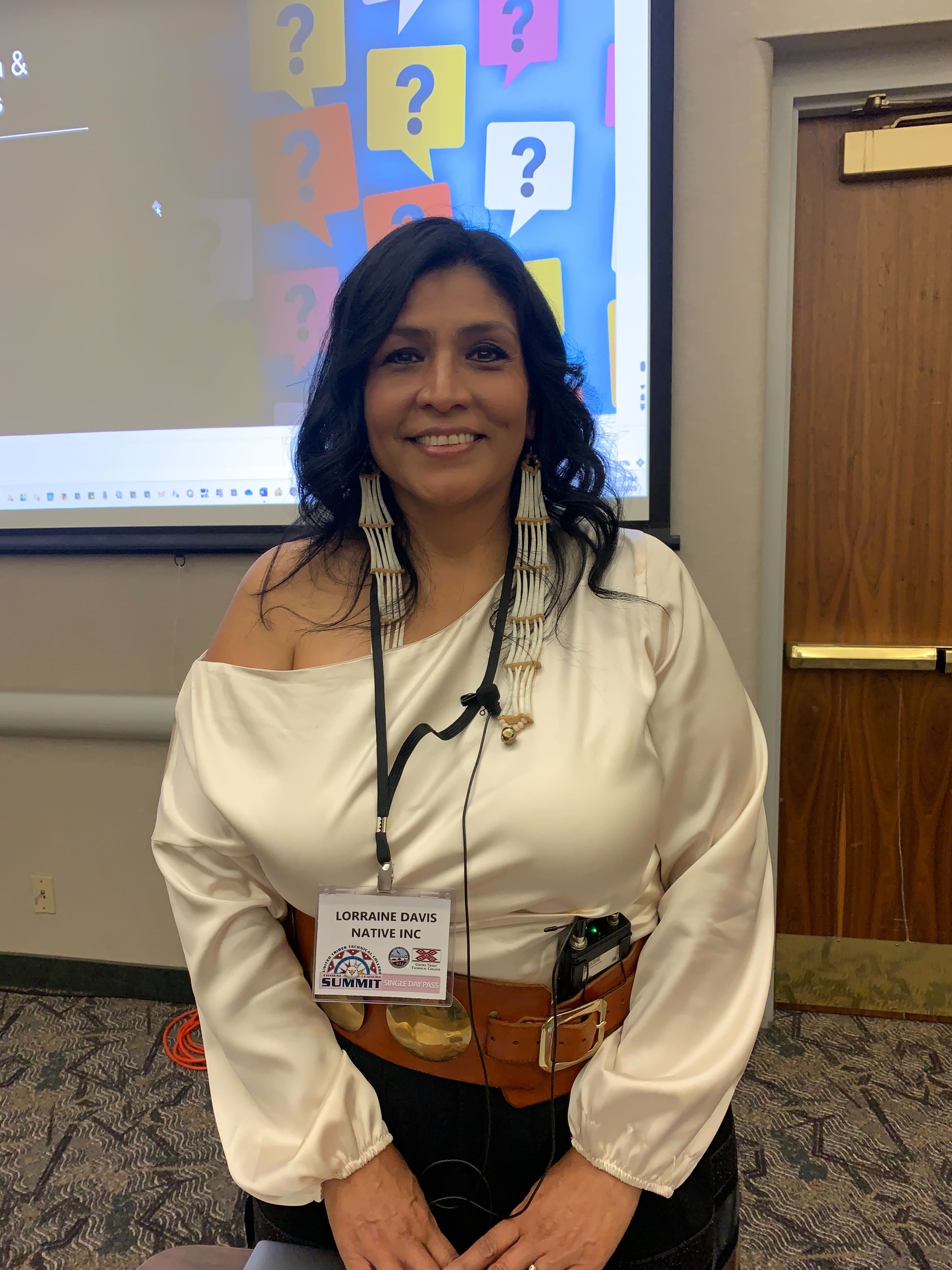
Culturally sensitive programs and services are crucial for urban Indians, Lorraine Davis told attendees at her UTTC Tribal Leaders Summit panel Sept. 3.
“I saw there was a lack of help for Native Americans,” said Davis, founder and CEO of Native Inc. and Native American Development Center. “What I wanted was tribal people helping tribal people.”
Native Inc. provides programs for domestic violence survivors, homelessness, youth services, cultural events and more. The organizations have offices in Bismarck and Fargo but will open a new office in Grand Forks this winter.
Davis aims to inspire: “We all have a fighting spirit within us.”
Tribal health data team works to prevent disease in Native communities
The Great Plains Tribal Health informatics team offers a case management system to tribes
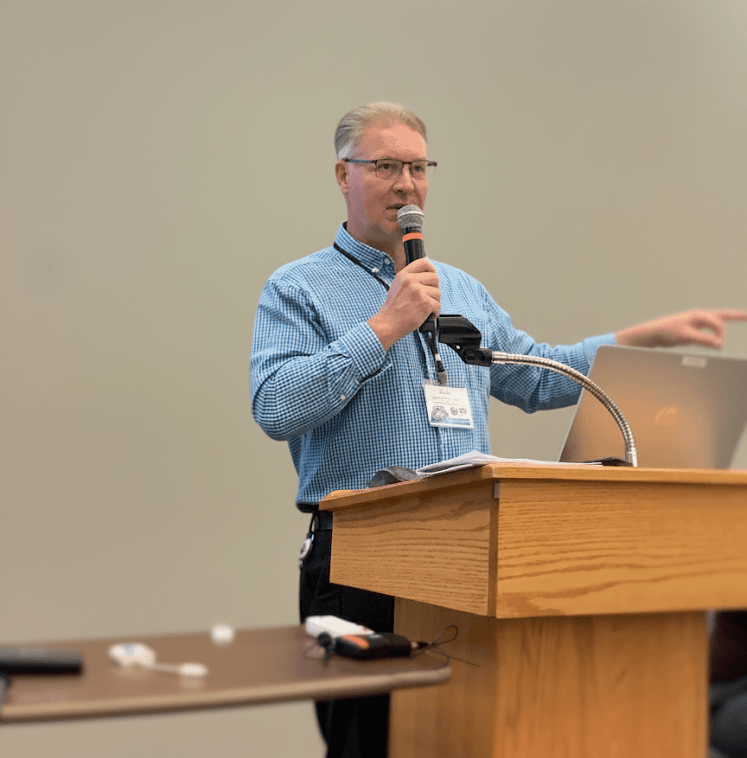
This marks the third year the Great Plains Tribal Leaders Health Board’s informatics team has been building data infrastructure for disease intervention and prevention in Native communities.
Nick Hill, the team’s senior informatics director, and his colleague Stephan Pingel, informatics specialist, spoke at the UTTC Tribal Leaders Summit Sept. 4 in Bismarck, North Dakota.
“We want to solve problems, not just talk theory,” Hill said.
The team tracks, stores, secures, accesses and exchanges data among tribes to prevent the spread of disease and manage exposures amid outbreaks.
A real-time dashboard, called the Great Plains Tribal Leaders Health Board, is accessible to the public to view and enter information.
UTTC Tribal Leaders Summit: Afternoon session focuses on Indigenous health research
Panelist emphasizes need to share data with Native communities
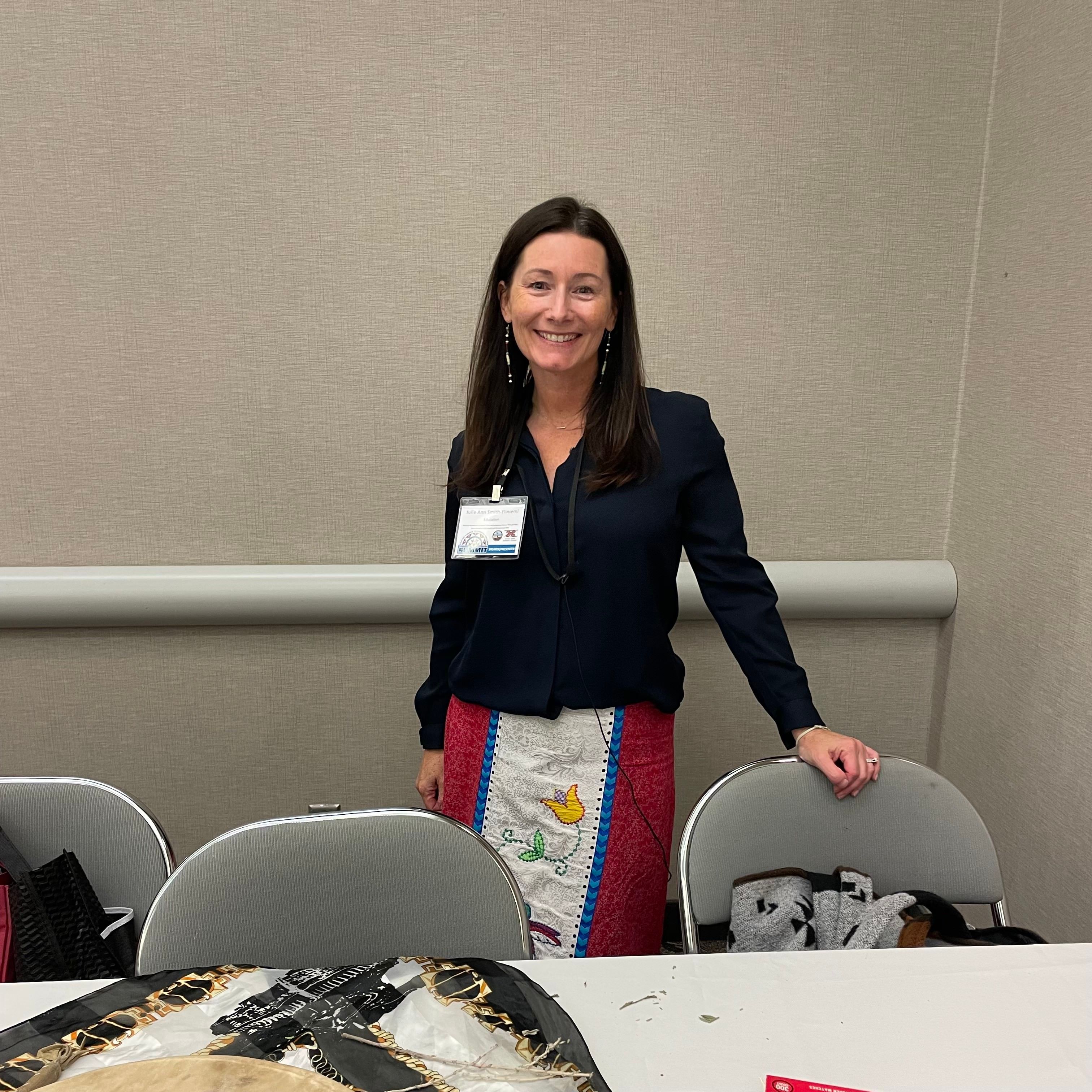
A “helicopter researcher” gathers information and conducts studies about Indigenous communities but then never shares that research with those communities, Julie Smith-Yliniemi, citizen of the White Earth Reservation, said Thursday at the UTTC Tribal Leaders Summit in Bismarck, North Dakota. The University of North Dakota Indigenous Trauma & Resilience Research Center does the opposite, she said: It conducts “community-based participatory research” that engages directly with Indigenous communities and uses their feedback to improve its studies. Smith-Yliniemi, director of community-engaged research for the center, shared that work during the afternoon panel “Braiding Knowledge Systems.” “We need to make sure that data is relevant to the community,” she said, highlighting the need to come together with Indigenous communities to conduct and disseminate research. Responding to a community need, Smith-Yliniemi is currently researching how sobriety is affected when people regularly engage in “culture camps,” weekly meetings where Indigenous community members craft together. Along with taking feedback from participants, community members also sit on the research team. Smith-Yliniemi ended the panel by encouraging students and attendees to learn from each other.
UTTC Tribal Leader Summit: ‘Protect Our People’ session warns about highly infectious measles
Health professionals urge tribal leaders to encourage vaccinations
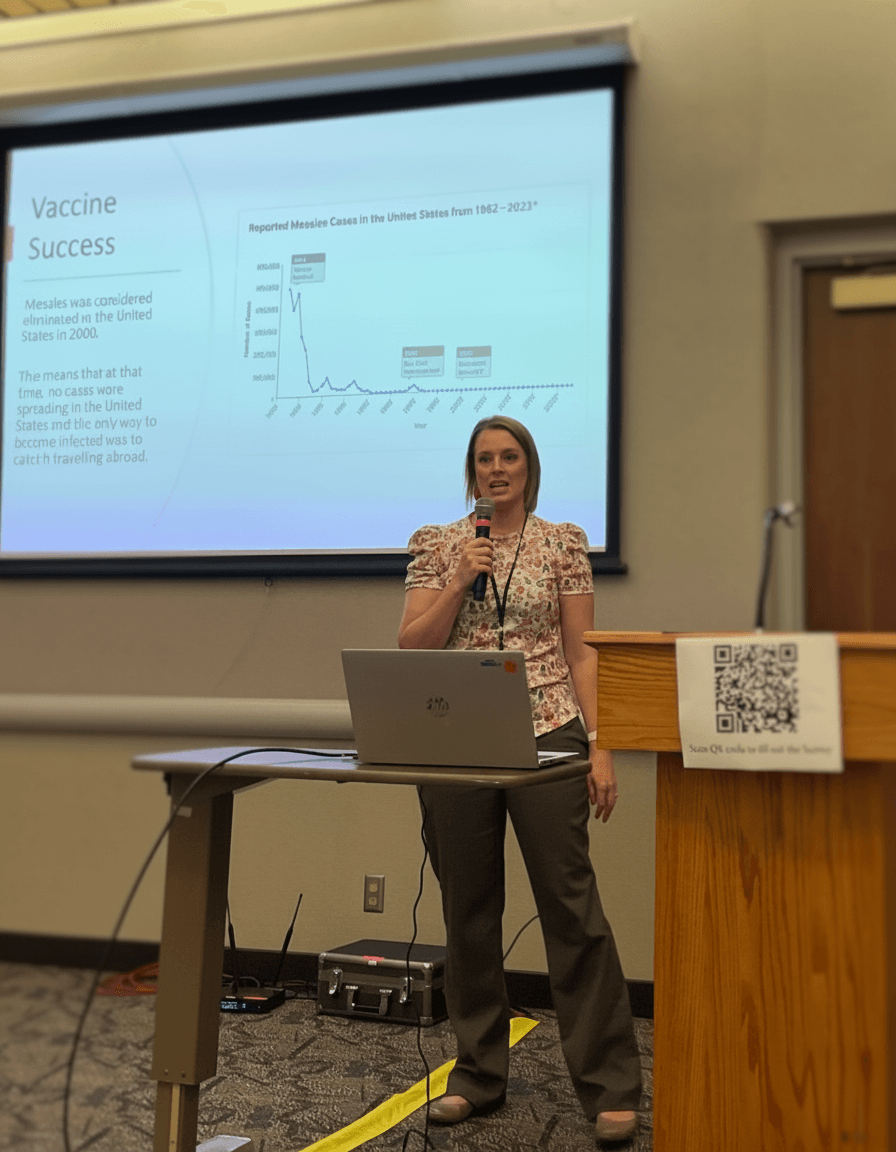
U.S. measles cases have surged to the highest level in 33 years. According to the CDC, 1,431 cases have been reported this year. That’s why health specialists from the Great Plains Tribal Leaders Health Board spoke at the UTTC Tribal Leaders Summit about the importance of vaccinations.
Measles is a highly contagious airborne virus. Sarah Shewbrooks, data coordinating unit director and lead epidemiologist on the board, said that one out of five people who contract measles will be hospitalized. The virus is especially dangerous for children — one out of 20 with measles will get pneumonia, a leading cause of child death.
There’s no cure, but the measles vaccine is 93% effective after one dose and 97% after two.
“You don’t get vaccines better than this,” said Shewbrooks.
Tinka Duran, citizen of the Rosebud Sioux Tribe and senior director of the Great Plains Tribal Epidemiology Center, acknowledged tribal communities’ long history of distrust in vaccinations and Western medicine, which contributes to lower vaccination rates on reservations.
That’s why it’s important for tribal communities to hear about the importance of vaccinations from people they trust, said Shewbrooks.
“This isn’t going to come from me,” said Shewbrooks as she lifted her lanyard identifying her as a health specialist. “It’s got to come from tribal leaders.”
UTTC Tribal Summit: State and tribal collaboration in materials research
University of North Dakota professor encourages partnerships with UTTC
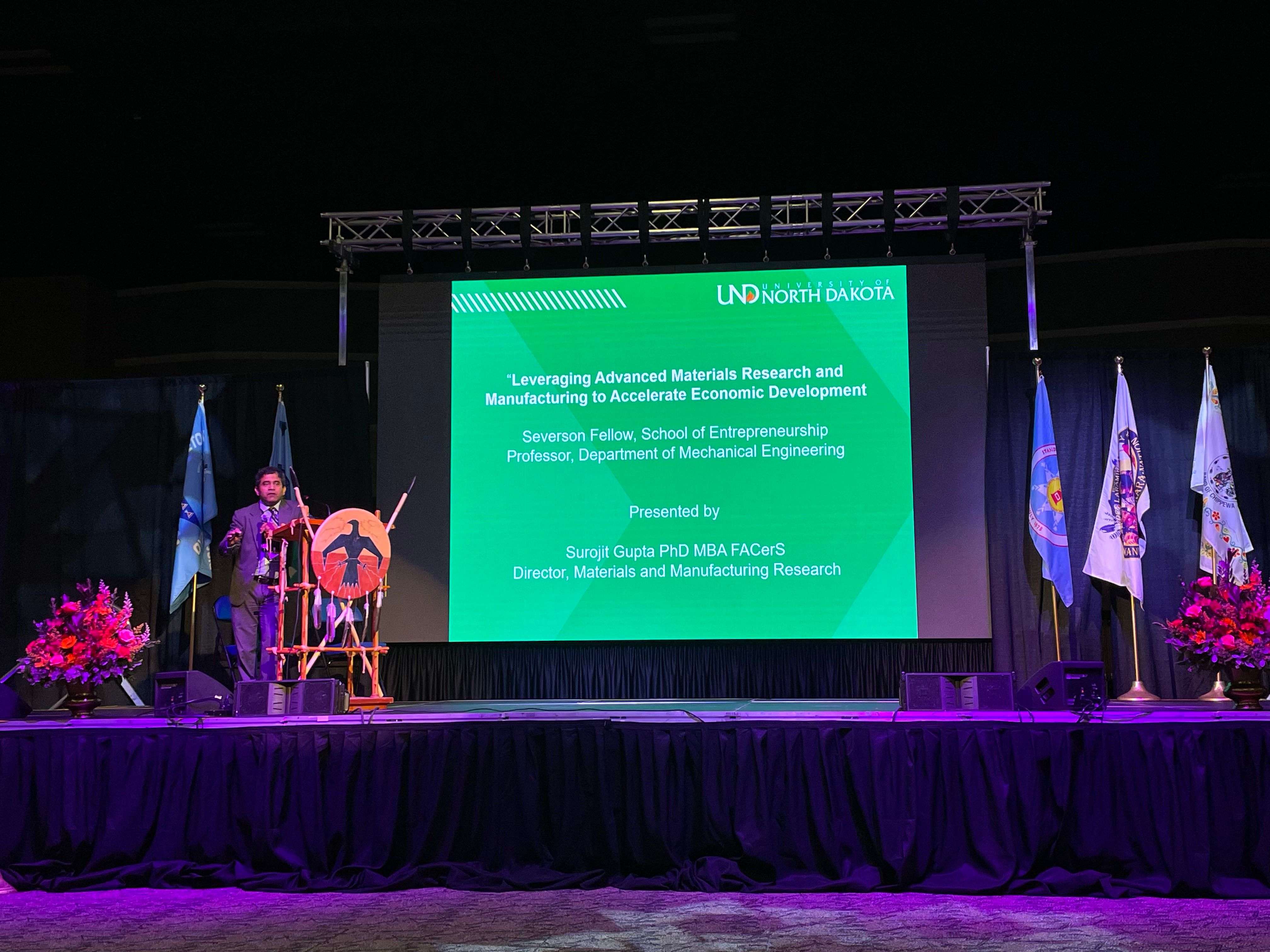
Collaboration is coming up as a consistent theme at this year’s UTTC Tribal Summit in Bismarck, North Dakota. During an afternoon panel, Surojit Gupta, mechanical engineering professor, spoke to students and faculty about the University of North Dakota’s research projects and their partnership with UTTC. “We want to work with the entire state to develop new technologies,” said Gupta. Gupta and the researchers at University of North Dakota are developing materials critical for renewable energy technologies and for worsening weather events — stronger ceramic, foam to clean up oil spills, and cement and plastic made out of soybeans. Gupta’s lab also partners with the engineering program at UTTC for its ASPIRE summer camp and a new research class. Alexa Azure, a citizen of Standing Rock Sioux Nation and the engineering department chair at UTTC, said the University of North Dakota’s partnership with UTTC provides, “opportunities for collaboration to develop solutions that impact tribal, state and global technologies.” Buffalo’s Fire is covering the UTTC Tribal Summit and International Powwow live all week.
BIA Missing and Murdered Unit assists in MMIP searches and solve cold cases
New technology expands the toolbox
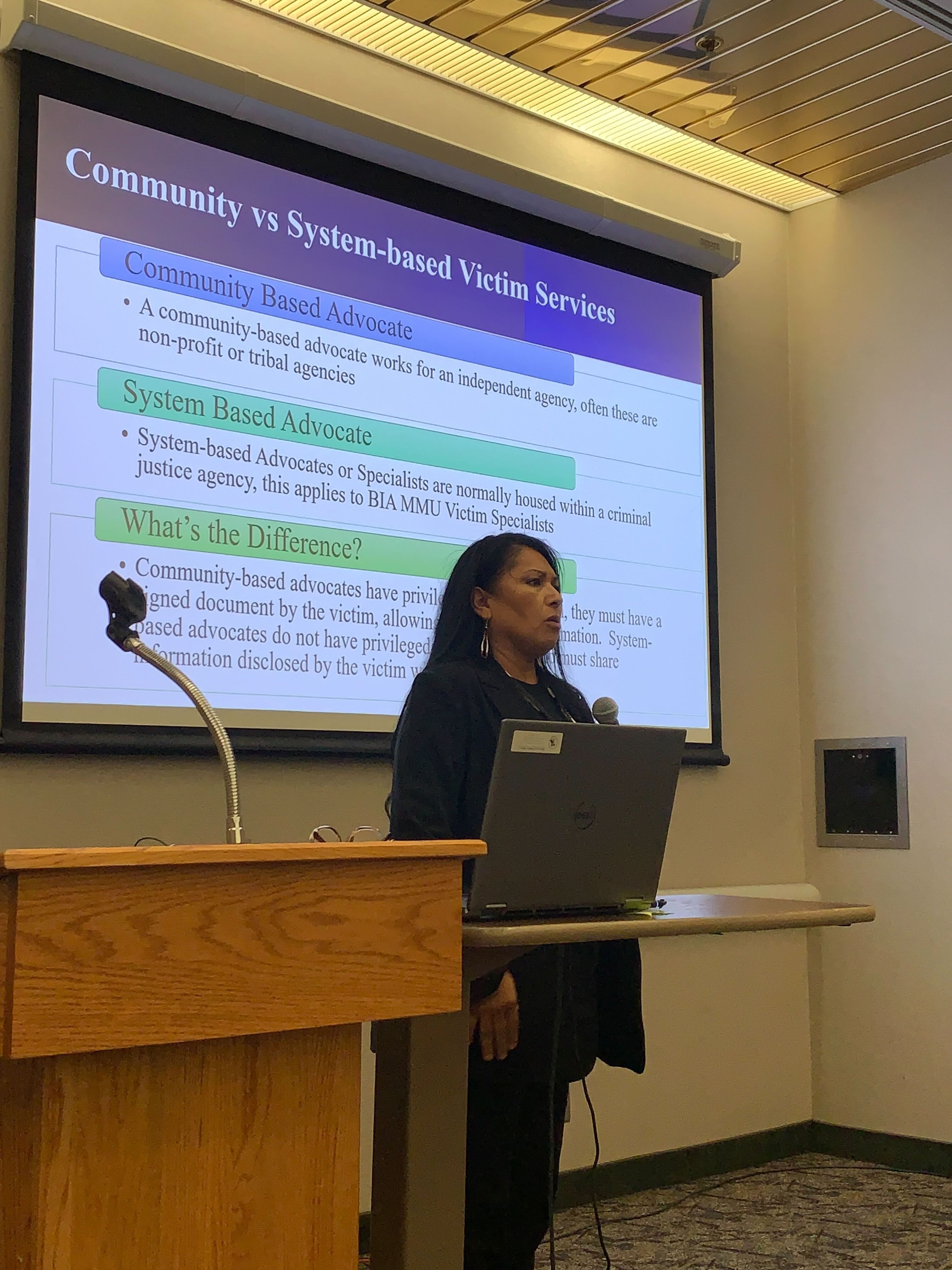
The Bureau of Indian Affairs Missing and Murdered Unit now has high-tech tools to bring closure to cold cases in addition to victim services, rewards and other resources. An underwater drone assists with searches in the water. Ground-penetrating radar locates remains at potential burial sites by using radio waves to generate coordinates. The technology can detect remains as small as a partial fingernail, shared Missing and Murdered Unit Victim Specialist Bobbie Olauson and her team at the UTTC Tribal Summit Wednesday in Bismarck, North Dakota. The FBI also assists with investigations and supports tribal law enforcement. “Families need more than updates,” said Olauson. “They need to feel seen and heard.” The unit accepts tips on cases or cases can be reported at 1-833-560-2065.
UTTC Tribal Summit: Working together to secure energy sovereignty
Tribes pivot after billions of dollars in federal grants are canceled for energy development
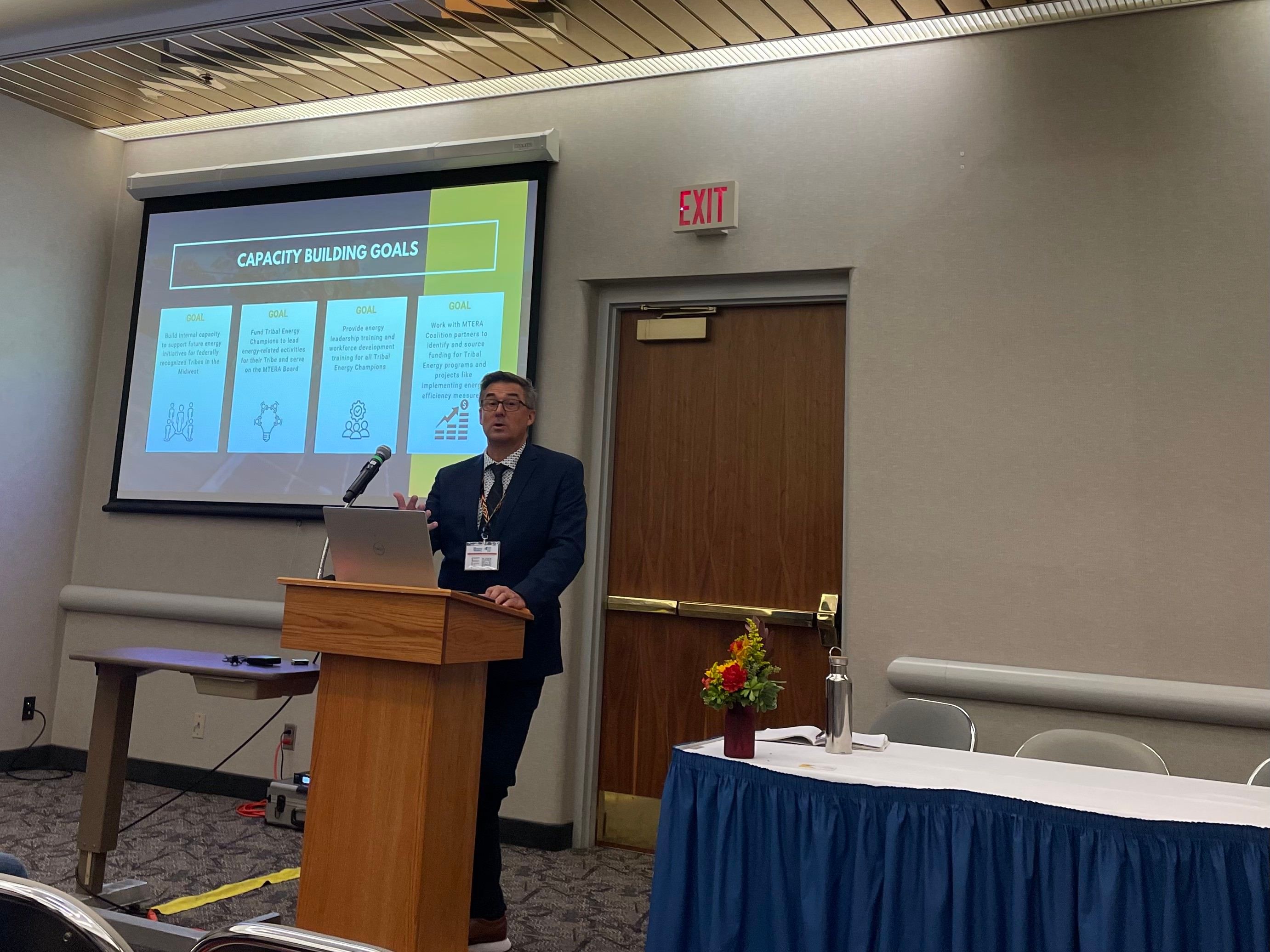
At the 20th annual UTTC Tribal Summit, tribal leaders, presenters and attendees are talking about energy. After Mandan, Hidatsa and Arikara Chairman Mark Fox focused his remarks on energy at the opening session, the Midwest Tribal Energy Resource Association kicked off the energy discussion during the first series of panel discussions.
MTERA director of policy and advocacy Andy Bessler said tribes need to work together now more than ever to achieve energy sovereignty. He said MTERA and the 33 tribes in Michigan, Minnesota, Wisconsin and Illinois that it partners with are pivoting with their energy development plans after the U.S. Environmental Protection Agency canceled roughly $7 billion in grants nationwide this year.
MTERA lost $60 million in federal funding, and Indigenized Energy, a tribal energy coalition like MTERA that works with North Dakota and South Dakota tribes, lost $136 million, according to Bessler.
Many tribes were counting on the grant money to develop energy plans, train staff, hire contractors and implement energy projects. Without that money, tribes must generate revenue elsewhere, whether that’s securing funding through state partnerships or through private ventures.
“Tribes helping tribes is a key strategy we’ll have to use right now,” said Bessler. “Let’s just help each other get through this.”
Buffalo’s Fire is covering the UTTC Tribal Summit and International Powwow live all week.
Tribes renew push for return of Wind River lands
The Eastern Shoshone and Northern Arapaho tribes are urging the federal government to return tens of thousands of acres within the Wind River Indian Reservation, according to WyoFile. In a July 15 letter to Interior Secretary Doug Burgum, the Eastern Shoshone Business Council wrote, “It has been the Wind River Tribes’ view for eighty years that these lands, which were part of the 1868 Treaty, should be returned to the Eastern Shoshone and Northern Arapaho Tribes as part of the Wind River Indian Reservation.”
The tribes are seeking to reacquire roughly 69,000 acres identified as “excess” by the Bureau of Reclamation, according to agency officials. Bureau of Land Management staff are reviewing updated legal descriptions of the property, with a public comment period expected after environmental assessments are published this winter, BLM-Wyoming Senior Advisor Brad Purdy said.
Medicaid cuts threaten tribal clinics in Oregon
The Ko-Kwel Wellness Centers in Coos Bay and Eugene, operated by the Coquille Indian Tribe, are preparing for possible service interruptions as Medicaid cuts loom, according to Underscore Native News. About 30% of Native people younger than 65 are enrolled in Medicaid, which accounted for nearly two-thirds of third-party revenue for the Indian Health Service system of care in 2023, according to the National Indian Health Board.
Caryn Mickelson, CEO of the Coquille Indian Tribe’s Health and Wellness Division, said the cuts could impact the wider community. “Even if the tribe is not directly impacted by any type of federal funding or state funding adjustments, if our community health system is affected, that reduces access for our tribal clients as well,” Mickelson was quoted as saying. Coquille Chairwoman Brenda Meade added, “We as tribal nations are serving some of the most vulnerable populations in our nation. We’re doing very good work.”
Tribal leaders, citizens gather in Bismarck
Buffalo’s Fire plans full week of coverage
The 2025 United Tribes Technical College Tribal Leaders Summit is getting underway in Bismarck, North Dakota, with the opening plenary session on Wednesday morning, Sept. 3, in partnership with Great Plains Tribal Leaders’ Health Board.
Two days of panel discussions, interactive workshops and networking opportunities aim to promote cultural exchange and foster collective progress on healthcare, education, culture, economic development and more. Cody Two Bears, founder of Indigenized Energy, anchors the program with his keynote on Thursday. Learn more.
This big week gets even bigger Friday with the kickoff of the UTTC International Powwow, among the largest powwows in the country. Thousands are traveling to Bismarck for the array of dance contests, memorials and vendors offering Indigenous food, art and resources. On Friday and Saturday evenings, the International Powwow will welcome TaikoArts Midwest to share their dynamic performance of drumming, dance, martial arts and athletics. Learn more.
Buffalo’s Fire will be on-site covering the conference and the powwow live with regular Daily Sparks and news stories.
Oscar-nominated actor Graham Greene dies at 73
First Nations actor Graham Greene died Monday in a Toronto hospital after a long illness, according to ICT. He was 73.
Greene, Oneida, was born in Ohsweken on the Six Nations Reserve in Ontario. He earned an Academy Award nomination for best supporting actor in “Dances with Wolves” and appeared in films including “Wind River,” “Maverick” and “The Green Mile.” His television credits included “Reservation Dogs,” “Northern Exposure,” “Tulsa King,” “Wolf Lake” and “Echo.” He also won a Grammy in 2000 for best spoken word album for children, and in 2021 received a star on Canada’s Walk of Fame, according to Variety.
“He was a great man of morals, ethics and character, and will be eternally missed,” his agent Michael Greene said in a statement to Deadline. Greene is survived by his wife, Hilary Blackmore, and daughter, Lilly Lazare-Greene.
NDN Collective announces restructuring, layoffs amid shifting landscape
NDN Collective announced major organizational changes in response to what it described as an “unstable economic and political environment.” According to NDN Collective, the shifts include layoffs and reductions or eliminations of certain programs.
“Over the last seven years, NDN Collective has resourced an incredible network of Indigenous leaders, organizations, Nations, and businesses through our central lens of Defend, Develop, Decolonize,” the group said. “We recognize now that it is time to pivot our strategies to respond to the time we are in.”
According to NDN Collective, the decision to restructure was “heartbreaking,” noting that laid-off employees “are our relatives.” The organization said it remains committed to advancing the LANDBACK movement and building Indigenous power.
Pueblo leader says USDA cuts will increase reliance on ‘commodities’
Recent federal cuts to food programs will force more tribal members in New Mexico to rely on the Food Distribution Program on Indian Reservations, often called “commodities,” according to James Mountain, chairman of the All Pueblo Council of Governors. Mountain spoke Thursday to an interim New Mexico legislative committee, Source NM reported.
The U.S. Department of Agriculture recently ended its Local Food Purchase Assistance Cooperative Agreement program, which had allocated more than $5.7 million to the Navajo Nation and Zuni Pueblo. Congress also reduced funding for the Supplemental Nutrition Assistance Program. Mountain said the commodities program, which has existed since the 1970s, serves many low-income households but operates on a flat budget. “We will see an influx of those participants migrating back into the Food Distribution Program,” Mountain said. “And our question to USDA, to President Trump and the administration and to lawmakers, is, how are we going to fund this?”
Federal government settles $18M case over abusive IHS doctor
The federal government finalized an $18 million settlement with 12 people abused by former Indian Health Service physician Dr. Stanley Patrick Weber in Montana and South Dakota, according to Montana Free Press. Weber worked on the Blackfeet Reservation from 1992 to 1995 and at Pine Ridge from 1995 to 2016. He was convicted in 2018 and 2019 of abusing Native boys and is serving multiple life sentences in federal prison.
A 2020 independent report found that several IHS leaders were aware of Weber’s behavior but failed to act. Blackfeet Tribal Councilmember Lyle Rutherford said the consequences of the abuse remain in the community, with some survivors facing mental health challenges and a loss of trust in IHS. “This whole Weber issue is still here,” Rutherford said. “I have constituents who are still worried for their children being serviced by IHS.”
Rounds says tribal radio grant program to launch in October
Native American radio stations will begin receiving $9.4 million in federal stopgap funding by October, U.S. Sen. Mike Rounds said Thursday during a Greater Sioux Falls Chamber of Commerce event, according to South Dakota Searchlight. The money comes from a handshake deal Rounds made with the Trump administration after Congress canceled $1.1 billion in public broadcasting funds in July. The funding will be administered through the Bureau of Indian Affairs’ Office of Indigenous Connectivity and Technology, Rounds’ staff said.
An Interior Department spokesperson said the department will coordinate with tribes and stations before distributing the funds among 37 broadcasters. Four South Dakota stations received a combined $820,760 in 2024, including KDKO in Lake Andes, KLND in McLaughlin, KILI in Porcupine and KOYA in Rosebud. Rounds said the temporary funding will keep stations operating while lawmakers seek a permanent source of support.
Minnesotans mourn children killed in Annunciation Church shooting
Hundreds of Minnesotans gathered Wednesday night to mourn the deaths of two children and injuries to more than a dozen others after a shooting at Annunciation Church in south Minneapolis, according to the Minnesota Reformer. The vigil was held at the Academy of the Holy Angels in Richfield, where Bernard Hebda, archbishop of the Archdiocese of St. Paul and Minneapolis, led mourners in prayer. Gov. Tim Walz, Sen. Amy Klobuchar and Attorney General Keith Ellison were in attendance.
Michael Thomas, a member of the Mille Lacs Band of Ojibwe, said his 14-year-old son was present during the Mass disrupted by the shooter but was unharmed. Thomas said his son remains shaken because his best friend was among those shot and is hospitalized. “I’d rather send them to a place where I know they’ll be safe at, but as of today that’s changed,” Thomas said.
Maine gubernatorial candidates back Wabanaki sovereignty
Seven of the 16 candidates running for Maine governor in 2026 have pledged to support full sovereignty for the Wabanaki Nations, according to Maine Morning Star. Democrat Troy Jackson, former Maine Senate president, said he would submit legislation on day one to restore tribal sovereignty. Other Democrats, including Hannah Pingree and Secretary of State Shenna Bellows, and independent Rick Bennett also voiced support.
Some candidates, like Democrat Kenneth Pinet and Republican Kenneth Capron, expressed backing for tribal sovereignty without detailing legislation. Candidates including Jason Cherry support self-determination with caveats, while Republican James Libby opposed full sovereignty. The Wabanaki Nations — Houlton Band of Maliseet, Mi’kmaq Nation, Passamaquoddy Tribe and Penobscot Nation — remain limited under a 1980 land settlement that treats them similarly to municipalities, the report said.
Tribes lose $260M in canceled solar energy grants
The Trump administration canceled nearly $7 billion in Solar for All grants earlier this month, including $260 million awarded for projects in tribal and rural communities in and around South Dakota, according to South Dakota Searchlight. The Environmental Protection Agency said the funding source was eliminated in the One Big Beautiful Bill Act signed into law by President Trump.
Indigenized Energy was managing $135.6 million awarded to the Northern Plains Tribal Coalition, which includes 14 tribes across five states. Founder and Executive Director Cody Two Bears, a member of the Standing Rock Sioux Tribe, said the cancellation is “another broken promise to Native tribes.” Indigenized Energy had planned thousands of projects, hired 20 people and expected to bring on 70 more, but staff were laid off after the cuts. Two Bears said the group is seeking alternative funding to continue the work.