






United Tribes Technical College Tribal Leaders Summit opens with unity and strength
Standing Rock Sioux Tribal Chairwoman Janet Alkire tells crowd, ‘We’re going to rely on each other’

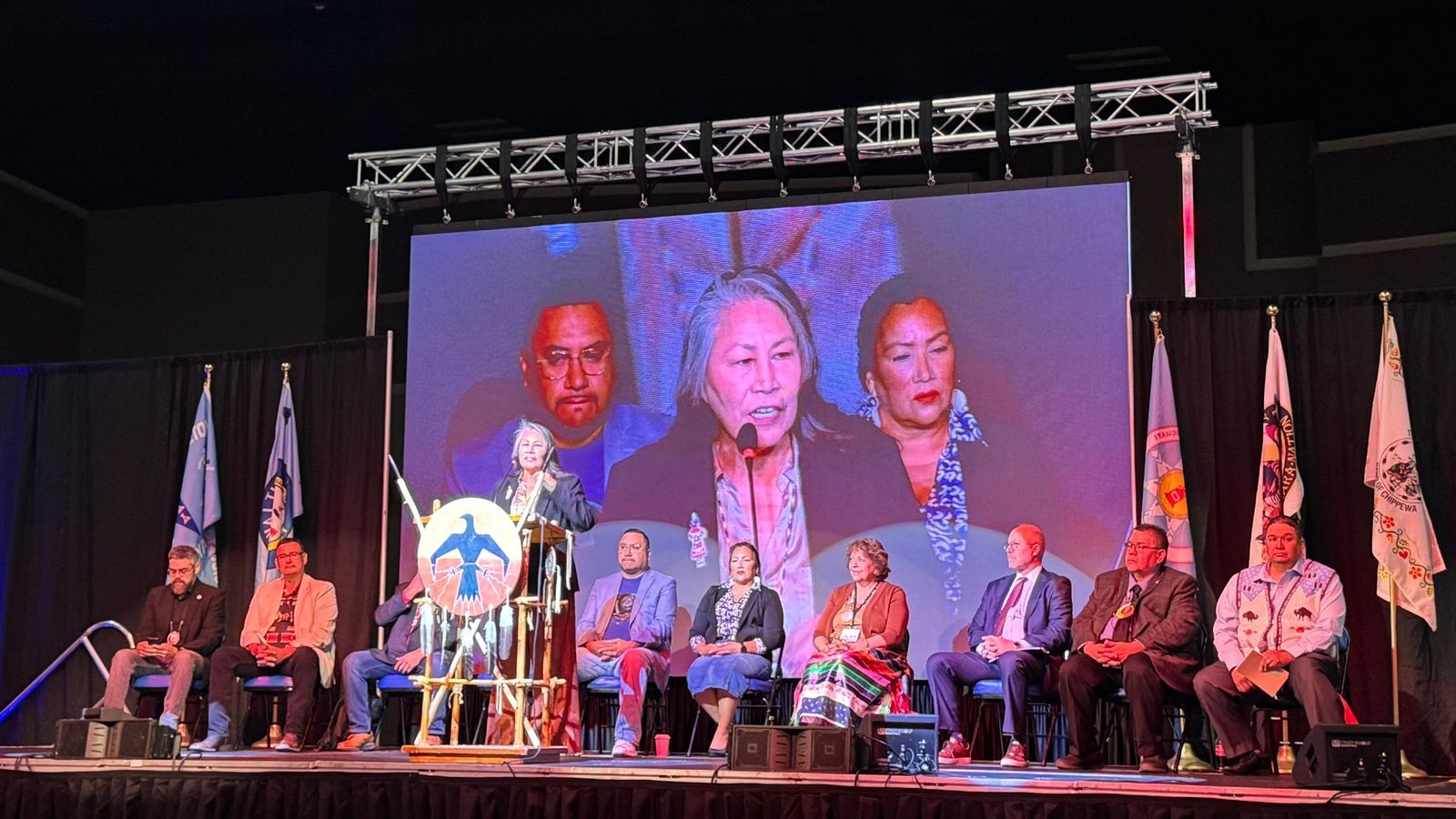

The drumbeat hit a crescendo as the United Tribes Technical College Color Guard of three military veterans arrived in front of the podium and turned in unison to face the crowd, opening the 28th annual United Tribes Technical College Tribal Leaders Summit at the Bismarck Event Center in North Dakota on Wednesday.
Hundreds of Native citizens, Bismarck community members, students, staff and faculty stood together, many moved to dance by the call of the drum and singing by Sloughfoot from Turtle Mountain Band of Chippewa Indians. A sense of common purpose filled the cavernous hall, as the tribal leaders took up that message in their remarks, their determination rising to meet this moment of national strife and uncertainty.
“For the next three years, we need to prove we are strong in unity,” said Turtle Mountain Band of Chippewa Indians Tribal Chairman Jamie Azure. “We have fought too hard. All of our tribes are coming together ... We will move forward and fight for not just what has been taken away but for what we have earned.”
Standing Rock Sioux Tribal Chairwoman Janet Alkire channeled comfort and strength.
“We’re living in a different world right now, but I know it’s going to be okay,” she said, summoning the theme that Native people are all related.
“A lot of times, they wanted us to go against one another, fight one another for resources,” she said. “We have to do this together. We’re going to rely on each other.”
And Spirit Lake Tribal Chairwoman Lonna Jackson-Street crafted a message for elected leaders: “Tell them to remember the treaty. Tell them to remember their obligations” to Native people.
Whitney Rencountre II (Crow Creek Hunkpati Dakota) emceed the grand gathering of leaders and community members, emphasizing the power of this year’s theme: “Building our future, celebrating our culture.”
On the dais sat the leaders of the Sisseton-Wahpeton Oyate, Spirit Lake Nation, MHA Nation and Standing Rock Sioux Tribe, along with Bismarck Mayor Mike Schmitz, President and CEO of the Bismarck-Mandan Chamber of Commerce Brenda Nagel and president and CEO of the American Indian College Fund Cheryl Crazy Bull.
The UTTC Tribal Leaders Summit welcomes leaders and community members from the Great Plains tribes for two days of knowledge exchange and debate through panel discussions and interactive workshops on topics from healthcare to education to culture and economic development.
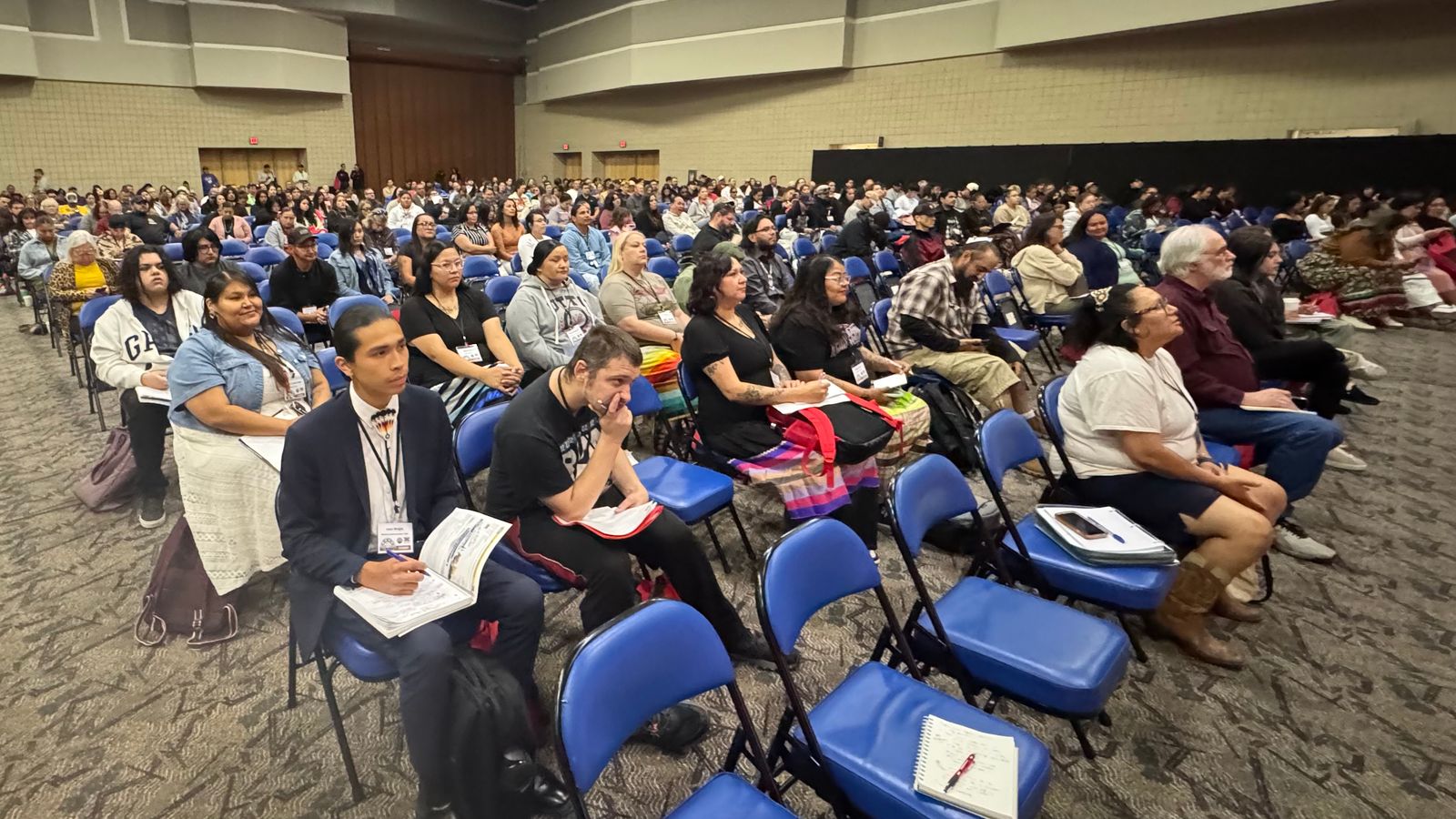
The leaders spoke to the hundreds of students in attendance.
Leander R. McDonald (Dakota/Sahnish/Hidatsa/Hunkpapa), president of the United Tribes Technical College, emphasized “the importance of getting educated and at the same time maintaining our culture.”
Sisseton Wahpeton Oyate Tribal Chairman Garret Renville told students that just 12 years ago, he was a tribal college student. And just nine years ago, he became a tribal council member. He hoped to help them envision what they could become while also noting, “You don’t have to be an elected leader. It takes all of us to advance our cause.”
Frank Star Comes Out, president of the Oglala Sioux Tribe, shared the struggles that he and his family endured as he was growing up — when, at times, they lacked food and electricity. “That’s what leads me here today,” he said, “the struggles growing up.”
He went on to serve in the military and tour the world. But he also experienced the trauma of war and came home seeking comfort in substance use. Therapy and apprenticeship programs helped him rebuild.
“I learned from the bottom up,” Star Comes Out said. “If you stay positive and keep pushing, your life will start to change for the better. Stay positive. Shoot for the stars.”
MHA Tribal Chairman Mark Fox encapsulated the gathering with the word “energy” and drove home a key point:
“The US government is never going to put back the energy that they took from us. You have to make a determination to take that back yourselves,” Fox said. “You are your source of power. You can use energy in a positive way; you can use it in a negative way. Use it to help yourself, your family, to determine how else can we make things better.”
Cheryl Crazy Bull, president and CEO of the American Indian College Fund, ended the remarks with proof of the power of unity.She shared the news that, pushed by the Area Health Education Centers (AHECs), Congress has restored funding to the American Indian Higher Education Consortium that had been nearly eliminated. And not only that, even amid difficult times, she announced that the Fund had its most successful fundraising year ever, raising $60 million and allowing for $24 million in scholarships and student support.
“We are in an incredible, chaotic storm,” Crazy Bull said. “But we have the tools to defy it.”
Sharing Is Caring
This article is not included in our Story Share & Care selection.
The content may only be reproduced with permission from the Indigenous Media Freedom Alliance. Please see our content sharing guidelines.
© Buffalo's Fire. All rights reserved.
We provide independent Native-focused reporting that gives our communities the context and the facts they need to make informed decisions.
Respect The Fire
At Buffalo's Fire, we value constructive dialogue that builds an informed Indian Country. To keep this space healthy, moderators will remove:
- Personal attacks, harassment, or hate speech
- Spam, misinformation, or unsolicited promotion
- Off-topic rants and excessive shouting (All Caps)
Let’s keep the fire burning with respect.