






‘Gaining back our identity’: Standing Rock Sioux Tribe looks to expand buffalo herd
Bigger herd would support tribe’s economy, land and culture, says herd manager

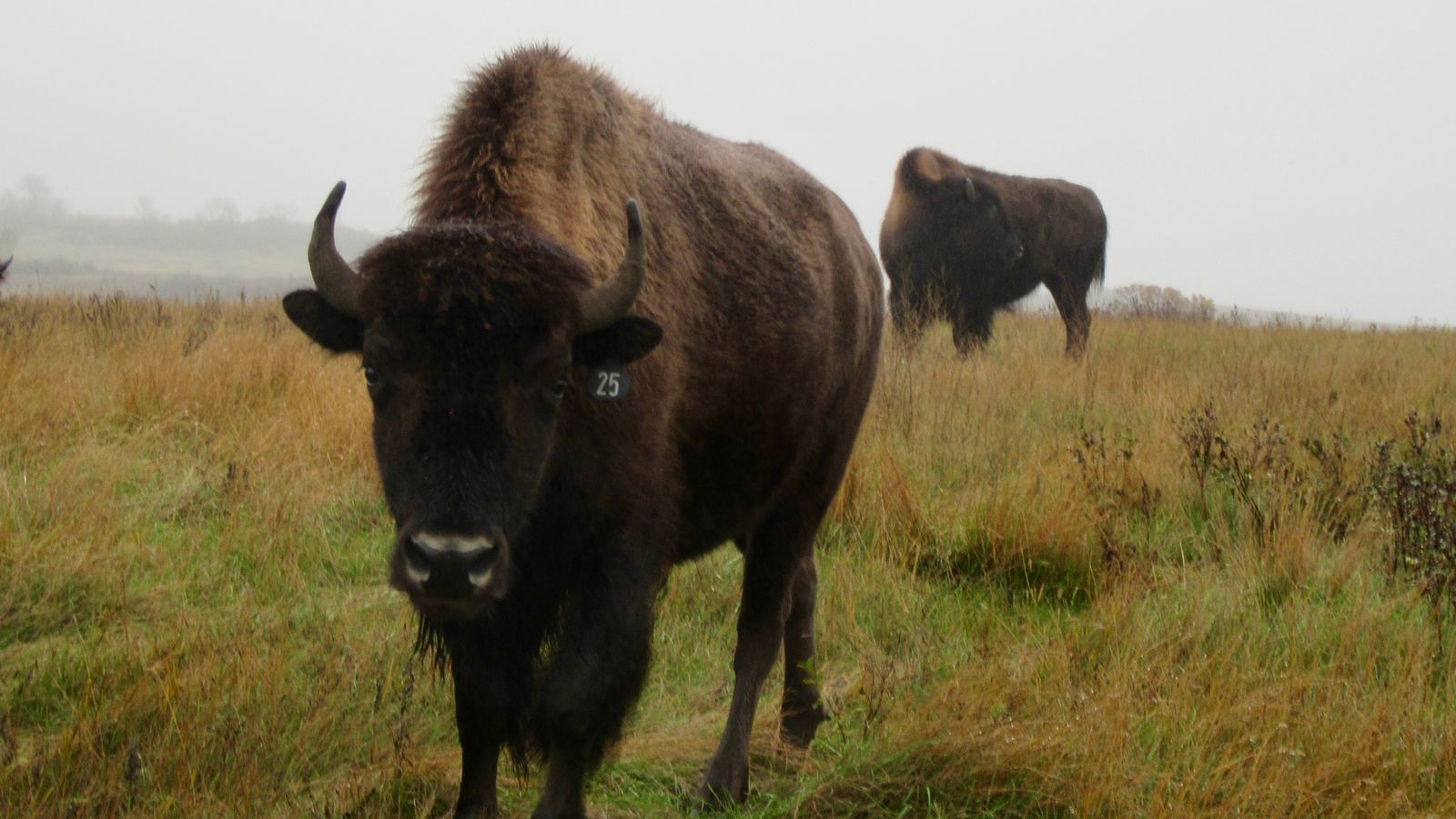

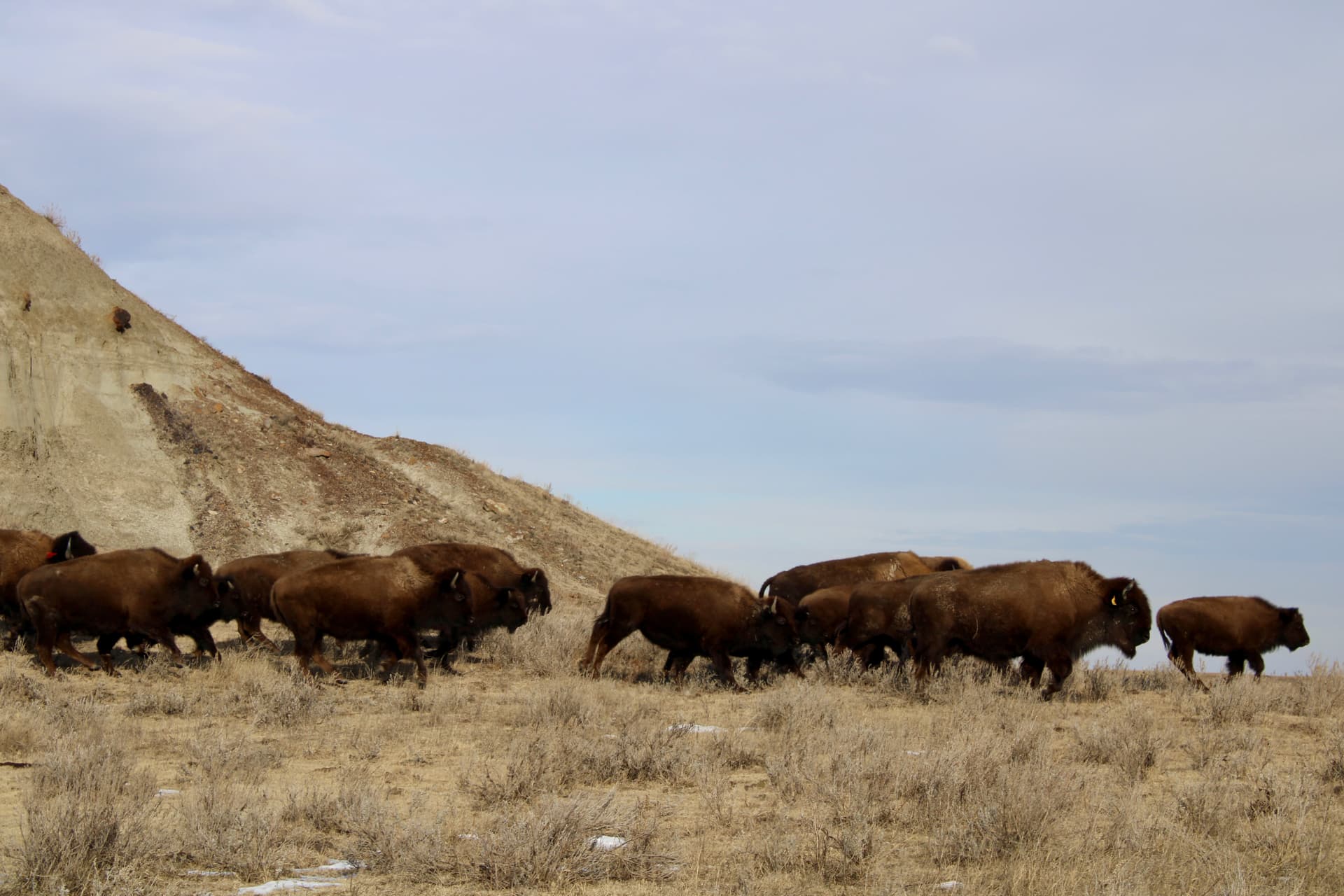
Driving a pickup truck to one of the two buffalo pastures on the Standing Rock Sioux Tribe Reservation, William Thompson spots a group of about a hundred buffalo grazing at one of the herd’s typical spots near the pasture’s entrance. Though the wind is biting and the temperature is below freezing, the herd seems unfazed.
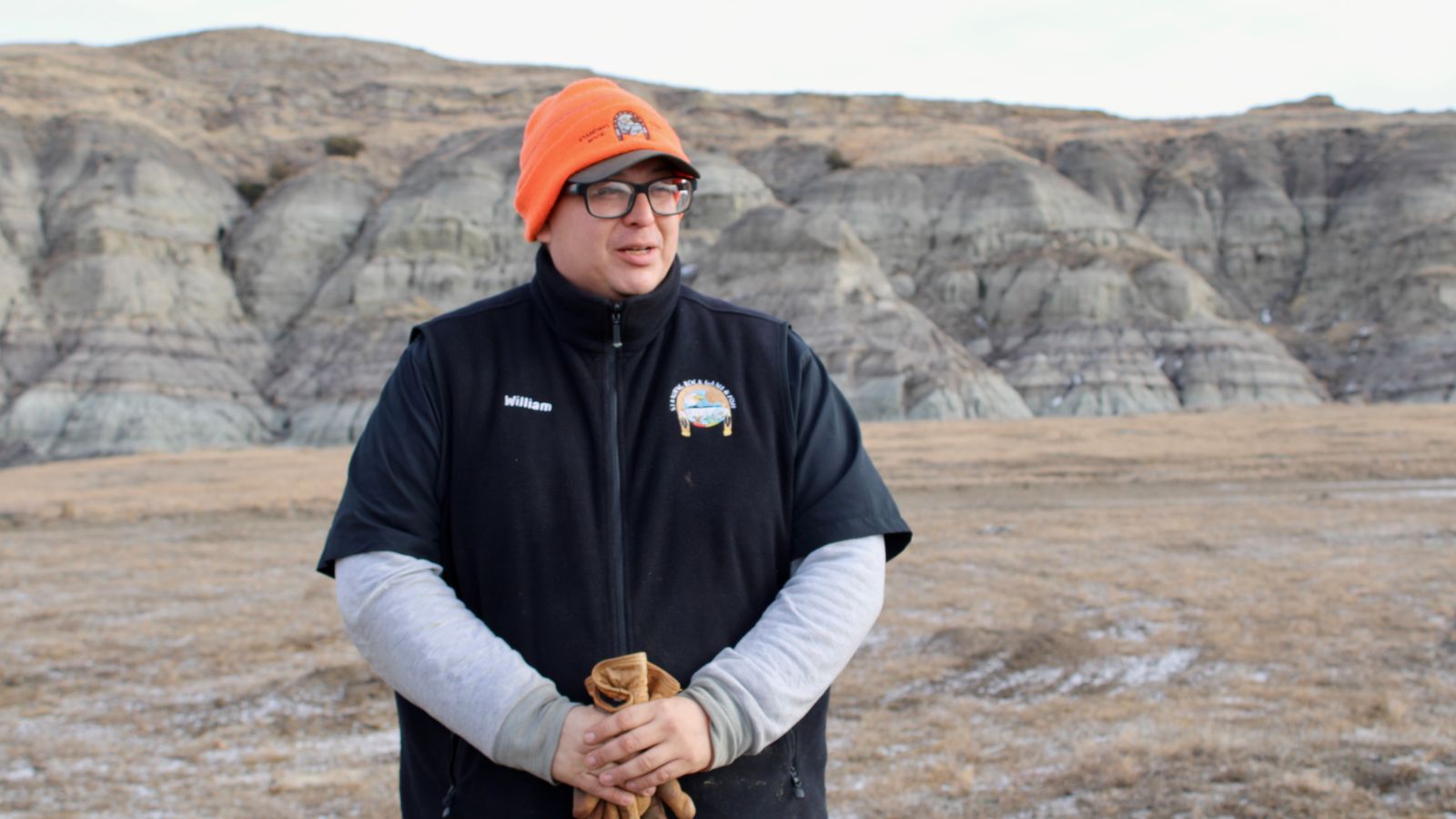
As the tribe’s buffalo herd ranger, Thompson checks on the herd every other day. His second stop on Friday, Jan. 9, is at the larger of the two parks, about a 20-minute drive from his office at the Standing Rock Game and Fish Department in Fort Yates, North Dakota. On the 12,350 acres of arid badlands, Thompson has seen the buffalo run down the steep sides of buttes and jump 10-feet ruts — but the terrain is impossible for large vehicles to traverse. So to get to “all four corners” of the pasture, Thompson exits his truck, starts up a side-by-side vehicle and drives out to meet the herd.
“I think our big bull is out there,” he says, singling out one buffalo in a sea of brown fur. “That’s him. Even laying down he’s bigger than the rest.”
Unit is the tribe’s biggest male buffalo, weighing around 2,700 pounds. Most weigh around 2,000 pounds, twice the typical weight of females. He was transferred to Standing Rock from Yellowstone National Park in the 1990s, when the tribe reintroduced buffalo to the reservation, says Thompson. For 30 years, the herd’s population has been stable. It currently sits at 324 — 276 cows (female buffalo) and 48 bulls (male buffalo).
Now Thompson wants to expand the herd, which he said will revitalize the tribe’s economy, land and Native culture. The Game and Fish Department’s goal is to have more than a thousand buffalo.
With the current herd size, yearly buffalo auctions pay for Thompson’s salary, equipment (like tractors and corral gates) and material to repair fencing.
This past year, Standing Rock auctioned off 81 buffalo, mostly calves and yearlings, to private buyers, bringing in $148,400, says Thompson.
With a larger herd, he says, the tribe could make a profit at its auctions, plus the department could start holding buffalo hunting auctions. But increasing the herd would require more land, fencing and staff. Thompson says it’s “a gamble” that some tribal council members are hesitant to invest in.
“Buffalo are assets of the tribe,” he says. “If we get more support from them, it’ll actually help in the long run, creating better job opportunities, creating more surplus of funds.”
Thompson has worked with buffalo for 15 years. About a year ago, he started managing the herd at Standing Rock, where he’s an enrolled citizen.
The two pastures span roughly 17,000 acres with 58 miles of fencing, which he checks every week in case there’s a need for repairs. The setup can support only 300 more buffalo, he says. But the department doesn’t have enough funds to lease more land or install more fencing, and the tribal government isn’t providing more funding. So Thompson is turning to tribal organizations for grant funding, including the Buffalo Nations Grasslands Alliance, which provides technical and financial assistance to support environment programs of the Northern Great Plains tribal nations.
“There are a lot of costs with raising buffalo,” the alliance’s CEO, Shaun Grassel, told Buffalo’s Fire. “And when those herds are managed for the community, quite often there’s not a lot of revenue to be made. So if they want to do more with their buffalo, that’s just added costs that they have to source from somewhere.”
The Game and Fish Department is currently trying to acquire land abutting the existing buffalo pastures. Thompson says the alliance can provide funding for land acquisition and cover some fencing costs. A specific grant aims to help tribal environment departments cover the cost of leasing croplands for grassland restoration — a process buffalo are essential to.
Buffalo are a keystone species of grasslands. They helped shape the Northern Great Plains, and their presence supports the overall health and stability of the ecosystem.
Their hooves help aerate the soil. They spread seeds that get trapped in their thick fur as they roam, and their poop has essential nutrients to fertilize the soil.
As a testament to their ties with the land, Thompson says he’s seen sick buffalo cure themselves by finding natural medicine in the pasture, like bear root and bitterroot. And unlike cattle, they don’t require supplemental hay, grain or soy meal. They can get all the nutrients they need from grazing. He says a couple private buffalo ranchers in the area have gone the last four winters without feeding their herds, which lowers operation costs.
“They’ve been here way longer than us,” he says, adding that millions of buffalo used to roam from Canada all the way to Texas. Their population fell to less than a thousand in the late 19th century when the U.S. Army, American settlers and fur traders hunted buffalo to near extinction for sport and as a way to weaken Native American communities that relied on the species.
Recently Buffalo populations have been growing due to restoration projects like Standing Rock’s.
Yet, in the last few decades, grasslands — buffalos’ native ecosystem — are declining. Over half the world’s temperate grassland, 62%, has been lost to agriculture, urban development and climate change. Indigenous grassland species, including pronghorns, elk and porcupine, are in danger, says Grassel, who, before starting the Buffalo Nations Grasslands Alliance, worked for 25 years as a wildlife biologist for the Lower Brule Sioux Tribe, where he’s a citizen.
“I got to experience seeing those animals, hunting those animals, but my grandkids might not,” he says, honoring the Native value of “looking seven generations ahead.”
Since Standing Rock reintroduced buffalo to the reservation, and the alliance helped them reintroduce elk, wildlife is thriving, particularly on their largest pasture, called Unit 41. The land is now home to 80 elk, a mountain lion and her three cubs, mule deer, coyote, beaver, porcupine, raptors and prairie dogs, in addition to the buffalo herd.
As they return buffalo herds to tribal lands and restore native ecosystems, Thompson says Native communities are “gaining back our identity.”
In 1975, the Indian Self-Determination and Education Assistance Act, which recognized tribes' right to self-governance, granted authority to tribes to manage their own fish and game programs, including the management of buffalo herds in the Northern Great Plains.
Less than two decades later, 19 tribes created the InterTribal Buffalo Council to support the restoration of tribal buffalo herds. Today, the council consists of 86 member tribes in 22 states and has returned 20,000 buffalo to tribal lands.
Standing Rock Game and Fish Department Director Jeff Kelly started working for the tribe in the early years of its program 20 years ago.
“It’s part of our past and our ancestry that we were close with the buffalo,” he says. “They provided us with everything — shelter, food, anything we could have needed to survive.” He says that while working with them he “learned to appreciate them as our relatives.”
And as people drive past the herd, which can be seen from the highway, Kelly says he hopes they are reminded of the relationship between Native communities and buffalo: “Our relatives are still here. We’re still here.”
Back at Unit 41, Thompson says he’s come to know the herd and their personalities in the past year. Some of them are curious, getting so close you can feed them by hand, while others are mean and rowdy and will challenge your vehicle, he says.
“It’s the bulls you have to get to know,” he says, driving the side-by-side vehicle up to a particularly “mischievous” group of young bulls tussling apart from the herd. “They’re smart. They’re powerful. But I know where they’ll be and where they’re trying to get out.”
The bulls butt heads and leap across crevices in the rocky, grassy landscape as they chase one another. Wary of the sound of the engine, they separate and run back to the herd. Thompson points out a cow with a red tag affixed to her ear. She’s marked for harvest.
The Game and Fish Department typically harvests one buffalo a month to distribute the meat to community members. The hides and skulls, he says, are gifted to tribal members for sundance ceremonies.
The department keeps its freezers stocked with 500 to 1,500 pounds of meat, which is processed at Wozu Inc., a Native community-focused organization on the Standing Rock Reservation, and West Side Meats, a meat market in South Dakota run by the Cheyenne River Sioux Tribe.
Any tribal member is welcome to the free buffalo meat, including hamburger, roast, steaks and stew meat. “All they have to do is call,” Thompson says.
During the government shutdown and SNAP benefit delays in November, the tribe harvested an additional 10 buffalo to distribute to community members. They donated 500 pounds to United Tribes Technical College and Native, Inc. in Bismarck. Increasing the herd would help with that response, says Kelly.
“If something like that ever happens, we’ll always have that supply, a good supply, of buffalo,” he says.
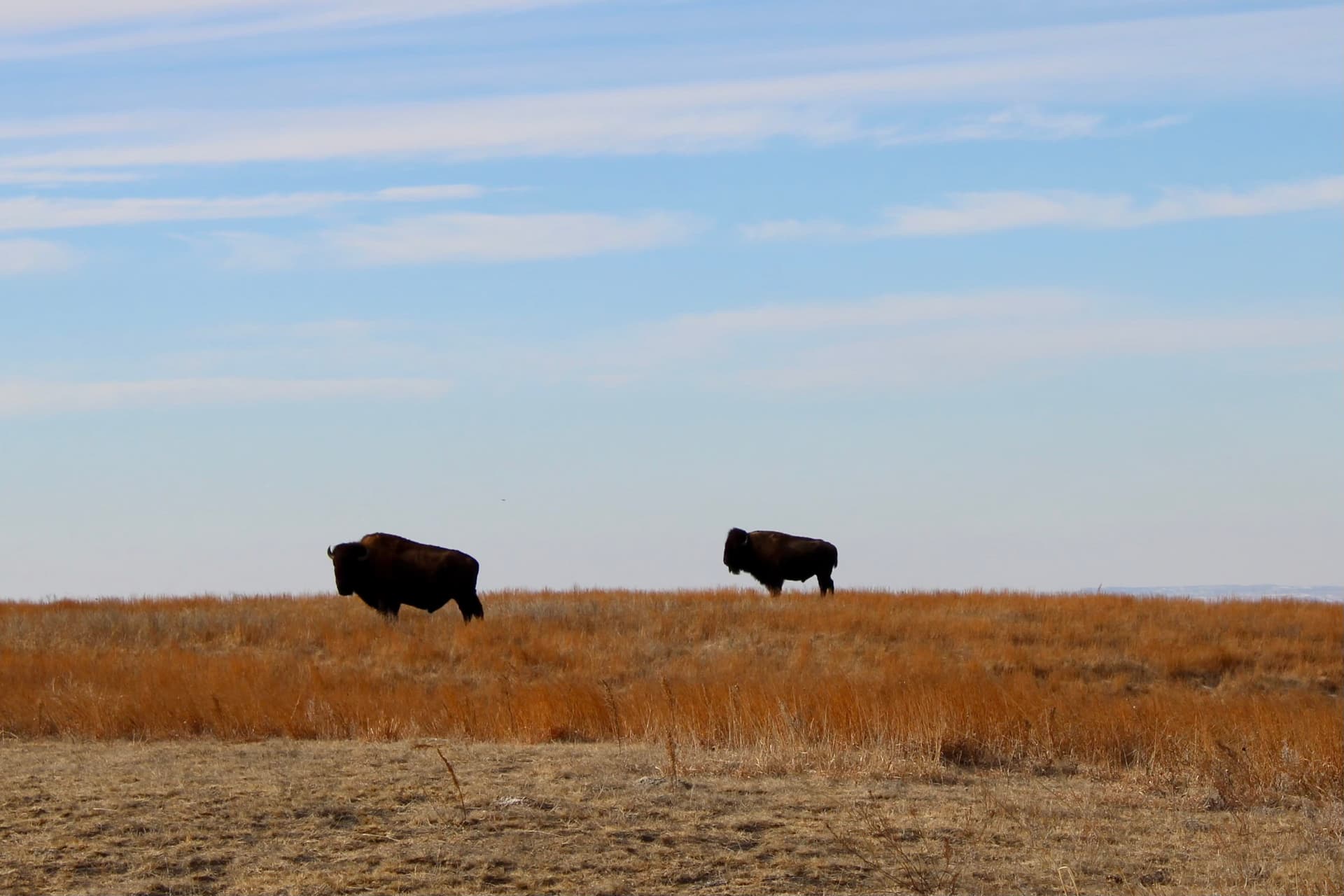
Finishing his rounds, Thompson stops at the top of the highest butte in the pasture and is greeted by two bulls who also made the trek to graze on a small patch of grass. The younger bull is likely following the old bull around to learn from his elder, he says.
Thompson braces himself against the wind and says he sometimes gets caught up in the office work and grant writing. But looking over the tribal land he grew up on, he says he feels grateful to work so closely to the land, the buffalo herd and his culture.
Corrections
An earlier version of this story misidentified the Buffalo Nations Grasslands Alliance as the Buffalo Nations Grassland Alliance. The story has also been updated to reflect that the InterTribal Buffalo Council has 86 members, not 85.
Gabrielle Nelson
Former Environment Reporter
Sharing Is Caring
This article is not included in our Story Share & Care selection.
The content may only be reproduced with permission from the Indigenous Media Freedom Alliance. Please see our content sharing guidelines.
© Buffalo's Fire. All rights reserved.
We provide independent Native-focused reporting that gives our communities the context and the facts they need to make informed decisions.
Respect The Fire
At Buffalo's Fire, we value constructive dialogue that builds an informed Indian Country. To keep this space healthy, moderators will remove:
- Personal attacks, harassment, or hate speech
- Spam, misinformation, or unsolicited promotion
- Off-topic rants and excessive shouting (All Caps)
Let’s keep the fire burning with respect.