






What a Superfund site is and how EPA cleanup works
Nearly 200 Superfund sites are on tribal land

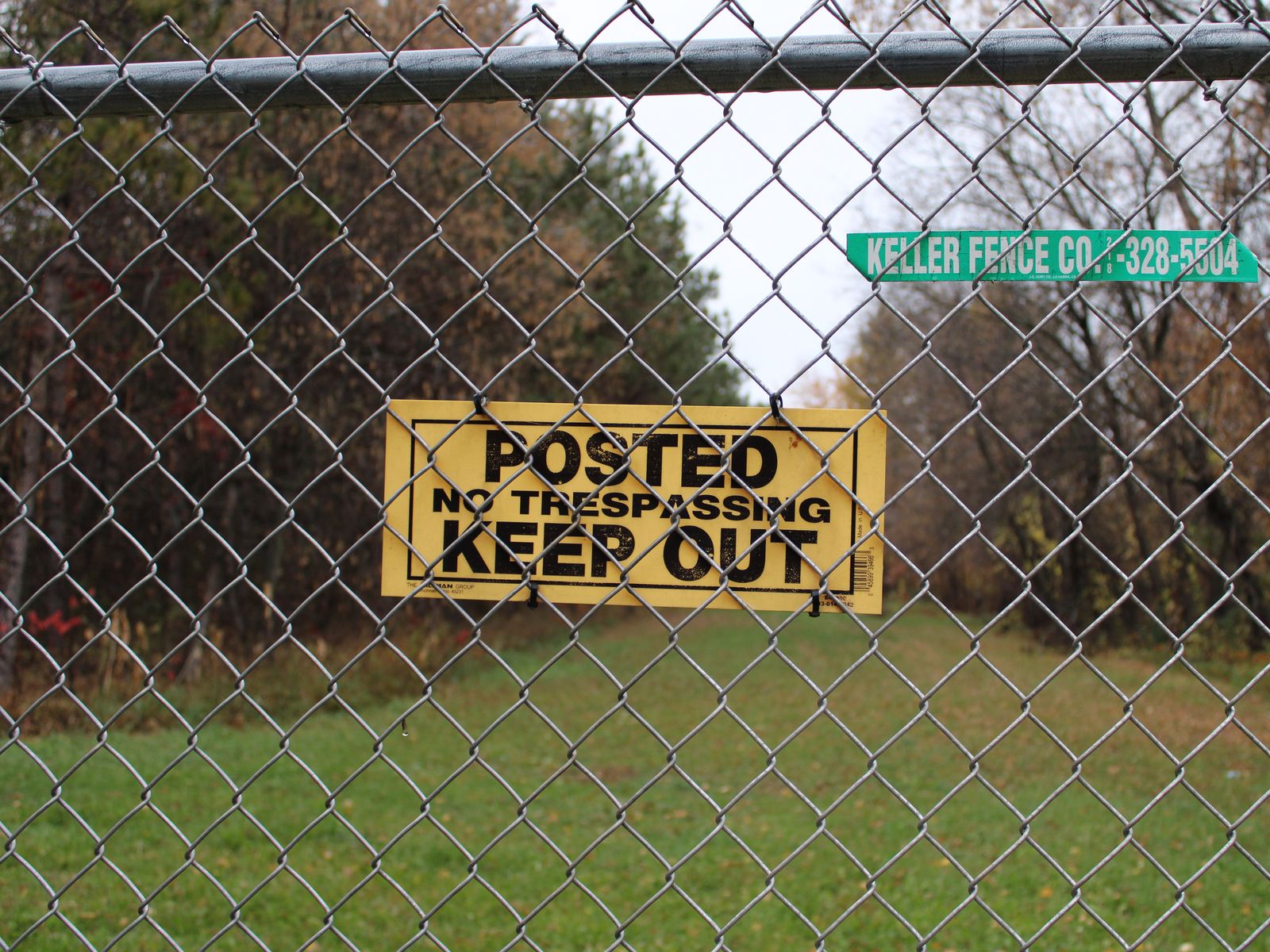

The St. Regis Paper Co. Superfund Site sits in the middle of Cass Lake, Minnesota, on the Leech Lake Reservation. It’s 163 acres of contaminated land made up of a checkerboard of “operable units.” Some are fenced off, awaiting remedial action. Others that have already undergone cleanup are now wide, vacant lots among homes, office buildings and businesses.
It’s a “black cloud” that hangs over the city, said Brandy Toft, the environment director for the Leech Lake Band of Ojibwe’s Division of Resource Management.
The area was earmarked for hazardous waste cleanup by the U.S. Environmental Protection Agency (EPA) in the 1980s and barred from development after a wood treatment plant polluted the city’s soil and groundwater.
It is one of the more than 1,300 active EPA Superfund sites in the country, which include improperly managed manufacturing plants, landfills, power plants and mines. A Superfund site is land in the United States contaminated by hazardous waste that poses a risk to human health or the environment. The EPA manages these sites under the Comprehensive Environment Response, Compensation and Liability Act (CERCLA), informally called Superfund, created in 1980 to direct cleanup and hold polluters accountable.
Here’s how the system works, what it means when a site is listed for cleanup and who’s held responsible.
How Superfund came about
CERCLA gave the EPA authority to clean up hazardous waste that threatens human health and the environment. It holds polluters responsible and establishes a trust fund — hence Superfund — for cleanup when a responsible party can not be identified. Infamous environmental disasters in the late 1970s, including Love Canal in Upstate New York and Valley of the Drums in Kentucky, prompted the federal government to make the Superfund.
The Resource Conservation and Recovery Act, which was passed in 1976 and most recently amended in 1996, is a waste management law for hazardous and nonhazardous waste. The EPA regulates hazardous waste under the law’s Subtitle C from the moment it’s generated to its final disposal — “cradle to grave.” The act also lays out what is considered hazardous waste, which include wood preservatives, some pesticides and coal byproducts. Groups that generate, transport, treat, store and dispose of hazardous waste must comply with the RCRA regulations.
RCRA prevents hazardous waste problems; CERCLA cleans them up.
|
RCRA (prevention) |
CERCLA (cleanup) |
|---|---|
|
Regulates active waste sites “cradle to grave.” |
Cleans up abandoned or uncontrolled sites. |
|
Compliance-based for operators. |
Retroactive liability for polluters. |
|
Industry fees fund program. |
Superfund tax and PRPs fund program. |
RCRA vs CERCLA: A framework for how the EPA manages and cleans up hazardous waste
What qualifies a site for the National Priorities List?
Along with being designated as a Superfund site, the EPA gives further importance to a site’s cleanup by adding it to the National Priorities List. The NPL marks a site for additional EPA investigation, ranks its severity and makes the cleanup process more public.
About the National Priorities List:
- Purpose: Identify and prioritize hazardous waste sites that threaten human health or the environment.
- How sites are added: The EPA scores sites using its hazard ranking system and invites public comment.
- Criteria: Sites posing significant health risks or requiring complex remediation are added to the list.
- Deletion: Sites are removed once cleanup goals are met.
As of January 2026, there were 1,343 active NPL sites, 38 proposed and 459 deleted. All NPL sites can be found on the EPA’s website.
Who cleans up Superfund sites?
One goal of the EPA when creating the Superfund was holding the companies or entities responsible for hazardous waste pollution accountable.
In many cases, the EPA doesn’t head the cleanup process themselves. Instead, they assign cleanup to the potentially responsible parties, or PRPs, which can be current or past owners of a facility. However, if the party responsible for the pollution refuses, the EPA will sue to and head the cleanup themselves.
“EPA determines the cleanup required, and then the responsible parties are responsible for implementing that cleanup and paying for it,” said Phil Gurley, community involvement coordinator at region 5, which includes the St. Regis Paper Co. Site. The “polluter pays” policy holds the responsible party accountable for the pollution by demanding it cover cleanup costs.
But ownership can get complicated, especially if the site is active over multiple decades as in the case of the St. Regis Paper Co. Site.
The St. Regis Paper Co. began operating in Cass County in the 1950s. It used Minnesota lumber to make poles and treated them with hazardous chemicals at its Cass Lake site. The city’s residents reported sickness including headaches, breathing problems and skin rashes. Although most cases can’t be traced directly to the site, the health complaints are consistent with pentachlorophenol poisonings. The site was placed on the National Priorities List in 1984, designating the cleanup to the paper company.
Since then, the paper company has changed ownership twice. Along with the company's resources and operations, the new owners also inherit the Superfund site and cleanup responsibility.
What is ‘environmental remediation’?
Environmental remediation is the process of cleaning up pollution in the air, soil or water to protect human health and restore the environment. Responsible parties, along with tribal, state and local authorities, implement this process with Superfund sites. They can use different remediation methods depending on the type of contamination:
- Soil remediation: This is the process of cleaning up contaminated soil to make it safe and usable. Oftentimes, this requires soil removal through excavation. Once the soil is removed, other cleanup methods can be used, including soil washing and soil vapor extraction.
- Groundwater cleanup: Contaminated groundwater can be treated above or under ground, which typically involves running water through filters or putting chemicals into the groundwater that act on pollutants and make them less harmful. A common above-ground treatment method is “pump and treat,” where groundwater is extracted through wells and cleaned at a water treatment facility.
- Bioremediation: This method uses living organisms, including microbes, fungi and plants, to speed up the natural biodegradation of harmful contaminants. It can treat the polluted area and turn contaminants into less harmful materials such as carbon dioxide, methane and water. Phytoremediation specifically uses plants for this purpose. Bioremediation methods are often less expensive and more acceptable to the public.
- Thermal desorption: This technology uses heat to separate contaminants from soil, sludge or sediment. The process is done in a machine called a thermal desorber that turns contaminants into vapors, which are then treated. The treated soil can be used to backfill excavated areas. This method can be quicker and provide better treatment than other methods.
What is the Superfund cleanup process?
Once a site is initially investigated, designated as a Superfund site and placed on the NPL, the EPA and responsible parties go through this cleanup process with the goal of site reuse and redevelopment.
Steps to the cleanup process:
- Remedial investigation: The EPA evaluates the nature and extent of the contamination. “We want to see where and how much contamination there is on the site,” said Gurley.
- Record of decision: The agency then presents a cleanup plan and sets a public comment period. “Oftentimes, public comments may slightly change our cleanup decision,” said Gurley, “or may bring up something that maybe we hadn't thought of.” The final record of decision lays out what cleanup alternatives will be used.
- Remedial design: “Our remedial design is our engineering designs for the cleanup,” said Gurley. “We have worked with contractors on that, or sometimes the Army Corps of Engineers, depending on the project.”
- Remedial action: The implementation phase of cleanup after investigation and design are complete. At the St. Regis Paper Co. Superfund Site, the responsible party excavated soil and sludge and buried it in an onsite containment vault. It also implemented a pump-and-treat water facility to clean groundwater pollution.
- Long-term monitoring: Through the cleanup process, the EPA also issues reports every five years. Each five-year review may include taking new site samples, inspecting the site and conducting interviews with residents. The EPA conducts long-term monitoring even after remedial action is complete.
- NPL site deletion: The EPA may delete a site, or a portion of a site, from the NPL if all cleanup goals have been met and the site no longer poses a danger to human health and the environment.
Depending on the type and extent of contamination, the cleanup process can get messy. For example, the St. Regis Paper Co. Superfund Site currently has five geographic operable units. Each unit requires different methods of environmental remediation and is in a different stage of the cleanup process.
“I think you could ask us on any specific day what is the most vexing or prevailing issue,” said Toft of the site, “and every day, every hour, we’d probably give you a different one.”
What happens after cleanup?
The EPA deletes a Superfund site from the NPL after cleanup goals are met. NPL deletion is the last step in the process, but EPA may require five-year reviews to check the long-term effectiveness of the site’s cleanup and to protect public health. Sites can be restored to the NPL if more cleanup needs to be done.
Once a site has been cleaned up and deleted from the NPL, the EPA works with the community to return the area to productive use. A site may be used for commercial or industrial purposes, such as a shopping mall or factory. In some cases, sites can be used for housing, community facilities and parks, or for ecological purposes, such as wetlands or wildlife preserves.
In its lifespan, a Superfund site will go through:
- Investigation
- Planning
- Cleanup
- Restoration
Is it safe to live near a Superfund site?
Exposure risk varies significantly across all sites. According to the EPA, a person isn’t necessarily at risk if they live near a Superfund site. In many cases, people are not being exposed directly to contamination. EPA monitoring keeps tabs on Superfund contamination. If there is an immediate threat, the EPA alerts residents.
Yet, living near a Superfund site may expose people to pollutants that can harm human health. It’s difficult to link specific health problems to a contaminated site, but the EPA has guides with known human health risks for common chemicals found at Superfund sites, including lead, asbestos and dioxin.
These chemicals can endanger a community’s water supply and impact the air quality. And because Native communities are often deeply rooted to the environment, through practices such as subsistence harvesting and fishing, they often face higher exposure risks.
Despite these risks, about 23 million people lived within a mile of a Superfund site in 2023, roughly 7% of the population, according to the EPA. Sites are disproportionately located in communities with high concentrations of people of color and low-income households. Almost 200 Superfund sites are on tribal land or impact Native communities, according to the EPA.
Impacted communities often emphasize the need for data transparency — knowing what’s in the soil or water matters as much as cleanup progress.
When considering exposure risk, remember:
- Safety depends on the cleanup progress. Human exposure status — under control and not under control — at each Superfund site is tracked by the EPA. You can search for your city on the EPA Human Exposure Dashboard.
- EPA, state and tribal agencies will let the public know about any health risks as soon as possible.
- The EPA encourages anyone living near a Superfund site to call and ask questions to prevent exposure.
Gabrielle Nelson
Former Environment Reporter
Sharing Is Caring
This article is not included in our Story Share & Care selection.
The content may only be reproduced with permission from the Indigenous Media Freedom Alliance. Please see our content sharing guidelines.
© Buffalo's Fire. All rights reserved.
We provide independent Native-focused reporting that gives our communities the context and the facts they need to make informed decisions.

Respect The Fire
At Buffalo's Fire, we value constructive dialogue that builds an informed Indian Country. To keep this space healthy, moderators will remove:
- Personal attacks, harassment, or hate speech
- Spam, misinformation, or unsolicited promotion
- Off-topic rants and excessive shouting (All Caps)
Let’s keep the fire burning with respect.