






Why you should Indigenize your holiday meals — and recipes to help you do it
Chef Nephi and UTTC students celebrate food as medicine


It's the holiday season, time to gather with loved ones, celebrate traditions and eat food. Many staple holiday foods, like cornbread, squash, cranberries and roasted game, are native to North America and are rooted in Indigenous food culture. Yet, they aren’t often seen and celebrated as Native.
The United Tribes Technical College sustainable agriculture program and Nephi Craig, chef and founder of the Native American Culinary Association, are teaching people that Indigenous cuisine is more than frybread. It’s nutrient-rich foods that connect people to the land, food traditions that reach back hundreds of years to Indigenous ancestors who relied on the land for sustenance before European contact.
“The cool thing about Indigenous foodways is that some of these flavors have not changed in centuries, if not millennia,” Chef Craig, White Mountain Apache Tribe citizen and Navajo descendant, said at the 2025 Intertribal Agriculture Council Annual Conference. Whether you’re growing corn, foraging for wild ingredients, fishing or cooking around a fire with family, he said, “you’re right there with the experience of being Indigenous with the food.”
UTTC sustainable agriculture student Orion Old Rock, Spirit Lake Tribe citizen, said he studies Indigenous foods so he can go back to his tribe and connect other tribal members with their ancestor’s food traditions. Food sovereignty, the power of a community to reclaim their food systems and ensure fair access to healthy food for all, he said, “is our right.”
What is traditional Native American food?
Native food systems span millennia.
In the Northern Great Plains, communities hunted bison and harvested wild rice. These were pillars of their diet along with corn, squash and beans — the “three sisters.” They would take from the land what they needed and nothing more, always with a spirit of gratitude, according to Dakota Goodhouse, UTTC history instructor and storyteller. He told Buffalo’s Fire that thanking and stewarding the land was just as much a part of Indigenous food culture as the actual food.
“We believe food is alive,” said Chef Craig. “It carries memory. It’s connected. It’s living, and we respect it.”
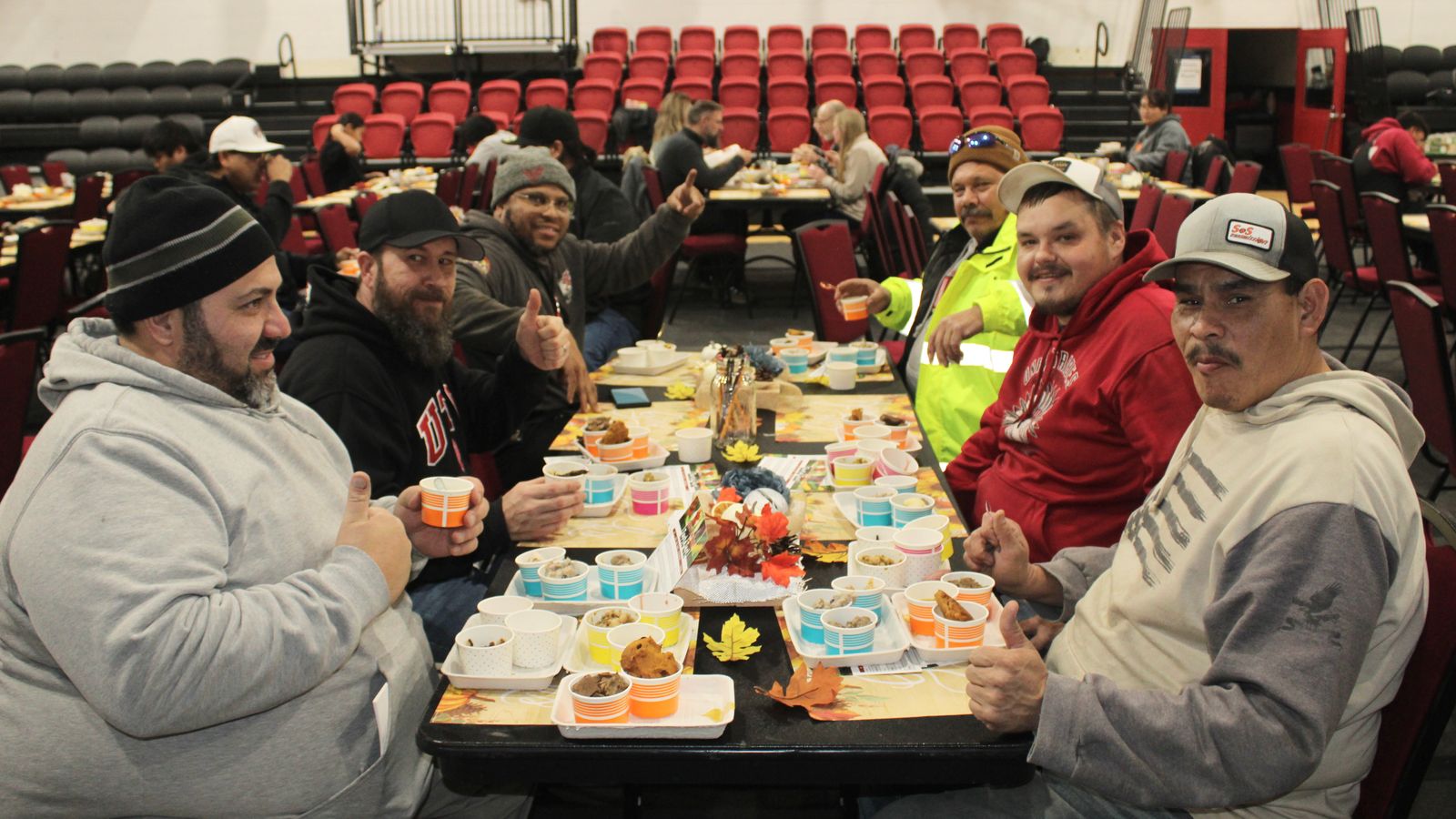
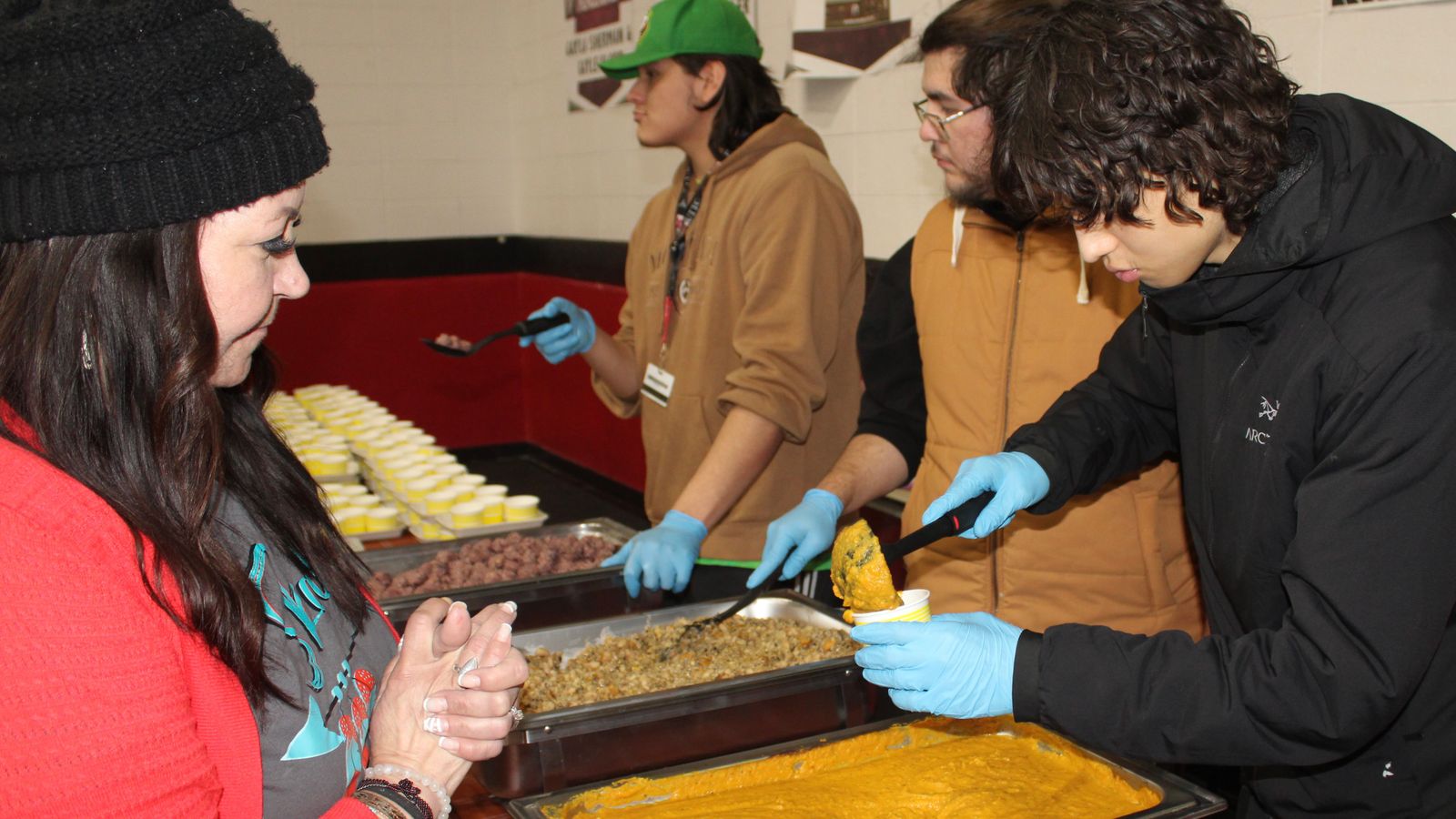
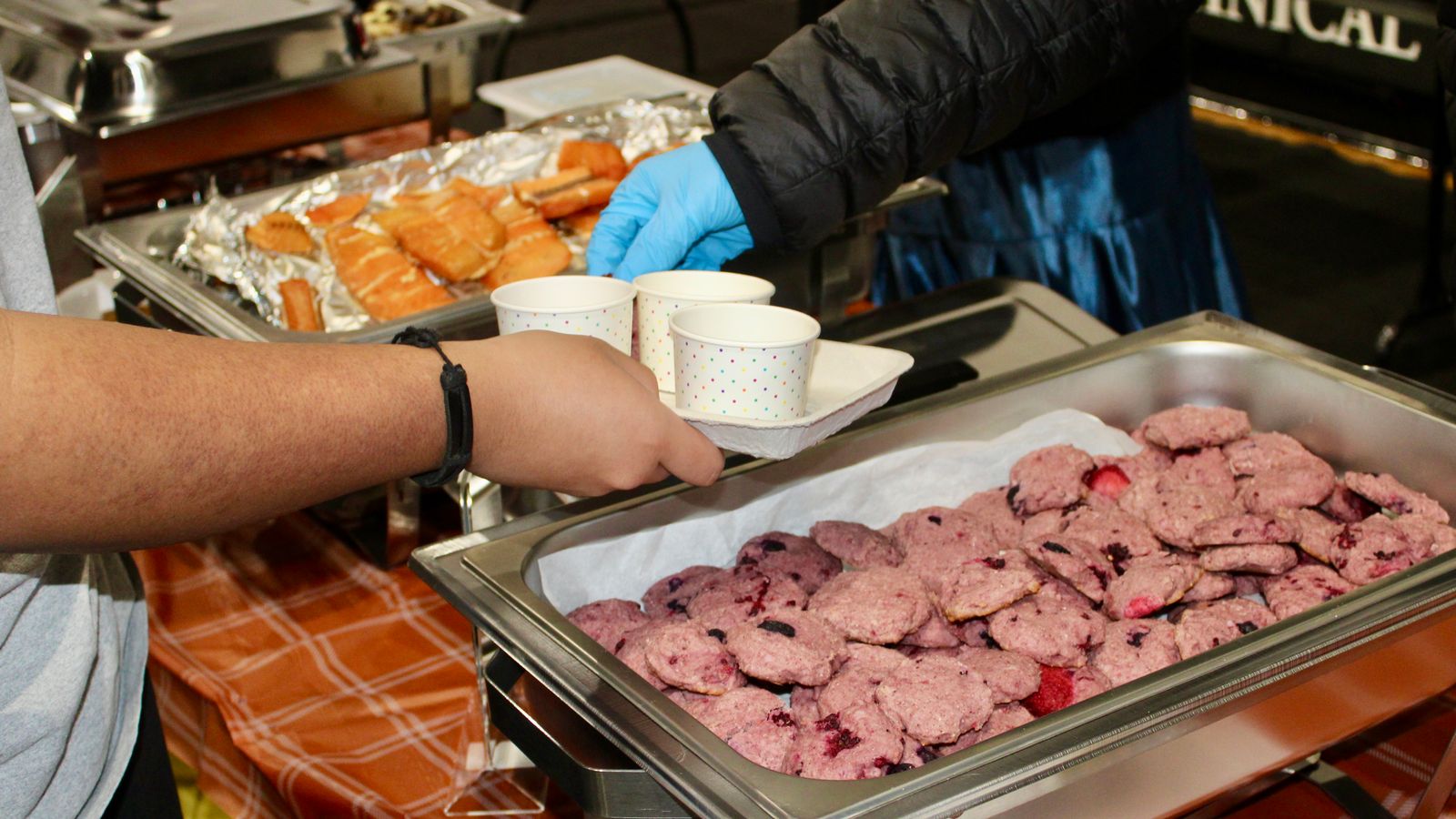
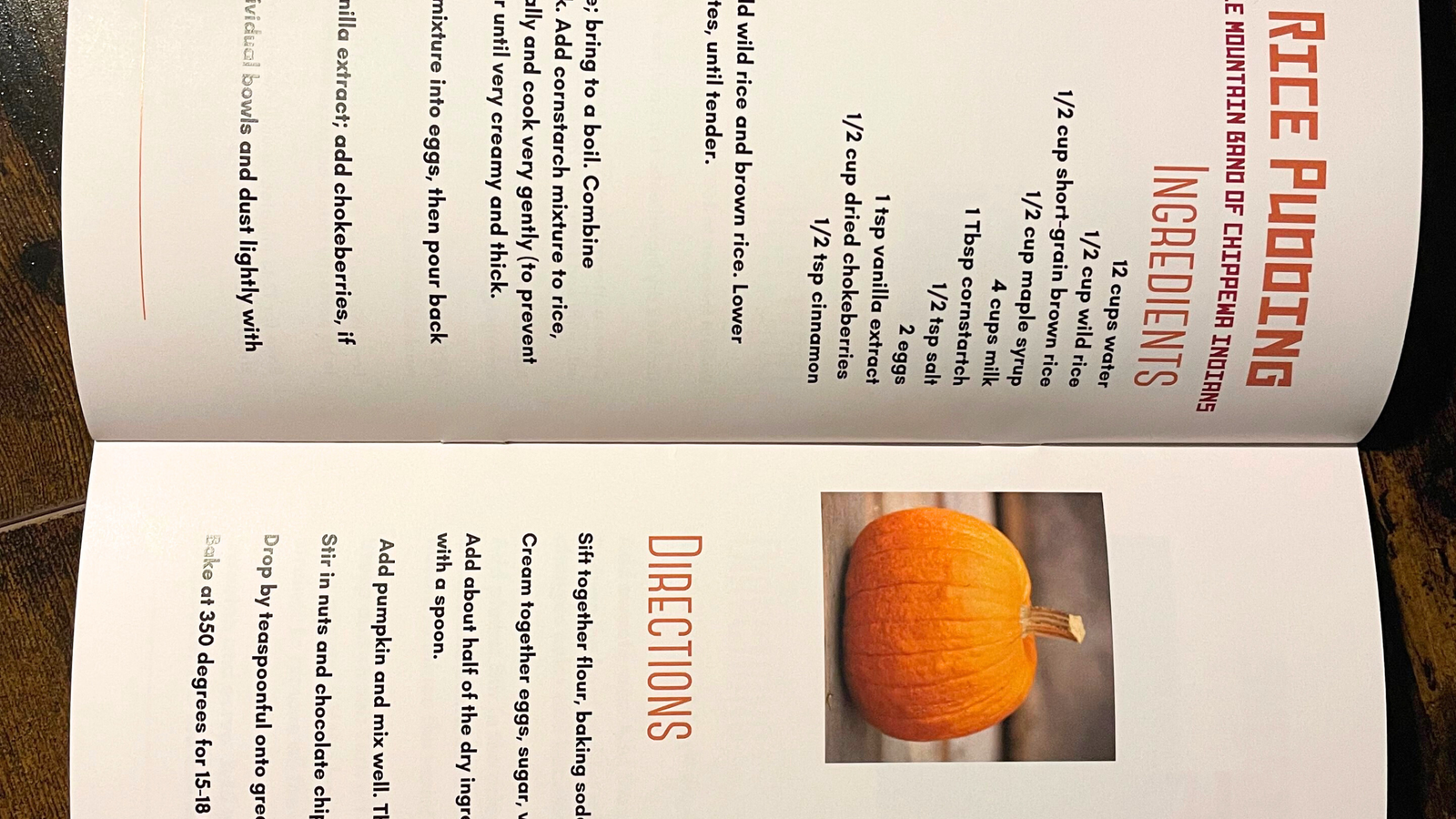
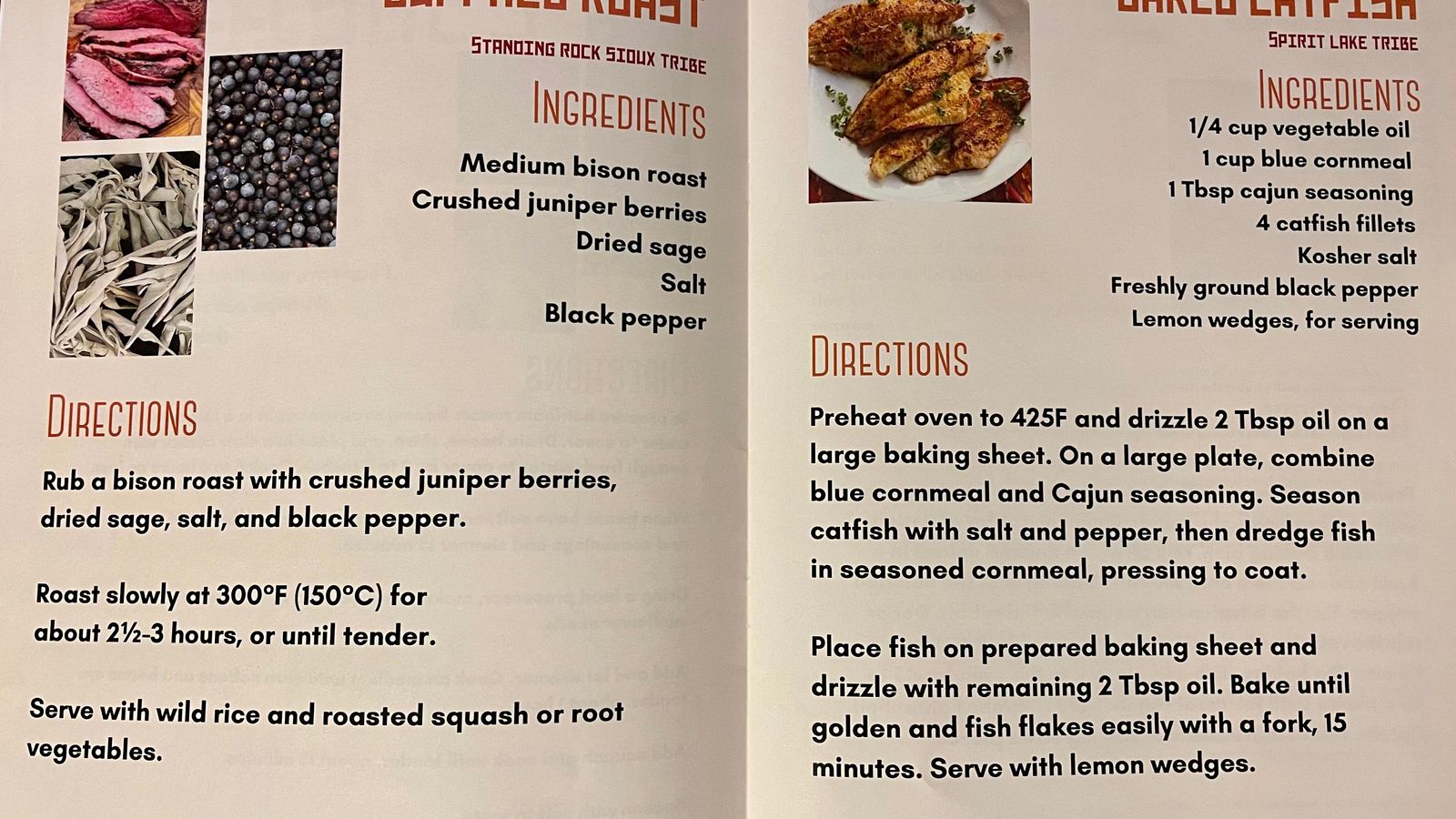
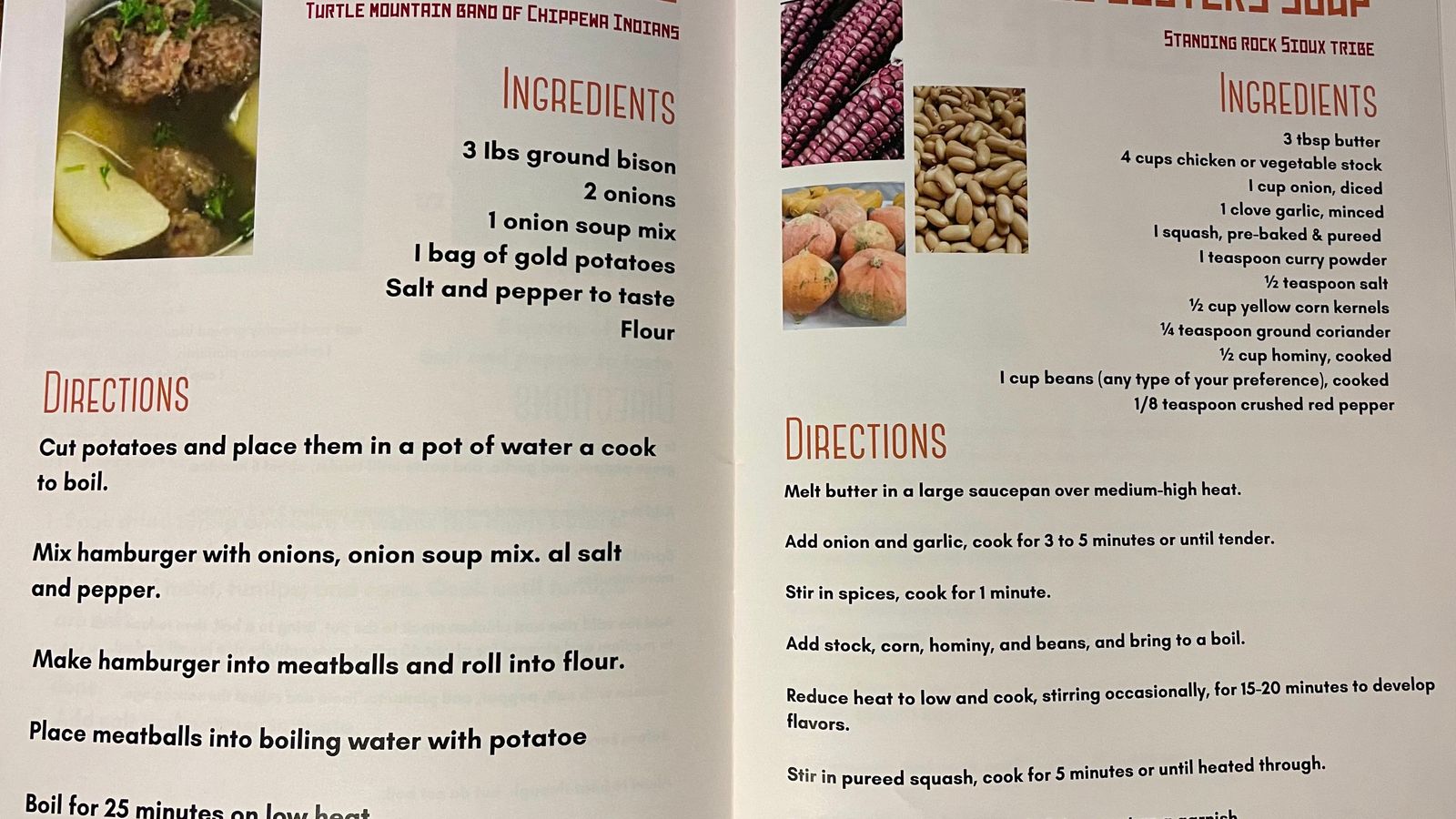
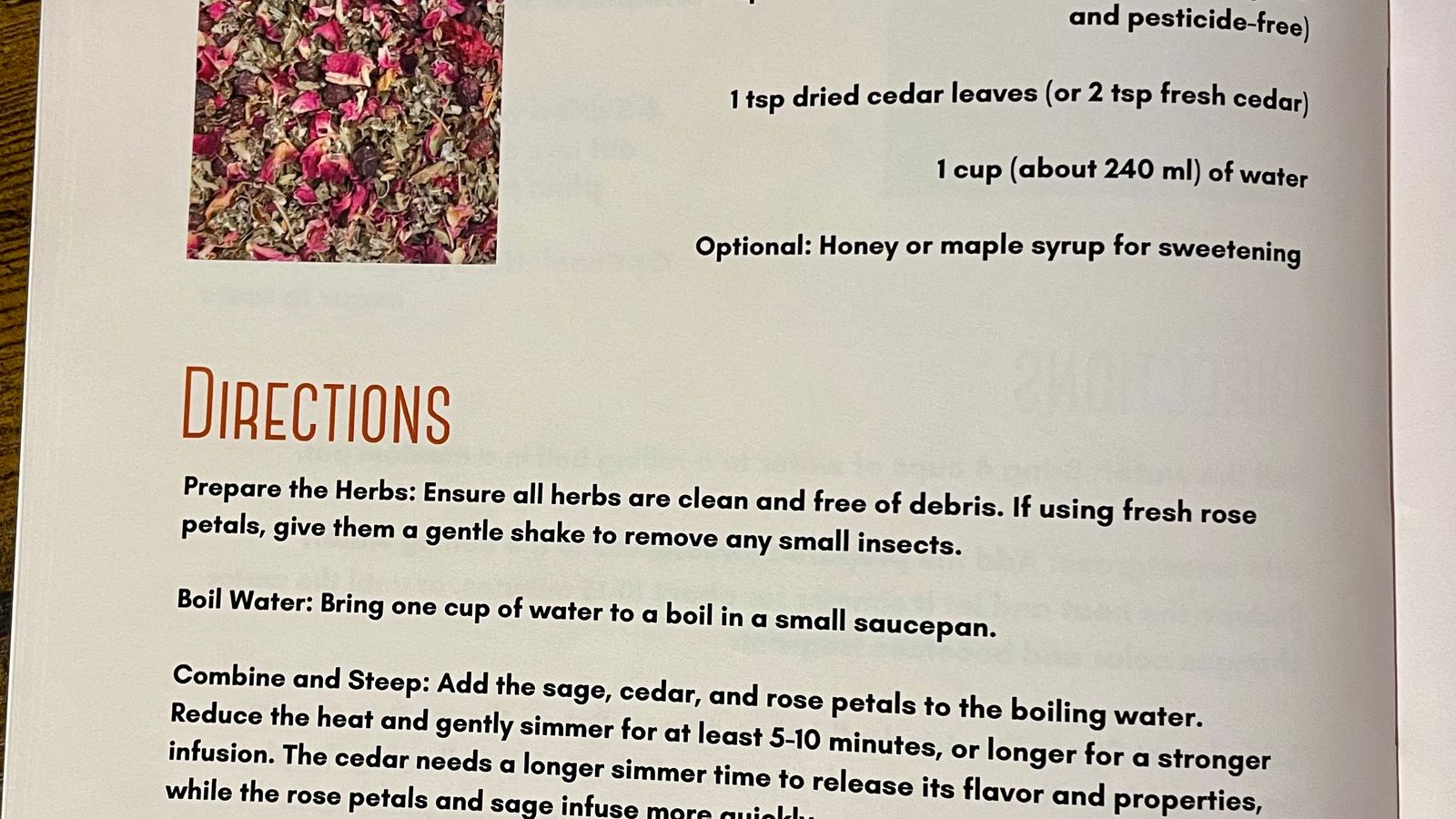
Old Rock and his fellow UTTC agriculture students learn about Native food systems by harvesting and cooking with the ingredients of their ancestors. For their fall semester final project, students created a recipe book honoring the traditional foods of the five tribes of North Dakota. And the weekend before Thanksgiving, they spent two full days making all 15 recipes and two teas from the recipe book, which they dished out to UTTC staff and community members at their “Taste the Earth” event on Nov. 25.
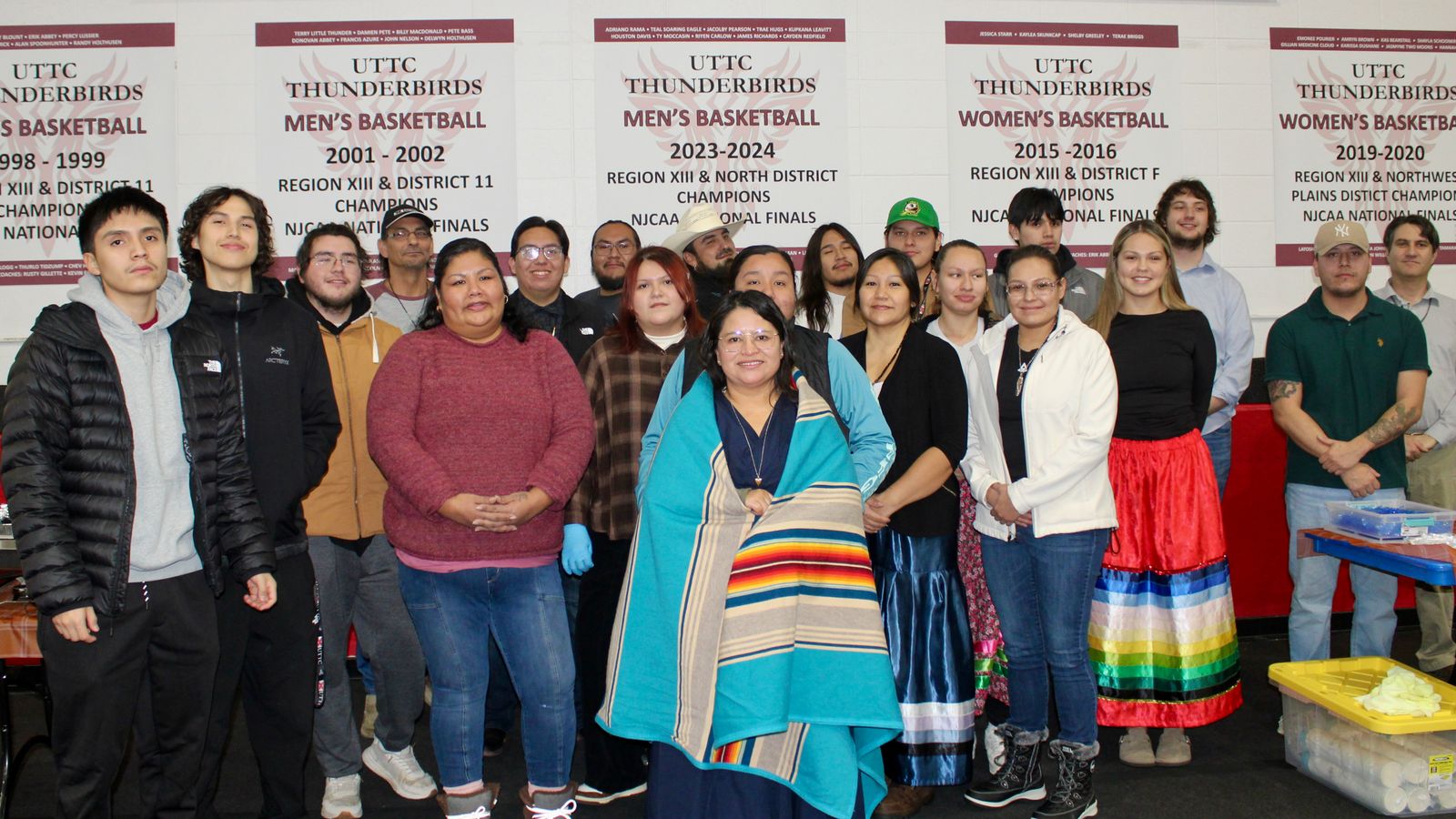
Student Melanie Moniz, Mandan, Hidatsa and Arikara Nation citizen, served cornballs — made with hand-ground blue corn meal, sugar, tallow and juneberries. Moniz helped design the recipe book, made five of the 15 dishes and blended both of the teas. She said working toward food sovereignty is her way to give to the next generations, and called the event “a celebration, a reconnection and a revitalization of our traditional foods.”
“It’s so important to see our foods reintroduced. For me, I’m in my forties, and I haven’t tried some of these foods until recently,” she said. “Now, my children get to be introduced to their traditional foods at a much earlier age.
The soups, dishes and desserts featured ingredients like hubbard squash, wild rice, buffalo, catfish, juniper berries and sunflower seeds — ingredients that are widely available today, that date back to pre-colonization and were a large part of Indigenous food systems.
Food as a tool for colonization
But European colonizers disrupted those food systems.
They hunted key species, like buffalo, to near extinction and corrupted Native crops through mass farming techniques, genetic modification and chemical fertilizer use. In the 1800s, settlers, in their haste to claim western frontier land and resources, forced Native communities from their homelands — separating them from their traditional food sources.
This settler expansion mentality was encouraged by the United States government, which used treaties to limit tribal lands. In 1830, Congress adopted the Indian Removal Act. These policies displaced more than 100,000 Native Americans. In the Northern Great Plains, the Sibley-Sully campaign, retribution against Native people after the U.S.-Dakota War of 1862, killed hundreds of Native Americans and left survivors to starve. The military went from village to village, slaughtering women and children, burning their land and destroying their food and shelter.
“Twenty-two hundred soldiers marching in a mile square, shooting and killing animals they encountered, pulling up natural food resources, burning them, defecating on them,” said UTTC’s Goodhouse, a Standing Rock Sioux Tribe citizen. “The utter destruction of food resources on the plains, it didn’t let up.”
Instead of their typical healthy diet of game, rice, squash and seeds, displaced Native Americans were issued food rations of flour, sugar, lard, coffee and canned meat. This was when foods like frybread were introduced into Native food systems.
Using food as a weapon of colonization continued as a weapon of assimilation. Native children involuntarily attending boarding schools were fed meals with little nutritional value, foods they had never eaten before, including white bread, canned meat, and sugar. Many kids became sick because of the change in diet, and many starved.
Through displacement and forced assimilation, Native communities were removed from the food systems that had sustained them for generations. Today, because of commodity food and fast food diets rich in carbs, fats and sugars that are widespread on reservations, Native American populations are burdened with high rates of chronic conditions, including diabetes, and have lower life expectancy.
Food as medicine
Encouraging tribal communities to reintroduce traditional food systems into their daily diet can make eating healthier the norm, said Chef Craig.
“If we have never seen quinoa on the rez, we don't know it's Indigenous. And if we associate it with super food or organic or health food, we're going to think, ‘Ah, that's white people food,’” he said. While quinoa isn’t native to the Great Plains, it is native to the Andean region of South America, or present-day Peru and Bolivia, and is an Indigenous grain.
Other healthy foods that might be viewed as “white people food” but are actually Indigenous to North America, are seeds, including flax, berries, including cranberries, beans, squash and any game native to the region, according to Dakota County Master Gardeners.
These ingredients and more are featured at Café Gozhóó, a restaurant serving Native American-inspired food on the White Mountain Apache Reservation in Arizona. The restaurant, launched by Chef Craig, is part of the Rainbow Treatment Center Nutritional Recovery Program, which helps people recovering from trauma and substance abuse through cooking as a form of behavioral therapy.
Indigenous foods heal our bodies and our minds, said Chef Craig, who received treatment for substance abuse at the center 13 years ago. Cooking by using traditional foodways gave him purpose and motivation to stay sober.
“It's changed my life and saved my life,” he said, “Not just in some like, romantic, you know, rebellion kind of way. It really literally did for me.”
He was invited back to the treatment center, not to receive help but to teach others how to heal their trauma through cooking and connecting to their culture.
His work is inspiring others to do the same. As he shared his story at the IAC Conference in Las Vegas, UTTC agriculture student Melanie Moniz sat in the audience, imagining how she could bring these practices back to her North Dakota tribe.
The day before she’d eaten a lunch featuring Indigenous foods curated by Chef Craig. She said she was blown away by the blue corn cake with vanilla mousse, made with some of the same ingredients as the cornballs she’d made for the “Taste the Earth” event the month before.
“Our foods are our culture. They’re our lifeway. They care for us spiritually,” she said. “Food is medicine.”
Making room on your table for Indigenous food
One way to reconnect with traditional foods is by visiting restaurants that specialize in Native American cuisine or buying Native produce from farmers’ markets.
In Bismarck, Blue Buttes Grill on the UTTC Campus sells frybread and, if you’re looking for something lighter, soups made with traditional ingredients like turnips, corn and buffalo.
Chef Craig recommended introducing Native foods into meals made at home. Keeping traditional foods visible — “in sight, in mind,” he said — makes them easier to incorporate into your lifestyle. Better yet, creating traditions such as harvesting or foraging with family, or baking a favorite holiday dessert using native ingredients, creates habits and revitalizes traditional foodways.
“The importance of native food-ways is when we heal our homes and when we heal our minds, we heal collectively,” he said.
Spotted an error? Suggest a correction.
Gabrielle Nelson
Former Environment Reporter
Sharing Is Caring
This article is not included in our Story Share & Care selection.
The content may only be reproduced with permission from the Indigenous Media Freedom Alliance. Please see our content sharing guidelines.
© Buffalo's Fire. All rights reserved.
We provide independent Native-focused reporting that gives our communities the context and the facts they need to make informed decisions.
Respect The Fire
At Buffalo's Fire, we value constructive dialogue that builds an informed Indian Country. To keep this space healthy, moderators will remove:
- Personal attacks, harassment, or hate speech
- Spam, misinformation, or unsolicited promotion
- Off-topic rants and excessive shouting (All Caps)
Let’s keep the fire burning with respect.