






A Superfund site in Minnesota is spreading, disrupting a tribe’s way of life
Little progress has been made despite 40 years of cleanup on Leech Lake Reservation

Environment Reporter

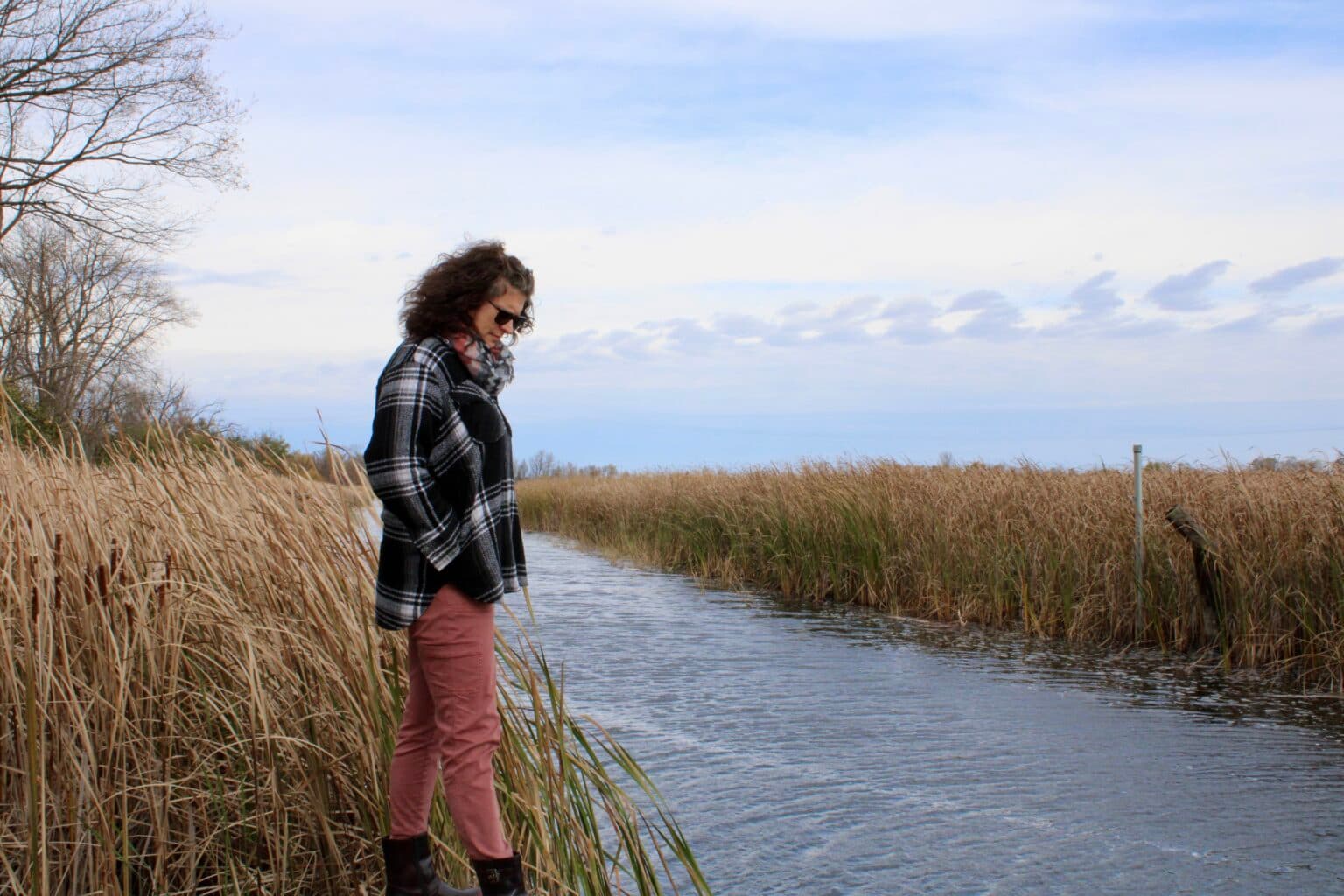
Brandy Toft, environmental director for the Leech Lake Division of Resource Management, looks down at Pike Bay Channel, where the St. Regis Paper Co. Superfund Site’s water treatment plant pumps its effluent, Cass Lake, Minnesota, Monday, Oct. 20, 2025. (Gabrielle Nelson/Buffalo’s Fire)
As a teenager, Ryan White learned to harvest manoomin from his father and grandfather on the White Earth Reservation.
The Minnesota lakes are surrounded by towering pines, the shallows hidden by tall grass, where the sacred wild rice grows. Every fall, he rows out on one of these pristine lakes, some of which ban motor boats during harvest season to keep the water pollution-free and the wild rice beds undisturbed.
Among the tall grass, White fills his canoe with the grain that’s part of the Ojibwe creation story.
“Most ricers start out as polers, and you just push them around,” he said. “As you gain experience, you’ll kind of figure out where the riper rice is, where the thicker rice is, and just get to know the bed and know the lake.”
But White, a citizen of the Leech Lake Band of Ojibwe and the director of advancement and public affairs at Leech Lake Tribal College, also knows to avoid harvesting from a certain part of the lake — Pike Bay Channel.
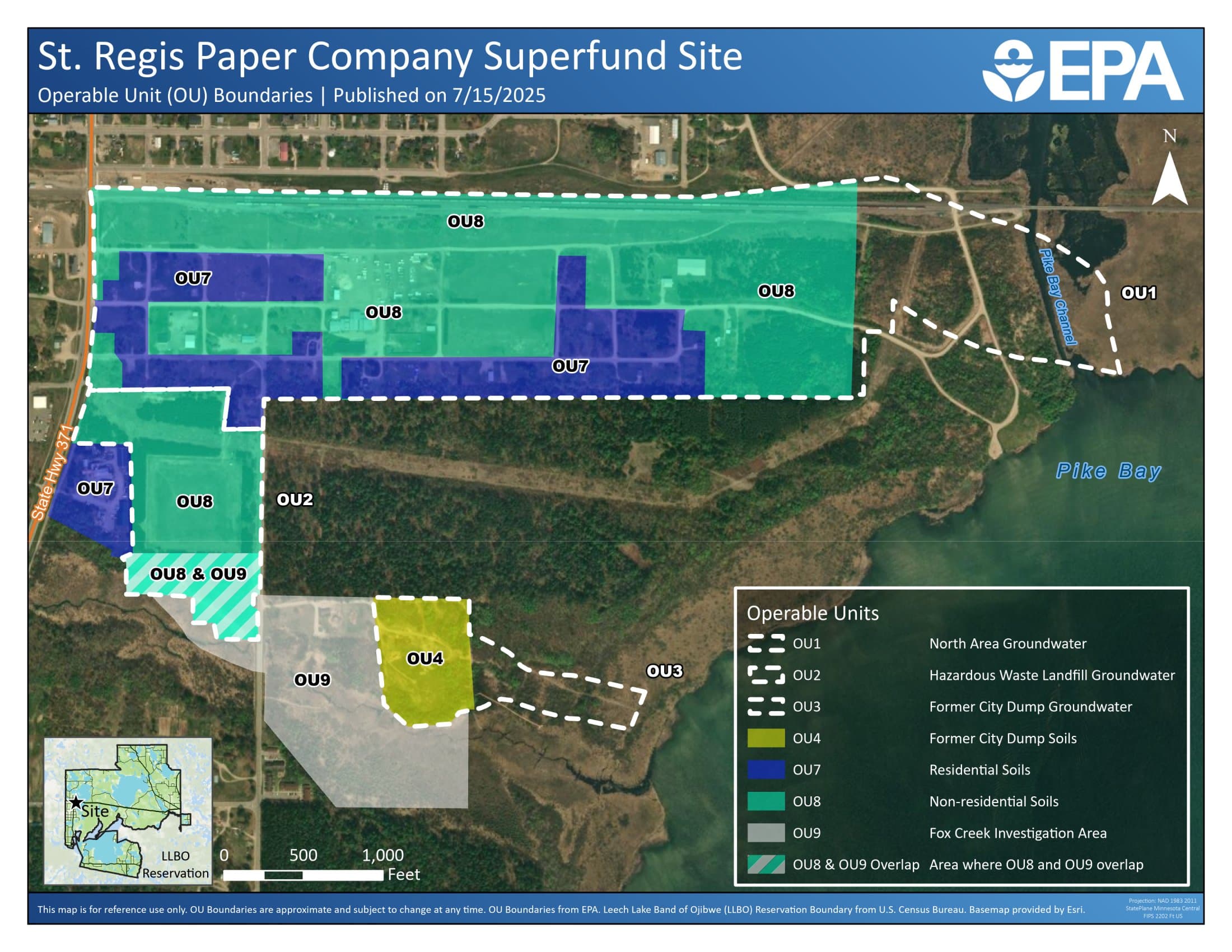
The channel abuts an active Superfund site that is part of a federal government cleanup program for some of the most polluted areas in the country. The site sits between State Highway 371 and Pike Bay, a 4,700-acre lake just outside the city of Cass Lake. Groundwater pollution stretches east beneath the channel and is migrating to the surface. And recent testing shows that the groundwater pollution is spreading south to Fox Creek, which flows into Pike Bay.
It’s putting wild rice harvesting — and Ojibwe traditions — in further jeopardy. And if contamination spreads, it could become a problem for communities downstream. Pike Bay and Cass Lake, the 15,000-acre body of water that gives the city its name, are part of a chain of lakes in Minnesota that form the headwaters of the Mississippi River.
The Environmental Protection Agency has been working to clean up the hazardous waste contamination in Cass Lake for more than 40 years. The primary solution is a water treatment plant that takes groundwater from multiple wells on the site, filters out the toxic pollutants and pumps the treated water into Pike Bay Channel, which connects Pike Bay and Cass Lake.
The system is meant to clean the contaminated groundwater and prevent its spread.
“It’s failing in both respects,” Eric Krumm, the Leech Lake band’s Superfund coordinator, told Buffalo’s Fire.
From 1957 to 1985, the St. Regis Paper Company operated a wood preserving facility in Cass Lake. During that time, it used the land as a dumping ground for its waste.
Workers placed wood soaked in hazardous preservatives next to homes, filling them with the smell of tar and mothballs. They burned waste products and discharged about 500 gallons of sludge and wastewater per day into onsite holding ponds, storm drains and the city dump.
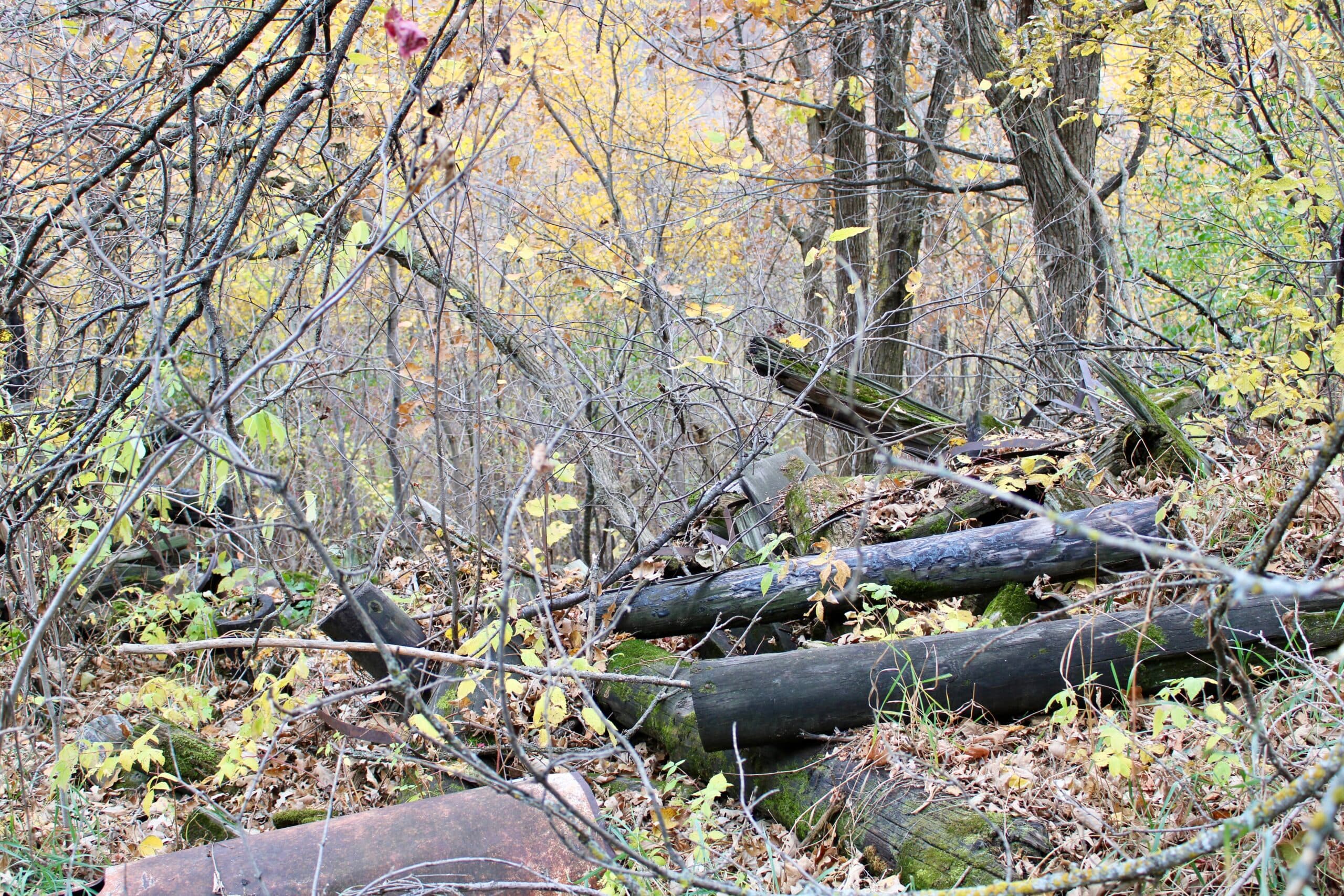
The main chemicals of concern are creosote, a tar-like byproduct of burning coal or wood, and pentachlorophenol, a manufactured chemical that the EPA is phasing out and will ban by 2027. Both substances are considered potential carcinogens by the EPA.
When the facility was active, the community was directly exposed to these chemicals at a swimming hole dubbed “Rainbow Pond” because of the iridescent sheen on the water from creosote runoff. In the neighborhood next to the facility, residents breathed in toxic fumes from the burning of the facility’s waste product, and contaminated soil and dust were tracked into homes.
The EPA designated the 163-acre facility as a Superfund site in 1984 and placed it on the National Priorities List. A year later, the St. Regis Paper Company stopped operations. Residents were bought out of their homes. Businesses closed. And 42,000 cubic yards of contaminated sludge and soil were excavated and buried in a lined containment vault a quarter mile from downtown.
The South Side neighborhood of Cass Lake is now a vacant field called “the great expanse,” surrounded by short, stunted pines. It serves as a reminder of the paper company’s pollution.
A ‘stable’ situation … or ‘stagnant’
The cleanup plan is now led by International Paper Co., a paper manufacturer headquartered in Tennessee, which acquired St. Regis and assumed cleanup in 2000. The EPA oversees cleanup, with the Leech Lake Band of Ojibwe Division of Resource Management and the Minnesota Pollution Control Agency providing feedback.
The groundwater treatment plan has remained unchanged since water extraction wells and the on-site water treatment facility were constructed in 1987, but the federal government and the band differ on its effectiveness
The EPA’s 2025 Five-Year Review showed decreasing contamination at the core of the plume, but it also showed unsafe pentachlorophenol levels east of the plume near Pike Bay Channel and south near Fox Creek. Of 89 monitoring locations on the site, 58 had pentachlorophenol levels that exceeded the band’s standards, greater than 0.02 parts per billion (ppb), and 36 exceeded EPA standards, greater than 1 ppb.
The EPA calls these levels “stable.” Krumm calls them “stagnant.”
The treatment plant was supposed to reduce the groundwater plume and render it effectively contained by 2011. Yet, the treatment plant is still required today — 40 years later — to keep the plume in check. And according to the EPA’s 2025 report, the groundwater “cleanup timelines could extend well beyond 2051 if the system were to remain operating as-is.”
Groundwater testing by the Leech Lake Band shows that the plume has spread beyond the extraction boundaries and beneath Pike Bay Channel.
The EPA said this doesn’t necessarily mean that the plume is growing. Rather, as the agency does more testing, “the shape of the plume is changed to reflect that new data.”
There are also fears other chemicals may be present.
While the plant removes most contaminants, Krumm said, treated water “regularly exceeds” healthy limits of dioxins. This group of highly toxic chemical compounds is believed to have been introduced to the soil and waters of Cass Lake by workers burning waste and wood at the St. Regis facility in the ‘80s.
Limits placed on traditional foods
Brenda Eskenazi, a University of California Berkeley public health professor who studies dioxin exposure, told Buffalo’s Fire that dioxin is a potent carcinogen that interferes with hormones and can cause fertility and developmental problems.
“It has a very, very, very long half-life,” she said, which “means it hangs out in the body and in the environment for very long periods of time.”
In 2001, the EPA conducted testing on white fish in Cass Lake, which showed dioxin levels in some was 10 times higher than those in nearby lakes. That has fed concerns that community members may be taking in chemicals indirectly through their food sources, including white fish and wild rice, which are staples of the Ojibwe diet.
The Leech Lake Band advises tribal members to remove as much fat, where dioxin accumulates, from Pike Bay and Cass Lake fish, while recommending that pregnant women and children avoid eating them altogether. But as stated in the band’s 2024 report, “consumption advisories for Treaty fish are like telling average Americans to limit meat or bread consumption.”
Limits are also placed on wild rice. Though the band has not issued a consumption guide for the grain, out of the thousands of pounds of wild rice it buys from tribal members each year for processing, Krumm said none are from Pike Bay Channel.
Brandy Toft, environmental director for the band’s Division of Resource Management, told Buffalo’s Fire, that there aren’t enough extraction wells to capture the contaminated groundwater and prevent its spread.
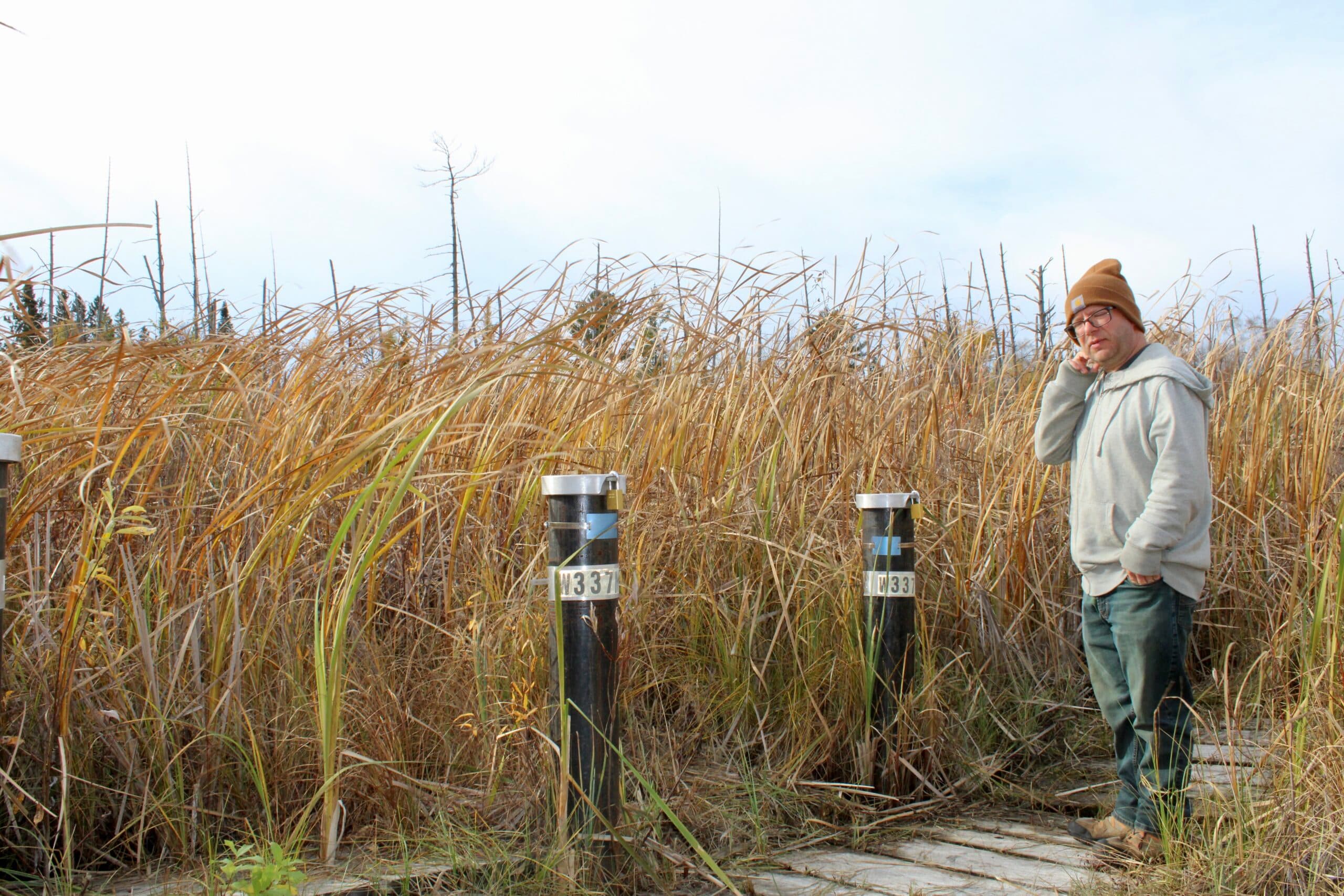
Standing among the tall grass at Fox Creek next to EPA monitoring wells, she said the groundwater is like a wave pool, and the contamination is like dye dropped into it. The extraction wells are like straws trying to suck all the dye out of the pool, but there just aren’t enough straws, she said.
“Especially in a subsistence indigenous community that has every right, literally every right, to hunt, fish, gather in these areas or surrounding areas without fear or without exclusion from those zones because of contamination,” she said.
International Paper has not included plans to update the water treatment plant, beyond replacing filters, in their most recent remediation report. The company did not respond to requests for comment.
Disrupting a way of life
Back at the Leech Lake Reservation, White harvests wild rice every year with his sons, 16-year-old Debwe and 14-year-old Arrow — a tradition he is passing down.
Eight years ago, he took his sons ricing for the first time. White said they were just “moseying along,” collecting rice here and there, when Arrow saw another little boy with more rice in his boat than him. Competitive, Arrow looked at his dad with excitement, urging him to hurry up.
Arrow’s love of ricing came “naturally,” said White. “He had just seen it in our people and how much we care about that rice. Even at a very young age, you know that it’s important.”
Minnesota Ojibwe tribes, including Leech Lake, harvest wild rice in beds along the St. Louis River and in shallow lakes that make up the headwaters of the Mississippi River — and have been for centuries. Ojibwe ancestors were sent to the region by a prophecy that told them to travel west from the East Coast until they found the “food that grows on water.”
“It’s called the sacred berry, or the good berry,” said White. “It’s food, but also, it’s medicine. It’s who we are.”
He said wild rice has also provided for the Ojibwe. Today, many tribal members rely on a steady wild rice harvest to supplement their income in the fall.
“There’s times where I had to use my income from wild rice to pretty much pay the bills, keep a roof over my head and keep the lights on,” said White.
But they have been limiting where they harvest since Pike Bay Channel is off-limits to tribal members.
“That’s what may happen in the future for the entire Pike Bay and the surrounding waterways,” said White, “and all that connects to the Mississippi River. And we’re pumping that directly into the lake.”
Community impact
So, why can’t Leech Lake tribal members just fish and harvest wild rice at a different lake?
Harvest practices are deeply tied to place and identity for Native communities, Anton Treuer, a Leech Lake citizen and a professor of Ojibwe at Bemidji State University, told Buffalo’s Fire.
“Being a Leech Lake Ojibwe person is connected to harvesting fish at Leech Lake,” he said. “The argument that someone should just pack up their bags and drive to Lake of the Woods and harvest a walleye that doesn’t hurt them is silly for a variety of reasons.”
The St. Regis Paper Co. hasn’t used Cass Lake as its dumping ground for more than 40 years, but Treuer said it’s still in the consciousness of tribal members today. He explains it as “an icky feeling.” Is it safe to drink tap water? Is it safe to go swimming in Cass Lake?
“It never feels as safe as it should be, and people intentionally avoid that space to the degree that they reasonably can,” he said, which has an “immediate impact on people’s ability and willingness to participate in certain cultural practices.”
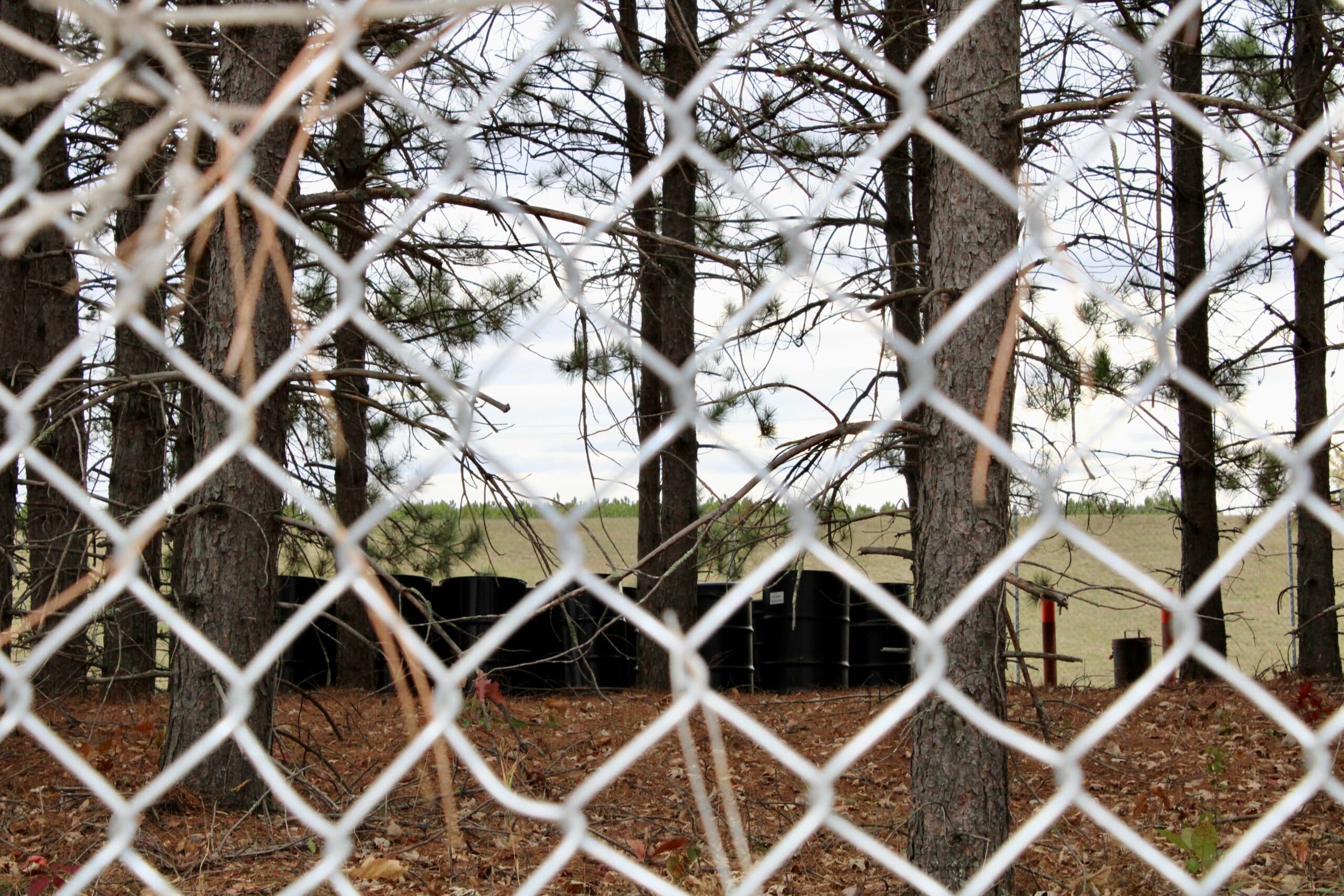
On top of limiting where tribal members can practice subsistence fishing and harvesting, the Superfund site also impacts ceremonies, said Treuer, who lives on the reservation near Cass Lake. Cedar, commonly burned in ceremonies, must be harvested out of town, he said, and the Superfund site occupies the area where first-kill ceremonies, a rite of passage for young Native hunters, were traditionally held.
Toft, from the band’s Division of Resource Management, called the Superfund a “black cloud over Cass Lake.”
“It just keeps hanging there,” she said.
The fight to preserve Ojibwe culture
But community members are making efforts to promote Ojibwe culture and language on the reservation.
Bug-O-Nay-Ge-Shig, a K-12 school, serves more than 200 students of various tribal backgrounds. Operated by the band, the school is located 15 miles from the town of Cass Lake, teaches kids the Ojibwe language and encourages cultural engagement. The school holds a Culture Camp each year where students take language classes, learn traditional crafts like drum making and beading, and take part in traditional Ojibwe pastimes.
The Leech Lake Tribal College also offers a course on nationhood and manoomin, taught by Leech Lake elder Elaine Fleming with help from White.
“When we’re on the water, I’ll be the one out there showing them how to rice — how to use the pole, how to knock, how to knock in a good way,” he said.
Treuer said other tribal initiatives are helping the band reclaim their land, language and culture. Around Cass Lake, signage is printed in both Ojibwe and English. And in June 2024, more than 11,000 acres of ancestral land, previously managed by the Chippewa National Forest, was returned to the band.
“The Ojibwe at Leech Lake, and really everywhere, we’re in for the fight of our lives,” said Treuer, “to keep our language alive and to keep our cultural practices vibrant.”
Even if part of the reservation hadn’t been turned into a Superfund site, he said, the Ojibwe community would still be building back their culture from other impacts of colonization, including residential boarding schools and the mass slaughter of buffalo.
While 40 years of Superfund clean up has accelerated those impacts, Toft said, in the centuries of Ojibwe history, a few decades isn’t deterring the community from fighting for their land and culture.
“We think differently,” she said, “and we’re in for the long haul.”
This story is a product of the Mississippi River Basin Ag & Water Desk, an independent reporting network based at the University of Missouri in partnership with Report for America, with major funding from the Walton Family Foundation.
Gabrielle Nelson
Report for America corps member and the Environment reporter at Buffalo’s Fire.

Sharing Is Caring
This article is not included in our Story Share & Care selection.
The content may only be reproduced with permission from the Indigenous Media Freedom Alliance. Please see our content sharing guidelines.
© Buffalo's Fire. All rights reserved.
Help us keep the fire burning, make a donation to Buffalo’s Fire
For everyone who cares about transparency in Native affairs: We exist to illuminate tribal government. Our work bridges the gap left by tribal-controlled media and non-Native, extractive journalism, providing the insights necessary for truly informed decision-making and a better quality of life. Because the consequences of restricted press freedom affect our communities every day, our trauma-informed reporting is rooted in a deep, firsthand expertise.
Every gift helps keep the fire burning. A monthly contribution makes the biggest impact. Cancel anytime.