

















Across Indian Country, approaches to accountability weigh privacy needs against information sharing
Leaders of Native nations can look to peers for guidance navigating delicate balance

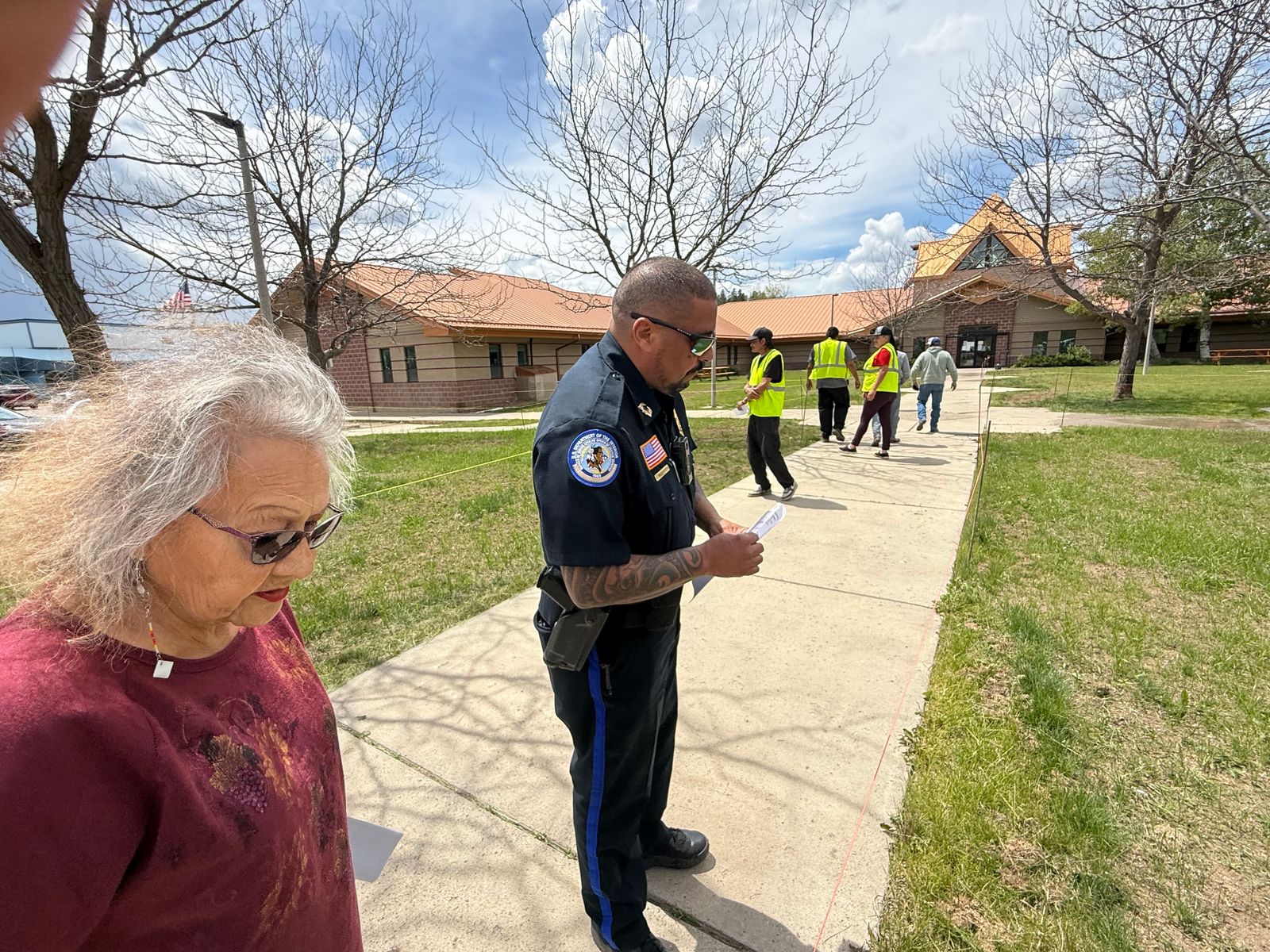

Over the past year, a dispute within the Northern Cheyenne Tribe’s elected leadership has been a source of unrest for members on the reservation headquartered in Lame Deer, Montana.
With limited transparency in the tribal government, allegations that most of the elected council misused the tribe’s money have gone unsubstantiated while rumors swirl. Each side sought to remove the other from power last fall, and those efforts haven’t been fully resolved.
Attempts to address the controversy are becoming more restrictive to community involvement even as the discord ripples out beyond Lame Deer. Cattle panels went up blocking the Little Wolf Capitol Building entrances after an influential court ruling last month, and a closed-door council hearing took hours to get underway on Sept. 30 because community members wanted access to the proceedings.
To restore a sense of unity, the tribe might benefit from looking outward, embracing openness and relying on kinship connections. Precedence for bringing greater community involvement to tribal government comes from examples like the Blood Tribe in Alberta, who sought to build trust by incorporating more member involvement and media coverage while setting the budget. There is also the work of the Confederated Tribes of Grand Ronde in Oregon, who mandate access to certain government information for members, as well as the influence created by watchdog local journalists on the Fort Peck Reservation in northeastern Montana.
The Blood Tribe
Across Montana’s border with Canada, the Blood Tribe in Alberta faced intense scrutiny and growing distrust after costly failed projects in the late 1990s, so the council began building a foundation for greater accountability and more public engagement in its budgeting.
Former Blood council member Jason Goodstriker played a significant role in creating an open, democratic process for making financial decisions. In a speech to fellow Indigenous leaders, he described how budget-making used to be exclusive and opaque.
“It's a smoky room, maybe there's one woman in there, and you pass the budget and everybody kind of grumbles and they walk away,” he recalled. “Well, I never figured that that was good enough.”
The Blood started inviting Canadian media to broadcast the tribe’s announcement when the budget was approved, a move that Goodstriker thought legitimized the internal procedures in the eyes of members and skeptical outsiders.
He remarked on the novelty of breaking down spending on Canadian television, line item by line item, and these days a version of this approach is still taking place, albeit online instead of on the evening news.
Goodstriker, who died in 2020, was lauded in the Canadian press for his work on tribal governance, First Nations representation and Alberta issues. Before his passing, he said bringing the Blood’s budget out into the light was “a healing process.”
Today, the Blood tribe’s website includes a comprehensive Year in Review magazine. The publicly available document provides audited financials from the past two fiscal years. It shows the individual pots of money that the tribe took in, the exact amount from every source and how the different contributions stack up against each other.
The magazine also provides the same breakdown for expenditures, as well as updates on claims being litigated and internal department developments.
According to the most recent year-in-review data, the Blood allocated $16 million from an advance payment on a large pending claim to the Twin Rinks hockey facility that opened in August.
A press release from the recreation center’s grand opening emphasized the Blood’s hope that Twin Rinks will serve young members and athletes throughout the region alike.
Chief Travis Plaited Hair said in the press release, “I really wanted to emphasize to everyone in the community that, yes, this is a hockey rink and our priorities will be our young kids and players, but I also want to make this a community gathering place. We want to accommodate everybody in the community to utilize this space.”
The Confederated Tribes of Grand Ronde
Another model of tribal government transparency in action comes from the Confederated Tribes of Grand Ronde in Oregon. Their tribal government has implemented several official measures to help members access government information while safeguarding sensitive details.
The Grand Ronde’s transparency methods for members include a Freedom of Information ordinance, access to audited financial statements and a multistage public input process for deciding the budget.
Chris Mercier is an outgoing Grand Ronde elected official who served 22 years with the tribal government, and he’s been consistently pushing for greater accountability and oversight.
He understands the need to steward tribal sovereignty without leaving members in the dark.
“I get the need for confidentiality,” he told Buffalo’s Fire. “It’s a balancing act.”
Mercier described a budget-making process that closely resembles municipal public-input structures used in local governments throughout Oregon. The tribes publish their preliminary budget for members to review, hold a general council meeting to discuss proposals and offer a public comment period for about six weeks.
The Grand Ronde also solicits input from members who don’t hold elected positions in the form of non-binding advisory votes that sometimes influence the eventual outcome. Mercier said people show active engagement as soon as the preliminary budget comes out, even though tensions over differing priorities remain a prominent feature of these conversations.
“It’s always an interesting exercise in democracy,” Mercier said, noting emotions can run high. Members who turn out to the preliminary budget meeting can be especially passionate about pushing their funding ideas, demanding explanations for proposals, and expressing frustration with government officials.
Although these participation channels give members a clear way to engage, Mercier said they don’t necessarily squash tensions between voters and their leadership. Members who don’t see their interests represented in the final budget often feel as if their voices aren’t being heard, and this can be a “sore subject” for the Grand Ronde.
Mercier told Buffalo’s Fire he’s interested in increasing opportunities for community buy-in and clarity, for example by bolstering wage transparency in the tribal government and establishing a transparency commission tasked with reviewing records.
Fort Peck Tribes
Ideas for transparency measures closer to home for those living on the Northern Cheyenne Reservation could come from the Fort Peck Tribes in northeastern Montana.
Members of the two tribes headquartered there — the Assiniboine and the Sioux — have the right to go to the Chief Financial Officer’s office and request budget documents. To facilitate access for members who may not have the time or capacity to review the financials in person, the independent newspaper on the reservation has published comprehensive budget information for local readers.
The Fort Peck Journal holds a storied legacy as a community watchdog for the Fort Peck Tribes, and it remains a vital link between members and their government.
The Journal’s founder, Bonnie Red Elk, was a multi-award-winning reporter and editor who launched the paper from her kitchen table in 2005. She famously started the independent outlet after 30 years as editor of the tribal-run newspaper, when the chairman at the time fired her for investigating his use of government funds for personal travel.
Today, the Fort Peck Journal is available in print for free, though Red Elk died of a stroke in 2015. Current publisher Kris Boyd carries on his aunt’s legacy, and he said his small team still wrestles with the tribal government to make sure readers get the full picture of the tribe’s affairs.
“It’s speaking truth to power,” Boyd told Buffalo’s Fire. “A lot of people, they want that transparency when it comes to our government.”
Boyd explained that the original intent of overseeing the tribes’ finances has evolved over the 20 years he’s been involved with the local newspaper. He’s attentive to feedback from readers, and he said these days the paper tends to focus less on tribal finances and more on issues that feel especially pressing — law and justice, tribal health and community service delivery.
“People are appreciative,” Boyd said, emphasizing how rare it is to publish an independently owned tribal newspaper. “I believe in the concept of what we’re doing. It’s not about me. I do it for the community.”
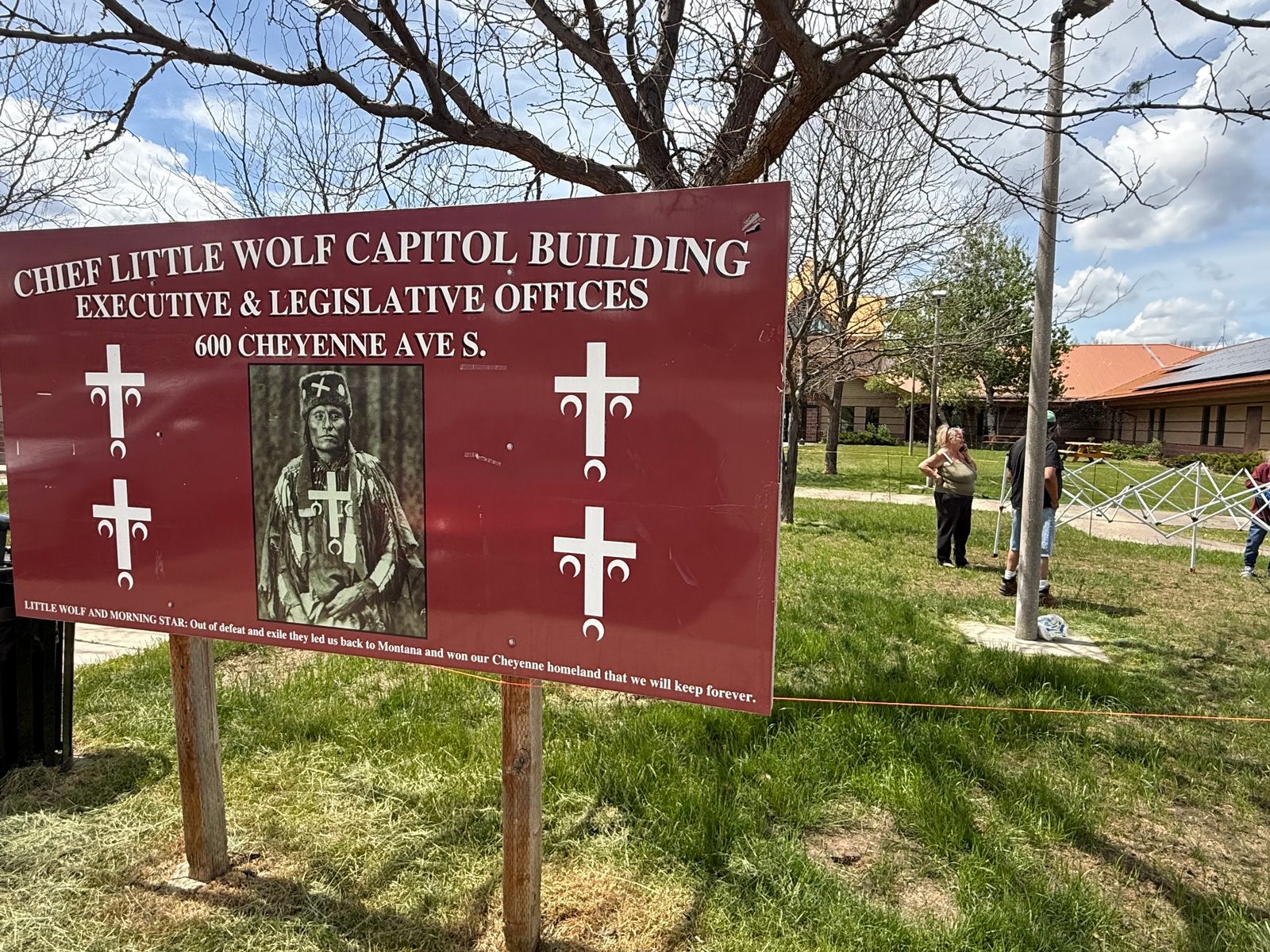
Keeping the Journal viable has been a gauntlet for Boyd and his small crew, similar to the challenges many independent local newspapers face nationwide. But when rising printing costs nearly shut the business down last year, Boyd managed to renegotiate advertising contracts after outcry about the potential closure.
“The community really spoke out about losing the paper,” Boyd said. New research from the nonprofit Rebuild Local News helps quantify the benefits of local outlets like the Journal for governments and communities.
“Local governments are more likely to engage in wasteful spending in ‘news deserts’ which have zero newspaper outlets,” wrote Matthew Baker, director of research at Rebuild Local News and his co-author, finance professor Dermot Murphy.
“Local journalism performs a core fiscal function: continuous, external oversight of public institutions,” the authors continued. “When that oversight erodes, governments face less scrutiny over spending and procurement decisions, increasing the likelihood of wasteful spending and corruption.”
They go on to detail how governments across the U.S. have incurred billions in expenses related to corruption or mismanagement when local community members didn’t have adequate insight into budgets and spending. One Illinois city that lacked this oversight wound up $164 million in debt by 2025 because city officials diverted funding under false pretenses between 2008 and 2010.
“Harvey, Illinois offers a documented case study in the costs associated with a sustained absence of local news,” the authors explained. “The city, a predominantly Black suburb of Chicago with a high poverty rate, had operated until relatively recently without a dedicated local newspaper for decades.”
For The Fort Peck Journal, an evolving strategy to inform the public cost-effectively has meant expanding its digital presence.
Digital journalist Clover Anaquod works alongside Boyd managing the Journal’s increasing online efforts. She shared the Fort Peck Journal’s Facebook analytics dashboard with Buffalo’s Fire, showing how the page reaches about a million views in a strong month. Additional analytics she shared demonstrate the content's broad reach beyond the 10,000 or so people who live on the Fort Peck Reservation.
A few thousand members of the Assiniboine and Sioux Tribes headquartered there live off the reservation — like Anaquod. At Boyd’s urging, she left Fort Peck to earn a journalism degree at the University of Montana, and now juggles social media duties and her MBA studies in Missoula with raising her three grandchildren.
She said she’s working with journalism colleagues in Missoula to build a pipeline of local talent in all of Montana’s seven reservation communities, driven in part by an audit she conducted at UM showing extremely low accuracy in reporting on tribes by non-Native journalists in the state.
Trust requires tradeoffs
These models offer potential ideas the Northern Cheyenne might adapt to their unique situation, but none is without shortcomings.
The Blood Tribe, for example, did not return multiple interview requests to examine the long-term effects of the changes Goodstriker and his colleagues set in motion, despite Goodstriker’s original emphasis on promoting media relations.
Similarly, the Grand Ronde tribal spokesperson did not comment on multiple inquiries about the tribe's transparency mechanisms. Mercier said the different members involved in the tribal government don’t always follow a uniform approach to engagement with members and the press.
Even for Fort Peck, the Journal remains active in print and online. But Boyd is looking to transition out of his publisher role soon, given the serious toll his work has taken on his personal health.
These complicated efforts around government accountability are influenced by deep-seated trauma and injustice that Native people have endured for centuries, and it’s important to consider that context in developing solutions for the future, University of Montana law professor Kekek Stark told Buffalo’s Fire.
Stark, who is Turtle Mountain Anishinaabe (Ojibwe) of the Bizhiw (Lynx) Clan, directs the University’s Indian Law Program and advises its American Indian Governance and Policy Institute.
“Sovereignty is complex,” Stark said, sporting an orange tie on Sept. 30 to memorialize the children harmed by residential boarding school atrocities. “Sovereignty is hard.”
He identified how the enormous history of colonialism and its more recent developments with the Indian Reorganization Act of 1934 contribute to the conflicts we see today in Lame Deer and other places. Tribal governments operating under the model imposed by the U.S. federal government must balance sovereign privacy with the need to share information in the community’s interest.
Nonetheless, Stark said, the discomfort for the Northern Cheyenne can be an opportunity to build mechanisms rooted in the community’s priorities, allowing for better circumstances in the future. Whether formally enshrined or more subtly incorporated, Stark said, examples from other tribes can help guide Northern Cheyenne’s leaders.
“I think it’s a good experience for the Northern Cheyenne to go through to learn and think about, ‘What does the community want?’” he said. “I think there’s opportunities for thoughtful mechanisms to be created to address all these concerns. There’s actually the potential for positive things to occur.”
Lessons for Lame Deer
Northern Cheyenne officials and members could take inspiration from others, with an eye toward local relevance.
“We’ve had similar struggles,” Stark said, referring to tribal governments across North America. “Others have waved through that puddle and they can learn from that.”
Chris La Tray, a Métis and Little Shell Chippewa storyteller who served as the Montana Poet Laureate from 2023 to 2025, offers similar insight in his book “Becoming Little Shell,” which traces the tribe’s successful fight for federal recognition.
“To ignore other approaches to preserving tribal culture and identity is shortsighted and ends only in sorrow,” he wrote. “Especially if tribes continue to consider these questions only in a view acceptable to—rather, dictated by—the settler colonial power structure still trying to eradicate them.”
La Tray, on his popular blog “An Irritable Métis,” criticizes the “shortsightedness of scores of ‘me first’ tribal councils across the country” that fail to take the long view of their community’s future wellness.
He’s hopeful Native leaders can reconnect with the kinship worldview that guided Indigenous practices prior to colonization. In La Tray’s tongue-in-cheek style, he describes this as the mindset that “we are all in this together” — but he points to the way many traditions thought about the interconnectedness between different people, groups and their surroundings.
Keep moving forward
Governance resources based on these considerations are available from various sources, including the Native Nations Institute in Arizona and the Native Governance Center in the Midwest.
After a two-year listening tour that included input from more than 20 sovereign Native Nations, the governance center in Minnesota documented its findings in a report that informs the services it offers to tribal governments today.
They note, “A significant number of Tribal leaders expressed the need to increase civic engagement. They are seeking support with engaging more youth in the governance process, educating constituents about how their Tribal government operates, and addressing transparency issues.”
These opportunities from afar offer potential paths forward for the Northern Cheyenne; the situation they face is not confined by reservation boundaries as it was during the allotment era.
UM’s Stark stressed that drawing on their ancestors' resilience and the hope of their youth can be critical to the Northern Cheyenne’s future.
“You’ve got to keep moving,” he said. “You’ve got to do the best you can.”
Sharing Is Caring
This article is not included in our Story Share & Care selection.
The content may only be reproduced with permission from the Indigenous Media Freedom Alliance. Please see our content sharing guidelines.
© Buffalo's Fire. All rights reserved.
We provide independent Native-focused reporting that gives our communities the context and the facts they need to make informed decisions.
Respect The Fire
At Buffalo's Fire, we value constructive dialogue that builds an informed Indian Country. To keep this space healthy, moderators will remove:
- Personal attacks, harassment, or hate speech
- Spam, misinformation, or unsolicited promotion
- Off-topic rants and excessive shouting (All Caps)
Let’s keep the fire burning with respect.