






‘Barnyard circus’: Northern Cheyenne leaders speak out a year after being ousted
Courts pave way for return of the council members, who see ongoing problems with safety, service delivery stemming from government turmoil


With recent rulings from the Northern Cheyenne courts on their side, members of the tribal council who were pushed out of office in 2025 feel eager to move on from a year of community-wide distress.
“Luckily we’re at this point,” Melissa Lonebear told Buffalo’s Fire on Wednesday alongside fellow members of the ousted tribal government. “We’re close right now.”
Lonebear and her colleagues lost their seats in an October 2025 special election that has been repeatedly voided by the courts. This week’s decisions from the Northern Cheyenne appellate court and tribal courts reaffirmed their authority, after months of mass confusion about the tribe’s true leadership.
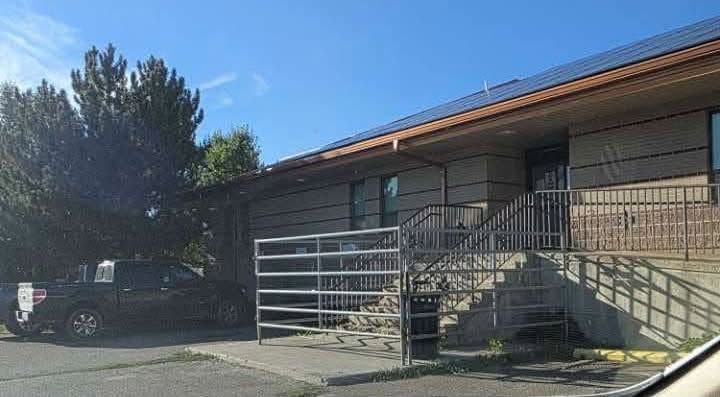
On Tuesday, shortly after Judge Adrian A. Miller issued the first of the decisions backing Lonebear and her colleagues, metal livestock fencing went up to barricade the entrance to the Little Wolf Capitol Building. It’s unclear who installed the cattle fencing. Tribal President Gene Small, a local rancher at odds with most of the tribal council, did not respond to Buffalo’s Fire interview requests.
Former tribal government employee Ryhal Rowland, whose photos of the cattle fencing quickly spread online, likened the ongoing turmoil to a “barnyard circus” in a Facebook post. She’s currently serving as the media specialist for the ousted council, and the group as a whole wonders what will happen next for the tribe and its leadership.
The saga in Lame Deer, Montana, dates back to at least September 2025, when Small organized alongside three Traditional Chiefs to unseat eight of the council’s ten members.
A Sept. 10 declaration from the Traditional Chiefs stated, “We are dissolving the current Tribal Council due to extensive theft, misuse of monetary sources and misconduct.” They provided no specific examples.
The council members named in the declaration told Buffalo’s Fire Wednesday the financial allegations were a false pretense to remove them from council. They state they have been good stewards of the tribe’s finances, for example investing in the new dialysis center to address devastating health issues.
“We were all active in our communities,” said Lonebear. “We were doing good things for our communities.”
Buffalo’s Fire has not received a response from the Bureau of Indian Affairs requesting financial audits of the tribe’s finances.
The problems in Lame Deer are real, ousted council members said Wednesday, but they don’t concern the tribe’s spending. At issue, as they see it, are resource constraints exacerbated by rampant misinformation and weak institutional structures.
Lonebear said she has worked in Northern Cheyenne tribal government for more than 20 years, and personal infighting among “disgruntled” community members plays a large role in shaping political perceptions on the tightly interconnected reservation. She said some of these community-level challenges have risen to prominence under Small’s leadership, which she characterized as self-serving and disconnected from the needs of community members.
“Everything is selective with him,” she said. “It depends on whether it will benefit him.”
But there’s more at stake for the ousted council members — many of them women — than disagreements among friends and family. Rowland, Lonebear and her fellow council member Nizhoni Friesz all detailed allegations that Small took office with explicit intentions to eliminate women in tribal government roles.
They pointed to the controversial special election used to replace them in their positions, which included rules barring women and people under age 30 from the ballot.
Lonebear called the election carried out with those rules “a huge civil rights violation.”
Plus, the traditional authority undergirding those special rules and the fallout they unleashed isn’t backed up by legitimate tribal practices, according to hereditary and seated Chief Cordell Little Coyote.
All of these factors have added up to a mountain of distrust and resentment on the plains of southeastern Montana.
Friesz said the problems persistent within the reservation community aren’t represented accurately by a lot of media coverage and activity on Facebook. To Friesz, the anger directed at her colleagues and the support for Small seem to come overwhelmingly from people who don’t live on the Northern Cheyenne Reservation. She said the result is a distorted public perception that she hopes will become clearer in the future.
Online vitriol is just one part of the ugliness the council members described experiencing as a product of the yearlong debacle. Lonebear and Rowland both detailed being harassed and threatened out in public.
“It’s a very unsteady feeling because of the personal attacks they’re doing,” Rowland said. “They’re trying to torture us.”
“We’ve been targeted in every area of our lives,” added Lonebear. “The mental health part of it is huge.”
At this point, Lonebear said, she’s hopeful the council, their families and the wider community can find solidarity and mend the profound damage created over the past year. She said she knows of other tribes who have spent years mired in similar challenges, their internal conflict complicating additional relationships like ties to the BIA.
“In the meantime their tribe is crumbling,” she said. “It’s heartbreaking for us. My hope is that we’re able to save our nation here. It’s not about us as individuals, it’s about our tribe, and our people, and our land, and our water.”
Sharing Is Caring
This article is not included in our Story Share & Care selection.
The content may only be reproduced with permission from the Indigenous Media Freedom Alliance. Please see our content sharing guidelines.
© Buffalo's Fire. All rights reserved.
We provide independent Native-focused reporting that gives our communities the context and the facts they need to make informed decisions.
Respect The Fire
At Buffalo's Fire, we value constructive dialogue that builds an informed Indian Country. To keep this space healthy, moderators will remove:
- Personal attacks, harassment, or hate speech
- Spam, misinformation, or unsolicited promotion
- Off-topic rants and excessive shouting (All Caps)
Let’s keep the fire burning with respect.