






MMIP Christmas tree shines brightly at North Dakota State Capitol
The tree features names of missing Indigenous people

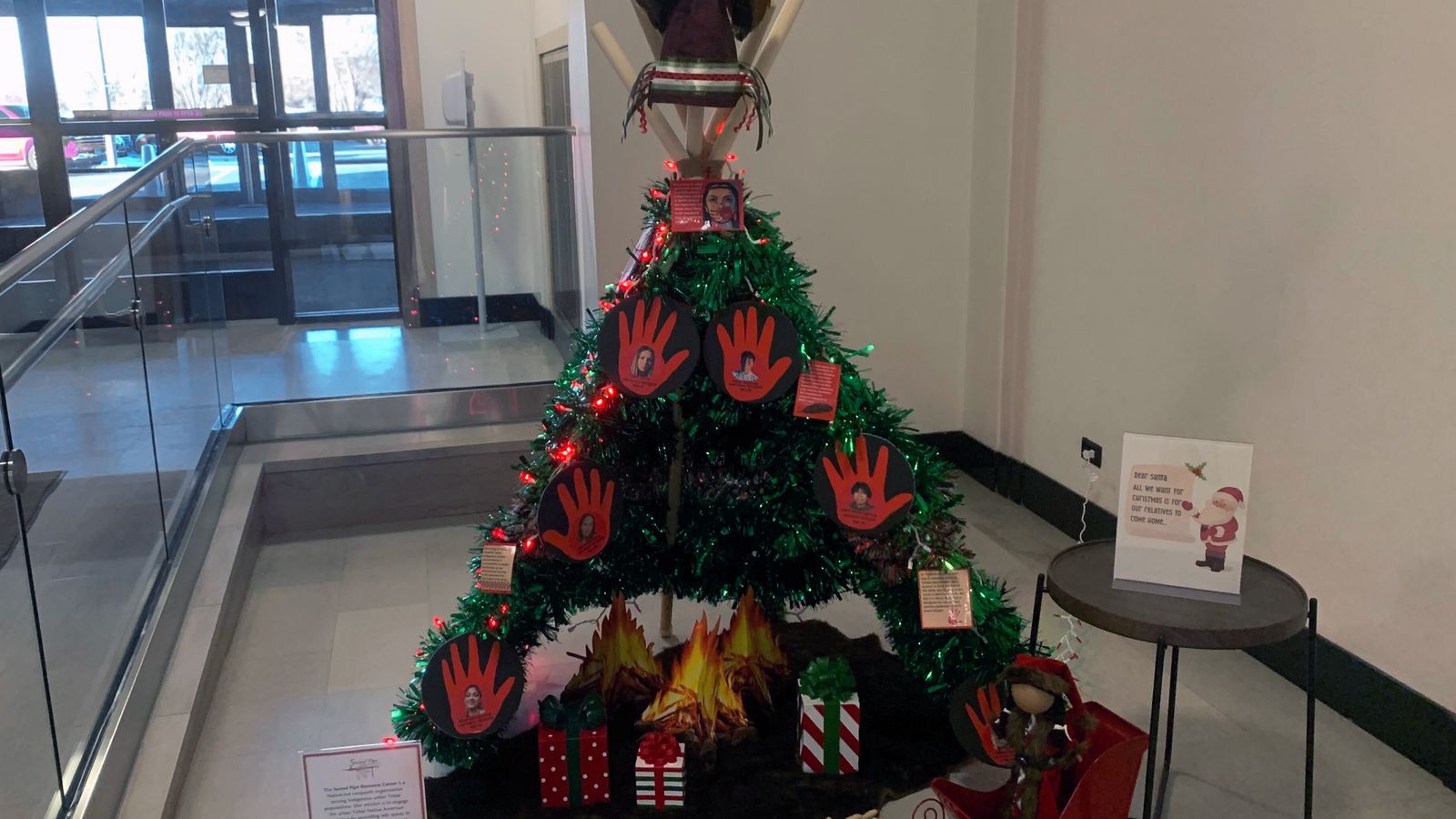

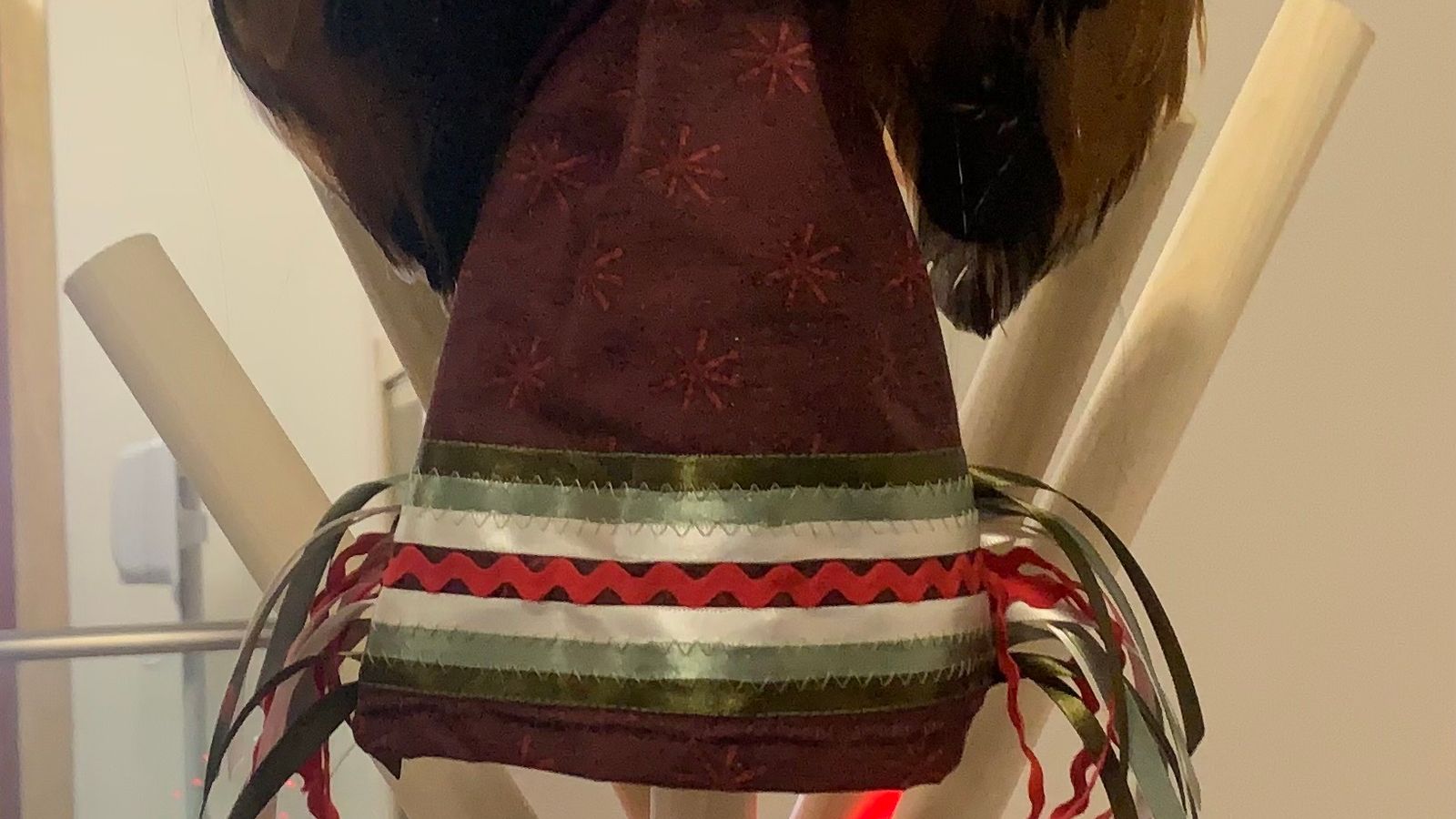
Toward the end of a long hallway at the North Dakota State Capitol, a small Christmas tree shines brightly. The tree, set up to resemble a tipi, is adorned with red lights and red handprint ornaments. An Indigenous angel sits atop the tree wearing a Christmas colored ribbon skirt and dentalium earrings. On the red handprint ornaments are names and pictures of North Dakota’s missing Indigenous people. Near the top of the tree is a photo of Renzo Bullhead, who went missing on March 16.
To the right of the tree is a powerful message: “Dear Santa, all we want for Christmas is for our relatives to come home.”
Cheryl Kary, executive director of Sacred Pipe Resource Center, said she and other employees want to bring awareness to MMIP in North Dakota while also Indigenizing Christmas. The idea for the tree came from staff having Bullhead on their minds, as this will be his family’s first Christmas without him. Since Sacred Pipe previously hosted events for Bullhead, Kary said she felt inclined to continue to help.
“The tree represents the idea that home is always waiting for us,” said Kary, a Yanktonai Dakota enrolled citizen of the Standing Rock Sioux Tribe. “We were all feeling bad and thinking about how that’s our Christmas wish, that our relatives be found.”
Kary said this is Sacred Pipe’s third year displaying a tree at the Capitol, each year with a different theme. She started working on this year’s tree in November, and it took a few weeks to finish. The tree is part of a larger display of Christmas trees, called the “Capitol Showcase of Trees,” which are sponsored by different state agencies. The MMIP tree is sponsored by the North Dakota Department of Public Instruction, which also sponsored Sacred Pipes previous trees.
“I think that was the perfect way to keep that awareness for those that are still missing so we never forget them,” Lucy Fredericks, director of the Office of Indian and Multicultural Education for North Dakota’s Department of Public Instruction, said. “We continue to not forget, to always keep looking and to keep searching and remembering those that have been missing in our state.”
The tree has cards with information about MMIP statistics, the development of the Feather Alert and the MMIP Task Force. Fredericks, who is an enrolled citizen of the Standing Rock Sioux Tribe, is also an appointed member of the North Dakota MMIP Task Force. Fredericks said she hopes the task force and the tree can help bring equal attention and education to MMIP cases, which are often underreported.
Also on the tree is a photo of Jemini Madeline Posey, who went missing in January 2024. Posey, an enrolled citizen of the Spirit Lake Tribe, was reportedly trying to leave a relationship with her boyfriend, D’Angelo Hunt, prior to her disappearance. Hunt’s brother, Isaac Hunt, also went missing shortly after Posey’s disappearance. His remains were found during a search on Nov. 15, and D’Angelo Hunt has been charged in connection to his brother’s murder. He has also been charged with the voluntary manslaughter of a woman identified in the indictment as ‘J.M.P,’ initials that match Posey’s name. But Posey is still missing.
Posey’s older sister, Jade Frier-Posey, said this year will be another Christmas that Jemini’s daughter, Amani, will spend without her mother. “I will be thinking of all those that have no answers yet and pray that one day we all have closure,” Frier-Posey said in a text message to Buffalo’s Fire.
Natasha Littlewind, a friend of Frier-Posey’s and an MMIP advocate, said she hopes the tree can help bring resolution to Frier-Posey and her family by being part of a movement that calls for justice.
“I like the fact that they made it a tipi theme,” Littlewind, an enrolled Spirit Lake citizen, said. “More than anything, that’s what the families want, is for their families to come home. And the tipi has a great significance of that.”
The tree has been on display since Dec. 1 and will come down after the Christmas holiday.
“We are not an MMIP organization, but we do what we can to keep attention on the issue,” Kary said. “This has probably been the most impactful tree we have made so far.”
Sharing Is Caring
This article is not included in our Story Share & Care selection.
The content may only be reproduced with permission from the Indigenous Media Freedom Alliance. Please see our content sharing guidelines.
© Buffalo's Fire. All rights reserved.
We provide independent Native-focused reporting that gives our communities the context and the facts they need to make informed decisions.

Respect The Fire
At Buffalo's Fire, we value constructive dialogue that builds an informed Indian Country. To keep this space healthy, moderators will remove:
- Personal attacks, harassment, or hate speech
- Spam, misinformation, or unsolicited promotion
- Off-topic rants and excessive shouting (All Caps)
Let’s keep the fire burning with respect.