






Murder mysteries and Indigenous knowledge: The legacy of Sicangu Oglala Lakota author Joseph M. Marshall III
In the last installment of the Smokey River Suspense series, recently deceased author, historian and cultural bearer Joseph M. Marshall III tackled his most challenging mystery: Missing and Murdered Indigenous Women.

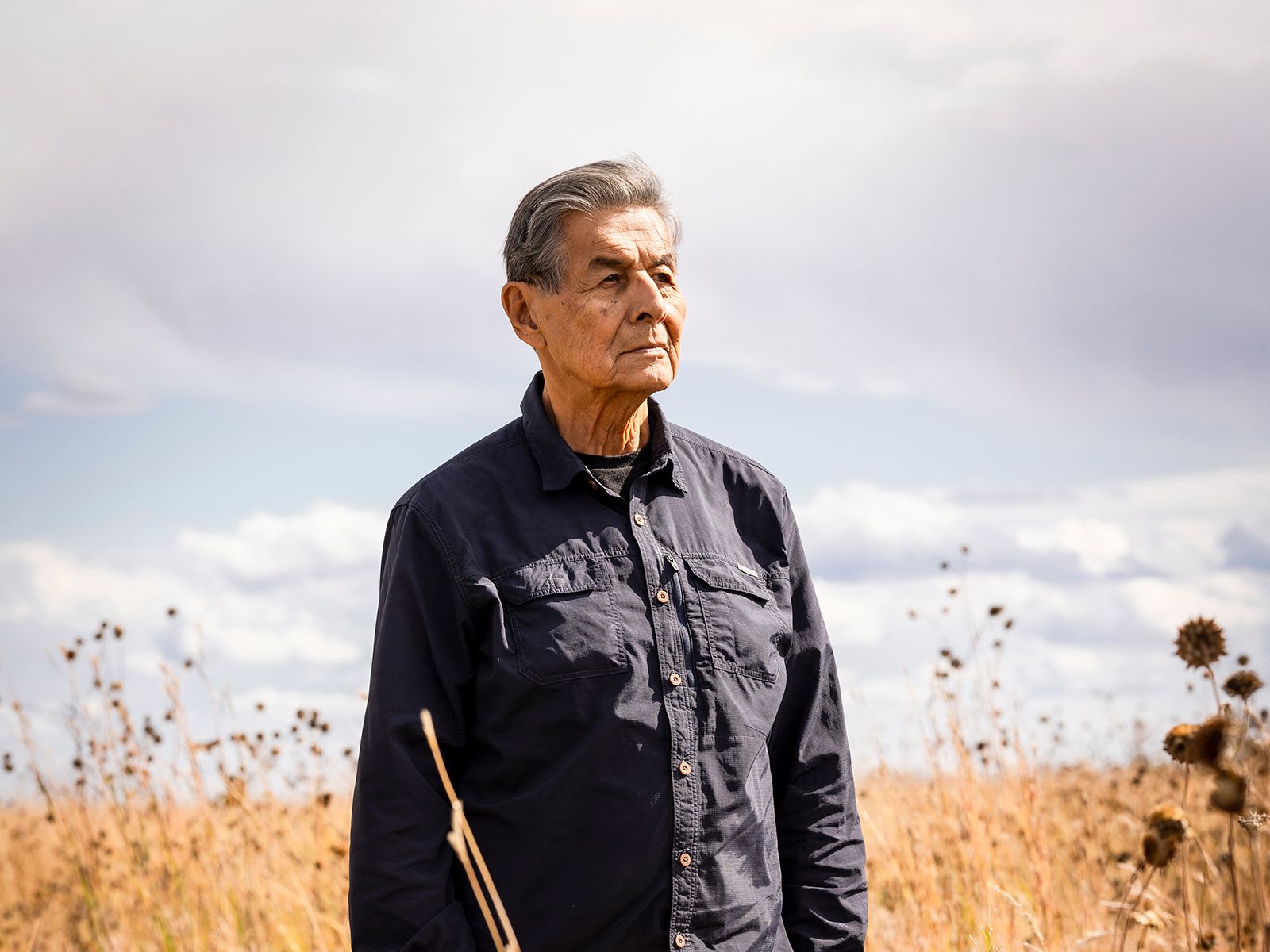
“Sing for the Red Dress,” one of three books in the Smokey River Suspense mystery series published in 2024, opens with a girl trying to find her way home. Keeling over with exhaustion from a long journey on the run, she lies down to rest in a pasture, so close to home, and never gets back up.
After a long life dedicated to teaching and writing about Native culture, one of the last stories that Sicangu Oglala Lakota author Joseph M. Marshall III told before his death in 2025 is about the ongoing Missing and Murdered Indigenous Women crisis. Just as the hero of his novel, crime-fighting historian Dr. Gavin Lone Wolf, saves 12 Native girls who are sex-trafficked, Marshall hoped that by bringing awareness to the issue through fiction, he could do the same.
Marshall was born in 1945 on the Rosebud Sioux Reservation in South Dakota, where he was raised in early childhood by his maternal and paternal grandparents — with whom he only spoke the Lakota language.
Later in his life, after receiving two PhDs in Native history and culture and becoming a prolific author and educator in his own right, he credited his maternal grandparents, specifically his grandmother, as being one of the most important teachers in his life because she taught him how to pray.
Marshall’s niece, Megan Bull Bear, remembers that her Uncle Joe’s “stoically indigenous” face would break into a smile around his loved ones. He told her stories when she was young, and she recalls his fierce dedication to living by the old Lakota teachings and customs and explaining their meaning to others as a culture bearer. He taught her the importance of the Lakota language.
“The way that he described it was like casting spells,” she said. He taught her that the Lakota language has power and that one must be careful when using it, especially in prayer.
Bull Bear’s mother, Marla Bull Bear, Marshall’s cousin by marriage, worked with him at her nonprofit, Lakota Youth Development, which she founded to teach youth Lakota culture, starting four-day summer camps 20 years ago. Marshall served as board president and helped create their Lakota Voices Audio Dictionary so youth could keep learning after they completed the program.
“He was extremely passionate about helping our kids reclaim their culture,” she said.
Teaching youth about their language and culture was one of the many ways that Marshall advocated for Native communities. He helped found one of the first tribal universities, Sinte Gelska University, on the Rosebud Sioux Reservation, where he taught high school and college students about Native culture, Lakota language and history.
Marshall wrote 19 other books, most of which were nonfiction, beyond the three in the Smokey River Suspense Series: “Last Prisoner of the Little Bighorn,” “The Wolf and the Crow,” and “Sing for the Red Dress.” He also served as technical adviser for films.
Marshall’s publisher of the Smokey River Suspense Series, Echo Montgomery Garrett, CEO of Lucid House Publishing, described working with him as “one of the most moving experiences of my entire career.”
She described Marshall’s dedication to the Smokey River Suspense Series and its ability to break stereotypes about Native people, address prejudices and challenges that Native communities face, and give a voice to contemporary issues.
Garrett also described the importance he placed on the message of “Sing for the Red Dress” about the Missing and Murdered Indigenous Women crisis. Red skirts and dresses became an important symbol for the crisis because many believe the color red can be seen in the spirit world.
“‘Sing for the Red Dress,’ for him personally, was the most important one,” Garrett said. She cited a speech he gave at the South Dakota Festival of Books in September 2023, in which he explained his deep passion for the issue.
“As with any issue, it starts with awareness,” Marshall said in the speech. “Please know that many native families live with grief and heartbreak day in and day out because a daughter, a sister or a mother is missing.”
Marla Bull Bear said that when a lot of tourism happens in South Dakota, such as the Sturgis Motorcycle Rally and the opening of pheasant season, women and girls on the Rosebud Sioux Reservation go missing, and they do not always know how many.
“As with any issue, it starts with awareness. Please know that many native families live with grief and heartbreak day in and day out because a daughter, a sister or a mother is missing.”
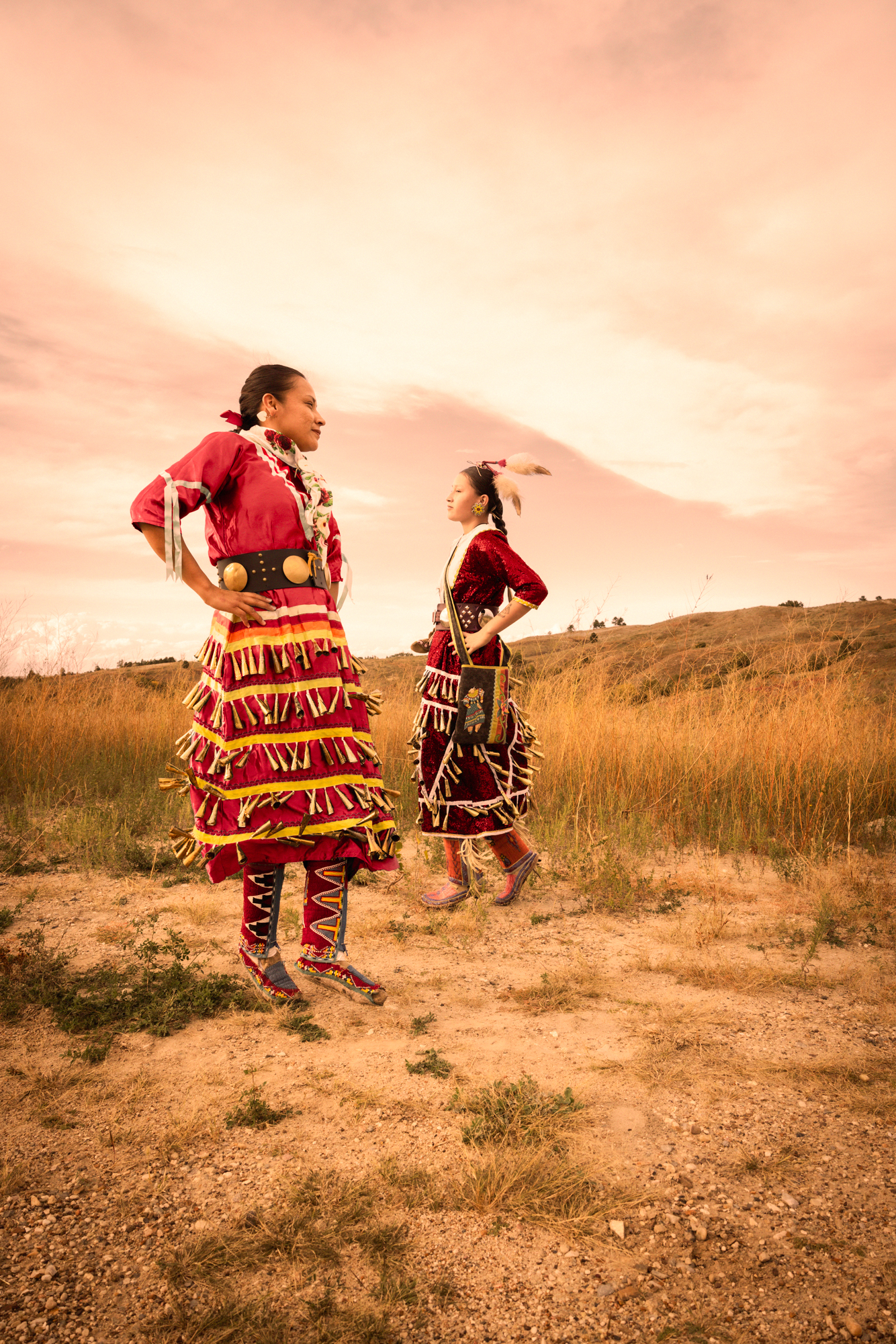
“Every single time there's a state event, this is happening, and it kind of gets brushed under the rug because the state is making money,” she said. “Look at what's happened to Mother Earth because of progress and money. Now it's costing human lives.”
There are 1,158 Murdered and Missing Indigenous People on the Buffalo’s Fire database but it is only a partial count. The agencies that investigate MMIP cases are disconnected and data collection is scattered and incomplete.
In "Sing for the Red Dress,” Mevlina Old Lodge, the girl in the pasture, runs away from her captors. It was an act of heroism in which she kept a list of the 12 other girls who were kidnapped with her and taken to a man camp. The story follows Dr. Gavin Lone Wolf and his cast of friends as they set out to find the missing girls, saving all 12 thanks to Melvina’s bravery.
The novel's final passage is a song Marshall quotes to uplift Lakota women, a final call to action for his readers. He writes:
“Lakota winyan
Nagi skapo
Niye un ca
Wicicage na
Oyate kinan
Waciniya pelo.”
“Lakota woman
Strengthen your spirit
You are the one
All the generations
Of the people
Depend on you.”
The Smokey River Suspense series is a contemporary mystery and thriller collection written by Lakota author Joseph M. Marshall III:
- Last Prisoner of the Little Bighorn: Follows university professor Dr. Gavin Lone Wolf as he investigates a murder and searches for a historical Native account of the Battle of the Little Bighorn.
- The Wolf and the Crow: Centers on rancher Hal Lamar and retired superintendent William Black Spotted Horse as they work to rescue a kidnapped family member.
- Sing for the Red Dress: Explores local community ties and addresses the crisis of missing and murdered indigenous women.
Chana Kaplan, Buffalo's Fire
Sharing Is Caring
This article is not included in our Story Share & Care selection.
The content may only be reproduced with permission from the Indigenous Media Freedom Alliance. Please see our content sharing guidelines.
© Buffalo's Fire. All rights reserved.
We provide independent Native-focused reporting that gives our communities the context and the facts they need to make informed decisions.
Respect The Fire
At Buffalo's Fire, we value constructive dialogue that builds an informed Indian Country. To keep this space healthy, moderators will remove:
- Personal attacks, harassment, or hate speech
- Spam, misinformation, or unsolicited promotion
- Off-topic rants and excessive shouting (All Caps)
Let’s keep the fire burning with respect.