






Native officials denounce Trump’s Little Bighorn revisionism
The historic battlefield has been directed to remove signage sharing Native perspective on Custer’s Last Stand


Almost 150 years after a coalition of Northern Cheyenne, Lakota Sioux and Arapaho warriors defeated Lt. Col. George Armstrong Custer and members of the 7th Cavalry Regiment at the Battle of Little Bighorn, a new battle has erupted over one question: Who gets to tell the story?
Since beginning his second term in the White House, President Donald Trump has waged an aggressive campaign against historical fact through an executive order issued March 27, 2025. The so-called “restoring truth and sanity to American history” directive has deemed museum and park displays on the nation’s darkest chapters — including slavery and broken treaties — contrary to his ideology that the U.S. has an “unmatched record of advancing liberty, prosperity, and human flourishing.” The president has also not held back his admiration for figures like America’s seventh president, Andrew Jackson, a known “Indian fighter” who signed the Indian Removal Act in 1830, which led to the displacement of thousands of Cherokee, better known as the Trail of Tears. A portrait of Jackson even hangs in Trump’s Oval Office.
As first reported by the Washington Post, Trump issued a new wave of orders in January that instruct National Park Service staff to take down or revise signage at 17 more sites across the country, including the Little Bighorn Battlefield National Monument at Crow Agency, Montana. Exhibit text describing the United States as “hungry for gold and land” and breaking treaties with Native people is being targeted, according to the Post.
“For him to be doing this to our culture and our history, it doesn’t sit right for us,” said Ernest Littlemouth Sr., the Northern Cheyenne Tribe’s vice president. He told Buffalo’s Fire that the tribe’s been trying to get answers from the National Park Service on what messaging will come ahead of the Battle of Little Bighorn’s 150th commemoration. “It represents our warrior life. And our teachings from our ancestors,” he said.
Another tribal official, Wallace Bearchum, questioned Trump’s directive.
“I think they're trying to rewrite it, and that's wrong,” said Bearchum, chairman of the Northern Cheyenne Cultural Commission. “We were the victors. It's our story. Custer and his entire command was wiped out, so there’s no one there on their side to tell that story. But you have the Northern Cheyennes who won that day, and we know what happened there. There's no way that anyone else can rewrite that history.”
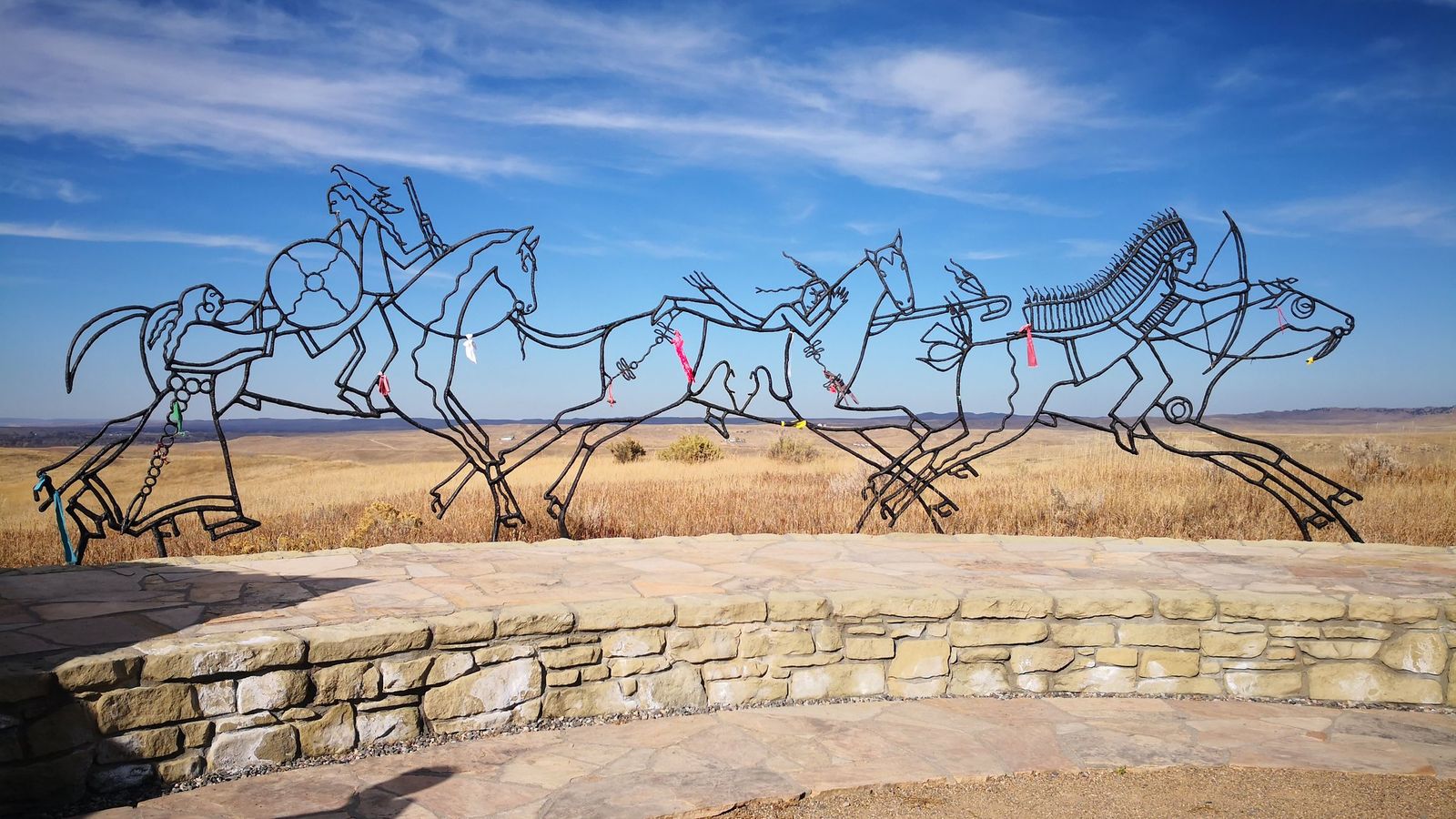
The Northern Cheyenne Tribe unanimously approved a resolution Feb. 2 to prevent any changes or removals to markers, signage and monuments that recognize Native people at Little Bighorn, a direct challenge to the Trump administration’s efforts. The tribe cited Public Law 102-201, a 1991 Congressional act that changed the site’s name from Custer Battlefield National Monument to the Little Bighorn Battlefield National Monument, and also authorized the installation of a Native memorial, a metal sculpture that honors the sacrifice of the Indigenous warriors who fought in the battle.
In an email sent to Buffalo’s Fire Feb. 6, the Office of the Secretary for the U.S. Department of the Interior disputed media reports about the president’s directive.
“Little Bighorn Battlefield National Monument has not been directed to remove or take down any exhibits or signage at this time,” it read. “At this time, very few parks have made any changes to exhibits or signage, and media reporting has broadly mischaracterized both the scope and the status of the review process underway pursuant to Secretary’s Order 3431.”
The email continued by saying parks are complying through an “ongoing, deliberate review process, working with subject-matter experts, tribal partners, and park leadership.”
“It seems like that should have happened first before they tried to make any changes over there,” said Littlemouth, citing the government-to-government relationship tribes have with the Oval Office. He said the Northern Cheyenne remain waiting for an invitation to consult on any potential changes or redesign to the site’s signage.
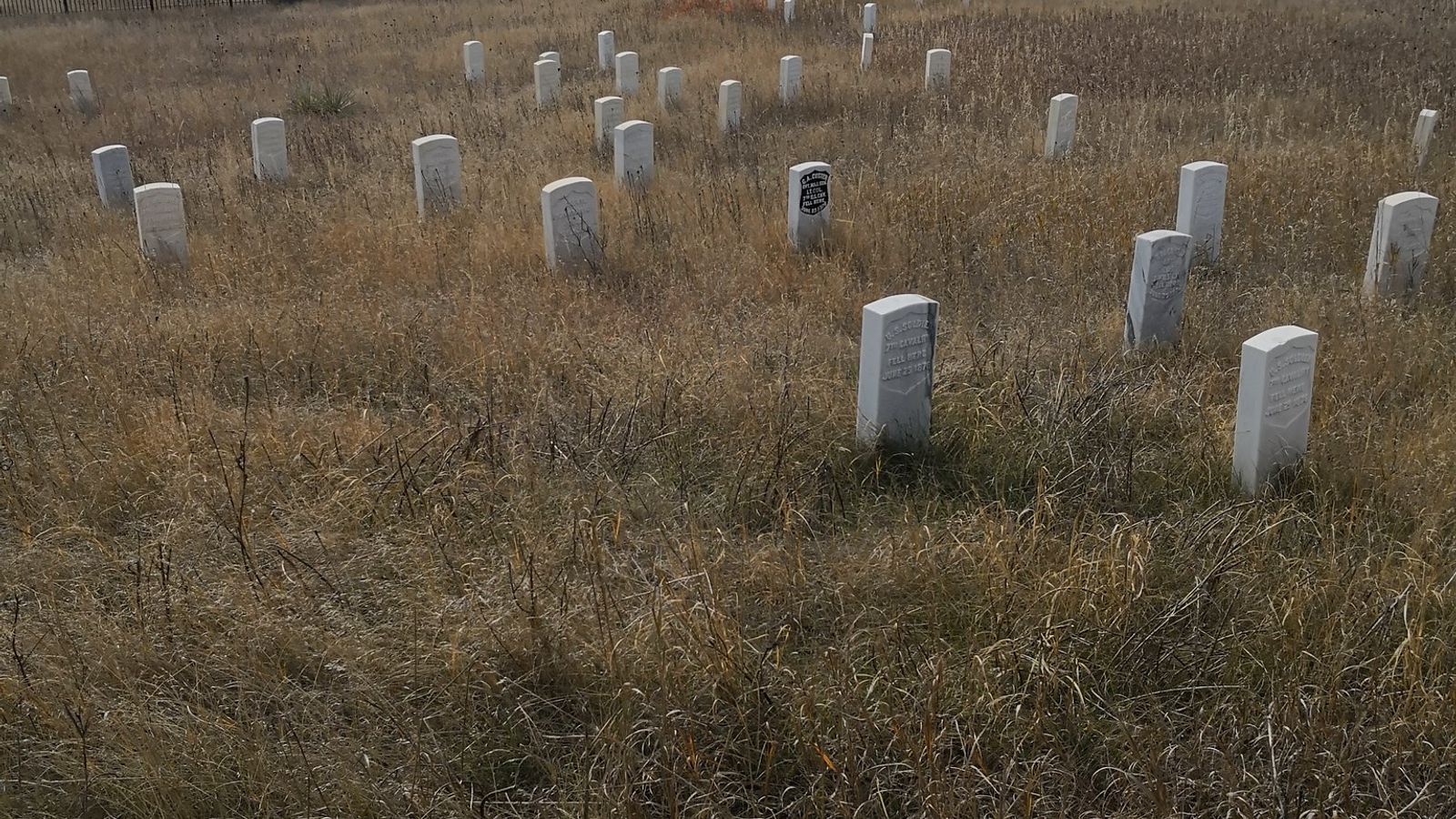
The Trump administration has already drawn accusations over the past year for whitewashing history, including that of Native people. Articles about the Navajo Codetalkers of World War II disappeared from Department of Defense websites until people complained, then U.S. Defense Secretary Pete Hegseth announced his decision not to rescind 20 Congressional Medals of Honor for U.S. soldiers who participated in the Wounded Knee Massacre of 1890. While Hegseth declared the matter settled, Native leaders — including Oglala Sioux Tribal President Frank Star Comes Out — denounced Hegseth’s decision as “despicable, untruthful, and insulting” and said efforts to rescind the medals will continue for what many consider a one-sided conflict leading to the deaths of between 150 and 300 Lakota, largely elders, women and children.
The 150th anniversary of the Battle of Little Bighorn — also known as the Battle of the Greasy Grass — is June 25-26. Plans are underway for a large encampment of several thousand Native people and horses near the original battle site.
One former NPS Indigenous liaison and consultant, Otis Halfmoon, said he’s been following the sweeping changes the Trump administration has been carrying out with parks, museums and government websites that reflect the history of people of color and marginalized communities.
“I suspected he would be attacking Little Bighorn Battlefield because that's the most famous of all battles where the Indians won,” said Halfmoon. “Sometimes non-Indians don't like hearing that.”
A member of the Nez Perce Tribe, Halfmoon said he knows the importance of including Native perspectives on historic sites, including battlefields.
“You try to tell a balanced interpretation, because for many years it was mostly from the soldier's point of view,” said Halfmoon. “But yet to do a balanced story, you tell the tribal story as well. So I'm worried about the changes that may take place inside the interpretation of our national park sites.”
The Battle of Little Bighorn site had previously been a mecca for admirers of Custer, whose ill-fated decision to engage Native forces has been romanticized in Western lore and such Hollywood Westerns as “They Died with Their Boots On,” in which Errol Flynn plays the golden-haired commander. Over time, historical analysis and Native perspectives chipped away at the Custer mystique, revealing an ambitious and flawed man who was often subversive or self-serving. When the battlefield was renamed in 1991, the superintendent of the NPS monument, Gerard Baker, received scorn and pushback.
“I mean, he got a lot of death threats,” said Halfmoon.
Just what presentation will await tourists on the 150th anniversary of the battle remains unknown at this time. But for many Native people, they hope their ancestors’ accounts remain a central part of the narrative.
“What are they trying to erase?” asked Littlemouth. “We want our people, our younger generation to know the truth.”
Sharing Is Caring
This article is not included in our Story Share & Care selection.
The content may only be reproduced with permission from the Indigenous Media Freedom Alliance. Please see our content sharing guidelines.
© Buffalo's Fire. All rights reserved.
We provide independent Native-focused reporting that gives our communities the context and the facts they need to make informed decisions.
Respect The Fire
At Buffalo's Fire, we value constructive dialogue that builds an informed Indian Country. To keep this space healthy, moderators will remove:
- Personal attacks, harassment, or hate speech
- Spam, misinformation, or unsolicited promotion
- Off-topic rants and excessive shouting (All Caps)
Let’s keep the fire burning with respect.