






Native political organizer and activist running for South Dakota governor
Candidate Allison Renville stresses importance of restoring trust between tribes and the state

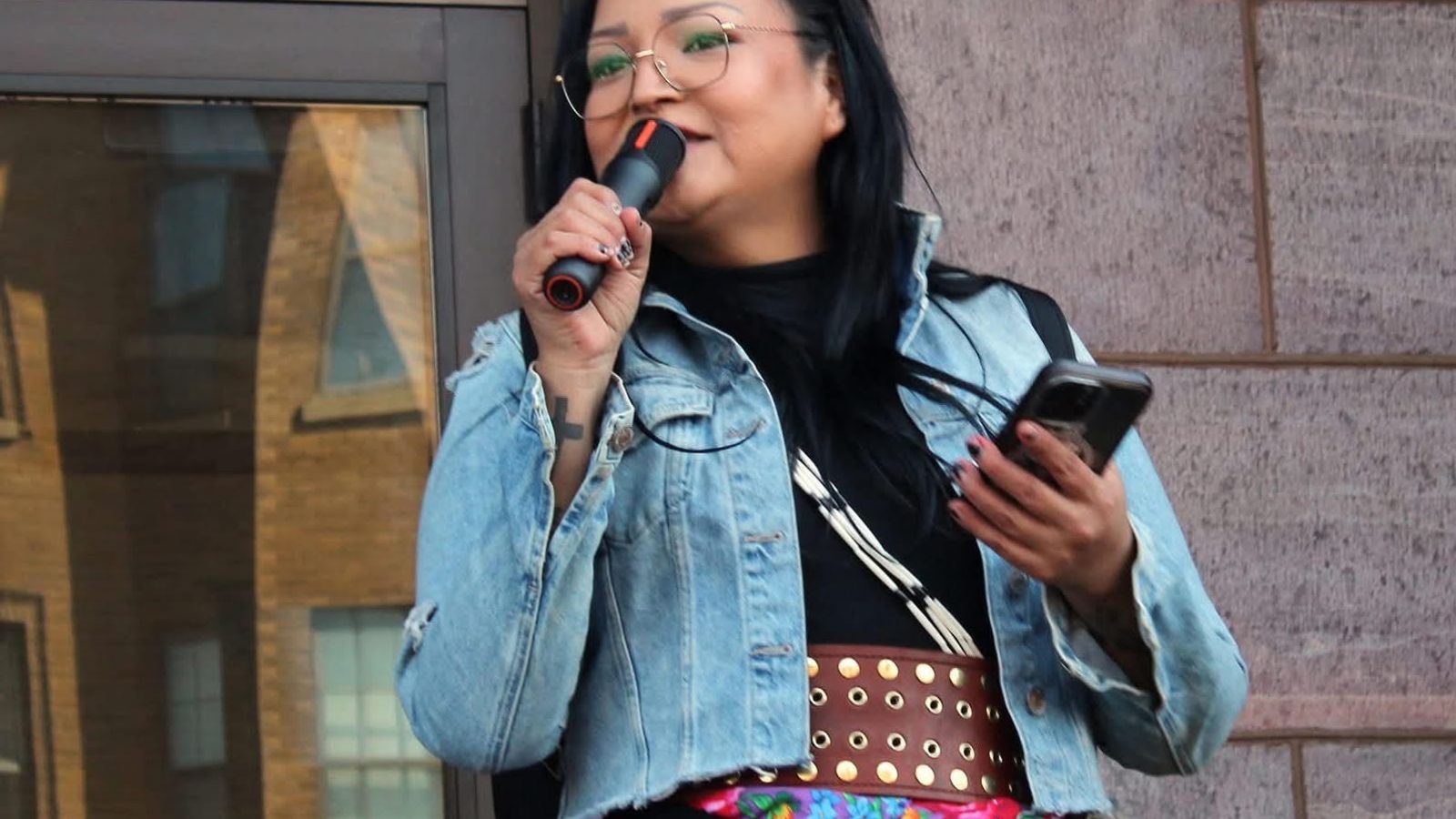

Allison Renville, political organizer and activist from the Lake Traverse Reservation, announced her 2026 South Dakota governor campaign in October. With deep ties to South Dakota, she told Buffalo’s Fire she feels a sense of responsibility for the state she grew up in and wants to bring a fresh face and new hope to South Dakotans in the upcoming election.
“This is my home,” Renville said. “This isn’t a stepping stone for me.”
On Sunday, Oct. 19, she announced on Facebook that she was running as an independent for the South Dakota governor seat. A Sisseton Wahpeton Dakota, Hunkpapa Lakota, Omaha and Haudenosaunee, Renville is the only openly Indigenous candidate and the only woman running for South Dakota governor in the 2026 election.
According to the 2020 U.S. Census, 11.1% of South Dakotans identify as at least partially Native American. The state is home to nine reservations, but it has yet to elect an openly Indigenous governor. The only state that’s done that is Oklahoma.
Dakota Walking Hawk, citizen of the Mandan, Hidatsa and Arikara Nation and field organizer for North Dakota Native Vote, said that having a Native person on the ballot “means everything,” since Native Americans are underrepresented in the state government.
“I honestly think it would get more voters out,” she said.
Renville said it shouldn’t be “far-fetched” to see a Native on the ballot, “because of the fact that we are some of the most engaged politically here in the state.”
Renville, who grew up in Sisseton, is a political activist and a single mother. Her campaign focuses on investing in education and expanding housing and police reform, among other issues. She stresses the need for cultural education in schools, including providing more language classes and addressing settler colonialism in history classes. She says building a state that is accepting of people who come from different backgrounds “starts with education.”
Renville also says her campaign will address issues like immigration, trans rights and reproductive rights, which she said boil down to protecting people’s privacy.
“How do we get people to understand that they deserve privacy, they deserve body autonomy,” she told Buffalo’s Fire, “And a lot of these decisions are protected by the Constitution.”
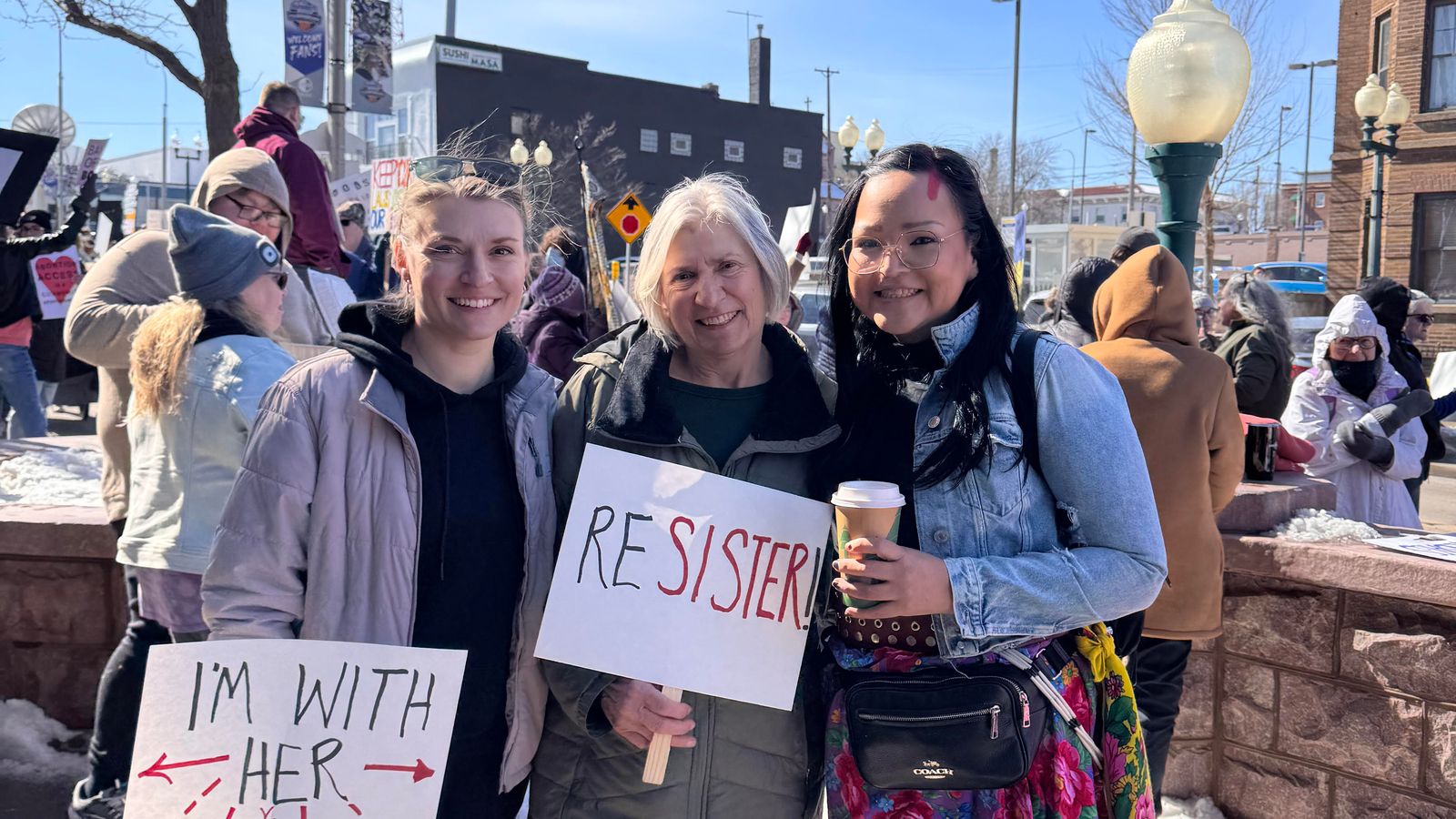
The previous election put former governor Kristi Noem at the head of state. During her term, she was banned from all nine reservations after making baseless comments about Native tribes. Noem resigned in January 2025 after being confirmed as U.S. Secretary of Homeland Security. Former Lt. Gov. Larry Rhoden now serves as governor.
Restoring trust between tribes and the state is important, said Renville, and electing a Native person as governor is one way to do it.
“I’ve always wanted to see a Lakota governor,” she said. “I didn’t necessarily anticipate it being me running, but I think being able to put myself out there gives a lot of hope to people.”
#NoDAPL movement: ‘I might have to run for governor someday’
Renville learned how much influence political offices have in the spring of 2016 at the #NoDAPL camps on the Standing Rock Reservation. At the camps, she raised money and awareness to support the movement against the Dakota Access Pipeline.
She also saw protesters injured during clashes with law enforcement. Police sprayed mace, blasted water cannons and shot rubber bullets into unarmed crowds. “They were saying, ‘Who protects us from the police?’” Renville recalled. When a protester called the sheriff’s department to report the assault, they were told the next office up the chain of command was the governor’s, she said. She told herself then, “‘I might have to run for governor someday.’”
Despite protesters’ efforts, Energy Transfer, the company behind the pipeline, went through with construction. In February 2017, the last #NoDAPL camp dissolved. After almost a year of protest, people wondered what came next, said Renville. An elder told her and others to “‘go home and do what you’re good at.’”
So Renville created a political action committee, registered through her tribal government. It was a flex of tribal sovereignty, she said, “to utilize their system and use it to our benefit.” Her PAC supported several tribal members running for state offices, she said, including her own 2018 state senate campaign, her first run for a political office. She lost in the primaries, an experience she said bolstered her resolve to run for governor.
Renville’s road to running for governor
Renville entered the world of political campaigning at 19, supporting Stephanie Herseth Sandlin’s 2004 run for state representative through the Democratic Congressional Campaign Committee. She enjoyed the hustle and bustle of canvassing — knocking on doors, raising money and organizing rallies. Herseth won, and Renville found her calling.
In 2008, she worked for Barack Obama’s presidential primary campaign in South Dakota. Seven years later, she left the state to attend United Tribes Technical College in North Dakota, where she earned her associates degree in criminal justice and political science. And she made her first successful run for office as the 2015 student government association president, while starting a media consulting firm and raising her two-year old son.
Renville speaks about her experience with domestic abuse and the struggle of finding housing and daycare for her kids — subjects some professional politicians don’t discuss.
“Allison’s life hasn’t been an easy one, and I’m glad she’s so open about that,” said Jacquelinee Franken, Renville’s friend and campaign chair. “She’s lived it. She’s gone through it.” Franken described Renville as a “wild mustang,” adding that a Native elder once said she is reminiscent of a lot of Native Sisseton women — strong willed, independent and genuine.
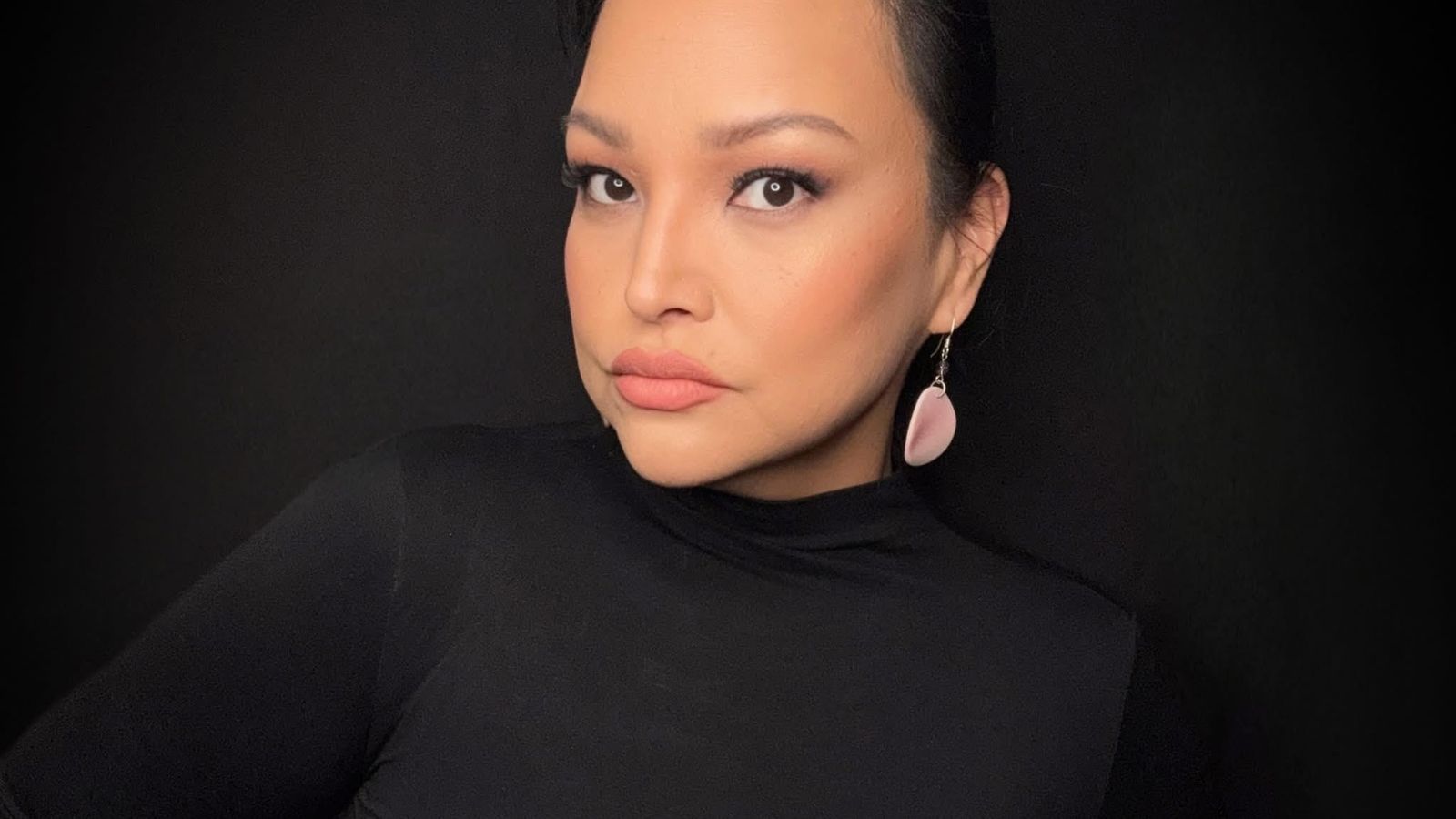
After earning her degree at UTTC, Renville moved back to South Dakota. In 2016, she started running the campaign trail in Sioux Falls as a political delegate for Bernie Sanders.
“She plans to be embedded and invested in South Dakota. She is rooted here,” Franken said.
Three years ago, Renville created a nonprofit, TiWakan.org to help sustain the cultural identity of the Native population in Sioux Falls. The project is named after her grandfather, Gabriel Renville, also known as Ti’Wakan, who led the Sisseton-Wahpaton tribe from 1866 to 1892. The nonprofit hasn’t been active lately (its website is expired). Renville said she stopped raising funds for the nonprofit when she decided to throw her name in the governor race.
She’s now focusing on raising money for her campaign. Unlike some of her political opponents, she said, she doesn’t have a “war chest” of campaign dollars and is raising the funds herself.
“She has experience, but now she has to audition unpaid for more than a year to potentially just be heard, to just be seen,” said Franken.
Renville has seen community support already. She said a foster mother from Sioux Falls recently emailed her, saying she’s excited that her Native foster daughter is able to look up to Renville as a Native woman. Renville said when she was young, she had the chance to meet Wilma Mankiller, an activist and the first woman to be elected as Principal Chief of Cherokee Nation.
“To be able to imagine a child, six, seven years old looking up to me the way that I looked up to her, is just really something,” she said. “You know, it's powerful, and it makes me feel like I do have an obligation to speak up and do something.”
Walking Hawk from Native Vote said Renville is an inspiration to Native communities, and especially to Native youth.
“They’ll realize, ‘Hey, I can do it too. I can be an advocate for my people,’” she said.
Renville will run for governor against incumbent Gov. Larry Rhoden, Republican U.S. representatives Dusty Johnson, Jon Hansen and Toby Doeden, Democratic candidate Robert Arnold and Independent Terry Gleason.
Spotted an error? Suggest a correction.
Gabrielle Nelson
Former Environment Reporter
Sharing Is Caring
This article is not included in our Story Share & Care selection.
The content may only be reproduced with permission from the Indigenous Media Freedom Alliance. Please see our content sharing guidelines.
© Buffalo's Fire. All rights reserved.
We provide independent Native-focused reporting that gives our communities the context and the facts they need to make informed decisions.
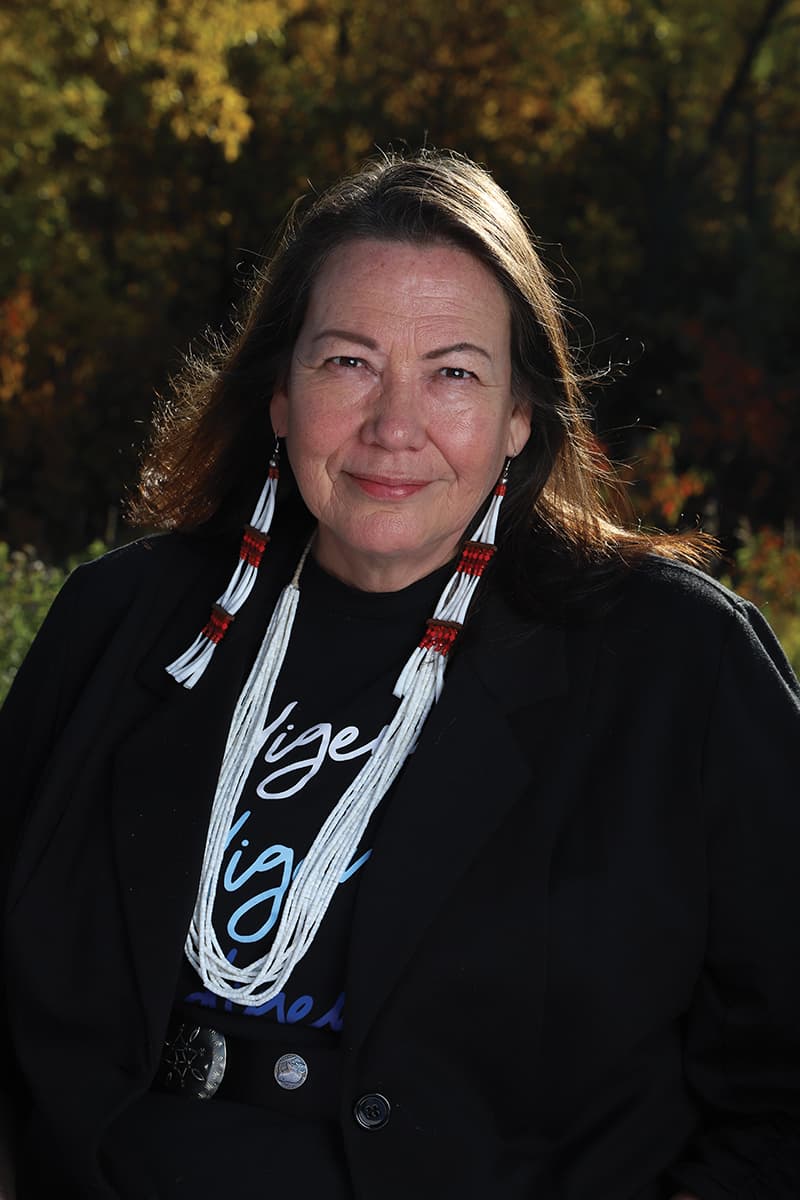
Respect The Fire
At Buffalo's Fire, we value constructive dialogue that builds an informed Indian Country. To keep this space healthy, moderators will remove:
- Personal attacks, harassment, or hate speech
- Spam, misinformation, or unsolicited promotion
- Off-topic rants and excessive shouting (All Caps)
Let’s keep the fire burning with respect.