

















NCAI leaders share concern over permitting bill that could override tribal sovereignty
83rd convening of Native leadership ends with resolutions supporting free press, traditional ceremonies and tribal land management

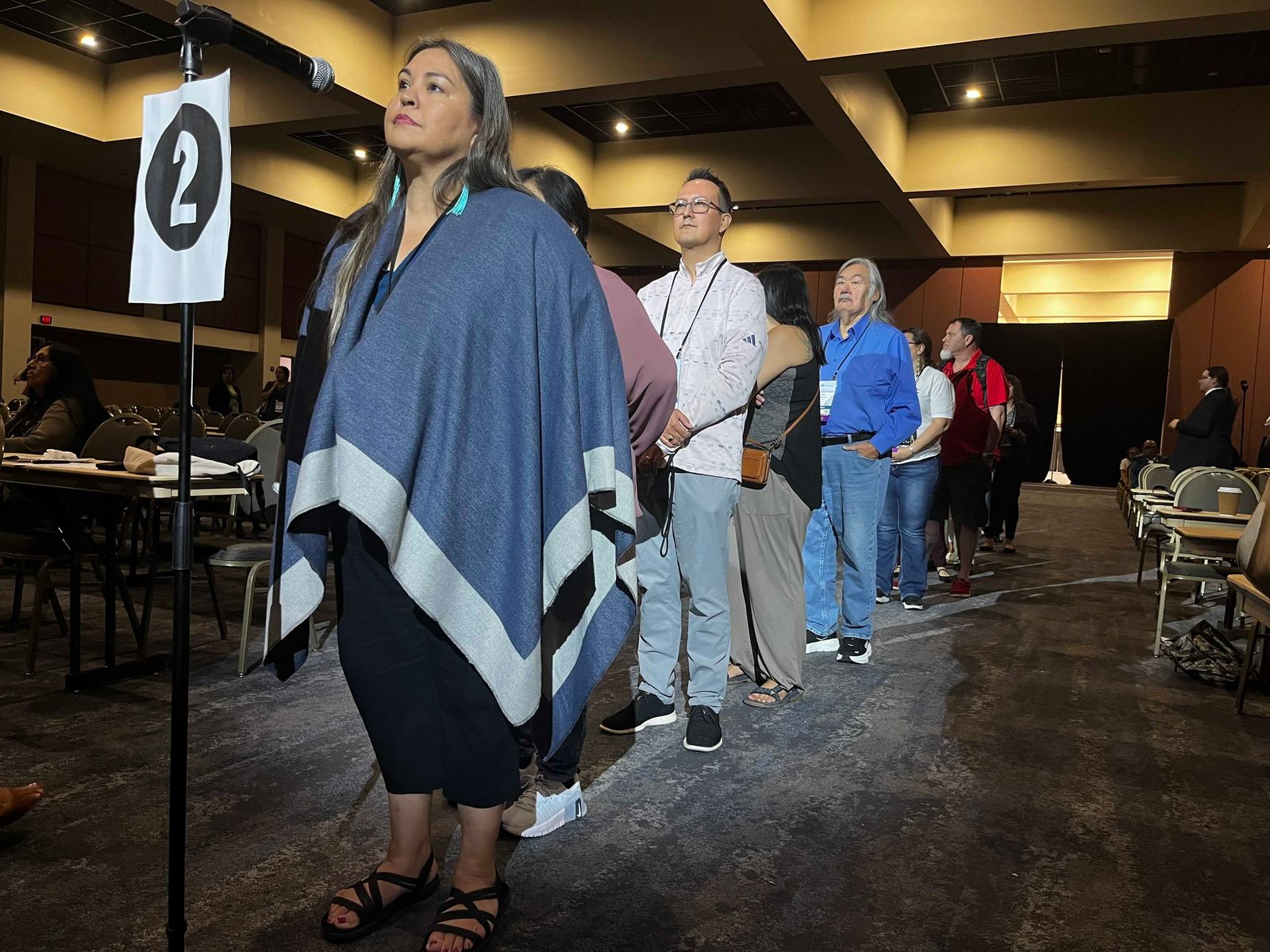
The National Congress of American Indians started its 83rd annual gathering of tribal leaders from across the United States with a prayer. It ended with a call to protect those prayers against anti-tribal amendments in a new federal infrastructure and permitting reform bill currently making its way through Congress that would make it easier to build things like data centers on public lands.
The annual weeklong conference brought tribal leaders to Palm Springs, California, to gather a consensus on issues that are vital to Indian Country. They left with the consensus that the Bipartisan American Affordability and Jobs Act of 2026 making its way through the U.S. Senate would hurt tribal sovereignty, a message tribal leaders are now taking to Washington, D.C.
“Now, there'll be a lot of work to do with our friends in Congress and tell people about the harm that's being proposed,” said Leonard Forsman, chairman of the Suquamish Tribe and vice president of NCAI’s Northwest tribes delegation, after the group convened. “I believe that parts of this bill are termination-like, in that they just sever the tribal consultation required for a lot of reviews, for cultural resources, and then also the federal government assuming tribal authority, is really scary.”
If passed, the bill would amend the National Environmental Policy Act, the Clean Water Act, the Endangered Species Act, the National Historic Preservation Act, the Federal Power Act, and federal energy and mineral permitting laws.
Its attempt to slice out tribal consultation, known as Section 106 of the National Historic Preservation Act, surprised tribal leaders at NCAI because the two sponsors — Sen. Mike Lee (R-UT) and Sen. Martin Heinrich (D-NM) — have demonstrated polar opposite views on tribal sovereignty.
Santo Domingo Pueblo Gov. Raymond Aguilar told NCAI last Thursday that Heinrich met with Pueblo leaders and said he would not remove any amendments in the bill that could harm tribes, including the Section 106 tribal consultation exemption the bill would remove if passed.
“He's been a champion for Native tribes across the U.S. — in particular, the Pueblo nations. Always went beyond. We supported him through campaign money,” Aguilar said. “At the very end, even though that meeting didn’t go well, we still said our prayers for all. In the middle of that prayer, Senator Heinrich walked up and left the room, in the middle of the prayers. So that is the message Senator Heinrich is sending to us, not only to Pueblo governors, but to your tribes and nations.”
Heinrich did not respond to a request for comment from Buffalo’s Fire but has stated publicly that he wants to fast-track development on public lands for energy and housing, something he argues can be done with bipartisan support for the bill.The bill was introduced in September through the Senate Committee on Energy and Natural Resources. It receives its first procedural vote on Nov. 9, after general elections.
“The work never stops,” Forsman said. “We got to keep telling our story and sharing our information with the public about what tribal culture, way of life, and identity is.”
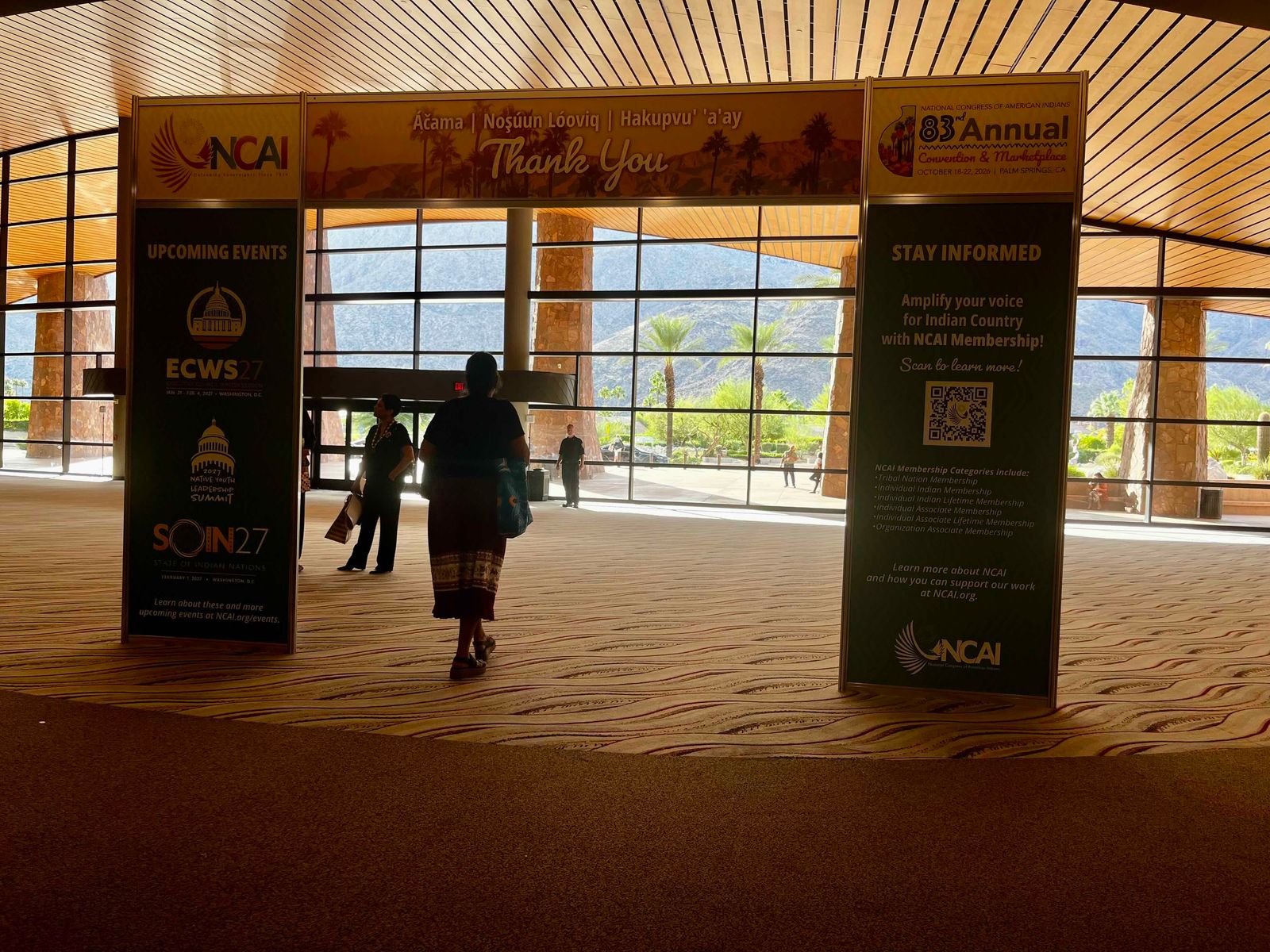
NCAI’s purpose is to attempt to do all of that through a governance structure, meaning tribal leaders or their representatives vote as a full assembly on resolutions passed through a committee process. This year NCAI passed 66 resolutions that give tribal sovereignty stances on matters that support free press, land and cultural protections, and Indian gaming.
These resolutions are then cited as a form of consensus on tribal interests when the group lobbies members of the United States Congress, as they are actively doing now with the permitting reform bill.
Other matters that were vital for tribes to address at NCAI were issues with predictive market gaming apps like Kalshi and Polymarket, and proposed changes to the U.S. Census that would remove questions about race and ethnicity. NCAI passed resolutions to address their stances against gaming reform to allow predictive market operations in states with tribal gaming compacts. Any changes to the Census are also opposed.
For the first time in 13 years, NCAI also approved a resolution to support expanding press protections for independent Native media, calling to increase tribal public records access for journalists. Out of 575 federally recognized tribes, only five have free- press protections in their tribal charters or constitutions. This resolution seeks to expand that to more tribes.
While this topic won’t be a matter of priority to discuss in Washington, D.C. with the NCAI lobby, free press standards have a direct impact on tribal citizens seeking any information about their governments, both during regular business and emergency situations. And there is an appetite for it from Native citizens.
Over the weekend, heavy rain caused flooding in northwest New Mexico that displaced residents in Pueblo, Navajo and Apache communities. Counties that border these tribes also saw severe flooding and damage. At least one person died in rural New Mexico near the Alamo Chapter of the Navajo Nation. This week, President Donald Trump approved federal emergency aid to help with recovery.
Tom McDonald, a Navajo resident from the Casamero Lake Chapter Community, said he struggled to find vital information about flood zones and emergency feed for his livestock. Rain did reach into his home and he had to move his livestock to a family ranch on higher ground. He got his weather reports from KTNN, an independent radio station on the Navajo Nation. He’d like to see more local news outlets cover county governments around him, and learn about any aid that could help his community recover from the floods.
“They closed the Gallup Independent and that hurt,” he said. “We get the Navajo Times but they write about Arizona. I need to know what’s happening here in McKinley County. This is Indian Country, we need information.”
References
- 1.
- 2.
- 3.
Sharing Is Caring
This article is not included in our Story Share & Care selection.
The content may only be reproduced with permission from the Indigenous Media Freedom Alliance. Please see our content sharing guidelines.
© Buffalo's Fire. All rights reserved.
We provide independent Native-focused reporting that gives our communities the context and the facts they need to make informed decisions.
Respect The Fire
At Buffalo's Fire, we value constructive dialogue that builds an informed Indian Country. To keep this space healthy, moderators will remove:
- Personal attacks, harassment, or hate speech
- Spam, misinformation, or unsolicited promotion
- Off-topic rants and excessive shouting (All Caps)
Let’s keep the fire burning with respect.