






No body, no crime? How prosecutors prove murder when a victim is missing
While proving a homicide without remains can be a challenge, conviction rates are high

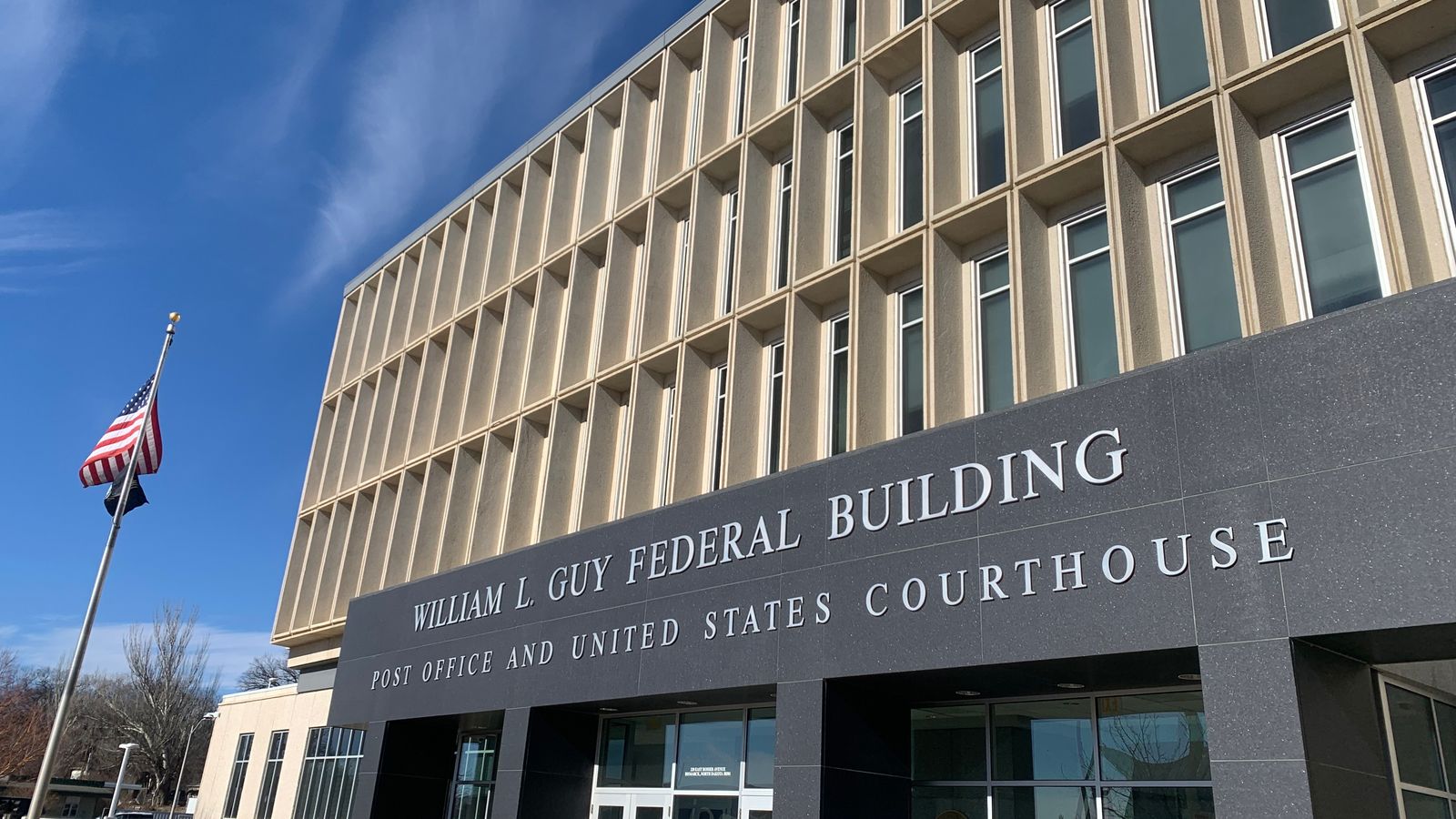

On July 14, D’Angelo Hunt, a Spirit Lake citizen, will be tried in Fargo, North Dakota, for the murder of his older brother Isaac Hunt and the manslaughter of his intimate partner, “J.M.P.” He pleaded not guilty to those charges in December.
The initials “J.M.P.” match those of his partner, Jemini Madeline Posey, whose body has not been found. She is still officially a missing person.
But contrary to the well-known saying “no body, no crime,” the case against him is moving forward.
Without a body, what kind of evidence is needed for a homicide charge?
In every successful homicide case, a prosecutor must prove beyond a reasonable doubt that a homicide took place and that the accused committed it. But when there’s no body, proving that a homicide took place could be an extra challenge.
Thomas DiBiase worked as a federal homicide prosecutor in Washington D.C. for over 12 years. He has also consulted on dozens of homicide cases where a body was never found, including a few MMIP cases in North Dakota.
DiBiase told Buffalo’s Fire that confessions can be strong evidence in “no-body” cases, either to police or to a friend or family member. In over half of no-body cases, he said, the “obvious” suspect is someone known to the victim, such as a partner, spouse or parent.
Mark Friese, a criminal law attorney who has worked for Vogel Law Firm in Fargo for more than two decades, said digital evidence can carry weight in no-body cases. Internet search history and pings from a cell tower can place a suspect in proximity to traces of blood, fibers of hair, or residue of bleach that suggest a crime was committed.
Are no-body cases common?
According to DiBiase, who wrote the book “No-Body Homicide Cases: A Practical Guide to Investigating, Prosecuting, and Winning Cases When the Victim is Missing,” over 600 “no-body” homicide cases have gone to trial in the U.S. since the early 1800s.
“It seems like a large number, but when you think of how many murder trials there have been in the United States, it’s a very small percentage,” DiBiase said.
Monty Mertz, supervising attorney for Fargo Public Defender Office, said throughout his approximately 50 years of practicing law, he hasn’t heard of or worked on a homicide case where there is no body.
What are the challenges of prosecuting no-body cases?
Friese said when there’s no body, prosecutors have a “more difficult challenge but not an insurmountable one.”
In most homicide cases, a medical examiner can provide a time and cause of death, which can help construct a timeline, but in no-body cases, the prosecution usually relies on circumstantial evidence, DiBiase said.
A prosecutor does not need to prove time or cause of death for homicide charges, Mertz said, but proving a homicide occurred without a body can be “tough, no question about it.”
“It’s a bit more complicated because if someone is missing, that doesn't mean they are dead,” Friese said.
Surprisingly, the conviction rate on no-body homicide cases is “significantly” higher than in cases where there is a body, with 87% of no-body cases in the United States leading to a conviction, compared to 70% of other homicide cases, according to DiBiase.
This is in part due to the amount of evidence needed to prove the missing person is dead, but also because the victim in such cases typically has a relationship with the suspect, DiBiase said.
“Prosecutors only take very strong cases to trial when it is a no-body murder case,” DiBiase said, adding prosecutors will only charge someone with homicide without a body when they have other strong evidence that a homicide took place, such as a confession to family or surveillance cameras that captured the crime. Officially charging someone can be difficult, DiBiase said, but “once a prosecutor can do that, the conviction rate is pretty high.”
Are there specific challenges related to MMIP cases?
DiBiase said he found homicide cases in Native communities to be “vastly underprosecuted,” particularly with Native women. He said he’s noticed some law enforcement officers stereotype Native women who are missing or murdered, referring to them as runaways or sex workers.
“The biggest difficulty I’ve found in Indian Country cases is a lack of interest from the beginning from police,” DiBiase said. “There has been a real discounting of Native American women as victims.”
This leads to fewer MMIP cases, including no-body cases, being investigated, prosecuted or even reported.
Sharing Is Caring
This article is not included in our Story Share & Care selection.
The content may only be reproduced with permission from the Indigenous Media Freedom Alliance. Please see our content sharing guidelines.
© Buffalo's Fire. All rights reserved.
We provide independent Native-focused reporting that gives our communities the context and the facts they need to make informed decisions.
Respect The Fire
At Buffalo's Fire, we value constructive dialogue that builds an informed Indian Country. To keep this space healthy, moderators will remove:
- Personal attacks, harassment, or hate speech
- Spam, misinformation, or unsolicited promotion
- Off-topic rants and excessive shouting (All Caps)
Let’s keep the fire burning with respect.