






The Daily Spark
Small sparks from Indian Country, built to catch fire
Missing Mandan woman’s Facebook page updated a day after she was reportedly last seen
Post says she was attacked with bat
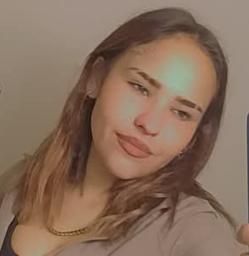
The Mandan Police Department is looking for 22-year-old Ava Morin, an Indigenous woman who was reportedly last seen on Nov. 15, according to the North Dakota Office of Attorney General.
A Nov. 16 post on Morin’s Facebook page, made at 5 a.m., shows what appears to be a bloody scalp and says that a woman “just hit me in the back of my head with a metal bat.”
The Mandan Police Department did not immediately respond to questions about whether Morin is believed to be endangered, where she was last seen and what her tribal affiliation is.
Morin is described by the attorney general’s office as 5 feet, 4 inches tall and 140 pounds, with brown eyes and hair. Anyone with information is encouraged to contact the Mandan Police Department at 701-667-3250.
Northern California tribes sign treaty to restore Eel River as PG&E plans dam removal
Two Northern California tribes signed a treaty committing to jointly restore the Eel River and its fish populations, according to The Mendocino Voice. Leaders from the Round Valley Indian Tribes and the Yurok Tribe met last month at the Eel River Canyon Preserve in Trinity County to sign the “Treaty of Friendship.” The agreement centers on rebuilding declining fish populations as PG&E moves to decommission the Potter Valley Project’s Scott Dam and Cape Horn dams in Mendocino County.
The tribes said the dams have long damaged the river and blocked access to fish habitat. Dam removal, expected to begin in 2028, will allow the river to flow freely again through the ancestral lands of the Round Valley Indian Tribes. The Yurok Tribe, California’s largest federally recognized tribe, will share its experience from Klamath River restoration efforts. The treaty was signed by Yurok Chairman Joseph L. James and Round Valley Indian Tribes President Joe Parker. Parker was quoted as saying, “The Eel River is our lifeblood and when it suffers, our people suffer.”
New project links Native youth and elders to strengthen Indigenous languages
A new initiative from Protect the Sacred aims to connect Native youth with elders to preserve Indigenous languages and cultural traditions, according to reporting by Axios Phoenix. Connecting the Rainbow will fund fellowships for young people to document elders’ stories through filmmaking, podcasting and other media, according to Diné activist Allie Redhorse Young. Young said geographic separation has disrupted oral tradition and contributed to youth isolation. A 2023 U.S. Bureau of Indian Affairs report found that of 167 Native languages spoken in the U.S., only 20 are expected to survive past 2050.
Protect the Sacred launched in 2020 as an emergency response to the COVID pandemic. The group has since expanded its advocacy work. One Connecting the Rainbow fellow, Chazlyn Curley, plans to produce a podcast with her grandmother on the Navajo Nation. Curley said her grandmother taught her, “T'áá hwó' ají t'éego,” which translates to “It’s all up to your effort and hard work and determination.”
Docuseries on self-governance wins 2025 Anthem Award
Tribal Self-Governance announced that its docuseries “For Our People: Stories of Tribal Self-Governance & Sovereignty” received a 2025 Anthem Award for social impact storytelling, according to a statement by the organization. The honored episode centers on the Quinault Indian Nation’s work to relocate neighborhoods to higher ground in response to rising sea levels, intensified storms and changing ecosystems on their ancestral lands.
The episode includes accounts from tribal council members, elders, scientists and community members. In the release, Tribal Self-Governance Executive Director Jay Spaan said the award recognizes the Nation’s achievements and the role of self-governance in supporting Native communities. The Anthem Awards received more than 2,000 submissions from 42 countries. Winners are selected by the International Academy of Digital Arts and Sciences.
CTUIR to host biogas workshop focused on food and energy systems
The Confederated Tribes of the Umatilla Indian Reservation will hold a community biogas workshop Dec. 4-5 to share training, education and feasibility information on renewable natural gas development, according to a CTUIR press release. The event will highlight anaerobic digestion technology and include free hands-on kits demonstrating the chemistry and engineering involved.
CTUIR’s First Foods Policy Program is partnering with biogas expert David House to lead the workshop. According to CTUIR Climate Adaption Planner Colleen Sanders, the gathering will help regional partners discuss potential benefits, barriers and future goals for food production and renewable energy systems. Technical discussions will take place Dec. 4 at the Nixyaawii Governance Center, with a virtual participation option available. The Dec. 5 community session at the Mission Longhouse will include participants from agriculture, public utilities, waste management and regional food sectors. Participants who register by Nov. 26 will receive a free copy of “The Complete Biogas Handbook.”
Audit faults Washington over stalled Native homeownership program
More than 300 homes in Washington are now eligible for Native tenant ownership through a federal Low-Income Housing Tax Credit program, but none has been transferred, according to reporting by Underscore Native News and ICT. A 2024 state audit found that the Washington State Housing Finance Commission failed for more than two decades to create policies, oversight or guidance for the Eventual Tenant Ownership program and initially undercounted eligible homes, listing 135 instead of 160 by 2023.
Updated policies adopted in 2024 and 2025 require regular progress reports, clearer guidance for tribal housing authorities and yearly certifications. The commission has approved tenant transfer plans for the Tulalip Tribal Housing Department and the Spokane Indian Housing Authority, with plans from Colville and Nooksack nearing approval and Quinault and Lower Elwha still in development. State Rep. Gerry Pollet said legislation is needed to ensure accountability and move Native tenants into ownership.
Michigan tribal leaders call for stronger food systems after SNAP lapse
According to Michigan Advance, tribal leaders and advocates in Michigan said the recent pause in Supplemental Nutrition Assistance Program benefits during the federal government shutdown highlighted ongoing barriers to food sovereignty in Indigenous communities. Meredith Migizi, executive director of Miigwech, Inc., said the interruption raised concerns about treaty obligations and reliance on federal systems that do not always meet tribal needs.
Joe Van Alstine, food distribution program specialist for the Little Traverse Bay Bands of Odawa Indians, said food sovereignty requires tribes to build their own networks, including working with local farmers and strengthening tribal distribution centers. Households cannot receive both SNAP and Food Distribution Program on Indian Reservations benefits in the same month, creating obstacles for citizens who considered switching programs during the lapse. Advocates said processing delays and limited access to distribution sites leave many tribal citizens without stable options when federal programs are disrupted.
Mississippi Choctaw release new digital dictionary to strengthen language preservation
The Mississippi Band of Choctaw Indians has launched a new online Choctaw Dictionary Project to support language learners and document the Mississippi dialect of the Choctaw language, according to the Mississippi Free Press. The digital resource, released in September, includes more than 5,000 words along with recorded stories and histories. Jason Lewis, who works in cultural content development for the tribe’s Choctaw Tribal Language Program, said earlier dictionaries reflected the Oklahoma dialect recorded after removal, not the language spoken today in Mississippi.
The Tribal Language Program has worked since 2019 to collect stories and develop a consistent writing system. Program Director DeLaura Saunders told the Mississippi Free Press the goal is to provide resources for younger tribal citizens who are no longer hearing the language daily. Tribal Chief Cyrus Ben described the language as “the living spirit of our identity” in a Sept. 8 statement. The tribe plans continued additions to the dictionary as staff complete interviews, transcriptions and new entries.
Brother charged with second-degree murder after remains found on Spirit Lake Reservation
D’Angelo James Hunt, 26, is being charged with second-degree murder after his brother’s remains were found behind their father’s home on the Spirit Lake Reservation, according to KFYR-TV.
Isaac Hunt disappeared in March 2024, when he was 27. Family members discovered what appeared to be a human skull on Nov. 15, leading to the recovery of additional remains the next day.
The FBI’s Evidence Response Team also recovered clothing and shoes consistent with what the victim was wearing when he was last seen, according to KFYR, which cited the criminal complaint.
The case falls under federal jurisdiction because both individuals are Spirit Lake Tribe citizens and the alleged crime occurred on tribal land. D’Angelo Hunt remains in custody at the Grand Forks County Corrections Center.
Oglala Sioux Tribe withdraws from two national advocacy organizations
The Oglala Sioux Tribe has withdrawn from the National Congress of American Indians and the Coalition of Large Tribes, saying the groups no longer represent its interests, according to ICT. In a statement, Oglala Sioux Tribe President Frank Star Comes Out said NCAI’s voting structure does not equitably account for the tribe’s population size and has resulted in advocacy that favors self-governance tribes over direct-service tribes. He said the tribe’s concerns about NCAI’s policy positions led to the decision to revoke its membership.
NCAI President Mark Macarro told ICT he was disappointed but said the organization respects the tribe’s decision. He acknowledged inequities in NCAI’s voting tiers and said constitutional reform may be needed. Star Comes Out said the tribe also left the Coalition of Large Tribes because of concerns about communication and messaging he said aligned too closely with the Trump administration. COLT Executive Director OJ Semans told ICT the coalition works with every administration to advocate for its members and cited recent efforts involving Indian Health Service employees.
Yup’ik immersion program supports children displaced by Alaska flooding
Children displaced from western Alaska villages by the remnants of Typhoon Halong are finding stability in a Yup’ik language immersion program in Anchorage, according to the Associated Press. Nearly 700 homes were destroyed or heavily damaged when flooding swept away structures along the Bering Sea, and hundreds of residents were airlifted to Anchorage. The Anchorage School District has enrolled about 170 displaced students, including 71 in the Yup’ik immersion program at College Gate Elementary and Wendler Middle School.
Teachers and administrators told the AP the program has expanded rapidly as evacuees join classes that split instruction between Yup’ik and English. Principal Darrell Berntsen, who greeted families at a Red Cross shelter, encouraged parents to enroll their children to help them adjust. Students described learning new Yup’ik phrases while navigating homesickness and temporary housing far from their villages. Educators said the program is helping preserve Alaska Native language and culture and allowing children to communicate with older generations.
Nisqually Tribe rejects ICE request for detention space
The Nisqually Tribal Council said it will not allow U.S. Immigration and Customs Enforcement to detain immigrants on its reservation or in its facilities, according to the Seattle Times. The council said it learned ICE had contacted a staff member without consulting tribal leadership and had also reached out to other tribal governments and cities in Washington to secure detention space. The Nisqually Indian Tribe, located east of Olympia and operating a 288-bed correctional facility built in part with federal funds, told ICE it would not participate.
Tribal Chair E.K. Choke said he was unaware of any discussions between the tribe and ICE until contacted by the Seattle Times, which received information about talks regarding detention space. Washington’s only immigrant detention center, the Northwest ICE Processing Center in Tacoma, has faced crowding, and ICE transferred some detainees to Alaska earlier this year. Advocates with the Northwest Immigrant Rights Project raised concerns about the possibility of detention on tribal land. The Nisqually Tribal Council said its decision aligns with the tribe’s history and values of treating all individuals with humanity and compassion.
New Mexico lawmakers seek study of forced sterilization of Indigenous women
New Mexico lawmakers plan to introduce a memorial to study the scope and ongoing impacts of forced and coerced sterilization of Indigenous women and women of color, according to SourceNM. Jean Whitehorse (Navajo) told lawmakers she was coerced into signing a form during a medical emergency at an Indian Health Service facility in Gallup, later learning the procedure left her unable to have more children. A 1976 U.S. Government Accountability Office report found that 3,406 women were sterilized over four years in four Indian Health Service areas, though the review covered only part of the system, leaving the total number unknown.
State Sens. Shannon Pinto (Diné) and Linda Lopez plan to advance the memorial during the 2026 legislative session, SourceNM reported. The proposal would direct the Legislative Health and Human Services Committee, in collaboration with the Indian Affairs Department, to present findings and recommendations by the end of 2027. Advocates including Keely Badger and Elena Giacci (Diné) told lawmakers the practice created deep mistrust of health care systems and called for acknowledgment of the trauma experienced by survivors.
Canada loses measles-free status amid rising cases
Canada has lost its measles-elimination status nearly 30 years after first receiving the designation, according to ICT. On Nov. 10, the Pan American Health Organization confirmed sustained transmission of the same measles virus strain in Canada for more than one year. The organization said Canada is now the only member state without measles-free status, and noted that the United States and Mexico have until early 2026 to stop the spread of related cases.
Canada has reported more than 5,000 measles cases in 2025, mostly in what officials described as under-vaccinated communities in Ontario and Alberta, ICT reported. “A lot of factors have contributed to this, and much of that I would attribute to misinformation and disinformation that has rapidly been spread around social media,” Jaris Swidrovich, Indigenous engagement lead at the University of Toronto’s Faculty of Pharmacy, was quoted as saying. Swidrovich, Ukrainian and Saulteux from the Yellow Quill First Nation, is a pharmacist and assistant professor.
The Public Health Service of Canada issued a statement saying it would work to improve vaccination rates and data sharing. Two infants who contracted the illness before birth are among those who died in the outbreak. Officials must halt transmission for at least 12 months to regain Canada’s status.
Bay Mills Indian Community joins Michigan DNR in effort to restore manoomin
The Bay Mills Indian Community is the latest tribe to partner with the Michigan Department of Natural Resources to restore manoomin, a wild rice native to the Great Lakes, according to WCMU. The collaboration supports tribes across the Midwest through seed sharing, access to waterways and guidance on ethically sourced seeds. BMIC President Whitney Gravelle said manoomin holds cultural significance and is tied to traditional practices and treaty rights.
Gravelle said wild rice is a keystone species and reflects the health of the surrounding environment. Tribes and the Michigan DNR host manoomin camps that teach community members about the rice from scientific and traditional perspectives. Gravelle said restoring manoomin is part of reestablishing traditional food resources and maintaining an Indigenous way of life for future generations.
OMCA exhibit highlights Indigenous knowledge of controlled burning
The Oakland Museum of California opened “Good Fire: Tending Native Lands,” an exhibition exploring how Native American communities in Northern California use controlled burns to support healthy ecosystems, according to reporting by The Oaklandside. The exhibit was co-curated by Ryder Diaz, OMCA’s curator of Natural Sciences, and Dr. Brittani R. Orona (Hupa), assistant professor of Native American Studies at UC Davis, with contributions from more than 40 Native collaborators. Diaz said the exhibition centers Native perspectives on cultural fire practices.
The exhibit includes artwork, basketry, films and historical materials that examine the impact of colonization, government fire suppression policies and the displacement of Native communities. It also highlights recent efforts to restore cultural burning, including legislation supported by the Karuk Tribe. “Good Fire” will be on display through May 31, 2026.
Allison Renville enters South Dakota governor’s race as Independent candidate
Allison Renville announced in mid-October that she will run as an Independent candidate for South Dakota governor in the 2026 election, according to ICT. Renville, Sisseton Wahpeton Dakota, Hunkpapa Lakota, Omaha and Haudenosaunee, said she compiled enough signatures to appear on the ballot by Oct. 28. She grew up in Sisseton on the Lake Traverse Reservation and lives in Sioux Falls.
Renville said her political involvement began during protests against the Dakota Access Pipeline nearly 10 years ago. She later campaigned for Sen. Bernie Sanders in 2016, created the Dakotas for America Political Action Committee in 2017 and organized locally in Sioux Falls, including a run for city council. Renville said her decision to run as an Independent reflects a desire to move past party politics. The South Dakota gubernatorial election is set for Nov. 3, 2026.
Native Ways Federation launches fourth annual #GiveNative campaign
Native Ways Federation announced its fourth annual #GiveNative campaign, “Woven Together in Solidarity,” which will take place on Dec. 2, which is GivingTuesday, according to a statement from the organization. The campaign highlights GivingTuesday as a global movement focused on generosity and community-led change. Native Ways Federation said Native-led organizations receive less than .5% of philanthropic funding and that the campaign aims to increase support for groups working in Indian Country.
“Solidarity means investing in Native leadership, trusting Native solutions, and amplifying Native voices,” Executive Director Carly Bad Heart Bull (Flandreau Santee) said in the statement. The 2025 campaign will offer resources to donors and Native nonprofits, including incentives, social media materials, a digital toolkit and free public webinars. The organization encouraged Native-led nonprofits to visit GiveNative.org to join the Native Nonprofit List and access campaign updates and resources.
Turtle Mountain Band expands food and heating aid during shutdown
The Turtle Mountain Band of Chippewa developed emergency plans to support members with food and heating assistance in response to the federal government shutdown, according to KMOT. Chief Financial Officer Jesse Trottier said the North Dakota tribe relied on experience from the pandemic and the 2018 shutdown to guide its response. Chairman Jamie Azure said the tribe allocated about $1.2 million from its general account to expand programs including school food assistance, the community kitchen and food cards. The tribe also increased Meals on Wheels services.
With SNAP benefits uncertain, Trottier said the tribe partnered with Rolette County to offer its own version of food support and issued $110,000 in food cards. Azure said the tribe redirected $30,000 in remaining LIHEAP funds from last year after federal energy assistance was cut.