






The Daily Spark
Small sparks from Indian Country, built to catch fire
New Mexico advocacy group warns Pueblo tribe of radioactive gas
Tewa Women United, an advocacy group in New Mexico, is warning Pueblo citizens about nearby radioactive substances released by Los Alamos National Laboratory, according to Koahnic Broadcast Corporation’s “Native America Calling.”
The laboratory issued a statement that said tritium is safe in small doses, but the advocacy group is urging locals to stay away, stating the substance is dangerous and could pose a threat to people’s health.
Tritium is a naturally occurring substance but is also used in nuclear weapons. The laboratory said the gas is being released because the containers the substances are stored in pose a risk.
Bullock Museum to host American Indian Heritage Day Sept. 26
Annual event highlights the history and contributions of Native communities in Texas
The Bullock Texas State History Museum and the Native American Cultural Center will host the 13th annual American Indian Heritage Day on Sept. 26. The program runs from 10 a.m. to 2:30 p.m. and features dancing and drumming, hands-on stations and interactive activities for school groups. Texas House Bill 174 designates the last Friday in September to recognize the role of American Indian communities and leaders. The program will also be streamed live at noon for virtual audiences.
New project will send boarding school records, correspondence to Native families
A University of Iowa professor and Lumbee tribal citizen is leading a project to send original documents to survivors of the boarding school era and their families, according to reporting by the Daily Iowan.
Operation Return begins in October. An online portal will let people request to have report cards, photos and letters between students and relatives sent to them free of charge. Lots of these old documents are at the National Archives, and have not been made available before.
“Most Indian boarding school survivors that I’ve ever met were not aware that there were records in the National Archives,” professor Carrie Lowry Schuettpelz was quoted as saying. She’s director of the Native Policy Lab and an associate professor for the university’s School of Planning and Public Affairs. Schuettpelz was recently awarded the Andrew W. Mellon Foundation grant to fund Project Return earlier this summer.
Accounts of the boarding school era are often tragic. An estimated 973 Native children died while attending the schools, with survivors sharing stories of abuse and isolation. The federal government and churches operated hundreds of the schools in the 20th century.
Robert Redford, movie star and film visionary, dies at age 89
Robert Redford, actor and Oscar-winning director, died at age 89 on Tuesday morning at his home in Provo, Utah, according to reporting by NPR. He acted in more than 80 movies, including “Butch Cassidy and the Sundance Kid,” “The Sting,” “All the President’s Men” and “Jeremiah Johnson.” In 1981, he founded the Sundance Institute, which became a launching pad for independent film artists.
One such artist, Sterlin Harjo, a citizen of the Seminole Nation of Oklahoma and of Muskogee descent, created the award-winning TV series “Reservation Dogs” about four Indigenous teenagers growing up on a rural Oklahoma reservation. In a social media post, Harjo remembered Redford as a generous and inspiring man, saying “RIP Mr. Redford. My career and path as a young man was defined by his commitment to empower Native film and storytellers .… Journey Well.”
Hawaiian private school for Natives under scrutiny
Conservative activists are criticizing Kamehameha Schools, a private school in Hawaii, for giving admissions preference to Native Hawaiians, according to reporting by the Associated Press. A website was set up this month by Students for Fair Admissions with the goal of challenging Kamehameha’s admissions policy in court.
In 2024, more than 5,400 students enrolled across three Kamehameha campuses on Oahu, Maui and the Big Island. The school is known for providing affordable tuition and education on Hawaiian values.
Trump OKs federal relief for flood-ravaged reservation
The White House has approved half a million dollars toward disaster relief for the Sisseton-Wahpeton Oyate tribe in South Dakota, following heavy floods that occurred this summer.
According to reporting by South Dakota Public Broadcasting, President Donald Trump posted on Truth Social that he agreed to provide the $500,000 in relief funding after a phone call with Senate Majority Leader John Thune.
In June, the Sisseton-Wahpeton Oyate saw heavy flooding on the Lake Traverse Reservation, which FEMA teams investigated the following month. The approval means affected property owners can apply for federal relief for repairs and temporary housing. People are encouraged to first contact their insurance companies before applying for aid.
Colorado grants Ute Mountain Ute and Southern Ute tribes free access to state parks
Members of Colorado’s Ute Mountain Ute and Southern Ute Indian tribes now have free access to all 43 state parks following the enactment of House Bill 1163. The law, effective August 5, waives state park fees for tribal members who present a valid tribal photo ID card. State Rep. Katie Stewart, D-Durango, one of the bill's sponsors, described the measure as “the first step in an ongoing process by the state to honor the commitment and uphold the ancestral land reconnection for the oldest continuous residents of our state.”
The bill also mandates that Colorado Parks and Wildlife engage with other tribal nations and explore expanding access to additional Indigenous communities. Reports on these outreach efforts are due to legislators in January 2026 and 2027, according to SkyHi News.
Coast Salish weavers collaborate on Seattle Sounders Salish Sea jersey
Coast Salish weavers Gail White Eagle of the Muckleshoot Tribe, Danielle Morsette of the Suquamish Tribe, and Connie McCloud of the Puyallup Tribe helped design the Seattle Sounders’ new Salish Sea Kit, which includes a jersey, shorts, socks, and a scarf, according to Underscore + ICT. The design incorporates traditional Coast Salish weaving patterns, colors, and symbols, including a wave, orca tail, and the phrase “x̌ax̌aʔ ti qʷuʔ” in Lushootseed and English, meaning “water is sacred.”
The weavers guided the design process, sending instructional videos to Adidas to ensure their techniques, including twilling and twining, were represented. The league donated the first $50,000 from jersey sales to local Native nonprofit organizations. White Eagle and Morsette said the project honors their culture, teaches traditional practices, and allows their communities to see meaningful Coast Salish representation in professional sports.
Trump approves federal disaster aid for six states and tribes
President Donald Trump has approved federal disaster aid for Kansas, North Carolina, North Dakota, Wisconsin, and for tribes in Montana and South Dakota following storms and flooding this spring and summer, according to the Associated Press. The disaster declarations will allow federal funding to help residents, local governments and nonprofits recover from damage caused by the storms.
Trump’s approval came weeks to months after some requests, continuing a trend over time of longer waits for disaster relief regardless of the political party in power. White House spokeswoman Abigail Jackson said the administration is conducting “a more thorough review of disaster declaration requests than any Administration has before him” to ensure federal tax dollars are spent wisely. Democratic Wisconsin Gov. Tony Evers noted the delays have left some residents waiting for assistance to repair homes and recover from August flooding.
Ioway tribe honors elder with traditional corn harvest
Members of the Iowa Tribe of Kansas and Nebraska harvested corn in early September at the Irogre Memorial Garden in White Cloud, Kansas, according to ICT. The garden was planted this spring in memory of Lance Irogre Foster, a longtime tribal historic preservation officer who died in January.
The harvest used the traditional three sisters method, planting corn, beans and squash together, and involved hand-picking, shucking and blanching the corn to preserve it for future tribal feasts. Shelby Merry, a tribal member, said the effort to avoid machinery helped participants reconnect with their ancestors and the land. Elder Reuben Ironhorse-Kent said the harvest also teaches the tribe traditional food practices and the medicinal value of homegrown foods.
North Dakota releases updated tribal textbook for first time in 20 years
The North Dakota Department of Public Instruction has released Journey to Understanding, the first updated edition in over two decades of a textbook on the five Native nations that share land with North Dakota, according to North Dakota Monitor. The text introduces students to tribal history, culture, sovereignty and federal policies. A digital version is already on the University of North Dakota’s Scholarly Commons site, and thousands of free print copies will be sent to K-12 schools statewide.
Over the next several months, the agency will publish updated tribe-specific books and a first-ever textbook on the Sisseton-Wahpeton Oyate. Tribal colleges, Native organizations and higher education institutions helped develop the series, and tribes had full editorial oversight.
North Dakota Monitor
Shoshone-Paiute sign profit-sharing deal with Canadian gold company
The Shoshone-Paiute Tribes of the Duck Valley Reservation have entered a profit-sharing agreement with Integra Resources, a Canadian mining company, to jointly develop a gold and silver mine on their homelands in southwestern Idaho, according to Grist. The legally binding deal includes revenue sharing, oversight by the tribe and commitments to support economic development and language revitalization efforts during the mine’s operation.
Vice Chairman Arnold Thomas told Grist revenue from the project will help fund a tribal health care system and language programs. Consultant Maranda Compton called the deal “the new standard” for how companies and tribes can work together under the United Nations Declaration on the Rights of Indigenous Peoples.
Chaco Canyon advocacy takes flight as Pueblo leaders head to D.C.
Pojoaque Pueblo Gov. Jenelle Roybal joined a Sept. 14 flight over Chaco Culture National Historical Park, where she said oil and gas development threatens sacred sites. “That land was really torn up — it’s just roads everywhere, that land’s never going to go back to the way it was,” Roybal was quoted in Source NM as saying. The flight, organized by LightHawk and the Native Land Institute, marked the start of a week of advocacy as at least 10 Pueblo governors prepare to meet with Congress in Washington, D.C.
In April, members of New Mexico’s congressional delegation reintroduced legislation to permanently ban oil and gas development within 10 miles of Chaco. A competing Republican-backed bill and the Trump administration’s vow to “unleash” energy development threaten that effort, according to the delegation’s June letter. Roybal said protecting Chaco is essential for sovereignty and maintaining sacred connections to the land.
Northern Cheyenne leadership dispute heads into council meeting
The Northern Cheyenne Tribal Council was scheduled to meet today, Sept. 15, after voting Sept. 11 to remove President Gene Small, according to Montana Free Press. Council member Melissa Fisher brought forward a complaint alleging constitutional violations, misuse of funds and ethics breaches.
President Small has rejected the removal vote, saying in a Sept. 12 video statement, “I am still your president.” Traditional leaders have called on members of the legislative branch, the tribal secretary and treasurer to step down, while the Bureau of Indian Affairs said it recognizes both the council and the president as part of the governing body. As of Sept. 12, Montana Free Press reported it remained unclear which entity has final authority.
Bismarck hosts Project Service Connect for people experiencing homelessness
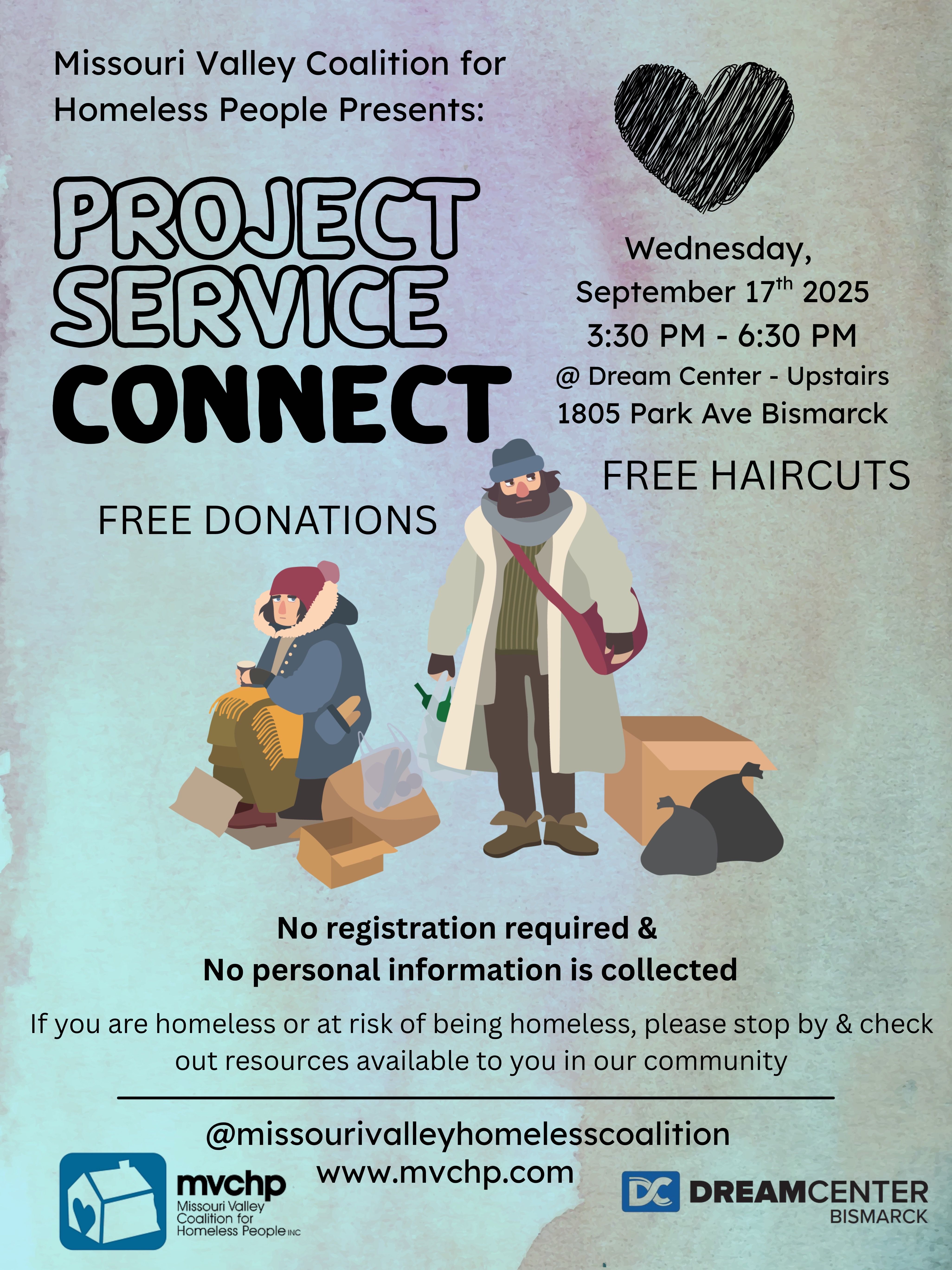
Bismarck’s Missouri Valley Coalition for Homeless People is hosting Project Service Connect on Wednesday, September 17, 3:30-6:30 p.m. at the Dream Center, 1805 Park Ave, Bismarck, North Dakota, according to a coalition announcement. The free event will connect individuals and families experiencing, or at risk of, homelessness with essential services and resources from more than 25 local organizations.
Guests can receive free clothing, supplies and haircuts, as well as participate in a children’s book reading and join a community art event. No registration or personal information is required. “Project Service Connect is about dignity, compassion, and connection,” the coalition said in a press release. The event is part of MVCHP’s ongoing effort to provide safe, stable housing and support to people in the Bismarck-Mandan area.
Fort Smith police, Choctaw Nation sign first cross-deputization pact in Arkansas
The Fort Smith Police Department and the Choctaw Nation of Oklahoma signed a cross-deputization agreement Sept. 5, marking the first tribal law enforcement agreement in Arkansas, according to the Northwest Arkansas Democrat-Gazette. The memorandum of understanding establishes mutual aid and cross-jurisdictional cooperation between the Fort Smith Police Department and the Choctaw Nation’s Lighthorse Police.
The agreement allows officers from both agencies to respond to violations of the law, assist with arrests, investigations and detentions and provide emergency support when needed. Choctaw Nation Chief Gary Batton said in a social media post the agreement strengthens public safety and builds “a framework of mutual respect and trust for the future.”
Department of Education ends funding to several MSI grant programs
The U.S. Department of Education announced Sept. 10 that it will end discretionary funding to several Minority-Serving Institutions grant programs, citing unconstitutional racial quotas. The decision follows a July determination by the U.S. Solicitor General that Hispanic-Serving Institutions programs violate the equal-protection component of the Fifth Amendment’s Due Process Clause.
According to the Department of Education, about $350 million in fiscal year 2025 discretionary funds will be reallocated to programs that do not have racial or ethnic quotas. Programs affected include Strengthening Alaska Native and Native Hawaiian-Serving Institutions, Strengthening Predominantly Black Institutions and Strengthening Native American-Serving Nontribal Institutions.
Bismarck Documenters to host meet and greet Sept. 18
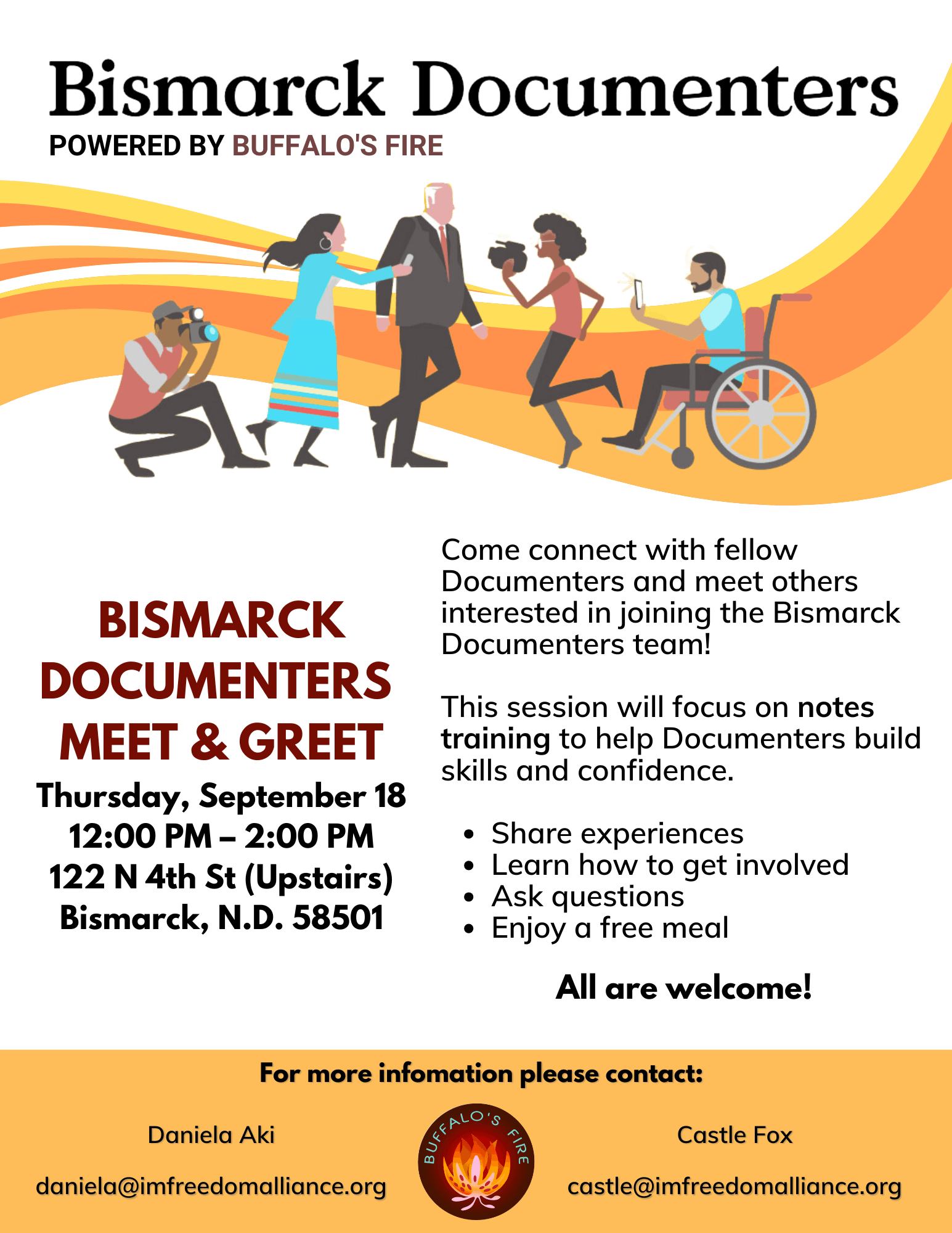
Bismarck Documenters will hold a meet and greet from 12 to 2 p.m. Sept. 18. The event includes a free meal and a workshop on note-taking. Documenters is a civic journalism program that trains and pays community members to take notes at public meetings. Attendees will have the chance to meet current Documenters, learn about the program and find out how to get involved. The event, which will be held at 122 N. 4th St., in Bismarck, North Dakota, is open to both current participants and community members interested in joining the Documenters.
Pechanga executive highlights collaboration among California tribes
Pechanga Resort Casino President Sean Vasquez said California tribes are balancing competition with cooperation as they defend their role as the state’s only sanctioned gaming operators, according to SBC Americas. Vasquez said tribes may compete for customers on weekends but stand together in Sacramento to oppose commercial gaming. He credited organizations such as the California Nations Indian Gaming Association and the Tribal Alliance of Sovereign Indian Nations with creating alliances that benefit all tribes.
Vasquez also described California tribal gaming as a spectrum, from billion-dollar operations such as Pechanga, San Manuel and Morongo to smaller rural casinos. He said partnerships, including Pechanga’s rewards program with The Venetian in Las Vegas, strengthen sovereignty and help tribes secure long-term economic stability.