






The Daily Spark
Small sparks from Indian Country, built to catch fire
Williston’s Chokecherry Festival returns with two days of family fun
The North Dakota Chokecherry Festival will return to Davidson Park in Williston August 8-9, according to the Williston Visitor Center. Festival events include a pancake breakfast, 5K fun run, pit-spitting contest, mini train rides, a kids’ money dig and the 1,000 burger feed sponsored by Northwest Communications Cooperative. Visitors can shop from local vendors and enjoy chokecherry-flavored treats. The festival runs from 4-8 p.m. on Friday and from 8 a.m. to 4 p.m. on Saturday, at 11th Street and 9th Avenue West.
Burlington’s plan to replace Greylock monument sparks intertribal identity dispute
Officials in Burlington, Vermont, plan to replace a deteriorated sculpture of Abenaki Chief Greylock with a new artwork commissioned by the state‑recognized Abenaki Nation of Missisquoi, according to VTDigger. The original statue was removed last week due to safety concerns.
However, the Missisquoi group’s role in the replacement has drawn criticism from state Rep. Troy Headrick, who urged officials to consult leaders from the Odanak and Wôlinak First Nations in Quebec. Those Abenaki communities argue that Vermont’s state‑recognized tribes, including Missisquoi, lack historical continuity and should not speak for all Abenaki representation. Burlington’s mayoral office said the delay in formally accepting the new statue was unrelated to tribal identity concerns and reaffirmed its partnership with the Missisquoi group under a 2022 city council resolution.
NATHPO condemns removal of Native history signage at Muir Woods
In a press release, the National Association of Tribal Historic Preservation Officers condemned the removal of signage at Muir Woods that referenced the enslavement of Native Americans by Spanish missionaries and the use of racist language by John Muir. The signage removal follows the implementation of Secretarial Order 3431 by the Department of the Interior.
“The removal of historical information at Muir Woods confirms our fears the Administration is actively working to erase evidence of the pain and suffering Indigenous peoples experienced,” said NATHPO Executive Director Valerie Grussing. In a June letter to Interior Secretary Doug Burgum, NATHPO wrote that the order “appears to instruct federal agencies to obscure the efforts on the part of the government to eradicate vibrant Indigenous cultures.” The organization called on the administration to rescind the order, restore the signage and work with Native nations.
ASU project highlights tribal water connections through interactive exhibits
A team of Indigenous scholars at Arizona State University is working with tribal communities across Arizona to create water-centered exhibits that reflect each tribe’s stories, rights and relationships to water, according to ASU News. The Indigenous Water Stories Research Cohort, led by assistant professor Liliana Caughman, collaborates with the Arizona Water Innovation Initiative to build immersive displays in rural areas.
The exhibits feature language, oral history, technology and cultural revitalization. One South Phoenix exhibit, “Agua es Vida: Honoring Mothers and Water,” incorporated virtual-reality games, a water chatbot and personal storytelling. The cohort is working with the White Mountain Apache Tribe, Colorado River Indian Tribes and Navajo Nation, among others, to tailor each display to local perspectives. “We’re trying to engage with them and use this as a process to help them think about water, tell their stories and uplift their communities,” Caughman said.
ASU News
Muscogee court affirms Freedmen descendants' citizenship
The Muscogee (Creek) Nation supreme court ruled in July that descendants of people once enslaved by the tribe are entitled to tribal citizenship, according to reporting by the Guardian. The court found that the nation’s citizenship board violated an 1866 treaty when it denied enrollment applications from Rhonda Grayson and Jeffrey Kennedy in 2019.
The board had argued that the two were ineligible because their ancestors, although they appeared on the Freedmen Roll, did not appear on the Muscogee Roll. The court ruled unanimously that such exclusions violated Muscogee law. As a result of the decision, all future applicants who can trace their ancestry to either roll will be eligible for enrollment.
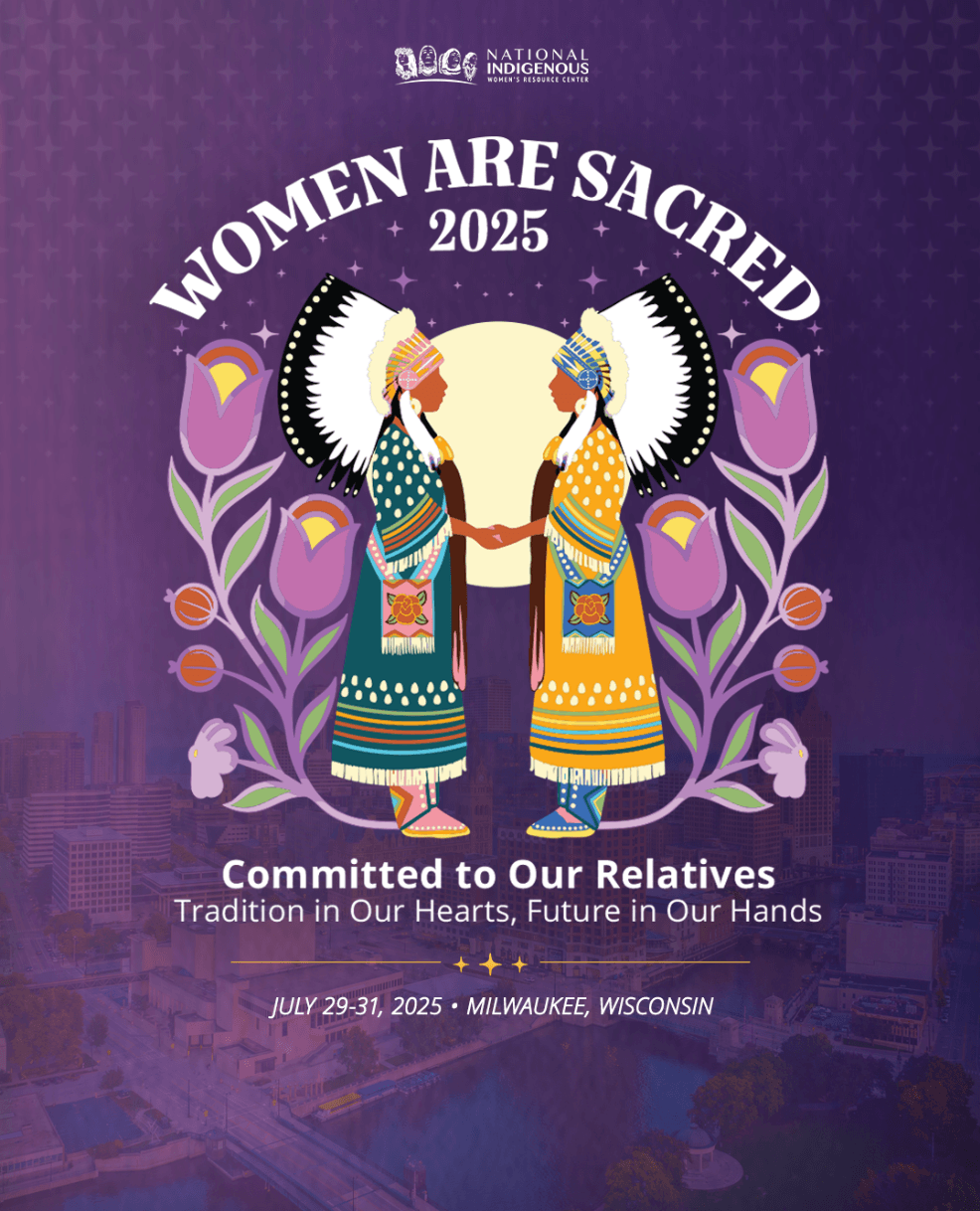
2025 Women Are Sacred Conference kicks off
The 2025 Women Are Sacred Conference began July 29 in Milwaukee, Wisconsin, bringing together tribal leaders, advocates and victim service providers from across the U.S. for three days focused on ending gender-based violence in Indian Country. The event opened with a water ceremony, land acknowledgment and morning prayer and song.
Hosted by the National Indigenous Women’s Resource Center, this year’s theme is “Committed to Our Relatives: Tradition in Our Hearts, Future in Our Hands.” The conference features cultural performances, keynote speakers, breakout sessions and more.
Jurisdictional confusion delays response to missing Native cases in Oklahoma
Families of missing Native people in Oklahoma say fragmented law enforcement responses and poor interagency coordination have delayed investigations, according to Oklahoma Watch. Deana Floyd, whose son Brandon Hummel went missing in January 2024, said his case was passed between the Atoka County Sheriff’s Office and Choctaw Lighthorse police with little follow-up. The Bureau of Indian Affairs became involved later, but Floyd said the assigned agent was rarely available.
Karrisa Newkirk, president of Missing Murdered Indigenous Women Chahta, said unclear responsibilities among city, county and tribal police routinely slow or prevent action. In the case of Trey Glass, a 19-year-old United Keetoowah Band member found dead in 2024, a report from the Northeastern Oklahoma Indigenous Safety & Education network cited confusion between UKB, the Cherokee Nation and local police. Newkirk called for better training, coordination and response protocols.
Tribal sovereignty limits hinder resistance to Oklahoma nickel refinery
Protesters and local tribal citizens continue to oppose Westwin Elements, a nickel refinery in Lawton, Oklahoma, but say their efforts are restricted by longstanding legal and political barriers, according to KOSU. Comanche Nation Chairman Forrest Tahdooahnippah indicated the tribe lacks Treatment as a State status due to a federal appropriations rider, limiting its ability to regulate environmental impacts.
The refinery operates on fee simple land, reducing the jurisdiction of the Kiowa, Comanche and Apache tribes, whose reservation was significantly diminished following the 1903 Lone Wolf Supreme Court ruling. Kiowa Chairman Lawrence SpottedBird told KOSU, “The only entity that has plenary authority over any person is God himself, and Congress is not God.” Protest organizer Kaysa Whitley (Kiowa/Absentee Shawnee) said the movement will continue, stating, “We’re not here to be a part of their system or to even uphold it. We exist outside of it.”
Colville Tribes assume full ownership of Chief Joseph Hatchery
The Confederated Tribes of the Colville Reservation have officially assumed full ownership of the Chief Joseph Hatchery after the U.S. Army Corps of Engineers filed a quitclaim deed, according to the Colville Tribes. The hatchery, located near the Grand Coulee and Chief Joseph dams, plays a key role in salmon reintroduction efforts in blocked areas of the Columbia River.
Tribal Chairman Jarred-Michael Erickson said the transfer strengthens tribal sovereignty and expands opportunities for tribal management and future funding. The hatchery produces more than two million juvenile Chinook salmon annually.
Puyallup Tribe receives downtown Tacoma community center in land donation
The Puyallup Tribe of Indians received a major property donation from Alma LLC, which transferred ownership of a 22,000-square-foot former community center in downtown Tacoma, according to ICT. The donation, finalized July 28, includes a performance hall, rooftop event area and cafe space that hosted cultural and community events from 2018 to 2023.
“This gift of this beautiful building in downtown Tacoma, which is our ancestral homelands, is somewhat of a miracle,” Council member Annette Bryan told ICT. The transfer was facilitated by Anpo, an Indigenous-led nonprofit. The Puyallup Tribal Council is exploring future uses for the site.
Annual Back to School Bash set for Aug. 6 in Bismarck
The Indigenous Education Back to School Bash will take place in Bismarck, North Dakota, on Wednesday, Aug. 6, from 11 a.m. to 6 p.m. at Sertoma Park Shelters. The Bismarck High School Karigaard Gymnasium will serve as a backup location in case of poor weather.
The event invites students and parents from Bismarck Public Schools, Mandan Public Schools and the Theodore Jamerson Elementary School to pick up free backpacks, binders and other school supplies for grades pre-K through 12. A ticketing system will be used, and attendees are asked to check in at Shelter 10 to receive their tickets. Community agencies will provide food, vaccinations and educational resources.
For more information, contact Tomi Cimarosti at 701-323-4136 or tomicimarosti@bismarckschools.org. Organizers encourage vendors and volunteers to participate.

Tribes tap hemp loophole to launch THC businesses
The Lac du Flambeau Band of Lake Superior Indians opened Little Pines cannabis dispensary in July on tribal lands in northern Wisconsin, selling THC-infused hemp products. According to ICT, tribal regulatory authority allows the sale despite state laws banning medical and recreational marijuana.
Candace Thompson, a citizen of the Lac du Flambeau Band and director of retail and cultivation at Little Pines, said tribal licensing enables the store to operate legally. The 2018 Farm Bill approves the domestic production of hemp for material and food products. Manufacturers can enhance the percentage of THC from harvested hemp. “That’s the legal loophole,” Thompson told ICT. Rob Pero of the Indigenous Cannabis Industry Association called Little Pines the first free-standing tribal business of its kind in Wisconsin.
Deb Haaland to receive Chief Standing Bear Prize
Deb Haaland, former U.S. Interior secretary and a member of the Pueblo of Laguna, has been named the 2025 recipient of the Chief Standing Bear Prize for Courage, according to the Nebraska Examiner. She will be presented with the award during an Indigenous Peoples’ Day ceremony Oct. 13 at the Lied Center for Performing Arts in Lincoln.
The prize is awarded annually by the Chief Standing Bear Project to honor those who embody the courage and legacy of Ponca Chief Standing Bear. Board president Katie Brossy said Haaland’s life demonstrates “quiet resilience” and a “willingness to lead, even when the path is uncertain,” highlighting her historic roles as the first Native American woman to lead a state political party, serve in Congress and serve in the Cabinet.
Ojibwe traditions highlighted at St. Croix RiverFest
Ojibwe artists, cooks and culture bearers were featured at this year’s St. Croix RiverFest in Hudson, Wisconsin, from July 22-26. Traditional foods, art, prayer and powwow-style performances took place at the event, according to the Hudson Star‑Observer. Lisa Mosay, a 60-year-old Ojibwe woman, attended the festival with her family and served wild rice soup, fry bread and Native American tacos. “Our culture is beautiful,” Mosay was quoted as saying. “It’s unique.”
Indigenous artwork at the event included beadwork and birchbark jewelry from Melissa "Niigaaniigaabowikwe" Fowler, a member of the Lac Courte Oreilles Band of Lake Superior Chippewa. “We need to have our people out here doing these kinds of things,” Fowler said. Programming also included prayer and song led by Michael Decorah of the St. Croix Chippewa Indians of Wisconsin, who shared the tribe’s history and emphasized cultural visibility.
Red Thread Network offers immediate support for Native families facing missing persons crisis
In June Red Thread Network, a Native-led initiative founded by Tyler Rambeau of the Flandreau Santee Sioux Tribe, announced the launch of its South Dakota chapter to support families in the critical first hours after a loved one goes missing. The network provides free resources including downloadable checklists, jail and hospital contact directories and advocacy tools designed for fast access when time matters most.
“I saw the gap — that moment when someone realizes their loved one is missing and has no idea what to do next,” Rambeau said. “Red Thread Network exists to fill that space with clear steps, real support and cultural care.”
Rambeau said the project grew from her lived experience and ongoing advocacy related to missing and murdered Indigenous people. The effort centers kinship and protection, aiming to replace panic with action across Indian Country. Expansion beyond South Dakota is planned.
More information is available on the Red Thread Network Facebook page.
Minnesota launches tip fund to help solve Indigenous cold cases
Minnesota has launched a statewide tip program to support investigations into long-standing missing and murdered Indigenous persons cases, according to NewsNation. The Gaagige-Mikwendaagoziwag Reward Fund, created through a $250,000 state allocation, currently offers rewards in 16 active cases, including two missing persons cases.
The initiative is led by the state’s Department of Public Safety’s Missing and Murdered Indigenous Relatives Office. Tipsters can remain anonymous, but eligibility for rewards ranging from $1,000 to $10,000 may require follow-up communication. Cases must be open and active with law enforcement. According to the MMIR office, 57% of the 716 Indigenous people reported missing in Minnesota last year were women. Proceeds from MMIR license plate sales and donations have increased the program’s available funding to $350,000 as of July 10.
Fort Yates event invites community to learn about Documenters program
The Documenters program will host a community meet and greet on Thursday, July 31, to introduce residents to its work documenting public meetings in Bismarck, Mandan and Lincoln. The event will take place from 11:30 a.m. to 2 p.m. on the Sitting Bull College campus and will include a free meal, according to event organizers.
The Documenters program trains and pays local residents to take notes at government meetings, helping to create a new public record. Organizers say the program gives participants a sense of purpose and strengthens community accountability. For more information, attendees can contact daniela@imfreedomalliance.org or castle@imfreedomalliance.org.

Monster trucks roar into Parshall for annual Healing Horse Challenge
The fourth annual Monster Truck Challenge will take place Tuesday, July 29, at the Healing Horse Ranch near Parshall, North Dakota, according to KXNET. Hosted by the northern segment of the Fort Berthold Indian Reservation, the event will feature nationally known trucks such as Vendetta, Jurassic Attack, Barefoot, Barely Tamed and Monster Patrol.
The evening begins with a pit party at 6 p.m. where attendees can meet drivers, take photos and ride in the Jeepers Creepers truck. The main show starts at 7:30 p.m. Tickets are $5 for kids, $10 for teens and $20 for adults. The Healing Horse Ranch, located on Highway 23, includes an indoor-outdoor racetrack and rodeo arena. According to announcer Randy Taylor, the ranch also supports youth and rehabilitation programs in the community.
Path to Lumbee federal recognition remains uncertain amid political hurdles
An executive order issued by President Donald Trump his first week in office directed the Interior Department to create a plan for recognizing the Lumbee Tribe of North Carolina, according to The Associated Press. The plan was submitted to the White House in April, but last week the White House told The Associated Press that recognition for the tribe must come through legislation.
The tribe has been lobbying for decades to be recognized as a sovereign nation and has been working with U.S. Sen. Thom Tillis of North Carolina to pass the Lumbee Fairness Act, which was referred to the Senate Committee on Indian Affairs in January. Critics, including Eastern Band of Cherokee Indians Principal Chief Michell Hicks, have questioned the Lumbee's genealogical claims. Lumbee Chairman John Lowery said the federal application process could take decades to complete and has instead urged congressional action. A 2022 estimate by the Congressional Budget Office put the cost of recognition at more than $360 million over four years.
Trump administration proposes coal leasing on public lands in Montana and Wyoming
Federal officials on July 7 disclosed a proposal to open more than 2,600 square miles of public lands in northeastern Wyoming and southeastern Montana to coal leasing, according to The Associated Press. The plan reverses the previous administration’s effort to end coal sales in the Powder River Basin due to climate concerns.
The proposal follows an executive order signed by Trump on his first day in office. A tax bill enacted July 4 lowered royalty rates from 12.5 % to 7 % for coal mined on federal lands and mandated that up to 6,250 square miles be made available for leasing. A spokesperson for the Interior Department’s Bureau of Land Management declined to say how much interest the proposal might attract or how quickly new mines could open.