






The Daily Spark
Small sparks from Indian Country, built to catch fire
North Dakota colleges, tribal schools awarded $7.96M to boost STEM research
Ten colleges and universities in North Dakota, including all five of the state’s tribal colleges, will collaborate on a $7.96 million National Science Foundation award to expand STEM research and education, according to the Minot Daily News. The four-year Sustainable Programs Advancing Research and Knowledge across North Dakota (SPARK-ND) project will be led by North Dakota State University.
The initiative aims to strengthen the state’s STEM ecosystem by building research capacity, connecting research communities and increasing STEM literacy in rural areas. Planned activities include outreach to rural schools, recruitment and retention of STEM students and development of multi-institutional research teams. Participating institutions include Cankdeska Cikana Community College, Nueta Hidatsa Sahnish College, Sitting Bull College, Turtle Mountain College, United Tribes Technical College and five state universities.
Seneca Nation acquires Rochester Knighthawks in first for pro lacrosse
The Seneca Nation has purchased the Rochester Knighthawks, marking the first time a tribal nation has joined the ownership ranks of the National Lacrosse League, according to ICT. The deal with Terry and Kim Pegula keeps the team in Rochester, New York, where professional box lacrosse has deep Indigenous roots.
Seneca Nation President J. Conrad Seneca said the move honors the cultural and spiritual significance of lacrosse, known as the Creator’s Game, and secures the team’s future in the community. The National Lacrosse League called the acquisition a “historic partnership,” which Commissioner Brett Frood said strengthens the NLL’s commitment to honoring the sport’s Indigenous origins. The Knighthawks are coming off a playoff season and will begin their 2025-2026 campaign under the leadership of Seneca Holdings. General Manager Dan Carey will lead the organization as team president and general manager.
Indigenous sorority faces uncertainty under federal anti-DEI orders
Alpha Pi Omega Sorority, the nation’s oldest and largest Indigenous Greek letter organization, is concerned about its future on college campuses amid a series of executive orders from the Trump administration targeting diversity, equity and inclusion (DEI) initiatives, according to The 19th. Founded to support Indigenous women in higher education, the sorority has 14 undergraduate chapters, 11 professional chapters and more than 900 members from nearly 130 tribes.
Sorority grand president and leader LaDonna Richardson said most undergraduate chapters are based at predominantly white institutions and could struggle to attract new members if DEI programs are curtailed. Federal judges have blocked some of the administration’s orders, but others remain in effect or unchallenged. Alpha Pi Omega members at the University of North Carolina at Pembroke — home to the largest Native American student population in North Carolina — say the sorority provides a vital sense of belonging, mentorship and cultural connection for Indigenous students.
Nine tribal recruits to join next South Dakota law enforcement academy class
Nine recruits from the Yankton, Oglala, Sisseton-Wahpeton and Rosebud tribes will join South Dakota’s next basic law enforcement certification class, beginning Aug. 18 in Pierre, according to South Dakota Searchlight. The 13-week program certifies officers for tribal and non-tribal agencies, with three sessions held each year.
Since May 2024, the state has certified 13 tribal graduates. Officials hope to expand training opportunities for tribal officers. U.S. Sen. Mike Rounds and state Public Safety Secretary Bob Perry have called for a federal tribal police academy in the Great Plains. Most tribal officers currently train at a Bureau of Indian Affairs facility in Artesia, New Mexico, which leaders say poses hiring challenges due to distance and duration.
Smudging, gardening and art: Students flourish in Indigenous STEAM camp
Minneapolis Public Schools offers a six-week summer American Indian STEAM program, according to reporting by Sahan Journal. The program combines science, technology, engineering, arts and math with cultural learning, including gardening with traditional plants like tobacco, sage and sweetgrass. Nearly 50 students attend; half are Native American. This year’s theme focused on water protection.
Siena Braun, a member of the Fond du Lac Band of Lake Superior Chippewa and co-author of the curriculum, leads students in hands-on activities, such as smudging, gardening and crafting. The program began virtually in 2020 and moved to a Native-centered elementary school in south Minneapolis that is housed in the same building as Sullivan STEAM School.
FEMA announces nearly $1 billion in disaster preparedness grants for states and tribal nations
The Federal Emergency Management Agency (FEMA) announced nearly $1 billion in disaster preparedness grants through 15 funding programs to help states and tribal nations improve readiness for natural disasters and human-caused incidents. Since July 25, the agency has offered over $2.2 billion in funding opportunities for state, local, tribal and territorial governments, according to FEMA.
To assist tribal emergency directors and managers, FEMA and the Department of Homeland Security will host a webinar on Thursday, Aug. 7, at 2 p.m. Eastern Standard Time. Tribal leaders may register and submit up to three questions by 3 p.m. on Aug. 5. For more details, contact FEMA’s Tribal Affairs team at FEMA-Tribal@fema.dhs.gov.
MHA Nation to host regenerative medicine conference Aug. 6
The Mandan, Hidatsa and Arikara Nation will host a free regenerative medicine conference Aug. 6 at the MHA Interpretive Center in New Town, North Dakota, from 9 a.m. to 5 p.m., according to event organizers. The event will feature medical experts discussing stem cells, gene therapy, diabetes care, mental health treatment and hyperbaric oxygen therapy.
Speakers include Asher Milgrom, CEO of AMA Regenerative Medicine & Skincare, Travis Whitney, naturopathic doctor and founder of Innate Healthcare Institute, and Robbie Westerman, co-founder of Camelback Integrated Health and Wellness. A 30-minute session led by MHA member Ansen Wounded Face will also take place. Lunch, snacks and drinks will be provided, and attendees must be present to win raffle prizes.
Tribal representatives cite “more questions than answers” as Montana pushes Medicaid work rule plan
Tribal health representatives are urging Montana officials to slow the state’s move toward Medicaid work requirements and premiums for the low-income health coverage plan, according to Montana Free Press. They warn the state may be acting too far ahead of the federal timeline laid out in the Trump administration’s domestic policy bill and have expressed concerns about potential administrative hurdles. At a July 29 consultation, stakeholders — including Urban Indian Organizations — said the state’s draft proposal risks disenrolling tribal members.
Although Native Americans are exempt from many new rules, state health officials, including Medicaid Director Rebecca de Camara, told tribal counterparts that the plan’s details don’t yet exist. Joel Rosette, CEO of the Rocky Boy Health Center, described the process as “a year ahead” with “more questions than answers.” He and other tribal leaders pressed the state to simplify applications and avoid replicating administrative failures from previous Medicaid redetermination efforts.
Mohegan Tribe agrees to sell Connecticut Sun for record $325 million
The Mohegan Tribe has reached an agreement to sell the Connecticut Sun to a group led by Boston Celtics minority owner Steve Pagliuca for a record $325 million, according to the Associated Press. The deal includes plans to move the WNBA team to Boston by 2027 and build a $100 million practice facility there.
The tribe purchased the Sun in 2003 for $10 million and relocated it from Orlando to Connecticut. It was the first time an WNBA franchise was run by a non-NBA owner. The current sale, first reported by The Boston Globe, is pending approval by the league and its Board of Governors. According to ICT, the Mohegan Tribe issued a statement saying that any agreement involving relocation would require WNBA approval and is subject to non-disclosure terms.
Pennsylvania museum closes Native American exhibit for repatriation
The State Museum of Pennsylvania in Harrisburg is set to close its Native American exhibit to facilitate the repatriation of thousands of artifacts and human remains to tribal nations. This action by the Pennsylvania Historical and Museum Commission (PHMC), reported by PennLive, aligns with the updated Native American Graves Protection and Repatriation Act (NAGPRA).
NAGPRA is a federal law protecting tribal gravesites and providing a mechanism for tribal nations to reclaim ancestral property from federally funded institutions. The PHMC’s collection includes some 908 individual human remains and 79,628 funerary objects subject to this law, which was enacted in 1990 and updated in 2024 to expedite the repatriation process. "The Pennsylvania Historical and Museum Commission is fully committed to this process," Andrea Bakewell Lowery, the commission’s executive director, told PennLive.
The exhibit has been temporarily closed since early May so staff could identify and prepare items for return. The law has faced challenges in its implementation and enforcement, with some institutions found to be delaying compliance. James Riding In, a retired professor who is Pawnee, has said of unreturned remains, "We never ceded or relinquished our dead. They were stolen."
The removal process is expected to take months, and the exhibit will not reopen before the museum closes for renovations in August 2026, according to Bakewell Lowery. PHMC plans to develop a new Native American exhibit in consultation with tribal nations.
Indigenous youth complete historic Klamath River descent, sign global dam removal accord
More than 120 Indigenous youth and allies from four continents completed a 310-mile journey down the newly undammed Klamath River in July, marking the first full descent of the river in over a century, according to reporting by Underscore Native News. The month-long paddle was organized by Paddle Tribal Waters, a program under Ríos to Rivers, and included participants from the Klamath Basin as well as river basins in Chile, Bolivia, New Zealand and China. The group convened for the Global Free Rivers Symposium at the mouth of the Klamath and signed the inaugural Klamath River Accord, calling for a global end to dam construction and the removal of existing dams. Youth participants said the event honored ancestors’ prayers.
Tribal leaders defend health care access for two-spirit citizens amid federal restrictions
Tribal leaders and public health advocates are asserting sovereignty over gender-affirming care in response to federal rollbacks, according to KFF Health News. At the Two Spirit Conference in Elko, Nevada, in June, organizers and attendees called attention to the challenges faced by two-spirit and LGBTQ+ Native Americans seeking health care. Myk Mendez, a citizen of the Fort Hall Shoshone-Bannock Tribes, said he organized the event to preserve two-spirit traditions and educate the community.
Shortly after taking office in January, Trump signed an executive order recognizing only two sexes. In March, the National Indian Health Board passed a resolution affirming tribal authority over health issues, including gender-affirming care. Organizers and health consultants said tribal citizens are experiencing delays or denials in hormone treatment, even in areas where such care remains legal. The Indian Health Service has faced criticism for limiting access, and advocates warn that recent federal policy changes may further endanger Native LGBTQ+ and two-spirit communities
Tribal police urge recognition under state law to strengthen public safety
Tribal and state officials are calling on South Dakota lawmakers to formally recognize tribal police officers as law enforcement under state law, according to South Dakota Searchlight. Roberts County State’s Attorney Dylan Kirchmeier told the State-Tribal Relations Committee on July 31 in Agency Village that current statutes prevent him from filing felony charges for assaults against tribal officers, despite their regular coordination with city and county law enforcement.
Sisseton-Wahpeton Police Captain Gary Gaikowski said tribal and state officers often arrest the same individuals. Officials also discussed the complexities of mutual aid agreements between state and tribal agencies. Department of Public Safety Secretary Bob Perry and Tribal Relations Secretary Algin Young acknowledged progress but noted lingering mistrust. The committee’s next meeting will take place in mid-September and will be co-hosted by the Cheyenne River and Standing Rock Sioux Tribes.
Sisseton-Wahpeton leader denounces lawmaker’s deleted post as racially charged
Sisseton-Wahpeton Oyate Chairman J. Garret Renville criticized a now-deleted social media post by South Dakota state Rep. Logan Manhart as “inflammatory” and “racially charged” during a State-Tribal Relations Committee meeting on July 31 in Agency Village, according to South Dakota Searchlight. The Instagram post, made on July 4, read, “it’s white boy summer and the boys are back in charge #MAGA.” Manhart represents District 1, which includes parts of the Lake Traverse Reservation.
Renville was quoted as saying at the meeting that such remarks “do not reflect the diversity or the values of District 1.” Committee Chair and Fort Pierre Rep. Will Mortenson told Renville that the committee “shares your sentiments to a large extent.”
Ponca bands reunite on ancestral land for Four Winds convening
The Fourth Convening of the Four Winds brought together Ponca bands in Niobrara, Nebraska, from May 16-18, making it the first time it was held outside Oklahoma, according to ICT. Co-hosted by the Ponca Tribe of Nebraska, the Ponca PaThaTa and Movement Rights, the gathering focused on tribal sovereignty, rights of nature and environmental justice. Participants traveled from across Turtle Island to take part in prayer, ceremony and community planning at the Old Ponca Agency Grounds.
Organizers emphasized intergenerational activism and the importance of reconnecting with traditional knowledge. Conference attendees held a water ceremony and planted sacred Ponca corn on ancestral land, continuing a tradition reestablished in Nebraska in 2024. The coalition also released a statement supporting a July advisory opinion from the Inter-American Court of Human Rights that links climate change to human rights obligations, according to ICT.
Documenters host Fort Yates meet and greet at Sitting Bull College
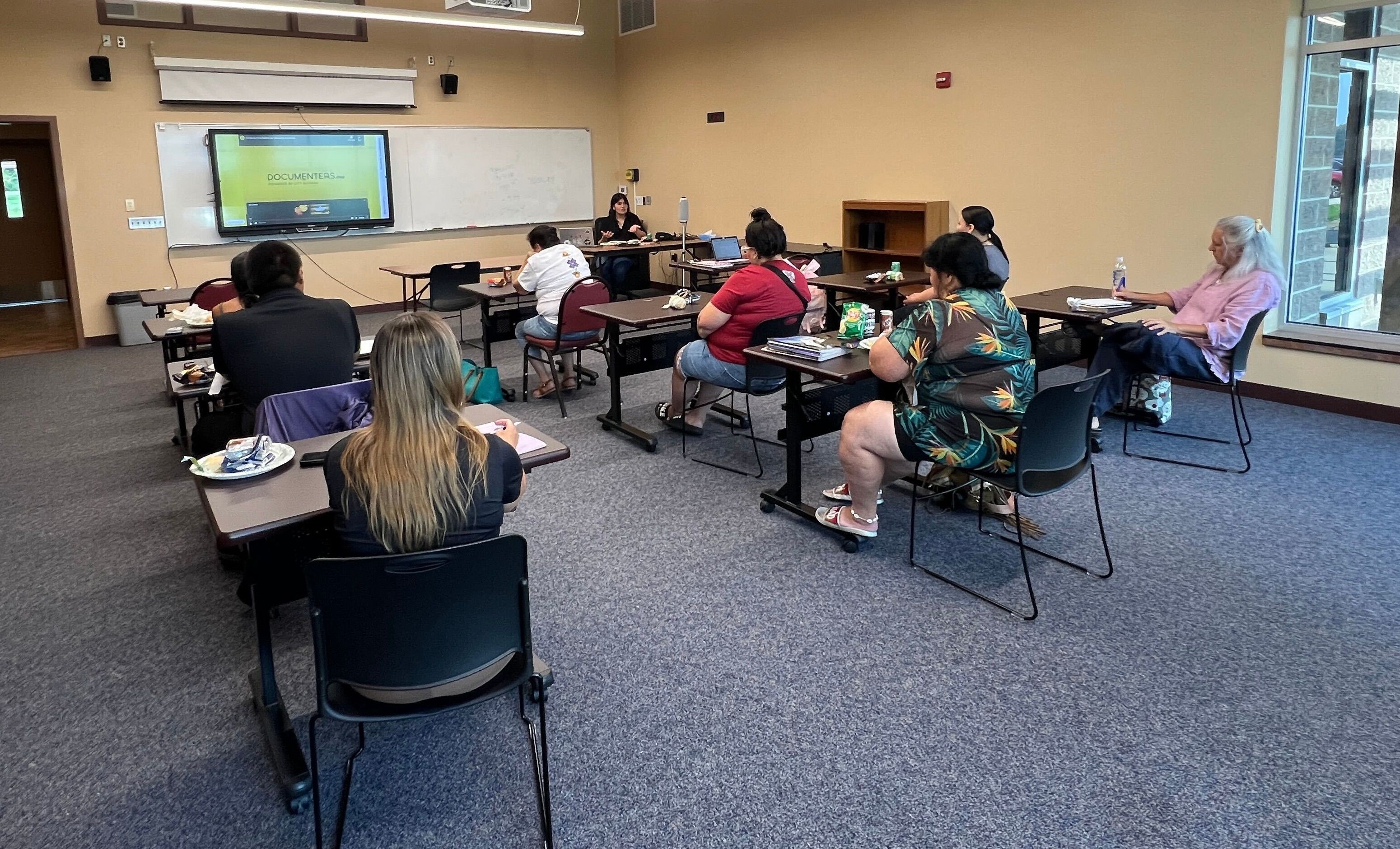
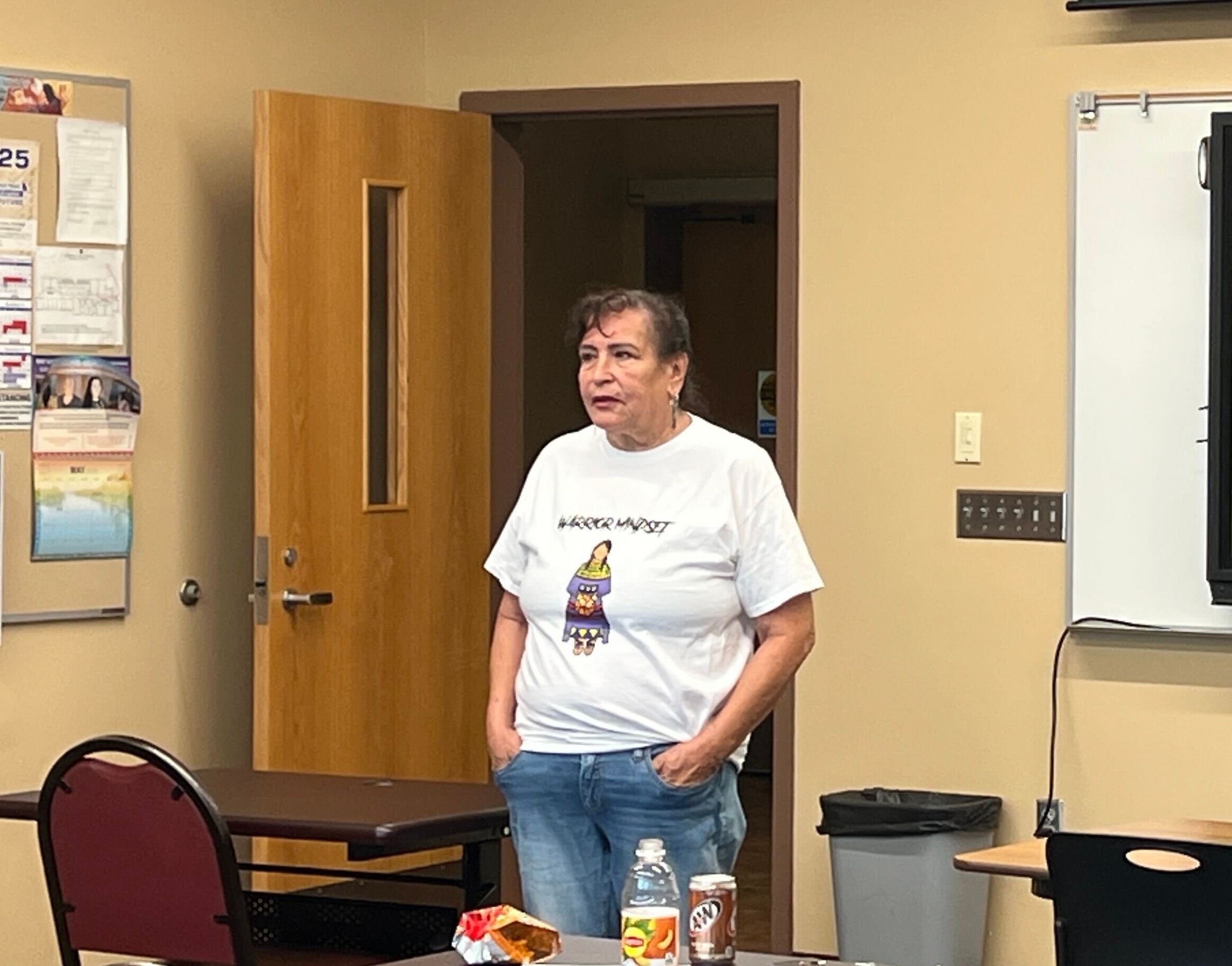
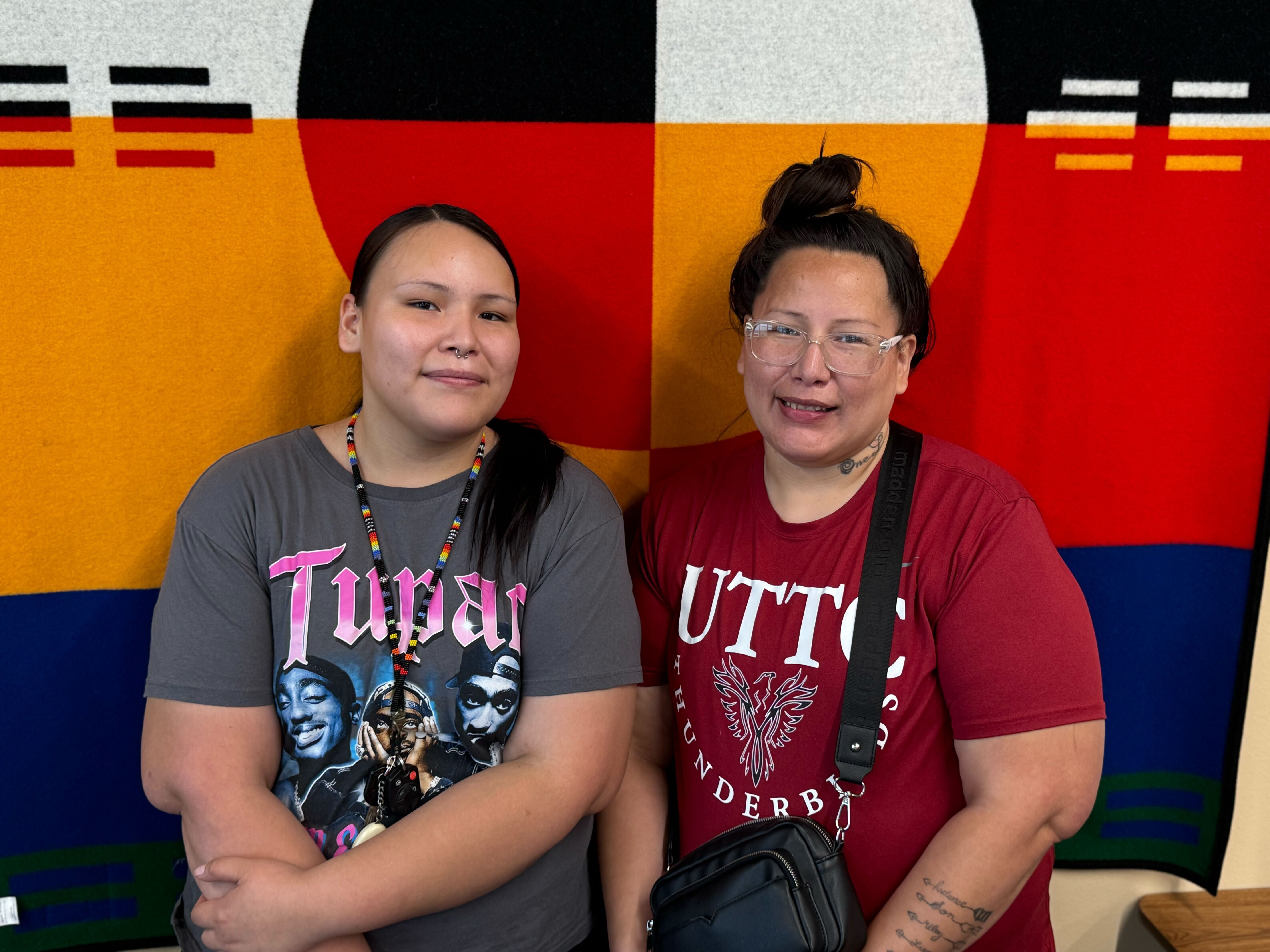
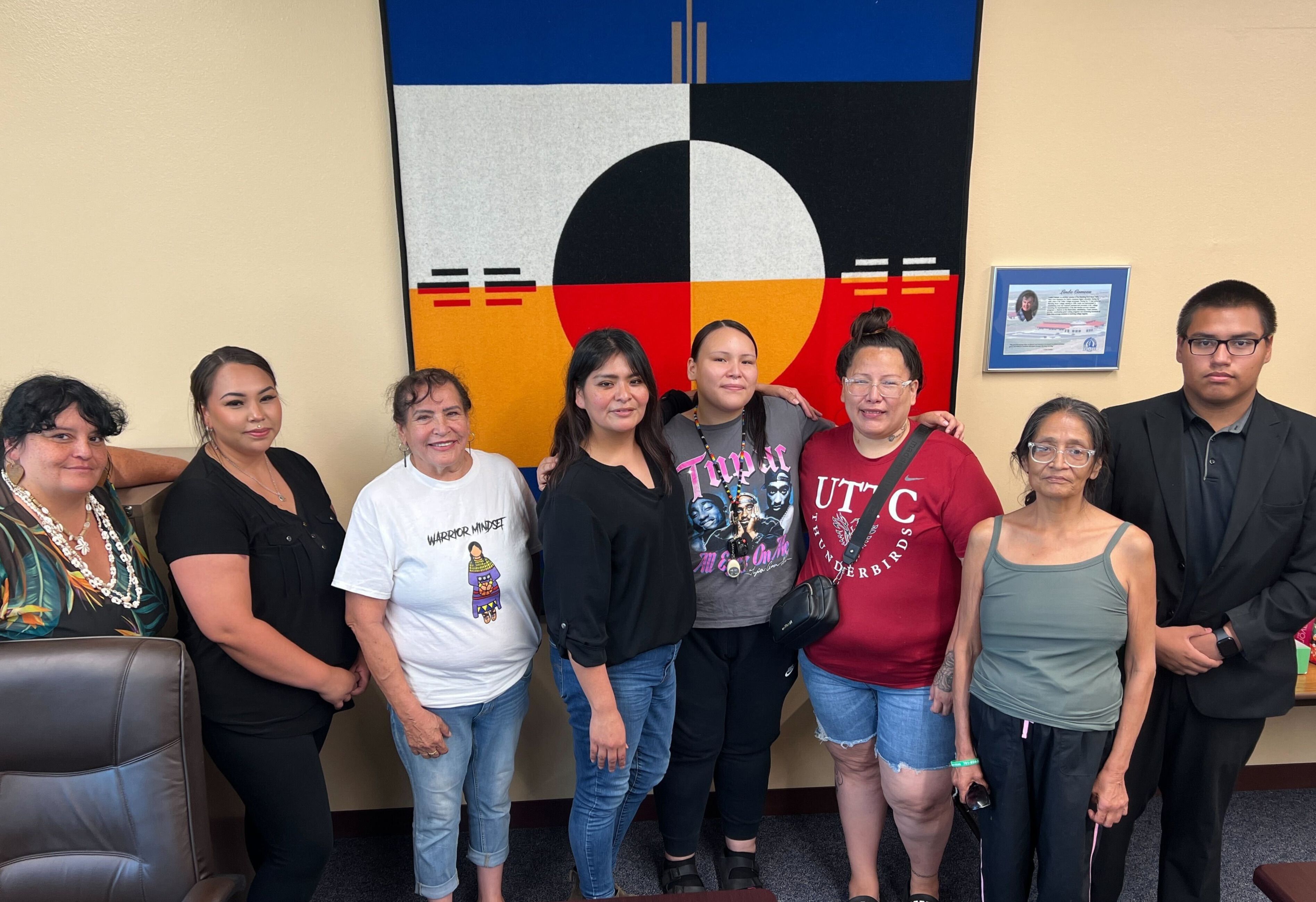
A meet and greet for the Documenters program was held Thursday, July 31, from 11:30 a.m. to 2 p.m. at Sitting Bull College in Fort Yates. The event took place in room 105 of the Entrepreneurial Center and included a free meal.
Attendees learned about the program’s goals and heard from current Documenters, who shared their experiences. New participants asked questions and joined the conversation, and everyone brought a story to the table. Connections were made among attendees as the event welcomed community members interested in learning how to take part in civic engagement and community reporting.
For more information about the Documenters program, please contact Daniela Aki at daniela@imfreedomalliance.org or Castle Fox at castle@imfreedomalliance.org.
Haudenosaunee women’s lacrosse team earns bronze, eyes Olympic recognition
The Haudenosaunee Nationals Women’s Lacrosse team won a bronze medal at the Pan American Lacrosse Association tournament on June 30 in Auburndale, Florida, qualifying for the 2026 World Women’s Lacrosse Championships in Tokyo, according to ICT. It was the team’s first time competing at the senior level in international play.
The team and the Haudenosaunee Confederacy have petitioned for recognition at the 2028 Olympic Games in Los Angeles. On July 26, the Syracuse Mets honored the team at the NBT Bank Stadium for “Haudenosaunee Night.” Players celebrated with fans and shared messages of encouragement for young Native athletes.
Texas board approves Native Studies course despite criticism over curriculum content
The Texas State Board of Education voted 9-5 on June 27 to approve the American Indian/Native Studies course for state credit, allowing students to study Native perspectives and sovereignty, according to the Christian Post. The Texas Education Agency said the curriculum includes topics such as cultural exchanges among Native peoples and other ethnic groups, and contrasts Native egalitarian concepts with Euro-Western hierarchies.
Republican board member Julie Pickren criticized the course, saying it trains children to “resent the birth of America” and “resent Christians.” She specifically denounced the curriculum for teaching that “Christian missionaries kidnapped Indian children and sent them to re-education camps to become Americans and Christians.” She also said the curriculum was not publicly available for review before the vote.
Chickasaw Nation leads in summer food benefits for Native children
The Chickasaw Nation implemented its inaugural Summer Electronic Benefit Transfer (EBT) program in 2024, reaching nearly 150,000 children across its service area and that of the Muscogee Nation, according to a case study by the Food Research & Action Center. The program provides eligible families with about $120 in grocery benefits per child during summer months to address gaps left by traditional nutrition programs.
The study highlights the importance of leveraging partnerships and strong data-sharing agreements with schools. It also recommends expanding eligibility beyond tribes operating WIC, increasing administrative funding, easing regulatory requirements and providing more federal technical support to enable broader tribal participation in Summer EBT.
Native youth program faces cuts as federal grant expires
A program in Kern County, California, that integrates traditional cultural practices to prevent suicide and substance use among Native youth faces uncertainty as federal funding ends, according to The Intersection. Since 2020 the Bakersfield American Indian Health Project has used federal grants administered by the Substance Abuse and Mental Health Services Administration to support youth services.
The Trump administration’s fiscal 2026 budget proposes eliminating Tribal Behavioral Health Grants, known as Native Connections. The program’s final funding round ends July 30 and technical assistance contracts expire in August. BAIHP CEO Angel Galvez said the reason for the grant’s discontinuation is unclear. Program director Johnny Delgado added that the loss of culture‑based services may reduce outreach and risk reduction for Native youth.