






The Daily Spark
Small sparks from Indian Country, built to catch fire
Jock Soto to be honored in Santa Fe
On Aug. 23, the International Museum of Dance marks 20 years since his retirement and launches a fund for Indigenous dancers
The International Museum of Dance and ChromaDiverse will present an event honoring Diné (Navajo) and Taíno ballet legend Jock Soto on Aug. 23 at the Lensic Performing Arts Center in Santa Fe, marking the 20th anniversary of his retirement.
The evening features a live interview, on-the-spot choreography by Soto and a preview of “Jock Soto: The Dancer and His Life,” a new searchable digital archive.
The museum and ChromaDiverse also have launched the Moving Memories Fund to support two goals: the Jock Soto Scholarship for Indigenous dancers and the preservation of underrepresented dance histories.
“Every artist’s story is worthy of preservation,” Judy Tyrus, ChromaDiverse’s founder and CEO, told ICT. Soto told ICT he’s excited for the evening and hopes the community turns out.
Judge halts Everglades detention center construction
A 14-day order pauses new work after the Miccosukee Tribe joined a suit alleging environmental harms and lack of public review.
After the Miccosukee Tribe joined a lawsuit challenging expansion of the Everglades immigration detention center known as “Alligator Alcatraz,” a federal judge issued a temporary restraining order Aug. 7 halting new construction. U.S. District Judge Kathleen M. Williams ordered a 14-day pause on tents, paving, filling and lighting after testimony during a preliminary injunction hearing; operations may continue.
Plaintiffs include the Miccosukee Tribe, Friends of the Everglades and the Center for Biological Diversity. They say the project proceeded without required environmental review or public input, violating the National Environmental Policy Act.
Williams said plaintiffs showed evidence of “ongoing and material harm,” after hearing testimony about threats to the endangered Florida panther and contaminated runoff. Counsel for Kevin Guthrie, the executive director of the Florida Division of Emergency Management, argued the restraining order wasn’t warranted and that the site must operate to meet law-enforcement needs.
The preliminary injunction hearing resumes Tuesday in Miami.
Pokagon Band joins regional effort to tackle opioid crisis
The Pokagon Band of Potawatomi Indians is partnering with the Berrien County Suicide Prevention Coalition to host the Southwest Michigan Opioid Summit on Sept. 25. The one-day event will bring together experts in public health, law enforcement, addiction recovery, harm reduction and tribal leadership to address opioid awareness, prevention and recovery.
Sessions will focus on data-driven prevention strategies, holistic recovery approaches and culturally informed interventions. The summit is also supported by the C.A.S.S. Community Coalition and Cass County Opioid Settlement Funds.
Journalists meet in Albuquerque to address press freedom, funding cuts
Buffalo’s Fire is on site and will send dispatches throughout the conference
The Indigenous Journalists Association annual conference opened Aug. 13 at the Isleta Resort & Casino, hosted by the Pueblo of Isleta. The three-day event will bring together several hundred Native reporters, editors, producers and influencers to discuss pressing issues in the industry. Buffalo’s Fire is on site and will send dispatches throughout the conference.
A major difference since last year’s gathering is the recent rescission approved by Congress at President Trump’s request, which cut $1.1 billion from the Corporation for Public Broadcasting. Critics say the loss will hurt small radio and TV stations in rural areas, particularly in Indian Country. Other topics on the agenda include environmental justice, coverage of missing and murdered Indigenous people, the Land Back movement and more. As of 7:18 a.m., 375 people were registered, according to IJA president Christine Trudeau. This year’s theme is “Sovereignty Equals Free Press.”

Chief deputy sheriff of Benson County faces three felony charges
On July 24, Ramsey County Sheriff’s Office arrested Chief Deputy Travis Carlson from the Benson County Sheriff’s Office. A dozen charges, including three felonies, were filed against him.
Carlson allegedly arrested citizens of the Spirit Lake Tribe without proper authority from the Bureau of Indian Affairs, according to a press release sent by the tribe’s public relations specialist.
According to court documents, charges include tampering with public records, unlawful arrests and disorderly conduct. The Grand Forks County Correctional Center told Buffalo’s Fire Carlson was released the day following his arrest after making a bail of $10,000.
Philly court restores Columbus Day holiday
Columbus Day will return to the City of Philadelphia’s calendar after the Pennsylvania Commonwealth Court invalidated a 2021 executive order by former Mayor Jim Kenney on Aug. 6, 2025. The order had replaced the holiday with Indigenous Peoples' Day.
Judge Patricia McCullough wrote in her opinion that the seven judges ruled unanimously that the executive order was a violation of the separation of powers, and that Mayor Kenney lacked authority to remove Columbus Day. The court determined that establishing or changing official city holidays is a legislative power reserved exclusively for the city council.
George Bochetto, an attorney who sued on behalf of Italian American organizations and Councilman Mark F. Squilla, said the holiday is "back to how it should be." Squilla said the decision should have involved the city council.
Mabel Negrete, executive director of Indigenous Peoples' Day Philly, expressed disappointment, calling it a silencing of voices. She said Indigenous Peoples' Day celebrations would still proceed on October 13. The City of Philadelphia Law Department is reviewing the opinion and declined comment.
Native youth foster care survey reveals key needs
The Center for Native American Youth at the Aspen Institute is analyzing an anonymous survey of more than 50 current and former Native foster youth to inform child welfare agencies about their needs.
Katy Stewart, senior program manager at CNAY, said the survey is believed to be the first of its kind, and its initial findings have already been shared with at least one state agency. Native youth are overrepresented in the child welfare system but underrepresented in discussions about their needs.
Stewart noted themes from the "Understanding Native Youth Foster Care Experiences" survey include youth feeling lost about their rights and the need for workers to recognize historical harms. Respondents also emphasized including cultural teachings, respecting Indigenous identity, and learning more about the Indian Child Welfare Act.
Roxy Sprowl, a Red Cliff Band of Lake Superior Ojibwe and the center's child welfare consultant, said the effort aims to ethically involve youth in decision-making. The findings will be compiled into a report to inform the development of a training curriculum.
NPS awards $1 million to Turtle Mountain Band for playground and picnic projects
The National Park Service awarded $1 million to the Turtle Mountain Band of Chippewa Indians to build five playground and picnic areas expected to be completed by the end of 2029, according to InForum. The funds will be allocated through the North Dakota Parks and Recreation Department via the Land and Water Conservation Fund, which is primarily financed by federal offshore oil and gas lease revenue.
Since 1965, the National Park Service has provided more than 45,000 LWCF grants supporting local park projects and expanding outdoor recreation access. The 2019 John D. Dingell Jr. Conservation, Management, and Recreation Act reauthorized the fund and ensures states receive at least 40% of its funding, InForum reported.
Federal judge sides with Wisconsin town, homeowners in road dispute
U.S. District Judge William Conley ruled Aug. 5 that homeowners and the town of Lac du Flambeau, Wisconsin, have an implied easement to use four roadways crossing Lac du Flambeau Band of Chippewa Indians land, according to ICT. Conley rejected the federal government’s claim that the town violated the Indian Right of Way Act, writing that the Bureau of Indian Affairs had granted the rights of way to a private developer with the understanding the roads would become public.
The decision follows years of failed easement negotiations and disputes that led the tribe to block the roads in 2023. The tribe said Aug. 7 it is disappointed in the ruling and concerned about its precedent for tribal governments. Tribal President John Johnson said, “We will continue to review the decision and consider all available options for the tribe. The band will continue to defend its land, uphold the promises made in its treaties and ensure the safety and well-being of its citizens and community members.”
Oregon, Washington fund tribal water projects in Walla Walla Basin
The Confederated Tribes of the Umatilla Indian Reservation will receive $2.5 million from Oregon for water and habitat restoration projects in the Walla Walla Basin, with Washington providing $2.4 million in matching funds, according to Underscore Native News. The projects are part of the 30-year Walla Walla Water 2050 Plan, which aims to improve water management and streamflows through collaboration between tribal, state, federal and local stakeholders in Oregon and Washington.
The plan addresses longstanding challenges in the basin, where legal water rights exceed available supply and low streamflows have harmed fish populations. Funded CTUIR projects include floodplain and streamflow restoration, fish passage improvements, stormwater infiltration, irrigation upgrades and water quality enhancements. The plan requires long-term funding commitments from both states to maintain progress on restoration and infrastructure goals.
Interior launches virtual training series for tribal crime response
The Department of the Interior’s Victim Assistance Program is offering a series of free virtual trainings to strengthen law enforcement and public safety providers’ responses to violent crime in Indigenous communities, according to the Arizona Mirror.
The program is partnering with the U.S. Department of Justice’s National Indian Country Training Initiative, U.S. Indian Police Academy, FBI, DEA and ATF to provide sessions on topics including trauma-informed interviews, crime gun intelligence, evidence handling, social media exploitation and firearms trafficking. Nearly 900 people joined the first webinar in May on responding to domestic violence and strangulation incidents. The series will continue throughout the year and is open to federal, state, county and local agencies connected to Indian Country.
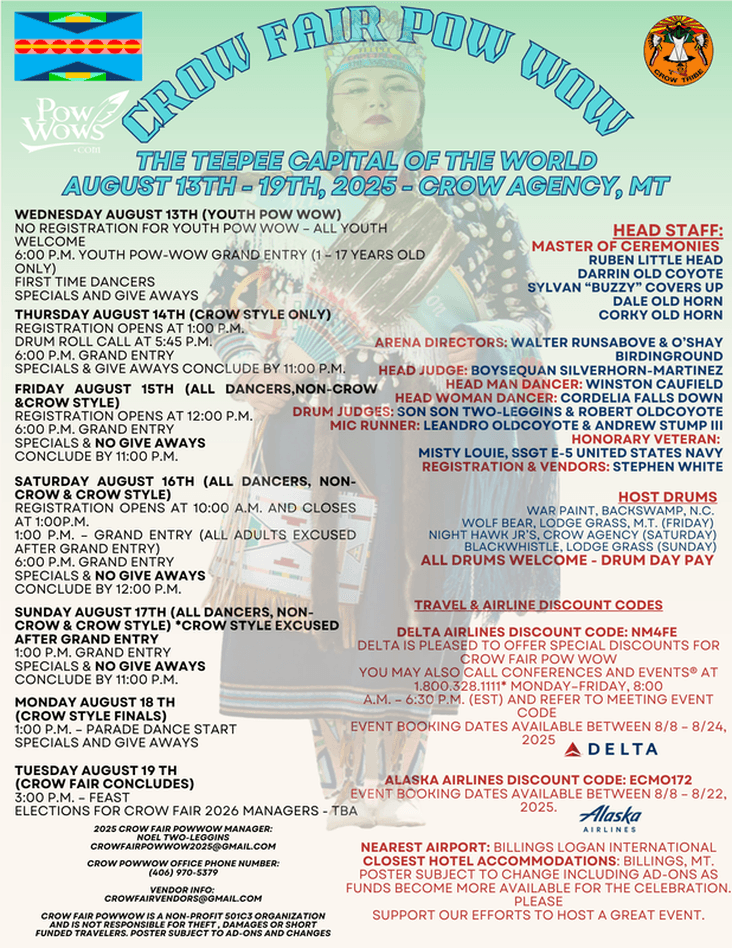
Crow Fair 2025 celebrates Apsáalooke heritage and tradition
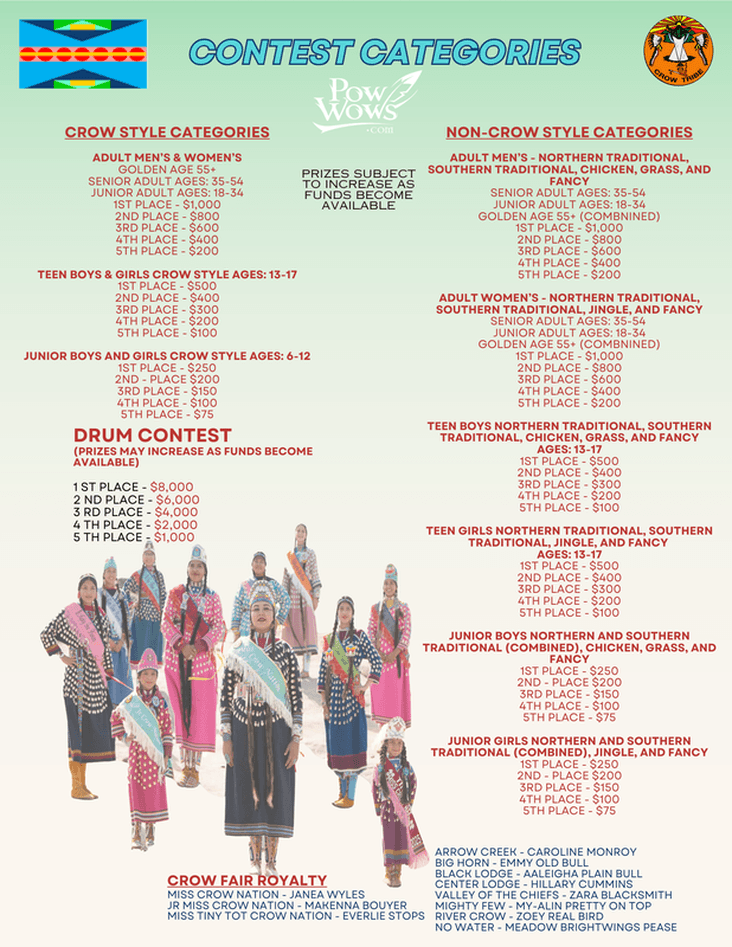
Crow Fair 2025, held Aug. 13-19 in Crow Agency, Montana, is one of the largest and longest-running Native American gatherings in the U.S., according to Visit Southeast Montana. Often called the "Teepee Capital of the World," the event features thousands of white teepees forming the largest modern-day encampment of its kind. Visitors can experience daily powwows with hundreds of dancers, morning parades showcasing traditional dress and decorated horses, rodeos, Indian Relay races and cultural craft markets. The powwow grand entry at 6 p.m. draws hundreds of dancers in intricate regalia representing Apsáalooke heritage.
The celebration welcomes visitors to learn and participate in events. For details, the Crow Tribe Tourism Office directs visitors to the official Crow Fair website.

Archaeologist monitors highway reconstruction for Native artifacts
An archaeologist is monitoring the reconstruction of Memorial Highway in Mandan, North Dakota, according to KFYR-TV. The highway lies on land historically belonging to the Mandan, Hidatsa and Arikara Nation, increasing the likelihood of discoveries during excavation.
The archaeologist will be on-site during all earthwork. Reilly Lembo, the North Dakota Department of Transportation state archaeologist, said, “You want to make sure that anything that could come up is treated properly and respectfully.“
Developer accused of destroying Native remains and artifacts in Georgia
The federal government filed a lawsuit against Savannah Land Holdings for allegedly destroying Native American artifacts and human remains at a development site in Richmond Hill, Georgia, according to WTOC. The company is accused of failing to follow conditions of a U.S. Army Corps of Engineers 404 permit, which required protection of cultural resources across 18 archaeological sites.
The complaint states that more than 80,000 artifacts were not properly curated and 3,000 were lost or disposed of. It also alleges Savannah Land Holdings failed to consult with the Seminole Tribe of Florida, the Georgia State Historic Preservation Office and the U.S. Army Corps of Engineers as required. The company reportedly continued excavation after discovering human remains. The federal government is seeking to halt development, secure the site and impose civil penalties.
Little Shell Powwow Brings Dance, Drums and Celebration
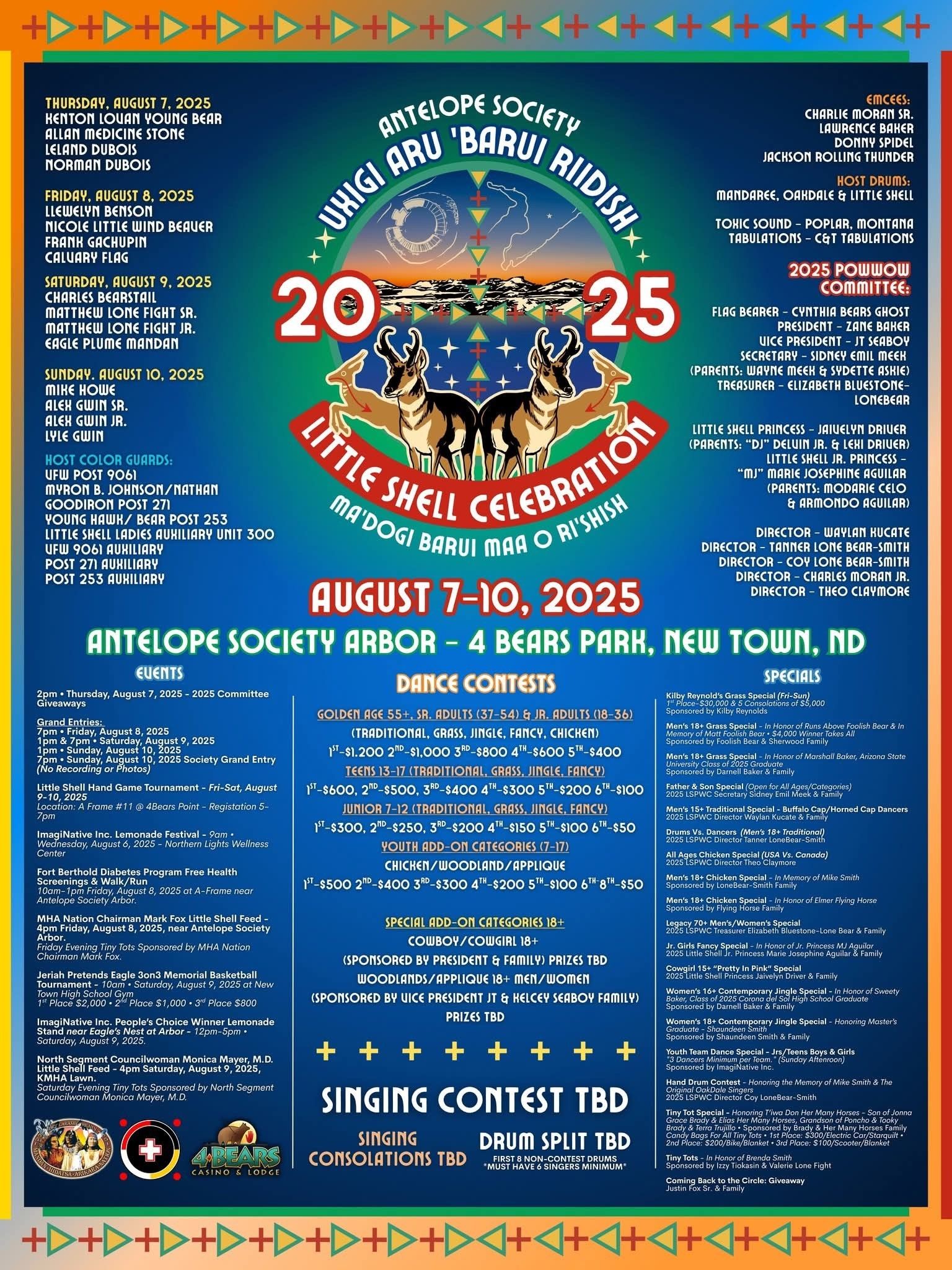
The Little Shell Powwow is bringing four days of dancing, drumming and celebration to 4 Bears Park in New Town, North Dakota, from Aug. 7–10, according to event organizers. Hosted at the Antelope Society Arbor, the event features dance contests in grass, fancy, jingle, chicken and traditional styles, with prize money up to $1,200. Special categories include woodland/appliqué and cowboy/cowgirl, along with youth and teen divisions.
Dozens of sponsored specials are scheduled throughout the weekend, including one with a $30,000 top prize. Other contests honor community members and graduates, such as the Men’s Grass Special in memory of Matt Foolish Bear, and the Women’s Jingle Specials honoring Shaundeen Smith and Sweety Baker. Youth contests include a Jr. Girls Fancy Special and Tiny Tot specials honoring T’iwa Don Her Many Horses and Brenda Smith.
Drum groups Mandaree, Oakdale and Little Shell are among the host drums. The weekend also includes a hand game tournament, a health fair hosted by the Fort Berthold Diabetes Program and a community feed sponsored by MHA Nation Chairman Mark Fox. Representing royalty are Little Shell Princess Jaiuelyn Driver and Junior Princess “MJ” Marie Josephine Aguilar. Color guards and auxiliaries from multiple posts, including VFW Post 9061 and Post 271, are taking part in the weekend’s events.

UN urged to investigate violence against Indigenous women in Canada
Attorney J.R. Howell filed a formal complaint with the United Nations Special Rapporteur on the Rights of Indigenous Peoples, calling for an independent investigation into violence against Indigenous women and girls in Canada, according to PR Newswire.
The complaint cites failures by Canadian law enforcement to search a landfill where the remains of Ashlee Shingoose, Morgan Harris, Marcedes Myran and Rebecca Contois were disposed of by a serial killer. It also highlights the unresolved case of Tanya Nepinak. Howell argues the lack of response reflects systemic racism, gender-based violence and cultural genocide. He calls for an urgent U.N. investigation, listening sessions in First Nations territories and international oversight into missing and murdered Indigenous women and girls.
Maria Danz joins NAIHC as training and technical assistance director
The National American Indian Housing Council has named Maria Danz, a member of the Couchiching First Nation, as its new training and technical assistance program director, according to a statement from NAIHC. Danz has more than 20 years of experience in tribal and affordable housing development and management, including 14 years with the U.S. Department of Housing and Urban Development’s Office of Native American Programs.
Her HUD service included 12 years with the Northern Plains office in Denver and two years at headquarters, where she focused on the Indian Community Development Block Grant and Tribal HUD Veterans Affairs Supportive Housing programs. From 2003 to 2011, Danz worked in the nonprofit sector in Duluth, Minnesota, developing nearly 100 units of affordable housing, including one of the country’s first urban permanent supportive housing projects for Native American families.
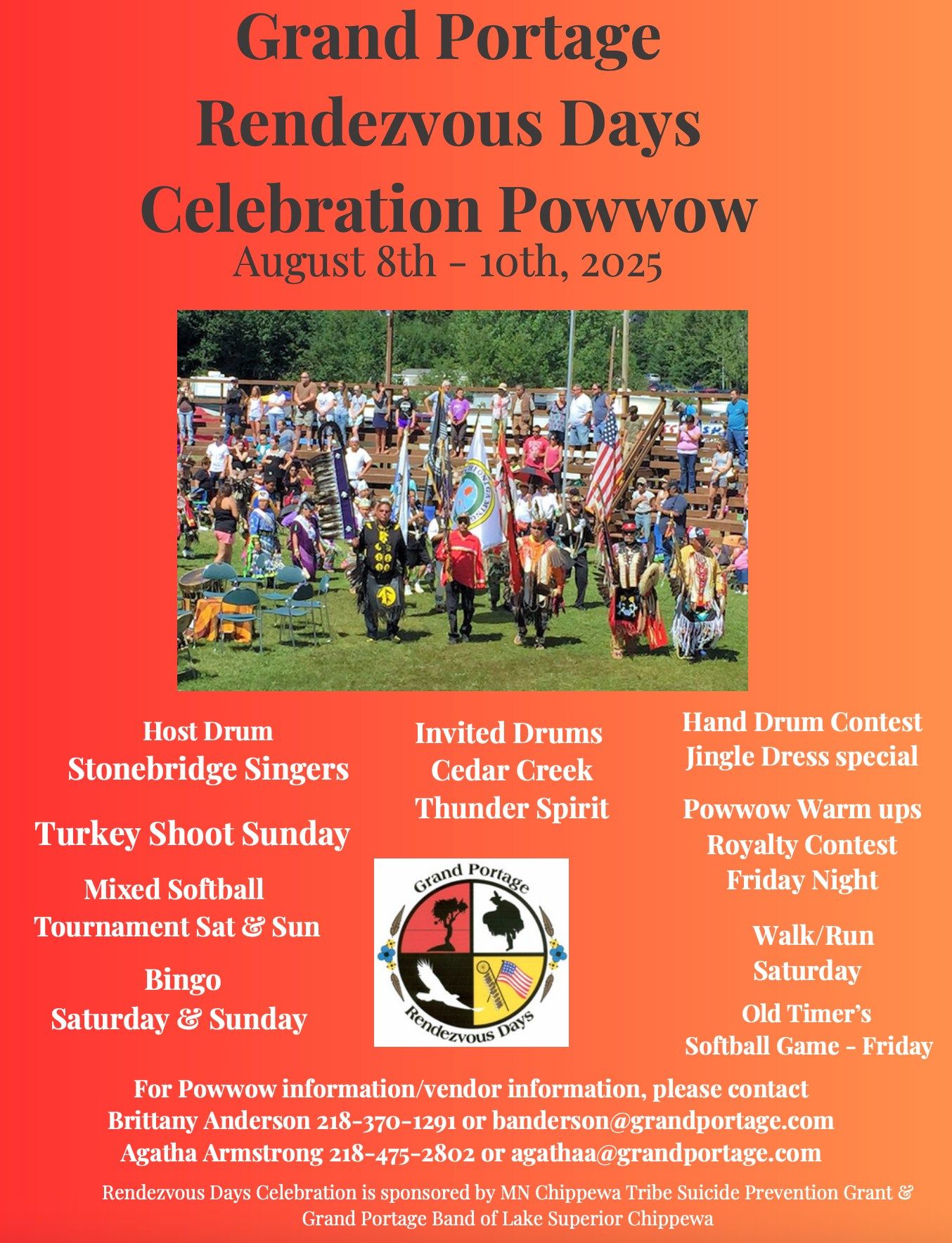
Grand Portage Rendezvous Days Powwow set for August
The Grand Portage Band of Lake Superior Chippewa will host its annual Rendezvous Days Powwow Aug. 8-10, in Grand Portage, Minnesota, according to event postings. The annual powwow coincides with the Grand Portage Rendezvous Days celebration and features traditional dance, song and family gatherings.
Attendees are asked to respect traditional songs, dances and ceremonies. The tribe requests no pets, removal of headwear when asked and photography only at appropriate times. The powwow offers a chance to experience Anishinaabe culture and community.
Medicine Lodge Intertribal Powwow set for September
The Medicine Lodge Intertribal Powwow will take place Sept. 27-28 at the newly developed powwow grounds at Memorial Peace Park in Medicine Lodge, Kansas. According to event information from The Medicine Lodge Peace Treaty Association, spectators are welcome to attend and are encouraged to bring lawn chairs, as seating around the dance area is reserved for dancers. Taking photos and entering the dance arena is prohibited unless permission is granted.
Food vendors will be on site with fresh Indian tacos and fry bread. Craft vendors selling Native-made goods will also be present.The powwow will feature a variety of dances, including the Gourd Dance, War Dance, Straight Dance, Chicken, Jingle and Fancy.

Meskwaki Annual Powwow returns with four-day celebration
The Meskwaki Annual Powwow will take place Aug. 7-10, behind the Meskwaki Bingo Casino Hotel, in Tama, Iowa. The location was moved due to flooding of the traditional powwow grounds. According to the Meskwaki Nation, the four-day event includes daily grand entries at 1 p.m. and 7 p.m. and traditional dancing, singing, games, and food.
A variety of themes will be celebrated daily, such as Children’s Day on Aug. 7, Senior Citizen’s Day on Aug. 8, Veteran’s Day on Aug. 9 and Special Events Day on Aug. 10, which will include a 5K run/walk. Admission is $15 for adults, $10 for children ages 6 to 12, and free for children 5 and under. Tickets are sold at the gate, with no presales.
The powwow highlights Meskwaki culture and traditions and is the only one of its kind in Iowa. The nation invites all to reconnect and celebrate community.