





The Daily Spark
Small sparks from Indian Country, built to catch fire
Tohono O’odham police receive mandatory MMIW training
All members of the Tohono O’odham Police Department in Sells, Arizona, are undergoing mandatory training on the Missing and Murdered Indigenous Women crisis. April Ignacio, co-founder of Indivisible Tohono, provides the training with Arizona Department of Public Safety’s Tribal Liaison, Capt. Paul Etnire. The first sessions were held in May at the department’s San Xavier station, according to the Arizona Mirror.
Ignacio, who serves on Arizona state and regional MMIP task forces, aims to train the entire department by the end of August. She said the sessions provide officers with an overview of the crisis, insight into systemic gaps and strategies to improve response. According to Ignacio, the Tohono O’odham PD is the only tribal agency in Arizona currently requiring such training.
Tourism grant program aims to boost North Dakota tourism
The North Dakota Department of Commerce has launched the 2025 Destination Development Grant Program, a $15 million initiative to strengthen the state’s tourism industry, according to a government news release. Funded by the 69th Legislative Assembly, the program supports projects that increase visitor experiences, support workforce retention and improve residents' quality of life.
“Tourism plays an essential role in North Dakota, contributing to a strong economy, by attracting visitors who spend money and pay taxes,” Gov. Kelly Armstrong was quoted as saying. Grant requests between $25,000 and $5 million require a 1:1 match from non-state sources. Eligible applicants include for-profit and nonprofit tourism-related organizations. Applications must be submitted online by July 31.
Camp Larson renamed ch ułts’e’l’l to mark Coeur d’Alene return
The Coeur d’Alene Tribe has officially renamed Camp Larson to ch ułts’e’l’l, which means “we have returned,” according to the Coeur d’Alene Press. The new name, originally spoken by tribal elder Felix Aripa, honors the tribe's enduring connection to the land, lake and ancestors.
The renaming ceremony in Worley, Idaho, featured canoe races, traditional stick games, cultural workshops and a pit-bake feast. Coeur d’Alene Tribal Chairman Chief Allan said, “Our connection to this land and this water runs through us,” noting the name celebrates identity and the generations that protected it. The event also paid tribute to Ray and Jeanne Givens for their legal roles in securing tribal ownership of the southern third of Lake Coeur d’Alene.
Gourd artist Nadiya Littlewarrior to appear at Antelope Valley Indian Museum
California State Parks will host Native American artist Nadiya Littlewarrior at the Antelope Valley Indian Museum in Lancaster on July 5 and 6. Littlewarrior, known internationally for her gourd art, founded her studio, Spirit Vessels, in 1993. The event begins at 11 a.m. each day. Admission is $3 for visitors 13 and older and free for children 12 and under. California fourth-grade students and their families receive free entry with the California State Parks Adventure Pass.
Operation Not Forgotten deploys FBI agents to cold cases in Indian Country
Public SafetyThe U.S. Department of Justice has launched Operation Not Forgotten, assigning 60 personnel, including FBI agents, to investigate more than 4,300 unsolved violent crimes against Native Americans, according to PBS. The initiative will deploy agents to 10 FBI field offices on 90-day rotations.
The program comes in response to continued concerns from Native families and advocates who say many cases are dismissed or poorly investigated due to jurisdictional confusion and a lack of law enforcement resources. Assistant U.S. Attorney Eliot Neal told PBS that tribal communities experience disproportionate levels of violent crime and officials must work to address it.
Native communities secure SNAP work rule exemption in federal bill
American Indians and Alaska Natives are now exempt from the Supplemental Nutrition Assistance Program (SNAP) work requirements under the latest version of a sweeping federal bill, according to Native News Online. On June 25, the Senate Committee on Agriculture, Nutrition, and Forestry released updated legislative text that includes the exemption, which mirrors similar protections related to Medicaid.
The exemption comes amid concerns that imposing work requirements would undermine the federal government’s trust responsibility. In tribal communities, food insecurity affects one in four Native individuals, with some areas reporting SNAP reliance rates as high as 80%. The bill, known as the “One Big Beautiful Bill,” combines a range of funding and policy measures that have raised concerns across Indian Country.
Montana-based forensics nonprofit offers free services to Native families in New Mexico
The Montana-based nonprofit Ohkomi Forensics is providing free forensic services to Indigenous families affected by unresolved disappearances and deaths, according to KOAT. Founder Haley Omeasoo, who is Hopi and Blackfeet, said the organization responds to the lack of forensic resources in tribal communities, offering services such as forensic consulting and field searches. The nonprofit is willing to travel to other states to assist families, provided funding is in place. According to the National Crime Information Center, more than 10,000 Indigenous people were reported missing in 2023. The organization’s name, Ohkomi, means “to use one’s voice” in Blackfeet.
Oklahoma Indian Gaming Association marks 30 years of industry growth
Nearly 3,000 gaming professionals will gather in Oklahoma City July 14-16 for the Oklahoma Indian Gaming Association’s 30th annual Conference and Trade Show, according to The Journal Record. The event celebrates three decades of growth from bingo halls to over 130 gaming facilities operated by 35 tribal nations.
Oklahoma’s tribal gaming industry generated more than $202 million in exclusivity fees in 2023 and supports over 113,000 jobs statewide. Conference sessions will cover such topics as disaster preparedness, federal policy changes and sports betting. The event also features award presentations recognizing leaders who have advanced tribal gaming rights and sovereignty. OIGA Chairman Matthew Morgan said the industry continues to drive economic development and funds government programs that benefit tribal citizens and the broader community.
Arizona medical examiner confirms homicide in Emily Pike case
The Pinal County Medical Examiner’s Office has determined the cause of death for Emily Pike, a 14-year-old San Carlos Apache girl, as “homicidal violence with blunt head trauma,” according to ABC15. Pike was reported missing from her Mesa, Arizona, group home in January and was found dead weeks later along U.S. 60, northeast of Globe. The full medical examiner’s report remains restricted. According to ABC15, efforts to raise awareness continue, including a recent clean-up event at her memorial site and ongoing calls for justice.
Seminole Nation of Oklahoma joins opposition to Florida detention site
The Seminole Nation of Oklahoma is standing with the Seminole Tribe of Florida and the Miccosukee Tribe in opposing the construction of a migrant detention center in the Big Cypress region of Florida, according to KOSU. The proposed 5,000-bed facility, referred to as “Alligator Alcatraz,” is located near traditional village sites and sacred lands.
“These lands are not empty stretches of wilderness,” said Seminole Nation Chief Lewis Johnson. “They are living, breathing homelands, deeply tied to the cultural, spiritual and historical identity of Miccosukee and Florida and Seminole people.” Jake Tiger, cultural specialist and Thomas Palmer Band chief, was quoted as saying that no one “can be illegal on stolen land” and criticized the project as “a clear case of colonial oppression.” Tribal leaders argue the project disrespects the land and their shared history.
April oil output drops on Fort Berthold while North Dakota gas production rises
Oil production on the Fort Berthold Reservation fell 4.6% in April to 184,026 barrels per day, down from 192,961 barrels per day in March, according to the Minot Daily News. Two rigs were active on the reservation, which had 141 active permits and 3,008 active wells.
Statewide, North Dakota’s oil production dropped to 1.17 million barrels per day in April. Director of the North Dakota Department of Mineral Resources, Nathan Anderson said that oil production is down 1.8% from March, while natural gas production increased slightly. McKenzie County accounted for 32% of statewide oil production. The state’s rig count held steady at 32, with 105 permits issued in May.
Haskell retains accreditation with monitoring after review change
Haskell Indian Nations University will remain fully accredited under a “continued accreditation with monitoring” recommendation from the Higher Learning Commission, according to The Indian Leader. The shift comes after a December 2024 HLC review that recommended probation over academic advising, communication and program assessment concerns.
A May 20 letter from President Frank Arpan noted that after a formal response and an April 29 meeting with the HLC’s Institutional Actions Council, the harsher recommendation was changed. The university awaits final approval by the HLC Board of Trustees, expected in late June. Arpan said student advising, complaint transparency and assessment of academic outcomes “will remain a focus for improvement.”
Cherokee Nation launches incentive program for employee college degrees
Cherokee Nation Principal Chief Chuck Hoskin Jr. signed a new employee policy on June 5 that offers financial incentives to government employees who complete college degrees, according to the Cherokee Phoenix. The Workforce Development Program provides a range of rewards from $2,000 for associate degrees to $5,000 for doctoral degrees.
The policy applies retroactively to October 2019 and includes nearly 5,800 government employees. Employees must meet performance standards, complete accredited programs and commit to one to three years of service depending on the degree level. Deputy Chief Bryan Warner said the policy reflects Cherokee community values. Executive Director of Human Resources Samantha Hendricks said it supports retention and development. The policy supplements existing tuition assistance and follows other employee-focused initiatives, including paid family leave and flexible spending accounts for eligible employees.
Native American Church members continue legal fight to protect Yanaguana sacred site
Two Lipan Apache Native American Church members are pursuing federal court protection for trees and birds at Yanaguana, a sacred site along the San Antonio River’s headwaters, according to ICT. The city of San Antonio has sought to remove trees and disperse migratory birds, including cormorants, citing failing retaining walls and public health concerns related to bird guano. The Fifth U.S. Circuit Court of Appeals previously ruled the city must allow church members access to the riverbend and placed a temporary stay on tree removal for religious purposes. However, the Texas Supreme Court ruled the city can address public health and safety hazards despite religious protections. Plaintiffs Gary Perez and Matilde Torres argue the birds pose no health risk and that immediate tree removal is unnecessary. They plan to continue the legal battle and possibly take the case to the U.S. Supreme Court, emphasizing their commitment to preserving the site’s spiritual and ecological integrity.
Tribes condemn U.S. withdrawal from Columbia Basin salmon agreement
The Trump administration has withdrawn from the Resilient Columbia Basin Agreement, halting plans to restore salmon populations and remove four hydroelectric dams, according to Grist. The federal government, under the Biden administration, entered into the deal in 2023 with two states and four Indigenous nations, pausing decades of litigation over salmon impacts.
Leaders from the Yakama, Nez Perce, Umatilla and the Confederated Tribes of Warm Springs said the withdrawal violates treaty rights under the 1855 agreement guaranteeing access to traditional fishing grounds. “This termination will severely disrupt vital fisheries restoration efforts,” Yakama Tribal Council Chairman Gerald Lewis was quoted as saying. Hydroelectric producers in Washington and Oregon supported the decision, citing energy demands from data centers and cryptocurrency. Daniel Cordalis of the Native American Rights Fund called tribal fishing rights “a contract right.”
Tribal leaders call on federal officials to protect Chaco Canyon buffer zone
Tribal and Pueblo governments, conservation groups and elected officials are urging federal officials to maintain Biden-era protections around Chaco Canyon, according to reporting by Source New Mexico. A 10-mile buffer zone around the historic site, established to prevent oil and gas development for 20 years, is under threat from a Republican-backed bill in Congress. The National Congress of American Indians passed a resolution June 17 supporting permanent protections and called for full tribal consultation before any decisions are made. Pueblo of Acoma Governor Charles Riley was quoted as saying the region represents “our most sacred ancestral homeland.” More than two dozen groups and 38 government officials also sent letters to Interior Secretary Doug Burgum in support of maintaining existing protections.
Red Sky Nation to host fourth annual MMIR powwow in Sioux City
Red Sky Nation will hold its fourth annual Missing and Murdered Indigenous Relatives powwow July 11-13 in Sioux City, Iowa, according to an interview aired by KCAU. Event organizers Trisha Rivers and Hayden Parker said the gathering will raise awareness about the MMIR crisis and provide a cultural safe space for families in the Siouxland area. The powwow will feature dance contests, food and art vendors and community engagement. Parker, who serves as the MMIR princess, said she has attended events across the region to increase awareness of families still seeking answers.
Montana tribal nations move to join lawsuit challenging voter registration law
Four Montana tribal nations and Native advocacy group Western Native Voice filed a motion Tuesday to intervene in a lawsuit opposing a bill that limits when Montana residents can register to vote, according to the Daily Montanan. The Confederated Salish and Kootenai Tribes, Blackfeet Nation, Fort Belknap Indian Community, Northern Cheyenne Tribe and Western Native Voice argue the law disproportionately impacts Indigenous voters in rural areas. The motion supports a suit filed by the Montana Federation of Public Employees in Lewis and Clark County District Court. Montana Senate Bill 490 removes an important eight-hour election day registration window that Native voters rely on due to transportation, distance and mail challenges. The tribal groups are represented by the ACLU of Montana, the American Civil Liberties Union and the Native American Rights Fund.
Leonard Peltier reflects on freedom and future after nearly 50 years in prison
The Native activist and citizen of the Turtle Mountain Band of Chippewa plans to focus on combating youth substance abuse in his community.
Leonard Peltier, a Native activist and citizen of the Turtle Mountain Band of Chippewa, spoke to MPR News about his transition to life outside prison during an interview at his home in Belcourt, North Dakota. Peltier was released in February after President Joe Biden commuted his two life sentences related to the 1975 deaths of two FBI agents on the Pine Ridge Reservation.
Peltier, 80, described improved health and adjusting to life after nearly five decades behind bars. Despite bitterness over his conviction, he said he has no regrets standing up for his people, and he plans to focus now on combating youth substance abuse. Peltier expressed remorse about the agents' deaths but denied involvement in the shootings. He remains a prominent figure in Native activism and is known as one of the longest-serving political prisoners in the U.S.
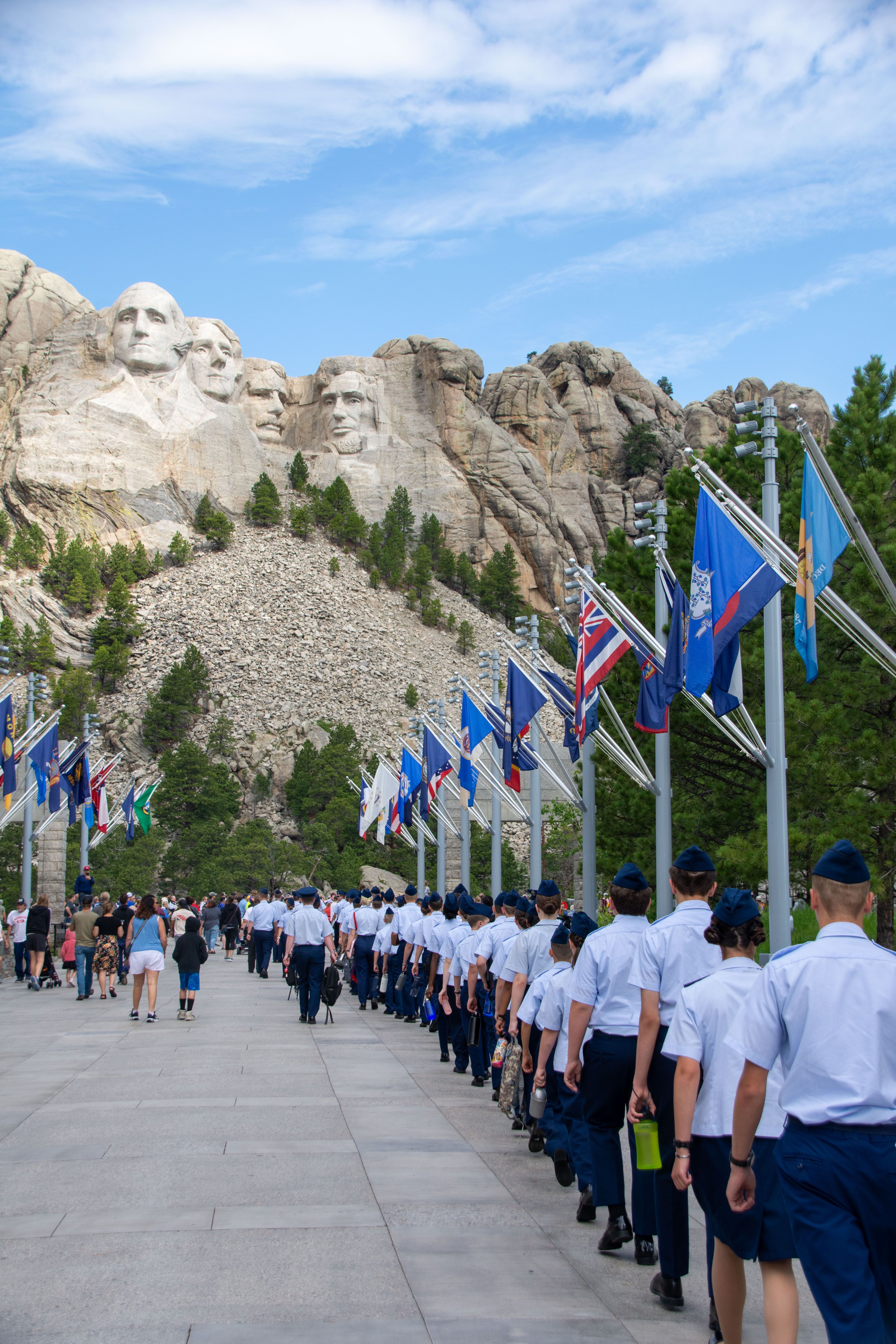
Cadets from 18 states gather for Joint Dakota Encampment in Rapid City
More than 150 cadets and senior members of the Civil Air patrol have gathered at Camp Rapid for the 2025 Joint Dakota Encampment. The annual training includes instruction in leadership, military-style discipline and aerospace education. This year’s participants hail from 18 states.
Cadet Major Clover Naughton of the Sioux Falls Composite Squadron serves as cadet commander. Lt. Col. Tom Anez of the South Dakota Wing, an Army combat veteran, is this year’s encampment commander. “This is a complicated, high-level event that is largely planned and managed by the cadets,” Anez was quoted as saying. Activities include classroom sessions, physical training, orientation flights over the Black Hills and daily drills. The eight-day encampment ends June 29.