






The Daily Spark
Small sparks from Indian Country, built to catch fire
Body of missing Turtle Mountain woman identified
The body of Kristin Bruce, a woman reported missing in the Turtle Mountains, was found and identified on June 6, according to an FBI Minneapolis spokesperson. Bruce was last seen on May 27, riding her bike at 10 p.m. on BIA Road 10 in Belcourt. Her bike was discovered in a ditch the following day, according to Minot Daily News.
An investigation is ongoing, but authorities do not believe there is a “threat to public safety” at this time, the FBI spokesperson said. No further details have been released.
NOAA cuts hinder Alaska fisheries management, officials say
Officials from the National Oceanic and Atmospheric Administration (NOAA) Fisheries told the North Pacific Fishery Management Council that Trump administration job cuts are undermining the scientific work needed to manage Alaska’s seafood harvests, the Alaska Beacon has reported. Since January, NOAA’s Alaska regional office has lost 28 employees — roughly a quarter of its workforce — and the Alaska Fisheries Science Center has lost 51, affecting up to 30% of its operations, according to directors Jon Kurland and Robert Foy.
Services now compromised include catch-tracking IT systems and fish age analysis, which Foy said is down 40%. Research at Little Port Walter Research Station has been canceled. The cuts are linked to the Department of Government Efficiency, led by Elon Musk, which has targeted NOAA operations in accordance with Project 2025. Council members expressed concern that reduced data may increase the risk of overharvesting.
Tribal legal experts warn of precedent risks, budget cuts, and voting rights challenges
NARF and NCAI leaders urge collaboration, not just litigation, in defending tribal rights amid growing legal and political pressure
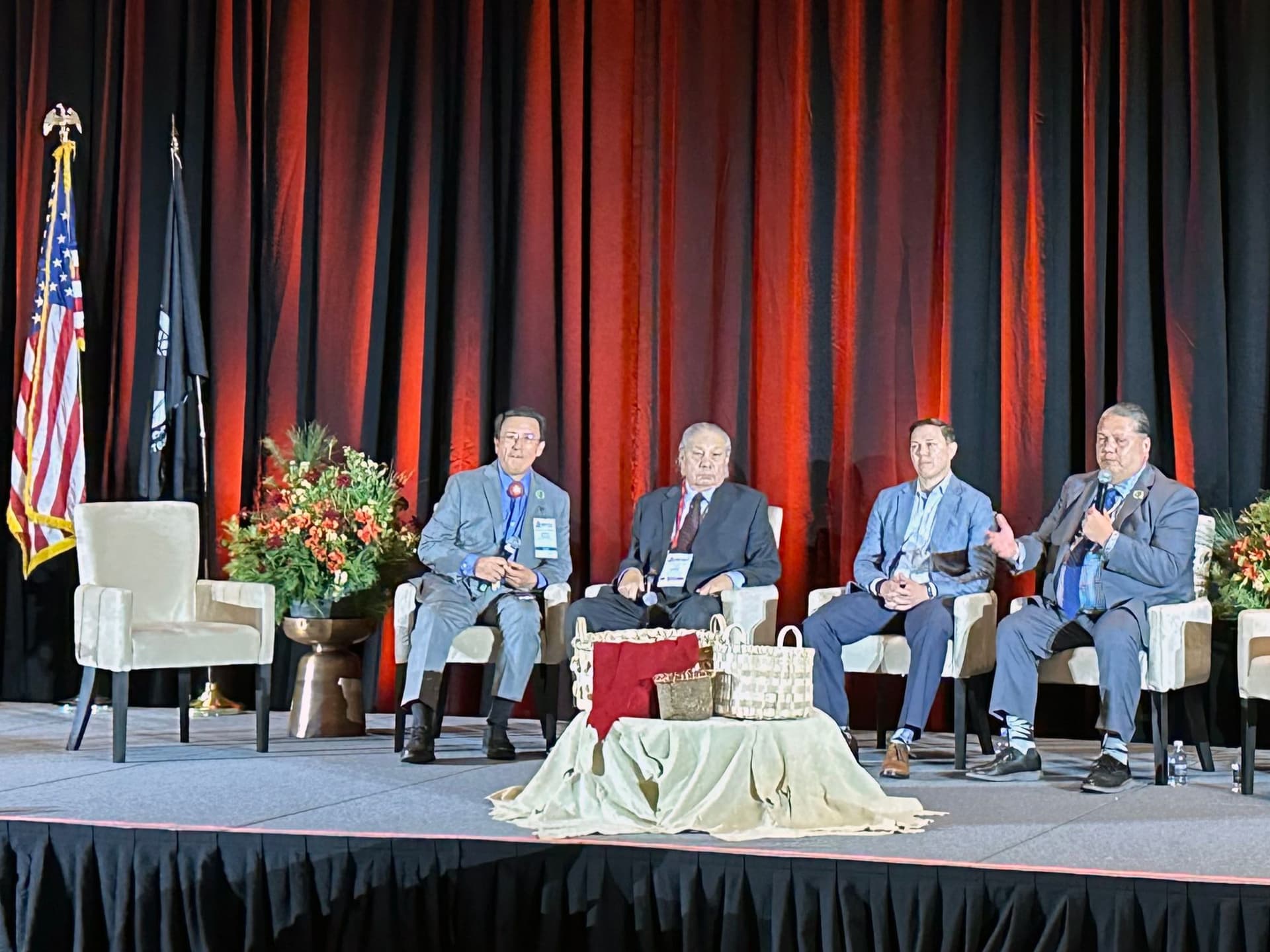
At Tuesday’s joint panel of the Native American Rights Fund and the National Congress of American Indians, held during the NCAI Mid Year Conference, legal and policy leaders outlined urgent threats facing Indian Country in the courts and in federal policy.
“We’re all bound by precedent — even if it starts with a single tribe,” said NCAI’s Geoffrey Blackwell, underscoring how litigation losses affect all Native nations. He called the Tribal Supreme Court Project a model for coordination, aimed at avoiding destructive court outcomes.
Matt Campbell of NARF warned of recent Supreme Court decisions that undercut protections for sacred sites and environmental review. “The courts aren’t always our friend,” he said,
Speakers warned that litigation remains a necessary but imperfect tool for defending tribal sovereignty — especially as federal courts issue rulings that may undermine long-standing protections.
Campbell cited two recent U.S. Supreme Court decisions: Apache Stronghold v. United States, in which the Court declined to hear a case challenging the transfer of sacred land at Oak Flat, and Seven County Infrastructure Coalition v. Eagle County, which narrowed the scope of required environmental review under the National Environmental Policy Act. Both decisions, panelists said, represent broader threats to tribal rights and environmental protections.
“Litigation is part of the toolbox,” Blackwell concluded, “but strategy starts with listening to tribal leadership — and making sure your voices shape the response.”
Overhaul of Endangered Species Act could reduce tribal consultation
A newly proposed bill in the U.S. House of Representatives would lessen tribal consultation requirements under the Endangered Species Act of 1973, according to reporting by ICT. The Endangered Species Amendment Act of 2025 would overhaul the current ESA, removing consultation requirements with federal agencies, a process through which tribal nations have exercised their voice regarding proposed activities’ impact on endangered species.
U.S. Representative Debbie Dingell criticized the bill, stating it "would strip ESA protections, making it harder to protect wildlife." While the original ESA did not explicitly include tribal consultation, Monte Mills, director of the Native American Law Center at the University of Washington, noted that various policies, including one dating back to the 1990s, incorporated it into the endangered species process.
Federal cuts impact Montana AmeriCorps
Federal funding cuts to AmeriCorps in April have impacted numerous Montana nonprofits, leading to concerns about reduced services across the state, according to reporting by Montana Free Press. The Trump administration ended nearly $400 million in AmeriCorps grants nationally, affecting thousands of members.
Montana was not among the 24 states that successfully sued to have the funding restored. As a result, Montana lost $1.2 million in grant funding and 86 AmeriCorps member positions. Such nonprofits as the Missoula Food Bank and Community Center anticipate fewer volunteers for vital programs, and Family Promise in Great Falls lost AmeriCorps support for a full-time position. The Rocky Mountain Development Council's senior volunteer programs, including the Foster Grandparent Program, are also in limbo, facing potential service interruptions if their grants are cut.
New Mexico lawmakers monitor federal public lands
New Mexico state lawmakers are closely monitoring federal actions concerning public lands, even after a provision authorizing the sale of thousands of acres was removed from a recent Republican tax and spend bill in the U.S. House of Representatives, according to reporting by Source New Mexico. On Monday, members of the interim legislative Indian Affairs Committee expressed concerns that potential federal land sales could threaten tribal sovereignty and economic development in New Mexico, home to 23 Indigenous nations.
Rep. Patricia Roybal Caballero, an Albuquerque Democrat and enrolled member of the Piro Manso Tiwa Tribe, said she anticipates that federal land sales may lead to "land grabs" impacting tribal sovereignty. Rep. Charlotte Little requested a report on the impact of proposed federal actions on Chaco Canyon and Kasha-Katuwe Tent Rocks national monuments and their potential effect on surrounding economic development.
Judge delays transfer of Oak Flat sacred site
A federal judge in Phoenix issued an injunction Friday that delays the transfer of Oak Flat, an Indigenous religious site in Arizona, to a multinational copper mining company, according to reporting by Grist. The judge called for a 60-day delay to allow advocates for Oak Flat to review an upcoming U.S. Forest Service environmental impact statement, expected June 16. The San Carlos Apache Tribe and a coalition of organizations, including the Center for Biological Diversity and a local Sierra Club Chapter, requested the delay. This decision comes after the United States Supreme Court declined to hear an appeal in the case more than a week ago, allowing a lower court order approving the transfer to stand.
Landback deal returns more than 17,000 acres to Yurok Tribe
More than 17,000 acres along the Klamath River have been returned to the Yurok Tribe, completing the largest landback deal in California history, according to Grist. The land includes the lower Blue Creek watershed and is part of a $56 million, 47,097-acre transfer that nearly doubles the Yurok Tribe’s current land holdings.
The Yurok Tribe partnered with the Western Rivers Conservancy for two decades to reclaim the land. Joseph James, chairman of the Yurok Tribal Council, said, “No words can describe how we feel knowing that our land is coming back to the ownership of the Yurok people.” The tribe has designated the land as a salmon sanctuary and community forest and plans to place it into a trust for future generations.
Buffalo’s Fire launches “The Daily Spark” widget for partner sites
Timely stories from Indian Country every day, ready to embed
Buffalo’s Fire, the independent news site from the Native Media Freedom Alliance, has launched The Daily Spark widget—a new service that allows external websites to feature timely news and updates from Indian Country.
The widget delivers “daily sparks” — brief, must-read updates on essential stories—directly to the websites of partner organizations. This service broadens the reach of Native independent news and offers media outlets a steady stream of fresh, relevant content for their audiences.
The Daily Spark widget is easy to integrate and adapts to the look and feel of the host site. Administrators can choose from light, dark, or auto themes, and set the number of updates displayed—from three to ten. While the widget includes minimal styling to blend into existing layouts, it can be fully customized via CSS.
To implement the widget, websites embed a simple HTML snippet. Buffalo’s Fire asks interested sites to contact us for a partner ID, helping us track where the spark has caught fire.
The Daily Spark will include a sponsor, selected from organizations that share the values and principles of the Native Media Freedom Alliance.
This initiative supports Buffalo’s Fire’s mission to foster conversation and understanding around tribal community, culture, and communication.
Tribal leaders rally to protect Native health programs
At the NCAI Health Subcommittee meeting, delegates passed six resolutions aimed at safeguarding tribal healthcare funding and representation
Amid looming budget cuts and federal restructuring, Native health experts and legal advocates worked line by line to finalize and pass six key health resolutions on Monday at the NCAI Mid Year Conference. The measures were adopted with unanimous support in a session that blended urgency with deep policy expertise.
The resolutions call for preserving Indian Health Service funding, protecting Medicaid access for American Indians and Alaska Natives, and elevating the IHS director to Assistant Secretary status within the U.S. Department of Health and Human Services. Leaders also pushed back on proposed cuts to critical HHS programs and reaffirmed the need for tribal consultation in agency reforms.
NCAI committee advances resolutions to protect Native priorities
Leaders advanced measures to protect Native businesses, public media and development programs amid federal uncertainty.
On Day 2 of the NCAI Mid Year Conference, the Economic, Finance, & Community Development Committee took up resolutions aimed at safeguarding Native priorities in federal funding and procurement. All were referred to subcommittee after receiving strong support.
Among the speakers were leaders from Vision Maker Media and Koahnic Broadcast Corporation, who emphasized how upcoming funding cuts could devastate Native rural radio. Committee members also backed resolutions calling for the preservation of the “Rule of Two” in federal contracting, sustained investment in the Native CDFI Assistance Program and the reinstatement of FEMA’s BRIC program to support infrastructure resilience.
Resolution targets cuts to NPR, PBS and the elimination of CPB
A resolution discussed Monday at the National Congress of American Indians calls on Congress to reject proposed funding cuts to NPR and PBS and to oppose the elimination of the Corporation for Public Broadcasting. The cuts were introduced with an executive order by President Trump on May 1 and the proposal to eliminate the CPB is included in the fiscal year 2026 budget proposal. Among the news organizations that receive funding through the CPB are Vision Maker Media, Pacific Islanders in Communications and Koahnic Broadcast Corporation.
The resolution states that PIC, based in Honolulu, “ensures a multiplicity of programs and people stories from Native Hawaiians for public television.”
It also notes that “since 1976, VMM has supported up to 15 professional film productions for PBS annually, primarily with CPB funding, generating hundreds of jobs and a return of three times its federal funding in rural and Native communities’ economies.”
KBC, a Native media company headquartered in Anchorage, Alaska with an office in Albuquerque, New Mexico, produces Native content, “including award-winning national Native programs, Native America Calling and National Native News.”
Ellison warns of democracy backslide under Trump administration
Minnesota Attorney General Keith Ellison said in a June 4 interview that states serve as a sovereign bulwark against federal power grabs, according to the Minnesota Reformer. Ellison said he and other Democratic attorneys general prepared for President Donald Trump’s second term by studying Project 2025 and organizing legal responses in advance. After the Office of Management and Budget froze distribution of certain federal funds, the group filed suit the next day. The attorneys general have filed more than two dozen lawsuits in five months. Ellison criticized recent U.S. Supreme Court decisions and warned, “We are a whisper away from Jim Crow.” Despite this, he expressed optimism that even conservative justices may resist executive overreach.
North Dakota tribes call for respect, autonomy amid federal cuts
Tribal leaders from North Dakota’s five tribal nations voiced concerns about federal funding cuts and called for greater respect and collaboration from state lawmakers during the seventh annual Government-to-Government Conference, according to the North Dakota Monitor. Turtle Mountain Band of Chippewa Chairman Jamie Azure criticized state legislators’ remarks on the tribe’s Grand Forks casino project as insulting and urged the Legislature to shift its mindset. Standing Rock Chairwoman Janet Alkire highlighted a co-stewardship agreement with the U.S. Department of Agriculture and ongoing energy infrastructure efforts. Spirit Lake Nation Chairperson Lonna Jackson-Street advocated for reinstating the motor vehicle tax exemption for off-reservation members and addressed economic losses due to electronic pull tabs. Gov. Kelly Armstrong praised a new state law establishing a task force to address the crisis of missing and murdered Indigenous peoples.
Montana extends ICWA protections through 2029 with scaled-back bill
Montana Gov. Greg Gianforte signed a bill into law on May 12 extending the Montana Indian Child Welfare Act until June 2029, according to Montana Free Press and ICT. Sponsored by Sen. Jonathan Windy Boy, D-Box Elder, the bill aimed to continue protections for Native children and their families in adoption and foster care cases. Earlier versions of the bill included cultural compact requirements, which were removed due to state cost concerns. The amended version, which transformed the 27-page bill to a two-page document, passed the House Human Services Committee unanimously. After the amendment passed, a new fiscal note estimated the policy would cost nothing. Windy Boy said the final bill was “probably the best we could do this session” and intends to reintroduce expanded protections in a future session.
‘Tiwahe’ statue unveiled to honor boarding school survivors and victims
A new statue unveiled in Rapid City, South Dakota, stands as a memorial to survivors and victims of the federal Indian boarding school era, according to reporting by ICT. The seven-foot-tall sculpture, called “Tiwahe” (which means “family” in Lakota), depicts a Lakota family surrounding a young boy in a boarding school uniform. Created by the group Remembering the Children, non-Native artist Dale Lamphere and Oglala Lakota apprentice Derek Santos, the statue sits on the former grounds of the Rapid City Indian School, where researchers identified 50 children who died. The statue is part of a broader memorial effort that includes a plaza, walking trail and cultural installations planned for public access beginning Sept. 27. Amy Sazue, executive director of Remembering the Children, said the project helps bring visibility to a long-hidden part of U.S. history.
North Dakota to launch Feather Alert for missing Indigenous people
North Dakota law enforcement will add new alerts to its emergency system starting Aug. 1, including the Feather Alert for missing Indigenous people and the Missing, Endangered Persons Alert for adults aged 18 to 65, according to the North Dakota Monitor. The updates were announced during the Government-to-Government Conference on June 5 in Bismarck.
North Dakota Highway Patrol Lt. Jenna Clawson Huibregtse said that Feather Alert emergency phone notifications will only be used in abduction cases. Websites, social media, billboards and media releases will be used in cases that don’t involve abduction or threats of bodily harm. House Bill 1535, sponsored by state Rep. Jayme Davis, created the alerts and was signed into law by Gov. Kelly Armstrong on May 2.
Native finance leaders push for better data
Speakers at NCAI warn that gaps in tribal finance data limit access to capital and weaken policy leverage
A panel at NCAI’s Mid Year Convention highlighted how stronger economic data can help tribal nations support sovereignty, unlock capital and influence policy.
Phil Gover, senior project manager and policy fellow at the Center for Indian Country Development, warned that tribal economic invisibility limits access to funding and clouds policymaking. “U.S. policymakers don’t have enough data to make sense of tribal finance,” he said.
Cory Blankenship, executive director of the Native American Finance Officers Association, said that telling the full story of tribal economies requires reliable data — the kind that shows both unmet needs and Native-driven innovation.
Amber Schulz-Oliver, executive director of the Affiliated Tribes of Northwest Indians Economic Development Corporation, framed data as a powerful tool of self-determination: “Data is one method for tribes to tell our stories—as individual nations and collectively.”
Panelists:
- Cory Blankenship (Eastern Band of Cherokee Indians), Native American Finance Officers Association
- Amber Schulz-Oliver (Celilo/Yakama), Affiliated Tribes of Northwest Indians Economic Development Corporation
- Phil Gover (Northern and Southern Paiute, Pawnee, and Comanche Nations), Center for Indian Country Development
The National Congress of American Indians begins at Foxwoods Resort Casino
Buffalo's Fire and Native Media Freedom Alliance are on the ground to cover the event
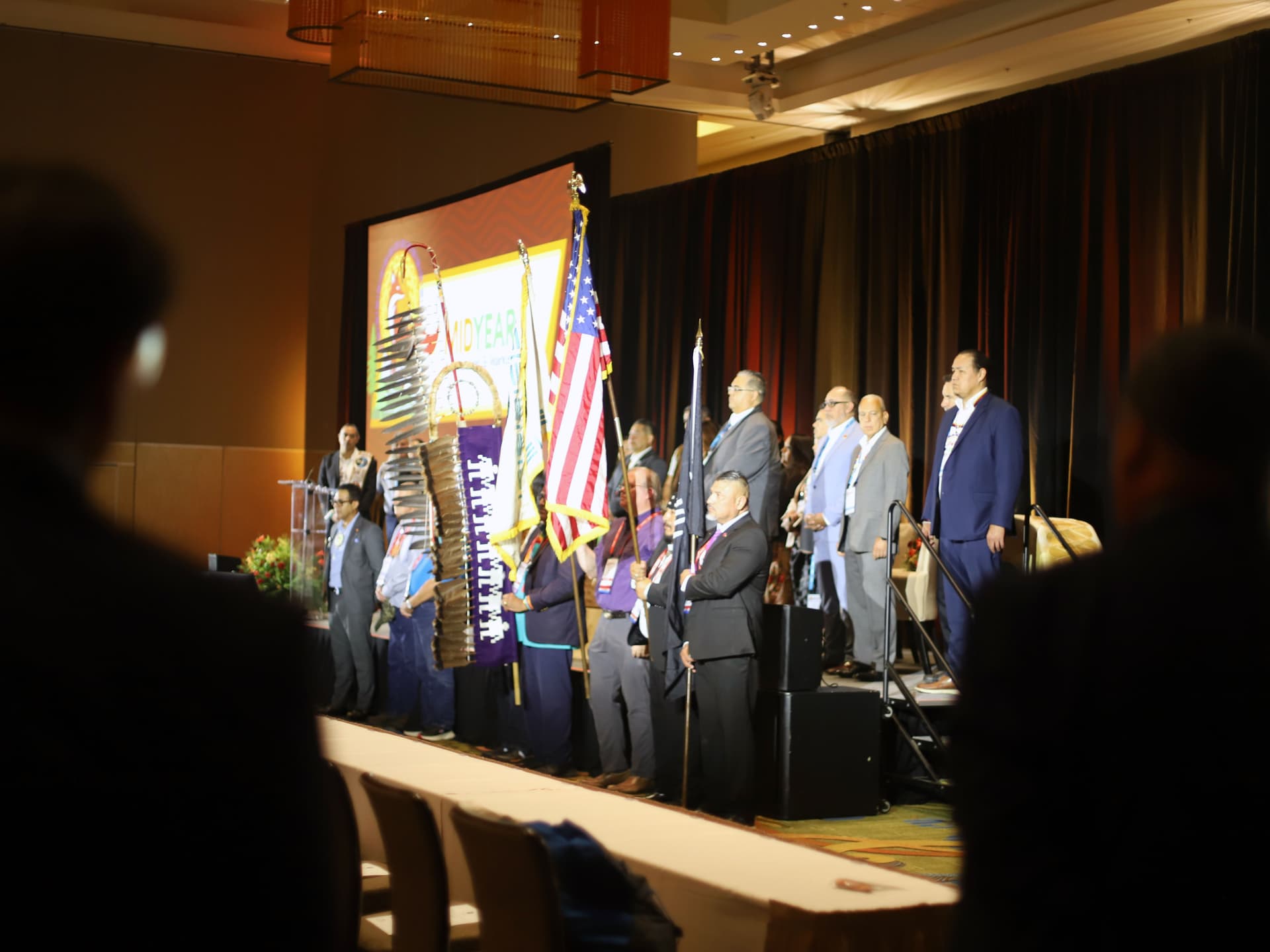
The works of the National Congress of American Indians 2025 are officially open at Foxwoods Resort Casino in Mashantucket, Connecticut. Buffalo’s Fire and the Native Media Freedom Alliance are on the ground, ready to cover the event. Among the core discussions on the opening day: efforts to address violence against Native women, strategies to close tribal finance data gaps through intertribal cooperation and priorities in Native education policy.
Devils Lake officials say city’s drinking water is safe despite Spirit Lake concerns
Following public concern over drinking water safety, Devils Lake officials confirmed the city’s water supply is safe to drink, according to reporting by Devils Lake Journal. City engineer Mike Grafsgaard said the city uses the Spiritwood Aquifer, while Spirit Lake Nation uses the Warwick Aquifer, and the wells are located miles apart.
Grafsgaard said Devils Lake switched to the Spiritwood Aquifer years ago and deeded the former well field to Spirit Lake Nation. He noted the city cannot provide water through the old pipeline due to dam-related removals. He also said the city water department monitors mineral levels closely and that iron and manganese removal is a common practice. Grafsgaard has been in contact with R.J. Yankton from Spirit Lake Water Resources and offered assistance, stating, “We’re willing to help our neighbors in whatever way is practical.”