






UTTC student raises $12k in food drive for North Dakota and Montana
Inspired by her grandparents, Tonah Fishinghawk-Chavez proves that caring for the community is an action, not just a word

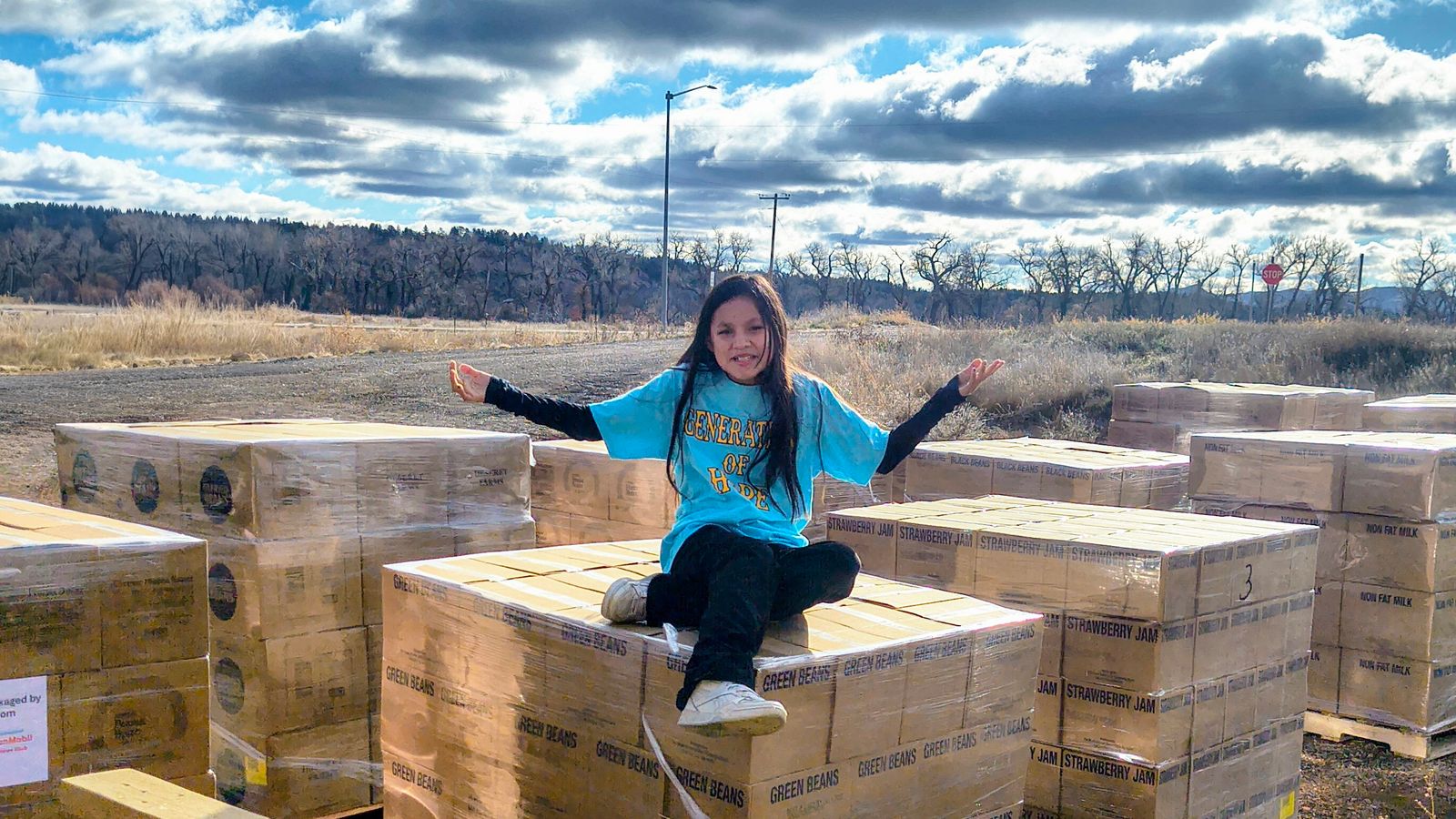

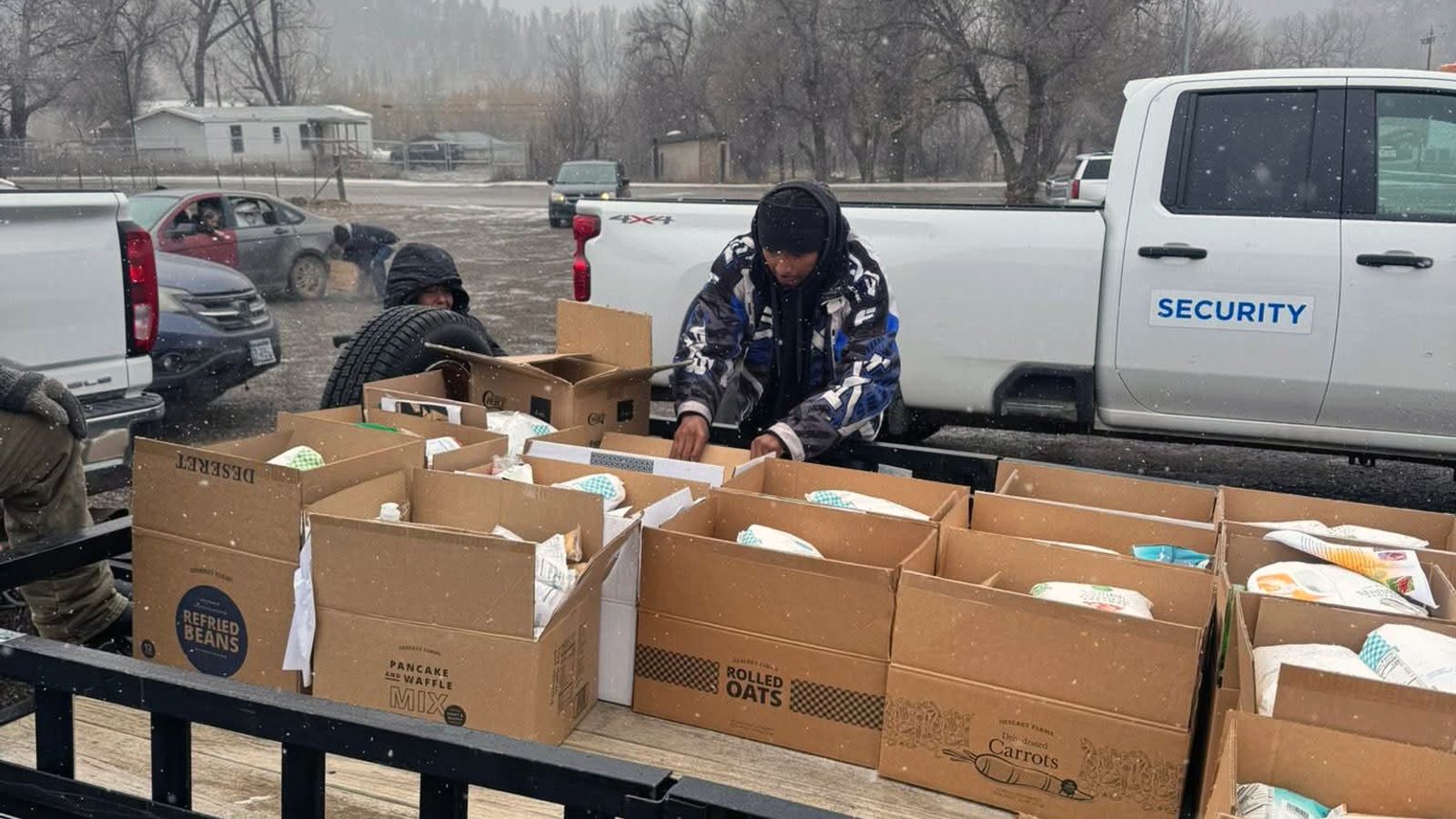
In Birney, Montana, on the Northern Cheyenne Reservation, Tonah Fishinghawk-Chavez and community volunteers went door to door in the biting November cold delivering boxes of food to people in need. With the Northern Cheyenne Tribe facing a leadership crisis and the federal government shutdown, tribal funds and food stamps were frozen, and some community members didn’t know where they would get their next meal. So Fishinghawk-Chavez jumped into action.
“I just want people to get fed,” said Fishinghawk-Chavez, a Northern Cheyenne Tribe citizen, mother of six and United Tribes Technical College student. “I want people to feel hope, and I want people to feel safe.”
Fishinghawk-Chavez organized the Generations for Hope food drive, following in the footsteps of her grandparents Agnes and Clarence Medicine Top. Her grandfather, a Cheyenne war chief, tended three community gardens and shared his harvest with the community.
“My grandparents taught us that true sovereignty isn’t a word — it is an action,” she wrote on a flyer that was included in every box of food she passed out, along with heirloom seeds from UTTC for people to plant their own gardens. “It is feeding one another, working the land, caring for our families and standing together.”
By the end of November, Fishinghawk-Chavez had distributed 512 boxes of food — containing pantry stable ingredients, including spaghetti, beans and peanut butter — and raised $12,000 through a virtual food drive to distribute to her tribe and all five tribes in North Dakota.
As she gave food to community members, Fishinghawk-Chavez said she “felt our ancestors walking with us.”
The month leading up to the food distribution “felt unreal,” she told Buffalo’s Fire. Her husband Carlos Chavez, Southern Cheyenne, drove food donations they had collected in North Dakota to the reservation. He said when he got there, “the town was alive.” People were walking around and talking to one another as they loaded up trucks with boxes of food, he said.
“To see it all come together so quickly was amazing,” he said, as Fishinghawk-Chavez chimed in that she organized everything in just over three weeks. “She’s got a lot of drive.”
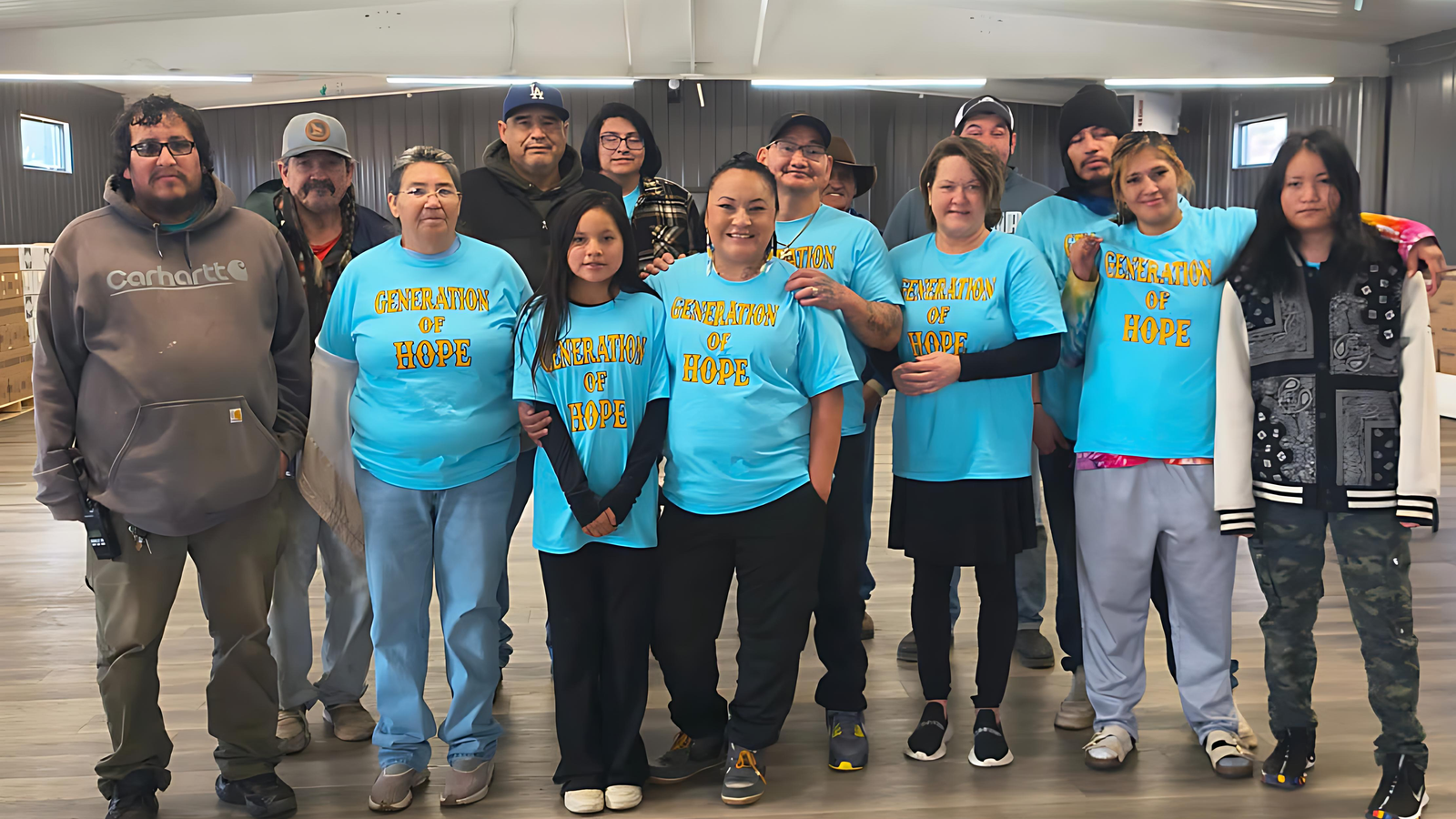
The virtual food drive was organized through the Great Plains Food Bank, which ran from Oct. 29 to Nov. 22. Over those three weeks, every ping from Fishinghawk-Chavez’s phone sent a jolt of anticipation and anxiety through her as she watched donation notifications pile up in her inbox. Reaching the end of the food drive, community members had donated just under $2,000.
“There was a time where she just stopped checking on it because it was stressing her out too bad,” said Chavez. But he kept reassuring her that she would reach her $10,000 goal. “Part of me just knew that it was going to work out.”
That’s when her uncle called and said one of his friends was planning to donate. Within the next few minutes, Fishinghawk-Chavez heard another ping: The Generations for Hope food drive had received a donation of $10,000.
“Her passion is completely contagious,” said Fishinghawk-Chavez’s uncle, David Leavitt. “I’m just so impressed with what she’s doing. She’s learning and growing herself. She’s raising her children, she’s helping her tribe. I think she’s a natural born leader.”
Fishinghawk-Chavez raised $12,000 by Sunday, Nov. 23 — $6,000 for North Dakota tribes and $6,000 for her tribe in southeast Montana. On Tuesday, she drove to the Northern Cheyenne Reservation with her family in a car packed with food donations. Arriving at Tin Hall in Ashland, Montana, they unloaded their haul and a semitrailer full of food — 24 pallets stacked with boxes five feet high — donated by the Church of Jesus Christ of Latter-day Saints.
The donation from the church was more than enough to distribute food boxes to every district of the reservation. Fishinghawk-Chavez said they still have about a third of the food left. The $12,000 from the virtual drive is yet to be distributed. The Great Plains Food Bank will buy pantry-stable food with the donation profits and send it to food pantries as soon as Fishinghawk-Chavez signs off on where it will go.
Fishinghawk-Chavez said the North Dakota half of the donations will be split between food banks at UTTC, Sacred Pipe Resource Center and the five tribes in the state — Mandan, Hidatsa and Arikara Nation, Standing Rock Sioux Tribe, Spirit Lake Tribe, Sisseton-Wahpaton Oyate and Turtle Mountain Band of Chippewa Indians. The other half will go to St. Labre Indian Schools, the boarding school her grandmother attended, which, Fishinghawk-Chavez said, wasn’t a decision made lightly.
“It caused so much pain, so much heartache, and it really destroyed our people,” she said about the boarding school that isolated Native children from their families, language and culture. “But the kids are still there.”
Two years ago, St. Labre initiated an independent investigation into its history and potential unmarked graves on its property. The investigation didn’t turn up unmarked graves, but it did reveal that 113 students died while attending the school, according to reporting by Montana Public Radio.
Fishinghawk-Chavez said giving the donation in her grandmother’s name will send a message: “She made it. She made it out of there.” She also hopes putting “good energy” into the school will benefit the nearly 750 children, many who are Native, that attend St. Labre.
She hopes to send a different message with the donation to UTTC’s food pantry. The college’s land grant director, Edwin Kitzes, said not many students know about the food drive.
“The college should know they’re getting this food from one of their students,” he said. “We often just teach students stuff, but it doesn’t translate to the outside world so much. That’s why this story is extra special.”
Fishinghawk-Chavez, who studies sustainable agriculture at UTTC, has made it her life's mission to feed her community and champion food sovereignty. It’s a mission that’s deeply personal. She said she used to live in poverty and relied on food stamps from age 16 to 39. To cope with stress, she turned to alcohol.
“It takes away from your self worth when you’re not able to feed your family,” she said. “It makes you feel like you’re worthless. Like, ‘What am I good for?’”
Now at age 42, Fishinghawk-Chavez is sober and getting a college degree while raising her six kids. As she speaks about food sovereignty and the food drive, she talks fast, laughs often and frequently starts tearing up when talking about the resiliency of her community.
“Every statistic that they’ve ever placed on a Native American woman, I’ve lived through, and so I know the struggle,” she said. “That’s what made [the food drive] so urgent and heartfelt.”
Fishinghawk-Chavez said this food drive is just the beginning. She plans on holding another one next fall and even dreams about giving TED Talks about food sovereignty and speaking to tribal colleges about how to translate school work to real work that benefits tribal communities. The Northern Cheyenne Tribe also plans to start a community farm with Fishinghawk-Chavez’s help, so it can provide fresh, healthy food for its citizens by its own power.
Gabrielle Nelson
Former Environment Reporter
Sharing Is Caring
This article is not included in our Story Share & Care selection.
The content may only be reproduced with permission from the Indigenous Media Freedom Alliance. Please see our content sharing guidelines.
© Buffalo's Fire. All rights reserved.
We provide independent Native-focused reporting that gives our communities the context and the facts they need to make informed decisions.
Respect The Fire
At Buffalo's Fire, we value constructive dialogue that builds an informed Indian Country. To keep this space healthy, moderators will remove:
- Personal attacks, harassment, or hate speech
- Spam, misinformation, or unsolicited promotion
- Off-topic rants and excessive shouting (All Caps)
Let’s keep the fire burning with respect.