






Whale’s tragic demise brings two worlds together
On a wind-swept Oregon beach, Native culture and science share space

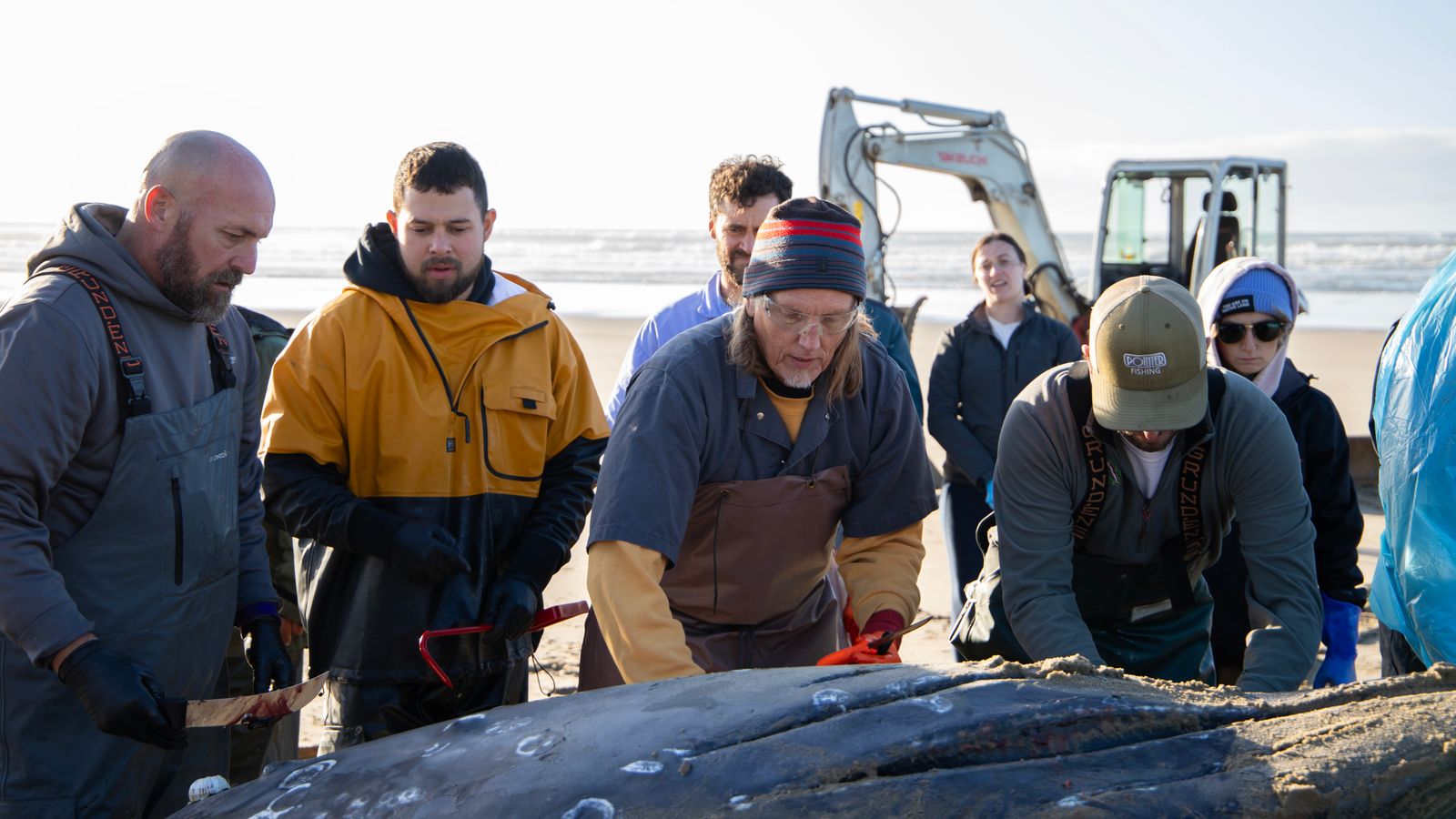

Robert Kentta heard of a beached humpback whale near the coastal town of Yachats, Oregon, around Nov. 14, just as his people, the Confederated Tribes of Siletz Indians, were beginning festivities for their 48th annual restoration celebration. Caught in crab pot line, the whale had floundered ashore.
Kentta and a friend drove down on Sunday morning to assess the situation. He saw the 28-foot whale lying in the sand, struggling to breathe. “It was obviously in stress,” Kentta, a Siletz tribal council member, told Buffalo’s Fire. “And it was hard to tell from the situation any path forward for it to really survive.”
That weekend, dozens of concerned people tried to keep the whale alive, removing most of the crab pot line and running buckets to keep it doused in water. Response teams from numerous state and federal agencies and marine organizations tried to move its immense, 10-ton body back into the ocean, an effort that included pulleys and ropes to no avail.
“This was a crisis,” recalled Angela Sondenaa, the CTSI’s natural resources director. “It became clear that this whale was not going to survive. It'd been on the beach too long, and we could not get it refloated.”
The scene was both despairing and tense. As waves rolled in and out, friction arose between several volunteers as to how to best save the whale while also being respectful and safe. Oregon State Police had already kept a good number of people away from the whale to let organizations like the West Coast Marine Mammal Stranding Network, National Oceanic and Atmospheric Administration, Oregon Department of Fish and Wildlife and Oregon State University do their best to help.
On Nov. 17, NOAA fisheries made the call to euthanize the whale after consulting with veterinarians and stranding specialists. After sedating it, they administered potassium chloride to stop its heart. Behind the scenes, Sondenaa worked with NOAA to quickly secure a permit so that the tribe could salvage certain parts of the whale.
“Our focus was on materials that we could use in a cultural context,” said Sondenaa.
The CTSI is made up of tribes from the lower Columbia River area to northern California. Kentta says they all historically made use of whales that washed ashore. Some had even practiced whaling through at least the mid-19th century.
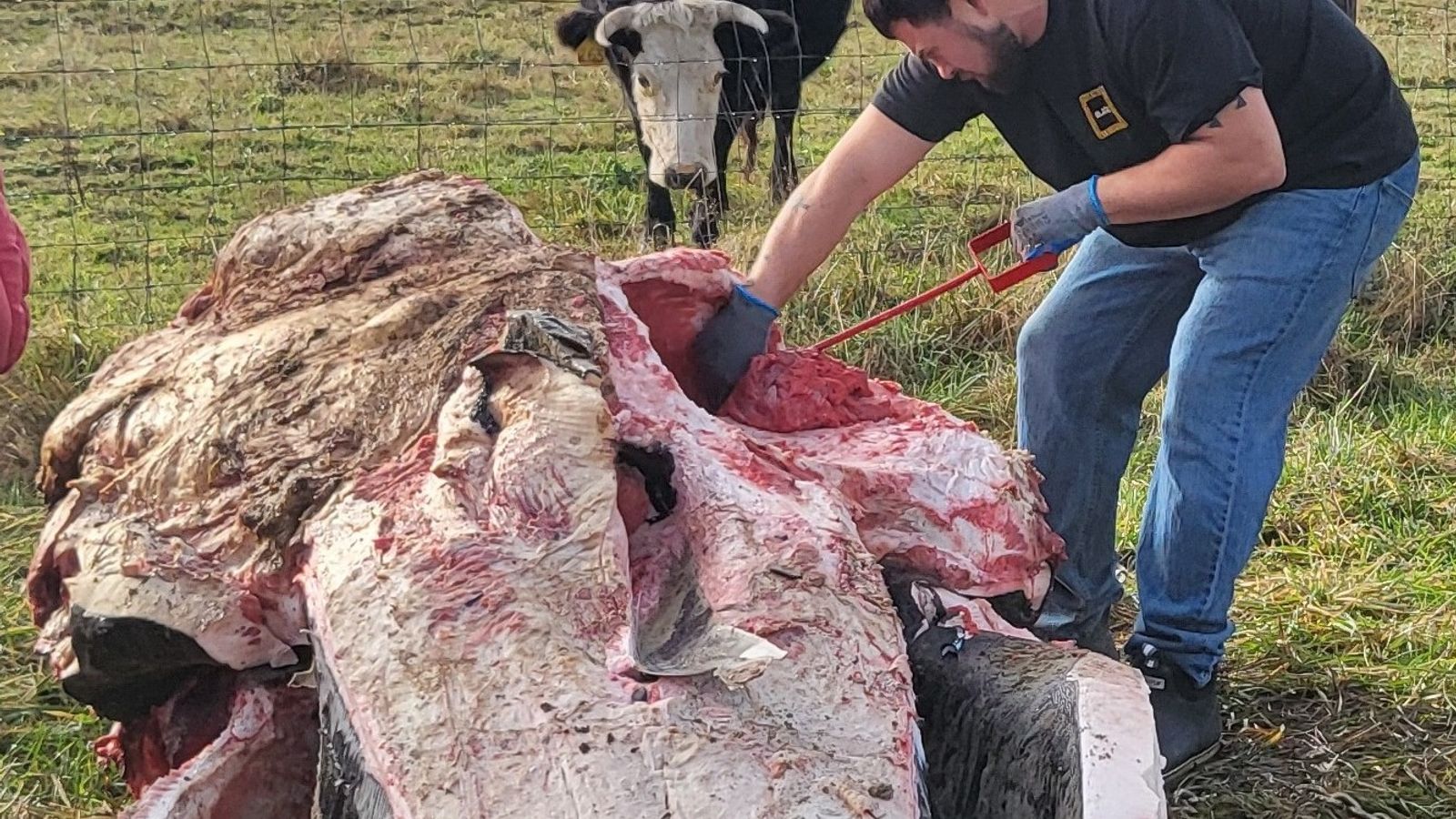
“For us, it’s reconnecting to the resource, to the values around making use of things that are provided by our environment,” said Kentta.
On Nov. 18, the day after the whale was put down, a team from CTSI arrived at the beach. Altogether there were about 20 tribal citizens, including children and the chief administrative officer for the tribe, Lisa Norton.
“It took me aback,” said Norton, reliving the moment she approached the dead whale. In front of her was an "enormous task" and "a lot of responsibility." It was important, she said, to "do it right."
Norton said she and the CTSI group arrived around 3:45 p.m., with sunset roughly an hour away. Not only did they have to work against fading light and the incoming tide, they also had to work around a necropsy team from Oregon State University taking samples for analysis.
Tribes and universities have had a checkered past. While many institutions of higher learning have taught Native American and Indigenous studies in recent decades, the previous century and a half saw many scholars and researchers plundering graves and burial mounds for human remains and sacred objects. While recent repatriation efforts and federal laws like the Native American Graves Protection and Repatriation Act have helped, there are still grounds for tribes to be wary of academia.
Kurt Williams, director of the Oregon Veterinary Diagnostic Lab and an OSU professor of biomedical sciences, headed the necropsy team.
“To recognize very quickly the significance of this animal to the members of the Siletz community, it was very impactful for us,” said Williams.
Norton said upon arriving at the whale’s carcass, decisions had to be made on the spot.
“The first consideration was, ‘How do we allow the necropsy team to get their stuff done, but also be conscious of the fact that we have an incoming tide and safety concerns?’” recalled Norton.
The Siletz started by laying down an offering of tobacco and praying. And including Williams’s team in the event.
“Do not say ‘ceremony,’” Norton told Buffalo’s Fire, noting that some other news reports referred to it as such. “There is no ceremony for this instance. We offer up prayers for the animal and the bounty it’s going to give us.”
With the ocean’s roar enveloping them, the two groups bowed their heads and contemplated the task ahead. Norton said people surrounding the whale prayed and provided meaning to what had been a distressing weekend of futile rescue efforts.
“I’m not a religious person at all, yet I still found myself really moved by their prayer, to be brought in and to take a moment to acknowledge the animal before us,” said Williams, adding that members of the necropsy team were tearing up.
The teams then shifted their energies to the carcass. Williams’s team extracted sections of tissues from “stern to stern,” which included samples from the gastrointestinal, urogenital, cardiopulmonary, endocrine, muscular and nervous systems, as well as spinal fluid. Williams said lab analysis would be done to determine how the humpback whale lived before getting entangled with the crab pot line.
The experience was completely new to Williams, as he’d never done a necropsy on a whale before.
“I hope I don’t have another opportunity, because I don’t want this to happen to these animals.”
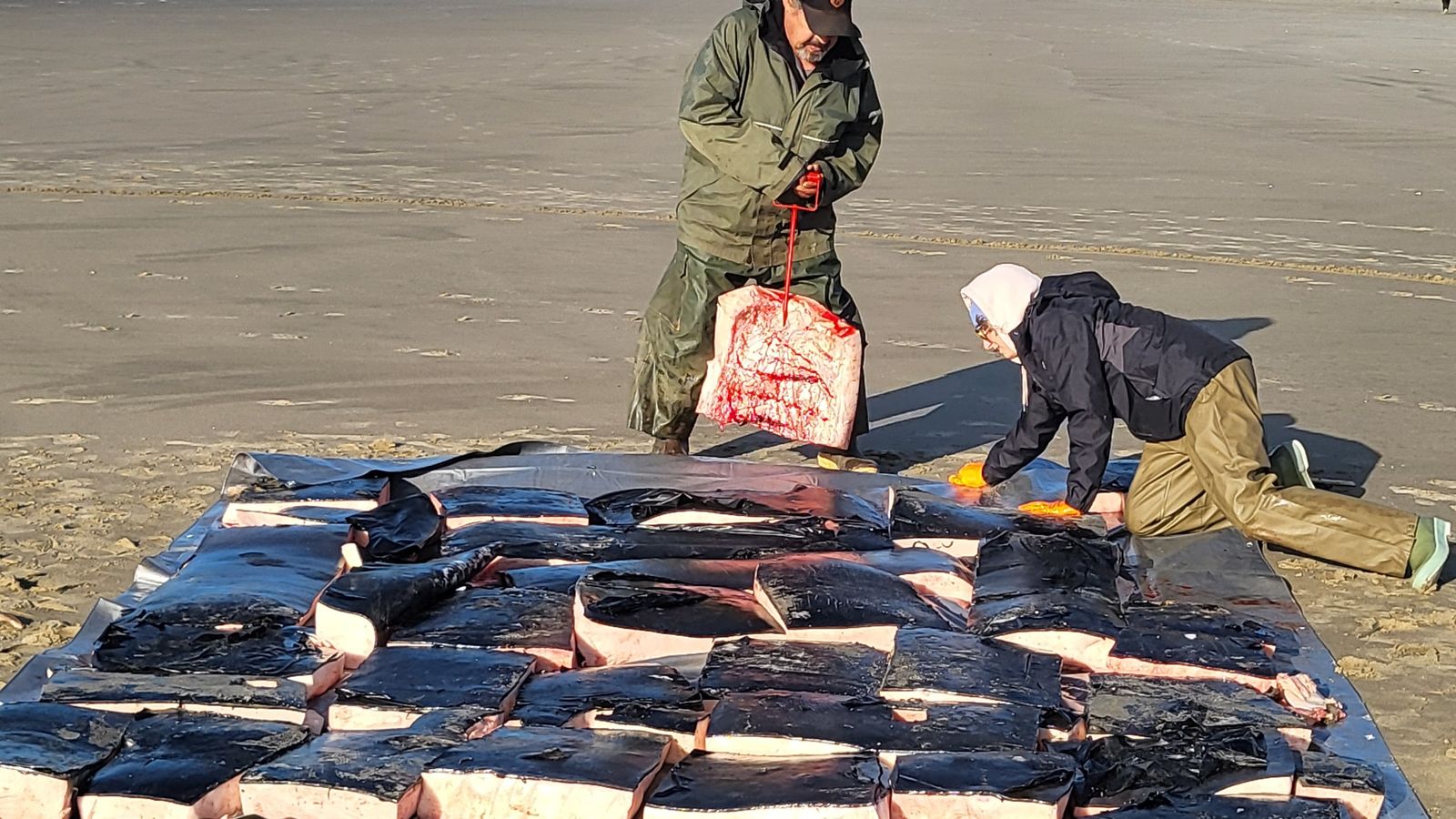
Meanwhile, Norton’s team, which included hunters, sliced away sections of blubber and baleen. She said the necropsy team checked in as the groups worked.
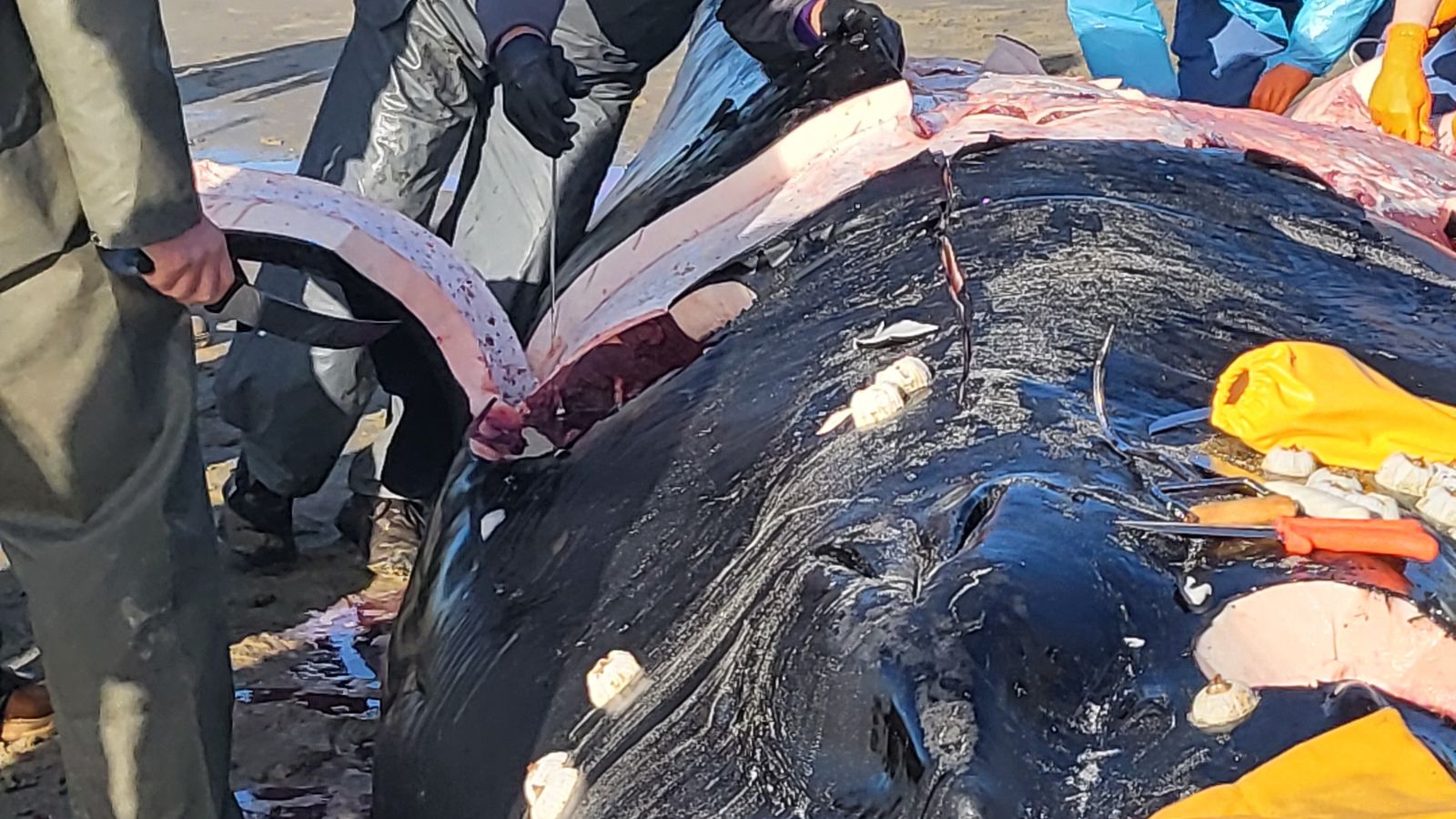
“They actually came to us,” said Norton. “They were like, ‘Here’s what we’re going to do. Is this OK with you all?’”
Norton said the groups were actually working in tandem, which resulted in the necropsy team finishing first and taking more samples than if they had done it on their own. And when one of the OSU team members was preparing to remove some baleen with a power tool, a Siletz tribal citizen showed them a different way to do it with a knife.
As the Siletz continued to remove the whale’s head, bones and other sections, the OSU necropsy team wrapped up, having collected its samples.
“We brought back pounds, not tons,” mused Williams, comparing his team’s collection to the CTSI’s.
The Siletz group continued working until sundown, with conditions becoming darker and less safe as the tide rolled in. Thankfully a local contractor — True North Construction — lent them an excavator and a flatbed truck to haul away the whale’s spine and larger pieces to a more secure area.
“The decision was made not to salvage the meat for human consumption,” explained Norton. “We salvaged primarily the blubber, which we’re having tested.”
If the blubber is deemed safe from toxins, Norton said the tribe could render down some of it into oil or use it in soap. Altogether, the Siletz acquired 1,500 pounds of blubber that was flash frozen and stored by a regional partner, Central Coast Food Web based in Newport.
Following a prayer and another offering of tobacco for the whale, its large bones were buried in a secret spot by the tribe. Norton said the plan is to leave them buried for up to two years, to let nature take its course and clean them.
Meanwhile, the CTSI’s tribal council must now deliberate on what to do next. Sondenaa told Buffalo’s Fire that the baleen will be used as cultural material, with the skeleton possibly being used for educational purposes, perhaps in a museum display.
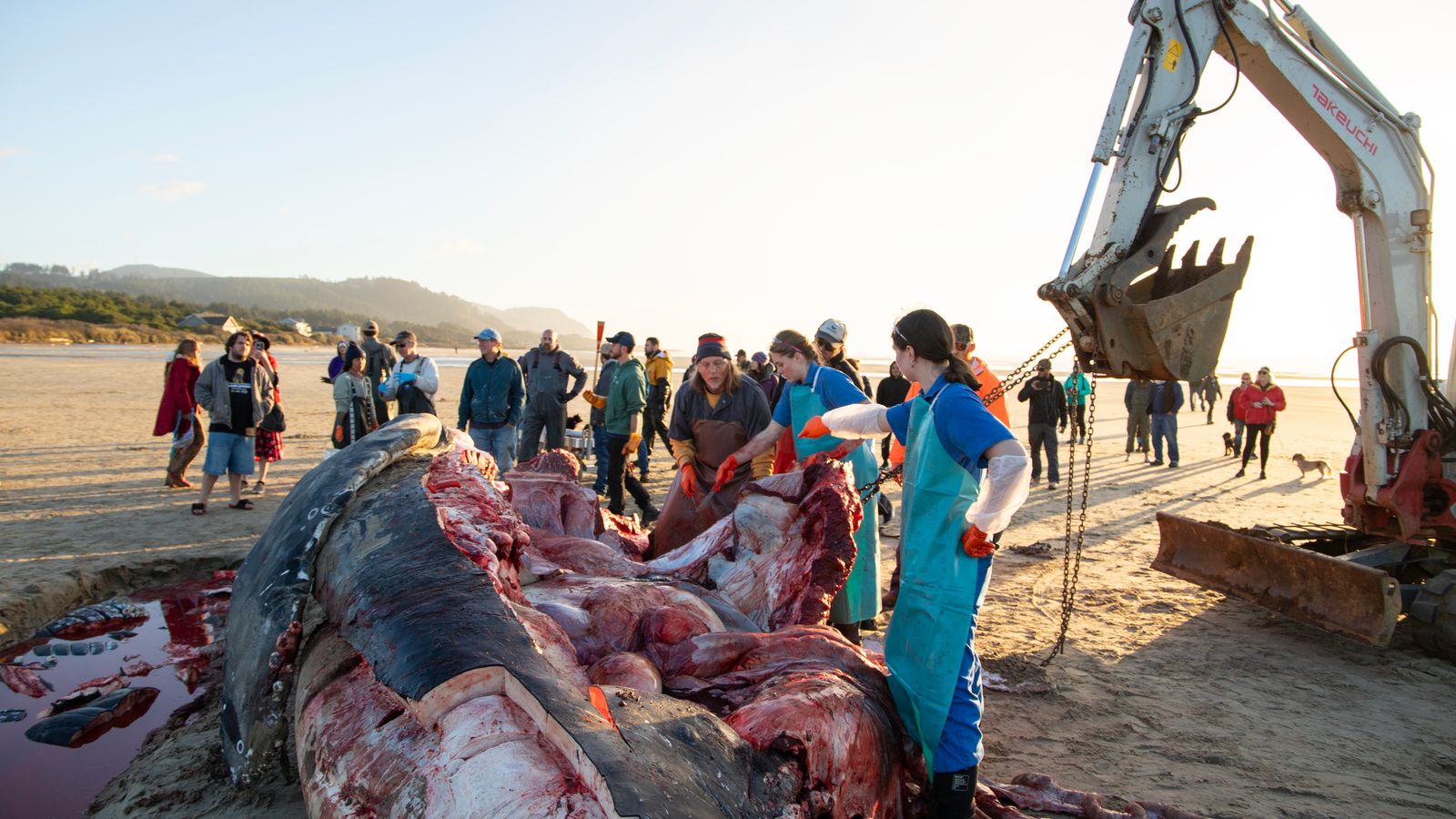
“We’re already in discussions on how we want to handle this material, to properly use it,” she added.
Kentta said that a local citizen of the Makah Tribe of Washington state — which traditionally whaled and was recently given permission to do so again — offered assistance in the matter. And the necropsy team will update the CTSI on its findings with the samples taken from the humpback. He said the response to this situation contrasts sharply to an infamous moment in Oregon history in November 1970, when a beached gray whale in the coastal town of Florence was blown up on live TV with dynamite. Chunks of rotting blubber rained down on cars and onlookers.
“I’m sure people were doing what they thought was right, but in my mind that’s just totally wrong,” said Kentta. He said there could have been more constructive ways to deal with the carcass, which could have involved input from coastal tribes.
The coordination and cooperation between a university science team and a Native tribe in salvaging the dead whale has not only created a primer for future occurrences, but a mutual appreciation.
“It was the best day I had at the lab to be honest,” said Williams. “Being able to work alongside the members of the Siletz, it was amazing. And they were gracious. I just felt very honored to be able to participate in it.”
“What an incredible privilege,” said Norton. “If people are wondering, ‘How do we make the best of a horrible situation?’ that’s where I look to our culture and the use of storytelling to keep the importance of that whale for those who experienced incredible loss as a result of this.”
Norton said this was a chance for the Siletz tribal citizens to rekindle a part of their culture that hasn’t been realized for a long time. Once the CTSI council decides what to do with the gathered materials, citizens may find themselves with an abundance of blubber, baleen and bone to use for oil products, regalia or jewelry.
For Norton, the takeaway message is that this experience has captured the hearts of a lot of people on the coast, and “will continue each time that those materials are used. That story will be told.”
Sharing Is Caring
This article is not included in our Story Share & Care selection.
The content may only be reproduced with permission from the Indigenous Media Freedom Alliance. Please see our content sharing guidelines.
© Buffalo's Fire. All rights reserved.
We provide independent Native-focused reporting that gives our communities the context and the facts they need to make informed decisions.
Respect The Fire
At Buffalo's Fire, we value constructive dialogue that builds an informed Indian Country. To keep this space healthy, moderators will remove:
- Personal attacks, harassment, or hate speech
- Spam, misinformation, or unsolicited promotion
- Off-topic rants and excessive shouting (All Caps)
Let’s keep the fire burning with respect.