






U.S. Forest Service and 11 tribes sign historic agreement to co-manage sacred area in South Dakota
The agreement concerns the Black Elk Wilderness, a ‘place of profound spiritual, cultural, and historical importance’

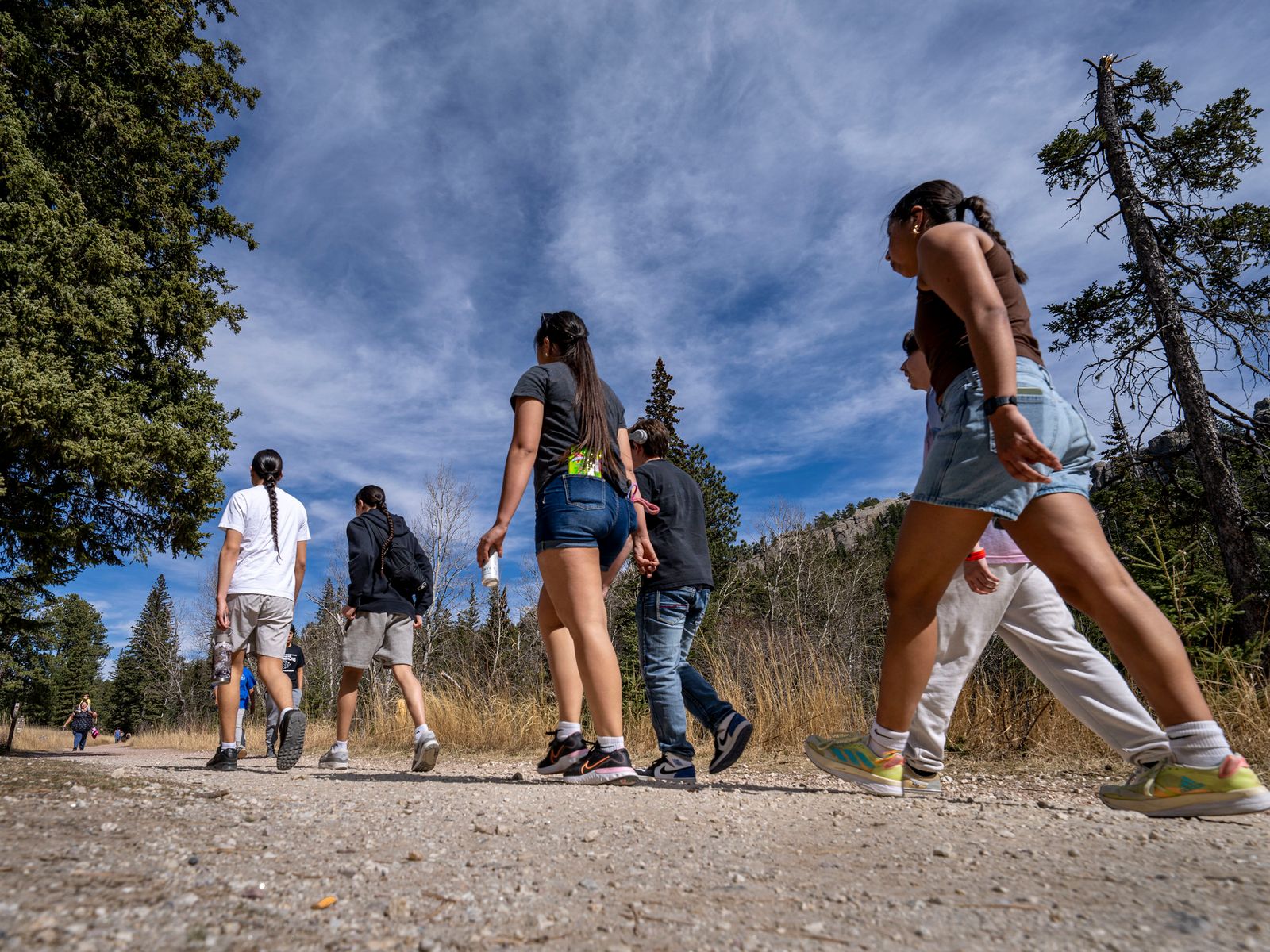

On Saturday, March 21, U.S. Forest Service officials and Great Sioux Nation tribal leaders spent the morning hiking up Black Elk Peak. After remarks and a song by a drum group, they added their signatures to a Memorandum of Understanding that allows collaborative stewardship of more than 13,000 acres of forest land in western South Dakota.
Those acres are protected by a 1980 law that created the Black Elk Wilderness area in the Black Hills National Forest.
U.S. Forest Service Chief Tom Schultz stated in a press release that the Memorandum of Understanding, which was signed by some parties on March 19, “focuses on active management for recreation, habitat improvement, wildlife benefit, invasive species mitigation and wilderness management.”
The release added that the MOU “enhances opportunities for tribal guidance, knowledge, and consultation regarding wilderness management, resource protection, recreation, and cultural interpretation” and “ensures tribal interests of preservation, site protection, wilderness integrity, and cultural practice and access are heeded.”
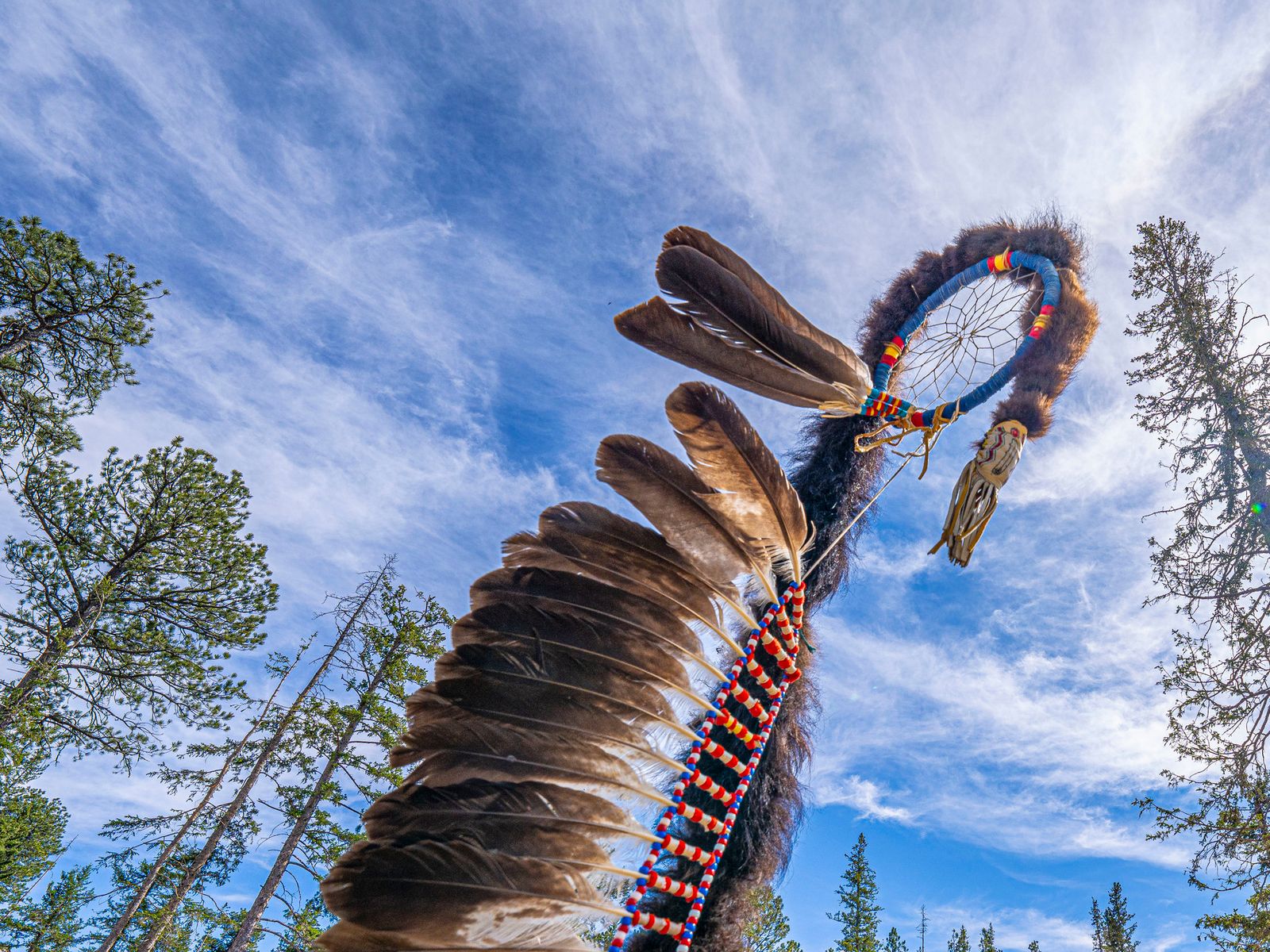
The 11 tribes represented in the agreement are the Cheyenne River Sioux Tribe, Crow Creek Sioux Tribe, Flandreau Santee Sioux Tribe, Lower Brule Sioux Tribe, Oglala Sioux Tribe, Rosebud Sioux Tribe, Santee Sioux Tribe of Nebraska, Sisseton-Wahpeton Oyate, Spirit Lake Sioux Tribe, Standing Rock Sioux Tribe and Yankton Sioux Tribe.
Boyd Gourneau, chairman of the Lower Brule Sioux Tribe, told Buffalo’s Fire that the MOU was important, especially for younger generations: “Our children are one of the most important resources for the future of our nation. We want our kids to have a chance to visit the sacred lands our ancestors roamed free at one time.”
Boyd also expressed that while the MOU is important, he would’ve preferred a Memorandum of Agreement, which he described as more binding and having “more bite.”
Boyd added that the Fort Laramie Treaty of 1868 “was supposed to have bite, and it didn’t” and said, “I’d like to see all the land returned to the tribes.”
In a Facebook post, the Cheyenne River Administration said that the MOU “recognizes the Black Hills, known to the Lakota as Pahá Sápa, as a place of profound spiritual, cultural, and historical importance and affirms a renewed nation-to-nation relationship rooted in respect and collaboration.” The post also said that for the Lakota, Dakota and Nakota people, the Black Hills are the “heart of everything that is” and Hiŋháŋ Káǧa — also known as Black Elk Peak — stands at the center of the Black Elk Wilderness and has been long considered the “Center of the World.”
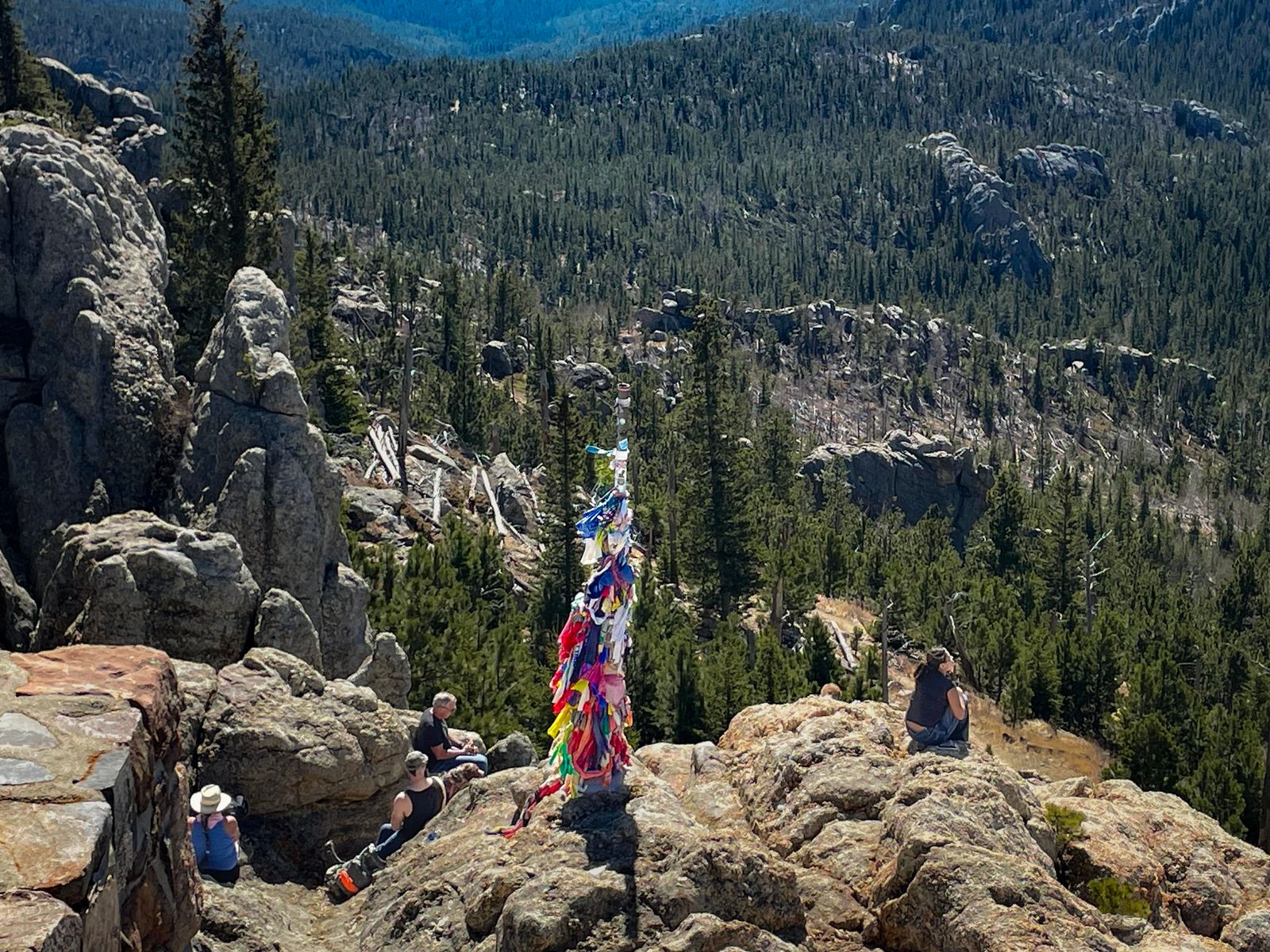
“For generations, Indigenous peoples have journeyed to these lands to pray, fast, and seek guidance, maintaining a living connection to their ancestors and to the natural world,” the post adds.
Buffalo’s Fire requested a copy of the MOU from the U.S. Forest Service but did not receive it before press time. But the Cheyenne River Administration’s post said that “while non-binding, the agreement formally commits the parties to ongoing consultation, shared stewardship, and coordinated management of the wilderness, consistent with federal law and the Wilderness Act. Importantly, the agreement explicitly upholds Tribal sovereignty and does not waive any treaty rights under the 1851 or 1868 Sioux Nation Treaties.”
In its release, the U.S. Forest Service said that the “historic partnership” will serve as a model for future agreements for co-stewarding efforts.
In a Facebook post, the National Association of Tribal Historic Preservation Officers celebrated the MOU, calling it “a remarkable step forward” to ensure the protection of sacred lands in the Black Hills.
References
- 1.
Sharing Is Caring
This article is not included in our Story Share & Care selection.
The content may only be reproduced with permission from the Indigenous Media Freedom Alliance. Please see our content sharing guidelines.
© Buffalo's Fire. All rights reserved.
We provide independent Native-focused reporting that gives our communities the context and the facts they need to make informed decisions.
Respect The Fire
At Buffalo's Fire, we value constructive dialogue that builds an informed Indian Country. To keep this space healthy, moderators will remove:
- Personal attacks, harassment, or hate speech
- Spam, misinformation, or unsolicited promotion
- Off-topic rants and excessive shouting (All Caps)
Let’s keep the fire burning with respect.