






Appeal heard over the Keystone XL Pipeline on Tuesday

Syndication
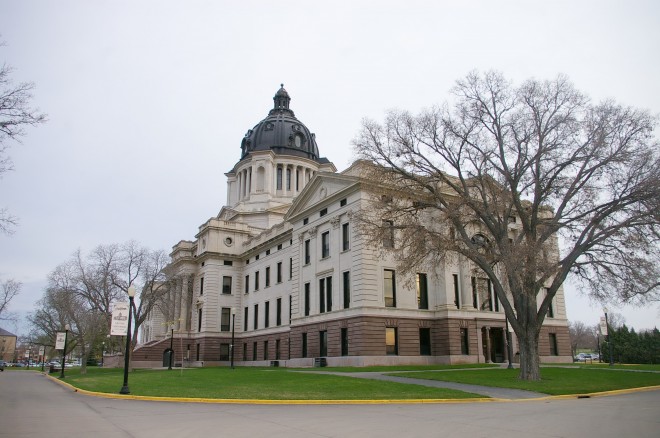
On Tuesday the South Dakota Supreme Court will hear oral arguments on the appeal of the Public Utilities Commission’s (PUC) decision for certification of TransCanada’s permit for the Keystone XL Pipeline.
Dakota Rural Action is joined in this appeal by the Yankton Sioux Tribe and the Cheyenne River Sioux Tribe.
This appeal started with the original decision by the PUC to grant TransCanada a permit for its pipeline in 2010. Under South Dakota law, if construction had not begun within four years, TransCanada had to go back to the PUC and certify that it could comply with conditions of the original permit. This appeal to the South Dakota Supreme Court is from the PUC’s decision to effectively renew the permit after four years.
Since the PUC made its decision, TransCanada’s first pipeline through South Dakota, Keystone 1, has failed twice – despite assurances from TransCanada to the PUC and the people of South Dakota that their pipelines were safe and that risks of spills were virtually nonexistent. Both recent spills in South Dakota have been significant, with the latest one in Marshall County being reported as twice as large as the original estimate, totaling approximately 407,000 gallons – or over 135 tanker trucks of oil.
Many investors are questioning the long-term profitability of fossil fuel infrastructure projects like this pipeline.
“Everyone needs to know this pipeline isn’t a sure thing,” said John Harter, chairperson of Dakota Rural Action. “They tell landowners and the people of South Dakota that they are ready to build but they’ve been leading their investors on for months.”
From the beginning, TransCanada has treated landowners shabbily over this pipeline. TransCanada seems to think that South Dakota is an area of “low consequence” and by association doesn’t value the people who live here either.
“We don’t need neighbors who threaten you with eminent domain the first time you meet them,” Harter said.
No matter what happens with the Supreme Court decision, South Dakotans need to insist our elected officials and state agencies hold developers like TransCanada to a higher standard.
Spotted an error? Suggest a correction.
We provide independent Native-focused reporting that gives our communities the context and the facts they need to make informed decisions.
Respect The Fire
At Buffalo's Fire, we value constructive dialogue that builds an informed Indian Country. To keep this space healthy, moderators will remove:
- Personal attacks, harassment, or hate speech
- Spam, misinformation, or unsolicited promotion
- Off-topic rants and excessive shouting (All Caps)
Let’s keep the fire burning with respect.