






The Battle of the Little Bighorn (Greasy Grass): Why it’s still being fought
150 years after the "Greasy Grass" victory, the Lakota and Cheyenne are planning a massive 2026 commemoration—and still refuse a $1.5 billion settlement for their land

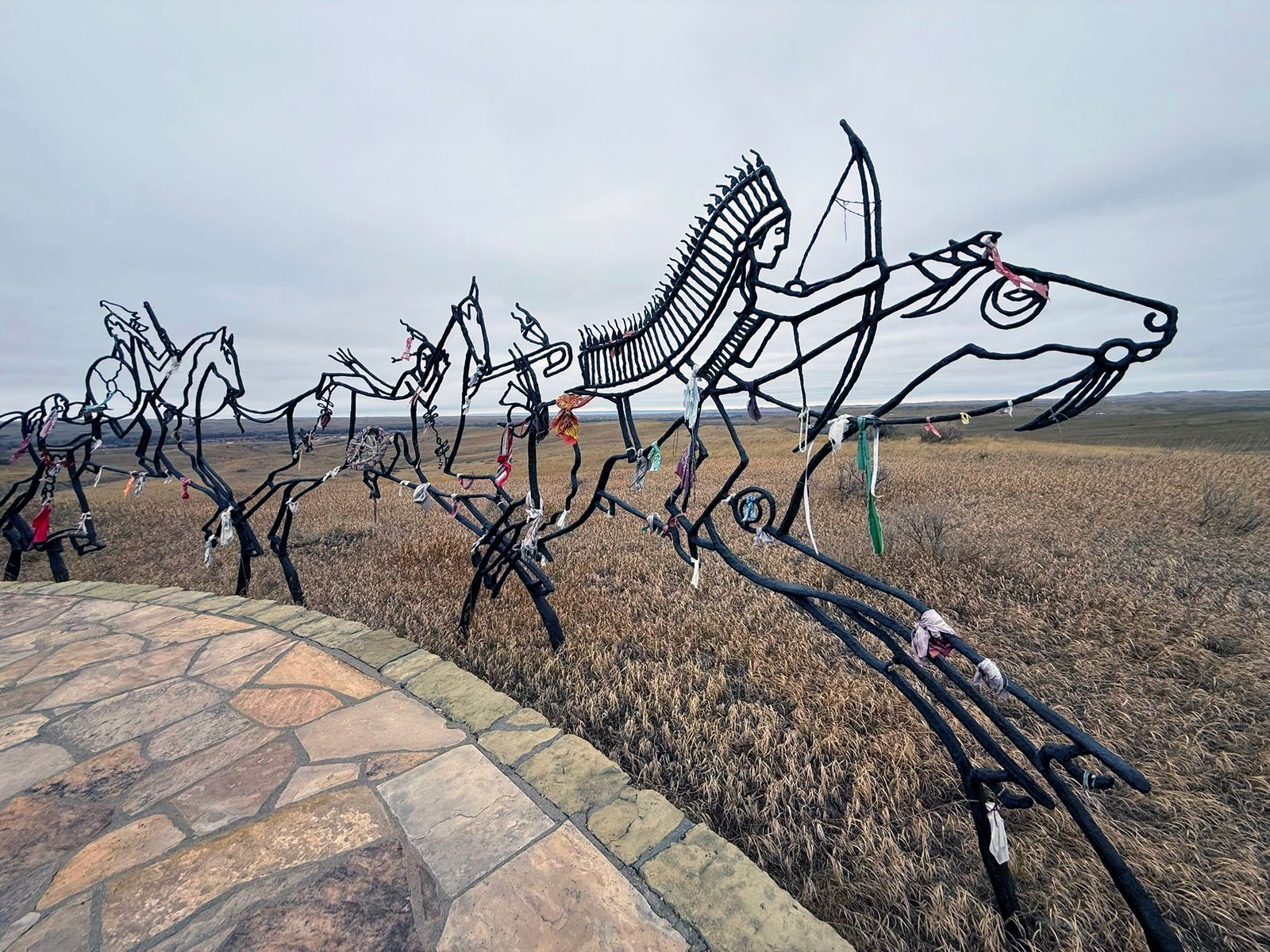

The name on the federal monument says "Little Bighorn." The name the Lakota use is older and more intimate to the land itself: Pezi Sla, or Greasy Grass, named for the heavy morning dew that soaked the valley grasses so thoroughly it left moccasins and horse bellies slick to the touch.
It was along those banks in southeastern Montana that, on June 25, 1876, a coalition of Lakota, Northern Cheyenne and Arapaho warriors killed 268 soldiers of the United States 7th Cavalry, including its commanding officer, Lt. Col. George Armstrong Custer.
The U.S. government called it a catastrophe. The tribes call it a victory. Both are correct.
The name "Little Bighorn" is a label from people passing through. While rooted in the Apsáalooke (Crow) name for the larger Bighorn River, Ets-pot-agie, or Mountain Sheep River, the tributary's name was adapted by European trappers. It is a name born of distance, bestowed by passing fur traders and military men who saw sheep in the mountains and transferred the animal’s name to the water below.
In contrast, Pezi Sla is a name born of the land. The battle of the two names highlights the tension as the 150th anniversary approaches in June 2026. With dozens of tribes already in various planning stages, some tribes will simply continue to carry on events as they have for years. One of those events is the Pezishla Woksuya Memorial Ride, led by Chief Arvol Looking Horse, a 360-mile memorial horse ride scheduled to arrive at the battlefield on June 24. What’s changed in the last 150 years is that the conflict has moved to new terrain: whose story gets told and how.
Why were the U.S. and the Lakota at odds in the first place?
To understand what happened on the Greasy Grass, it helps to start eight years earlier, in 1868, when the United States signed the Treaty of Fort Laramie with the Sioux – Brulé, Oglala, Mnicoujou, Yanktonai, Hunkpapa, Blackfeet, Cuthead, Two Kettle, Sans Arc, and Santee – and Arapaho. That agreement guaranteed the Lakota "absolute and undisturbed use and occupation" of the Black Hills — the Paha Sapa, or "heart of everything that is" — along with broad territories stretching across the Northern Plains.
Six years later, in 1874, Custer himself led a military expedition into the Black Hills and confirmed what miners had suspected: gold. The discovery upended everything. White prospectors flooded into treaty land. The Ulysses Grant administration, rather than remove the illegal settlers as the treaty required, attempted to buy the Black Hills from the Lakota. When Sitting Bull, Crazy Horse and other leaders refused to sell, the government's position hardened quickly.
On Jan. 31, 1876, the federal government issued an ultimatum: all Native people must report to reservation agencies by the end of the month or be treated as hostile combatants. The deadline was impossible to meet in the middle of a Plains winter. Historians and tribal leaders agree that it was by design.
Just how big was the village on the river?
By the third week of June 1876, the valley of the Greasy Grass held one of the largest gatherings of Native people in the history of the Northern Plains. Estimates range from 7,000 to 8,000 people in total, with between 1,500 and 2,500 warriors among them.
The encampment was not made up of refugees. It was a coalition organized into distinct tribal circles, each with its own internal governance. The Hunkpapa Lakota, led by Sitting Bull and the war chief Gall (Phizí), occupied the southern end of the camp nearest the river. The Oglala Lakota, under Crazy Horse(Tȟašúŋke Witkó), held positions to the center-south. The Northern Cheyenne, led by Two Moons (Éše'he Ȯhnéšesėstse) and Lame White Man (Vé'ho'énȯhnéhe), were positioned at the northern end. The Mnicoujou, Sans Arc (Itazipco) and Arapaho bands held the center and filled the spaces between.
Order within the camp was maintained by warrior societies, such as the Fox, the Elk, and the Strong Hearts, which functioned as both military units and a civil police force. These societies coordinated hunts, managed disputes and secured the village perimeter. The camp's elder councils, sometimes called the "Big Bellies" or "Silent Eaters," provided strategic direction and a scale of organization that the U.S. Army command failed to heed, despite the warnings from their own scouts. The U.S. Army moved forward regardless.
Who was in the "Circle of Campfire"?
|
Tribal Band |
Leadership |
Camp Position |
Role in Battle |
|---|---|---|---|
|
Hunkpapa Lakota |
Sitting Bull, Gall |
South (Upriver) |
First response to Reno’s charge |
|
Oglala Lakota |
Crazy Horse, He Dog |
Central-South |
Flanking maneuvers and Custer Hill counter-attack |
|
Northern Cheyenne |
Two Moons, Lame White Man |
North (Downriver) |
Engagement on Custer Hill and Deep Ravine |
|
Mnicoujou Lakota |
Red Horse, Lame Deer |
Central |
Core resistance and center-field defense |
|
Sans Arc Lakota |
Spotted Eagle |
Central-North |
Reinforcing the Cheyenne at the northern fords |
|
Arapaho |
Waterman, Left Hand |
Interspersed |
Support roles alongside the Cheyenne |
How did the tribes prepare for the fight?
The weeks leading up to the battle were shaped as much by ceremony as by tactics. In what the Lakota calendar marks as the "Moon of the Ripening Choke Cherries," the allied tribes gathered at Rosebud Creek for the Sun Dance, a multiday ceremony of prayer, communal renewal and personal sacrifice.
It was there that Sitting Bull — after offering 100 pieces of flesh cut from his arms and dancing for two full days — received the vision that would define the coming fight. He saw soldiers and horses falling from the sky into the camp, their heads pointed downward, as if dropped by a force from above. The interpretation was immediate and unanimous: the soldiers were coming and they would be defeated.
That vision did something to the morale of the village that no tactical briefing could have accomplished. Warriors prepared to fight not as people defending against impossible odds, but as people fulfilling a prophecy. On June 24 — the day before the battle — approximately 20 young Lakota and Cheyenne men took what witnesses described as a "suicide vow," pledging their lives to protect the village. They were, in effect, an assault force without fear of death.
Was the Little Bighorn the only major battle that summer?
The battle at the Greasy Grass was not the first major engagement that summer. On June 17, 1876, warriors from the same allied village met Gen. George Crook's column at the Rosebud River, in what U.S. military histories record as the Battle of the Rosebud.
In Cheyenne oral history, the fight carries a different name. It is called "The Battle Where the Sister Saved Her Brother," for the moment Buffalo Calf Road Woman (Brave Woman) charged into heavy fighting to rescue her brother, Comes-in-Sight. His horse had been shot from under him. She pulled him onto her horse and rode out of the battle under fire.
The broader strategic result mattered as much as the heroism. The warriors forced Crook's column into a full retreat south toward Wyoming, removing one of three Army columns that had been coordinating to surround the village. When Custer arrived at the Little Bighorn a week later, he was engaging a force that was not only spiritually prepared but battle-tested against a larger unit, freshly supplied with captured ammunition and horses. The Lakota, Cheyenne, Arapaho and other allies were also operating with hard-won knowledge of how U.S. 7th Cavalry formations fought under pressure.
So, how did the battle actually play out?
The engagement began around 3 p.m. on June 25, when Maj. Marcus Reno's battalion charged the southern end of the encampment. By nearly every Native account, the village was not on a war footing at that moment. Many people had been up late the night before dancing. Women were east of the river, digging turnips in the summer heat.
The Hunkpapa warriors at the southern end of the camp responded first and fast. Rather than scatter, the warriors fanned out to flank Reno's line, using dust, terrain and speed to mask their numbers and create the impression of a force far larger than what Reno expected. The soldiers, according to the Mnicoujou chief, Red Horse, appeared "crazy" — disoriented by the noise, the movement and the scale of the resistance.
Reno's command, already put on the defensive and flanked by warriors, effectively collapsed into a disorganized flight when the Arikara scout Bloody Knife (NeesiRAhpát) was shot in the head beside him, spattering the major's face and breaking him psychologically. The retreat across the river to the bluffs above was, by both Army and tribal accounts, a rout. Warriors later recalled soldiers throwing down their rifles and raising their hands in surrender.
Reno's survivors dug in on the bluffs. They would stay there, pinned down, for the next two days. Meanwhile, Custer moved north along the river's eastern bluffs, searching for a river crossing where he could strike directly into the village. He found one — or tried to — at a dry creek bed the Cheyenne called Medicine Tail Coulee. The Cheyenne at the northern end of the camp spotted him there and mobilized.
What followed, on the hill now called Last Stand Hill, lasted perhaps an hour. Two Moons, the Cheyenne leader, described the fighting as a whirlpool — warriors circling the shrinking cluster of soldiers, pressing in, the dust and smoke so thick that visibility was nearly nothing. Five cavalry companies — C, E, F, I and L — attempted to make defensive stands in succession. Many soldiers shot their own horses for cover, a tactic that provided minimal protection against warriors using the surrounding ravines to maintain elevated firing positions.
By 5 p.m., the shooting had stopped. Every man in Custer's immediate command — 210 soldiers — was dead.
What was the role of the women during the fighting?
The popular image of the battle focuses almost entirely on the soldiers and the warriors who killed them. It omits the women.
During the fighting, women remained active throughout — rallying warriors with Strong Heart songs, catching cavalry horses that broke free and keeping the children safe. After the shooting ended on Last Stand Hill, women moved through the battlefield to identify fallen relatives and, in some cases, to perform traditional burial rites or deliver final blows to injured soldiers.
Red Horse's ledger drawings, made in the years after the battle, depict this aftermath with a directness that 19th-century white journalists found shocking. Red Horse did not offer the depictions as acts of savagery. He described them as responses to what he called a war fought without rules — a direct reference to Sand Creek in 1864, where Col. John Chivington's soldiers killed and mutilated more than 150 Cheyenne and Arapaho civilians, most of them women and children, without military consequence.
Wait, why were some Native people scouting for the U.S. Army?
Among the most misunderstood aspects of the battle is the role of the approximately 40 Crow and Arikara men who served as scouts with the 7th Cavalry. Their presence is sometimes used to complicate or deflect the narrative of U.S. aggression. Their actual motivations are more specific and more interesting than that framing suggests.
The Crow, or Apsáalooke, had spent decades in conflict with the Lakota over control of the Yellowstone and Bighorn valleys — territory that the 1851 Treaty of Fort Laramie had explicitly assigned to the Crow. The Lakota had routinely ignored those boundaries. For the Crow scouts — White Man Runs Him, Goes Ahead, Curley (Ashishishe) and others — scouting for the Army was not deemed a collaboration with a colonial power as much as a strategic alliance against a more immediate and persistent rival.
The Arikara (Sahnish) scouts had their own motivations. Bloody Knife, Custer's most trusted scout, was the son of a Hunkpapa Lakota father and an Arikara mother. He spent much of his life navigating the violent space between two worlds, the Lakota and the Arikara. Arikara scout Red Star later recalled that Custer "had the heart of an Indian" because he observed Indigenous ceremonies with respect and genuinely listened to scouting reports, even when he ultimately disregarded them.
The warnings the scouts gave before the battle were clear: The village was enormous, far larger than anything Custer's intelligence had suggested. Custer pressed forward anyway.
For the descendants of those scouts, the service their ancestors performed is not a source of shame. It is a warrior tradition in its own right — one that secured the Crow Nation a reservation outcome meaningfully better than what the Lakota would eventually receive.
By allying with the U.S. Army, the Crow and Arikara were engaging in a calculated defense against their traditional, more powerful enemies — the Lakota and Cheyenne — who had long encroached on their territory. While the Lakota fought the U.S. and eventually faced total subjugation, the Crow used the alliance to secure military protection and preserve their traditional homelands. For them, the battle wasn't about serving the U.S. government; it was a strategic maneuver for their people's survival and to secure reservation terms far better than those who chose total war.
|
Scout |
Tribe |
Role |
|---|---|---|
|
Bloody Knife |
Arikara |
Custer’s favorite scout; killed during Major Reno’s charge |
|
Curley (Ashishishe) |
Crow |
A young scout who observed Custer's defeat and claimed to have seen Custer engage the opposing warriors; survivor whose account became central to early myths |
|
White Man Runs Him |
Crow |
A scout who survived the battle but did not witness Custer's final hours on Last Stand Hill. He is noted for riding through the rain all night to inform General John Gibbon that Custer had been killed |
|
Mitch Bouyer |
Lakota/French |
Chief scout; the "eyes and ears" of the command; killed with Custer |
What did the U.S. do in response to the defeat?
The victory on the Greasy Grass did not produce lasting sovereignty but rather the opposite.
The shock of Custer's defeat ended whatever remained of President Grant's "Peace Policy" toward the Plains tribes. Congress responded swiftly. In August 1876, lawmakers attached a rider to the Indian Appropriations Act that cut off all food rations to the Lakota until the tribe agreed to cede the Black Hills and the surrounding unceded territories. The Lakota, their food supply already devastated by the systematic destruction of the buffalo herds, faced a stark choice: sign or watch their families starve.
Under the threat of deliberate starvation, a small fraction of Lakota leaders signed the Agreement of 1877. The agreement was legally invalid by the terms of the 1868 Fort Laramie Treaty, which explicitly required the consent of three-quarters of all adult male tribal members before any land cession could be binding. Because the 1877 agreement had nothing close to that number, the U.S. Congress bypassed the treaty process entirely and passed a unilateral statute to seize the Black Hills. Instead of a lawful land transaction, it was a fraudulent taking of sovereign land obtained through coercion.
How did this become a century-long legal battle?
The Lakota did not accept the land theft quietly or permanently. Legal challenges began in 1922 and wound through the federal court system for six decades. In 1980, the Supreme Court ruled in United States v. Sioux Nation of Indians that the 1877 Act constituted an unconstitutional taking under the Fifth Amendment. This affirmed earlier lower court findings that the United States had acquired the Black Hills through "unfair and dishonorable" dealings. Ultimately, the Court awarded the Sioux $17.1 million for the 1877 value of the land, plus 5% annual interest accrued over the next 103 years, bringing the total 1980 award to over $105 million.
Why did the Lakota refuse the money?
The payment, now held in a U.S. Interior Department account, has grown to more than $1.5 billion. It remains uncollected. The tribal position has not changed in more than 40 years: The Black Hills are not for sale. To the Lakota, Paha Sapa is a sacred homeland, not real estate that can be bought or sold. Because its spiritual and cultural value is irreplaceable, no financial settlement—no matter how massive—can ever substitute for the physical return of the stolen land.
The litigation continues. So does the political organizing around what advocates call "Land Back" — the broader movement to restore Indigenous territorial control over stolen lands, with the Black Hills case being the most prominent and legally developed example in the United States.
What is being planned for the 150th anniversary in 2026?
As Oglala Sioux Tribe President Frank Star Comes Out noted, the 100th anniversary of the battle in 1976 was largely a government-run affair centered on the monument and the mythology of "Custer's Last Stand." In 2025, Oglala Sioux Tribe President Frank Star Comes Out helped lead early planning meetings for allied tribes to organize events for the 150th commemoration. As reported by Buffalo's Fire, those meetings have produced a committee structure covering genealogy, logistics and security, youth engagement, public relations and fiscal management. The target: a gathering that draws thousands of Native people to the valley of the Greasy Grass, organized around a 300-acre encampment, plus resting and feeding areas for approximately 1,000 horses, according to early estimates by organizers. In 2026, Native organizers are prepared to emphasize Indigenous victory and endurance, a sentiment echoed by Russell Eagle Bear of the Rosebud Sioux Tribe, who said the gathering will serve to honor their major victory and proclaim that Native people are "still here".
Many participants have been engaged in annual events central to the Battle of the Greasy Grass. Chief Arvol Looking Horse, the 19th Keeper of the White Buffalo Calf Pipe, will help lead the Pezishla Woksuya Memorial Ride. The ride will cover hundreds of miles from the Cheyenne River Reservation in South Dakota to the battlefield area in southeastern Montana. Spanning some 15 days, the riders will arrive on June 24, 2026, the eve of the commemoration. While the Pezishla Woksuya ride is a prominent trail ride, it is one of several — including the Cheyenne Victory Ride and the Crazy Horse Memorial Ride — that will converge at the site.
The Real Bird family has offered 300 acres of their land for Natives to set up camp. Their land sits adjacent to the Little Bighorn River and the battlefield, which lies within the exterior boundaries of the Crow Reservation. The family will host its annual reenactment. They have invited the Lakota, Cheyenne and Arapaho, and allies, to participate in the battle reenactment, an event notable for its geographic accuracy and its refusal to subordinate the Indigenous perspective to the conventions of the cavalry genre.
Organizers have set up a planning survey for tribal members and visitors to coordinate transportation, lodging and logistics. Star Comes Out has described the expected gathering as a "movement of people" — not a memorial service, but an assertion of continued presence.
What is the legacy of the battle 150 years later?
The Battle of the Greasy Grass is often taught, when it is taught at all, as the last major victory of the Indian Wars — a dramatic but ultimately futile stand before the inevitable march of American expansion.
That framing does a lot of work on behalf of a particular version of history. It obscures the fact that the battle was a legal response to a broken treaty, fought by people defending their homes and their children. It obscures the century of litigation that followed. It obscures the $1.5 billion sitting uncollected in a federal account because the people it is owed will not accept money in place of their sacred Black Hills.
For the Northern Cheyenne (Tsétsėhéstȧhese), the battle connects directly to their forced removal to Oklahoma in its aftermath and the long journey back to Montana, where they eventually established their reservation. For the Teton Sioux, it is the foundational event in an ongoing argument with the United States government about who owns the heart of the continent.
The riders who arrive at the battlefield on June 24, 2026, will not be arriving as the descendants of a people who were eventually defeated. They will be arriving as the heirs to a victory — one that took place on their land, against an army that came to take it, 150 years ago on the Greasy Grass.
Events & Glossary
There are several 150th-anniversary commemorative events taking place at or near the National Park Service's Little Bighorn Battlefield.
- The Native-led events will take place June 23-26 on Real Bird land near Crow Agency, Montana. Tribal organizers ask interested parties to complete the Greasy Grass 150 survey to assist with event logistics.
- The National Park Service event is scheduled for June 25-27, at the Little Bighorn Battlefield National Monument, located at 756 Battlefield Tour Road, Crow Agency, Montana.
- Crow Native Days: June 22-28, Crow Agency, Montana.
- Little Bighorn Days: June 25-27, Hardin, Montana.
Lakota Bands and Spellings
|
Native Orthography |
Official Tribal Usage |
Alternative Spellings |
English |
|---|---|---|---|
|
Mnikȟówožu |
Mnicoujou, Mnicojou |
Minneconjou, Miniconjou, Minnicoujou |
Planters By The Water |
|
Oglála |
Oglala |
Ogallala (incorrect) |
They Scatter Their Own |
|
Sičháŋǧu |
Sicangu |
Brulé, Brule |
Burnt Thighs |
|
Húŋkpapȟa |
Hunkpapa |
Uncpapa |
End of the Circle / Camps at the Entrance |
|
Itázipčho |
Itazipco |
Sans Arc, Itazipcola |
Without Bows |
|
Sihásapa |
Siha Sapa, Sihasapa |
Blackfoot Lakota, Si Sapa, Blackfeet |
Black Foot |
|
Oóhenuŋpa |
Oohenumpa |
Two Kettle, Oohenupa, Oohanunpa |
Two Kettle / Two Boilings |
References
- 1.Elena Creef. Remembering the Battle of Pezi Sla (Greasy Grass—aka Little Bighorn) with the Lakota, Northern Cheyenne, and Arapaho Victory. University of New Hampshire (COLA), .
- 2.Darren Thompson. 150th Anniversary of Battle of the Little Bighorn: Tribes Plan Major Event. Buffalo's Fire, .
- 3.Frank Pommersheim and Bryce Drapeaux. United States v. Sioux Nation of Indians Revisited: Justice, Repair, and Land Return. USD RED (South Dakota Law Review), .
- 4.Herman J. Viola. How the Battle of Little Bighorn Was Won. Smithsonian Magazine, .
- 5.Benjamin A. Schluter. Crow and Arikara involvement in the Great Sioux War of 1876. KU ScholarWorks (University of Kansas), .
- 6.Red Horse (Narrator). PART 2: Red Horse at The Battle of the Little Bighorn - An Eyewitness Account. Notes from the Frontier, .
- 7.Two Moons (Narrator). The Battle of the Little Bighorn, Narrated by an Indian Who Fought in It. History Is A Weapon, .
- 8.Native American Stories. Cheyenne and Lakota Women and the Battle of the Little Bighorn. YouTube, .
- 9.Official timeline of the events leading up to and during the June 1876 engagement.. National Park Service, .
- 10.Point of View, Misconceptions, and Errors of Omission - Perspectives on the Battle of the Little Big Horn. Montana Office of Public Instruction, .
- 11.Scott D. Sagan. The Face of Battle without the Rules of War: Lessons from Red Horse & the Battle of the Little Bighorn. Daedalus (Journal of the American Academy of Arts and Sciences), .
Spotted an error? Suggest a correction.
Pier Paolo Bozzano
Sharing Is Caring
This article is not included in our Story Share & Care selection.
The content may only be reproduced with permission from the Indigenous Media Freedom Alliance. Please see our content sharing guidelines.
© Buffalo's Fire. All rights reserved.
We provide independent Native-focused reporting that gives our communities the context and the facts they need to make informed decisions.
Respect The Fire
At Buffalo's Fire, we value constructive dialogue that builds an informed Indian Country. To keep this space healthy, moderators will remove:
- Personal attacks, harassment, or hate speech
- Spam, misinformation, or unsolicited promotion
- Off-topic rants and excessive shouting (All Caps)
Let’s keep the fire burning with respect.