






Cadavers help MMIP search volunteers prepare for the worst
A trip to an anatomy lab teaches searchers to distinguish between human and animal remains. It also aims to lessen the shock of potentially gruesome discoveries

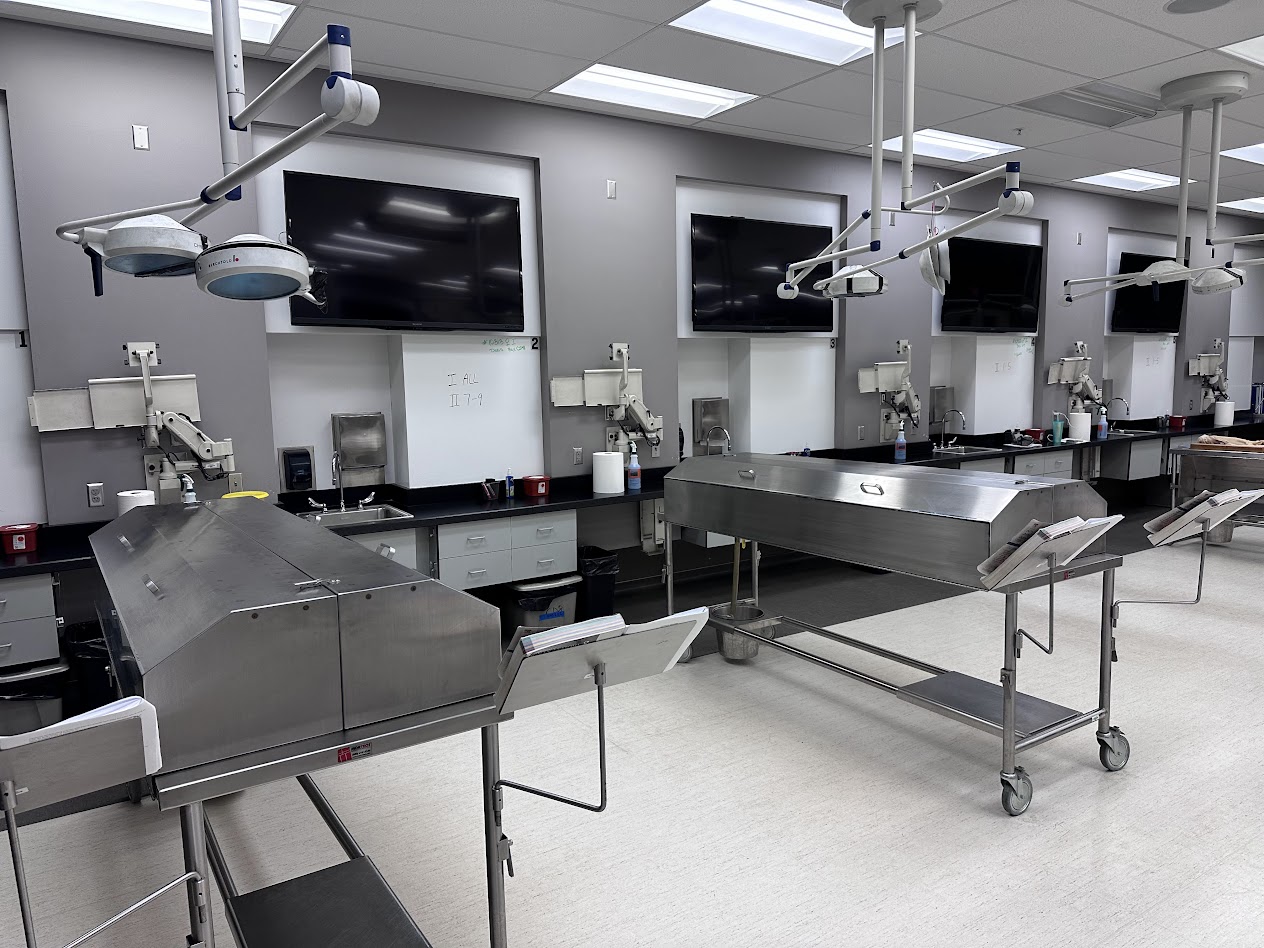

With the slide of a metal cover and the lift of a sheet, the world of anatomical science was laid bare for seven volunteers from MMIW Search & Hope Alliance, an organization based in Portland, Oregon. With the sharp odor of embalming fluid wafting from the body, the visitors leaned in and examined the skin, muscles, nerves and ligaments of a man who died in his 90s.
Over the course of an afternoon, four cadavers inside the anatomy lab at Linfield University’s Portland campus were shown to the volunteers. Each took turns feeling and examining the bodies from head to toe, taking notes and asking questions. Each cadaver was in different stages of dissection, all to educate people about the structure and functionality of the human body.
“This is a male whose chest is open like that one over there,” explained William Borman, professor of basic science for the University of Western States, which leases the facility from Linfield University. He carefully turned the body face down onto the metal table. “That strap is to keep his chest together,” he said, motioning towards a thick black sash of fabric wrapped around the upper torso.
With the cadaver now positioned, Borman pointed out and removed sections of the spinal column, and also shared the location of the salivary glands and masseter — a muscle that controls the jaw — on the sides of the face.
A few feet away, other volunteers were handling another man’s heart, lungs and liver, or running their glove-covered fingers over the ridged contours of the skull cap (cadavers’ brains were removed and sent to a different department that studies them).
Kimberly Lining, founder of MMIW Search & Hope Alliance, said she wanted her volunteers to be as fully educated as possible about what to look for on missing person searches and to help them be better prepared for the strong possibility of finding a corpse.
“There's a lot of things that come with death that people don't always realize comes with it. That includes smells and things of that nature,” she told Buffalo’s Fire. She said she has “come across bodies in my own personal life,” including that of her best friend, who was murdered in 2017 and whom she watched pass away.
“I’ve just been in the wrong places at the wrong time,” she said, “and it’s prepared me. Like steel is forged through fire.”
But not everyone has experience with dead bodies. To help facilitate that encounter in a safe and supportive environment, Lining reached out to Borman, who oversees the anatomy lab.
“I just thought that it's a great organization to do the kind of things that she's doing, to help bring closure to families who are missing their loved ones,” Borman said of Lining and MMIW Search & Hope Alliance. “And if we could provide some sort of learning opportunity for those folks that would be helpful to them, I thought that was a great thing.”
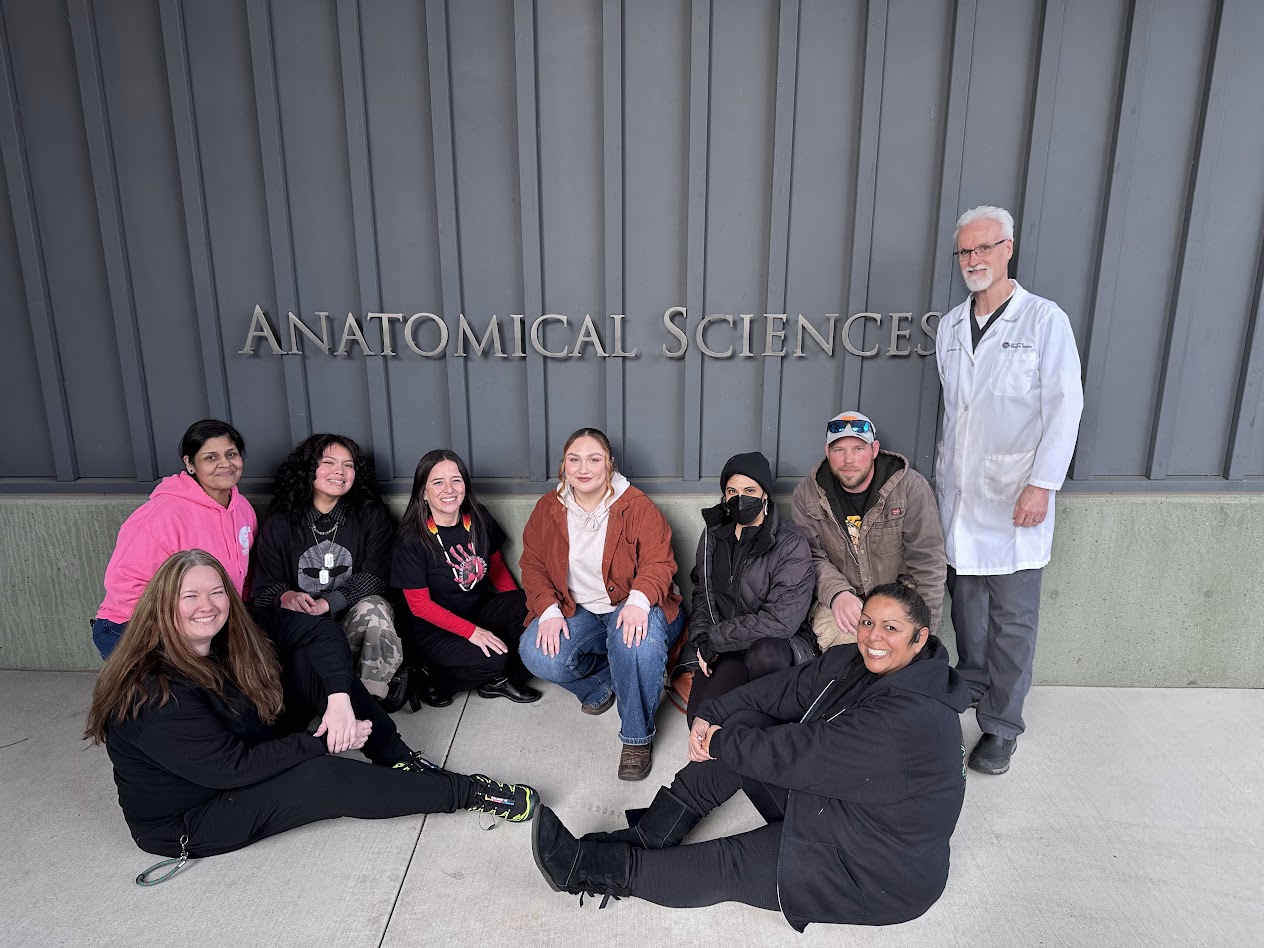
Borman’s supervisors agreed, and on Thursday, Jan. 22, Lining and seven volunteers arrived.
Fresh perspectives on the human form
Sabrina Griffith, a member of the Confederated Tribes of Siletz Indians, was among them. She admitted she wasn’t entirely sure how the experience would affect her emotionally, but she found much of it fascinating and educational.
“You never really know how you're going to react in a situation when you find a loved one or a relative, or somebody's loved one or relative,” Griffith said. “Emotions can be high. Any gained information on what we might find out there would be helpful in any organizations doing a search and rescue for MMIW.”
Isabella Regalado, one of the newer MMIW Search & Hope Alliance volunteers, said initially she was worried that exposure to cadavers would be a “little bit more gruesome.”
“But everyone has been very professional and understanding, and everyone has been doing their best to educate everyone else,” said Regalado, as other volunteers compared notes at a central desk covered with bones and anatomy manuals. “So it's been really good. I feel like I've learned a lot already, and I'm excited to learn more.”
Regalado added that she feels better prepared now for any search or recovery efforts.
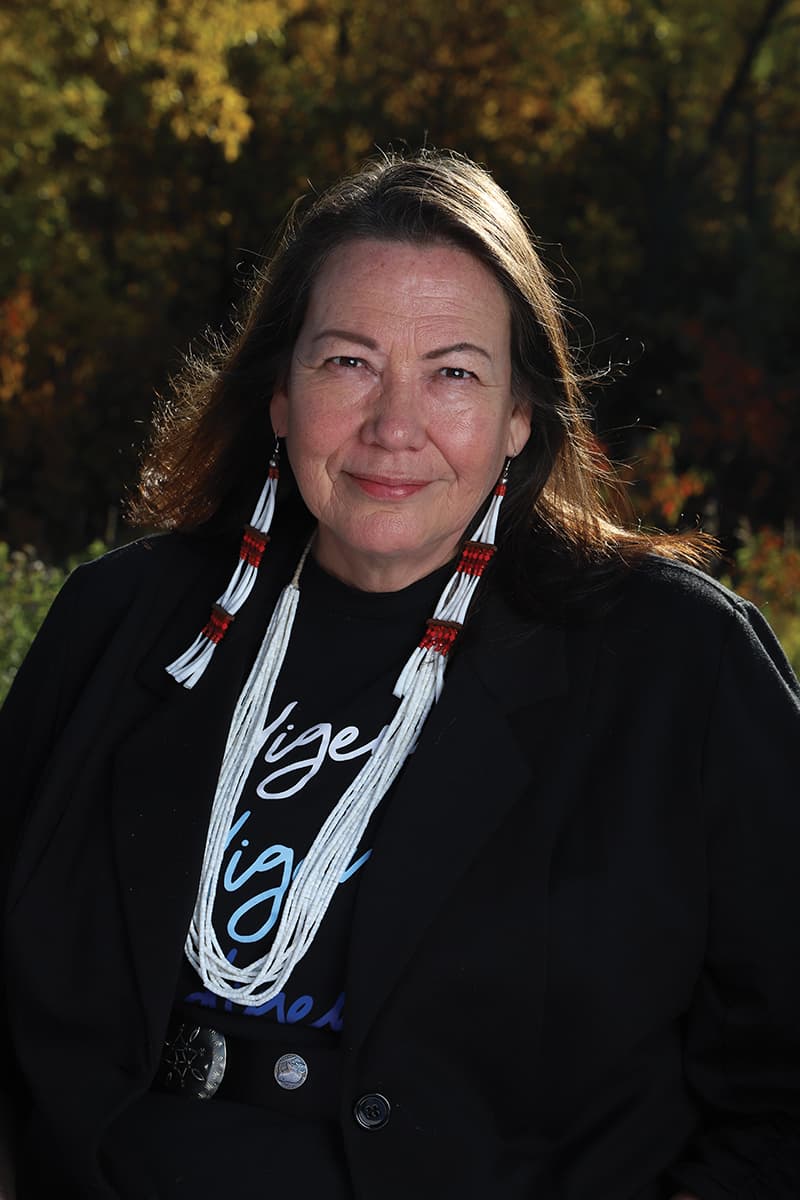
Lissa Yellowbird-Chase, a veteran investigator of MMIP cases mostly across North Dakota, told Buffalo’s Fire it’s helpful for searchers to have familiarity with human anatomy.
“The first time I ever had cadaver experience was in college in the anatomy and physiology department,” she said, spending a year each on a female and then a male body. “And we dissected the whole person.”
Originally a pre-med student, Yellowbird-Chase switched her degree to criminal justice and graduated from the University of North Dakota in 1992. She founded her own MMIP organization, Sahnish Scouts, in 2013 and has used cadaver dogs on a number of searches. She says anything that prepares volunteers for the worst is good.
“When people say they're gonna come on searches, they'll say, ‘Well, I have kids, what if we find a body?’” recalled Yellowbird-Chase, who counters “Well, isn't that the purpose of the searches?”
What cadavers don’t provide
Borman and Lining said the cadavers don’t fully represent the experience of finding a body, in either a wilderness or a city setting.
“The bodies that we're looking at today are very intact,” Lining said, reminding everyone that the cadavers are preserved with embalming fluid and therefore not quick to decompose. “When you come across remains a lot of times, animals, critters, insects — nature's already taken its course. The organs are usually gone. Eyeballs are gone.”
The cause of death, weather and the elements also play a part in whether a body is intact. Cold weather and icy water keep a body preserved longer than hotter environments, though frigid conditions often make searches more treacherous. And if a large animal like a coyote or bear has been foraging on the remains, there’s a strong chance the body will be torn to pieces.
Lining also stressed how water immersion can affect the human body, mentioning that search volunteers often go into lakes and rivers to find people.
“Imagine this all inflated with gasses,” said Lining, as volunteers circled the cadaver of a elderly woman. “In water rescues, the skin will be damaged quite a bit, not as well preserved. And it depends on the temperatures, but bodies sink, bloat.”
Nearby, Borman sprayed blue hydrating liquid on the cadavers to keep them from drying out and developing mold. All of the cadavers shown to the volunteers were acquired in April 2025, then prepared for students over the next six months. Borman refers to them as “donors,” as each person specified that their bodies be used to educate others on human anatomy.
“The donor will be returned within three years from when they die,” Borman said, gently sliding a wooden block under the shoulders of a woman’s body. “The donor will be cremated, and then the cremains, the ashes, will be returned at some point, so the families will ultimately have closure.”
To end the session, Lining quizzed her volunteers at a large metal counter in the center of the vast room. Besides steeling themselves for the potential encounter with a body, the other purpose was to help them discern human remains from those of animals common to forests and cities.
Lining says teeth and vertebrae are particularly challenging.
“They're small, and when we dig up bones, it's hard to tell the difference between deer and human, as you can see they're so similar,” she said. Lining and her volunteers also discussed how the pelvic bone can help determine a victim’s sex, and how the shape of teeth can determine if remains are that of a human or animal.
By late afternoon, the MMIW Search & Hope Alliance group removed their protective gloves and stuffed their notes and illustrations into their backpacks and prepared to leave. But first they made sure to thank Borman for providing them the opportunity to see the human form up close, and for answering their questions. They also presented small gifts to Borman, who said he’d welcome another session should Lining wish to bring more volunteers over soon.
Lining was excited at the prospect and appeared deeply appreciative of the opportunity she and her team had just experienced.
“MMIP is a continuing crisis and our organization, and organizations like us are out here really trying to combat the crisis,” said Lining. “We respect and honor all the people that have donated their bodies to science so that we could continue our work.”
Sharing Is Caring
This article is not included in our Story Share & Care selection.
The content may only be reproduced with permission from the Indigenous Media Freedom Alliance. Please see our content sharing guidelines.
© Buffalo's Fire. All rights reserved.
We provide independent Native-focused reporting that gives our communities the context and the facts they need to make informed decisions.
Respect The Fire
At Buffalo's Fire, we value constructive dialogue that builds an informed Indian Country. To keep this space healthy, moderators will remove:
- Personal attacks, harassment, or hate speech
- Spam, misinformation, or unsolicited promotion
- Off-topic rants and excessive shouting (All Caps)
Let’s keep the fire burning with respect.