






Drilling project moves forward in the heart of the Black Hills
Forest Service waives environmental assessment, disregarding cultural significance of Pe’ Sla

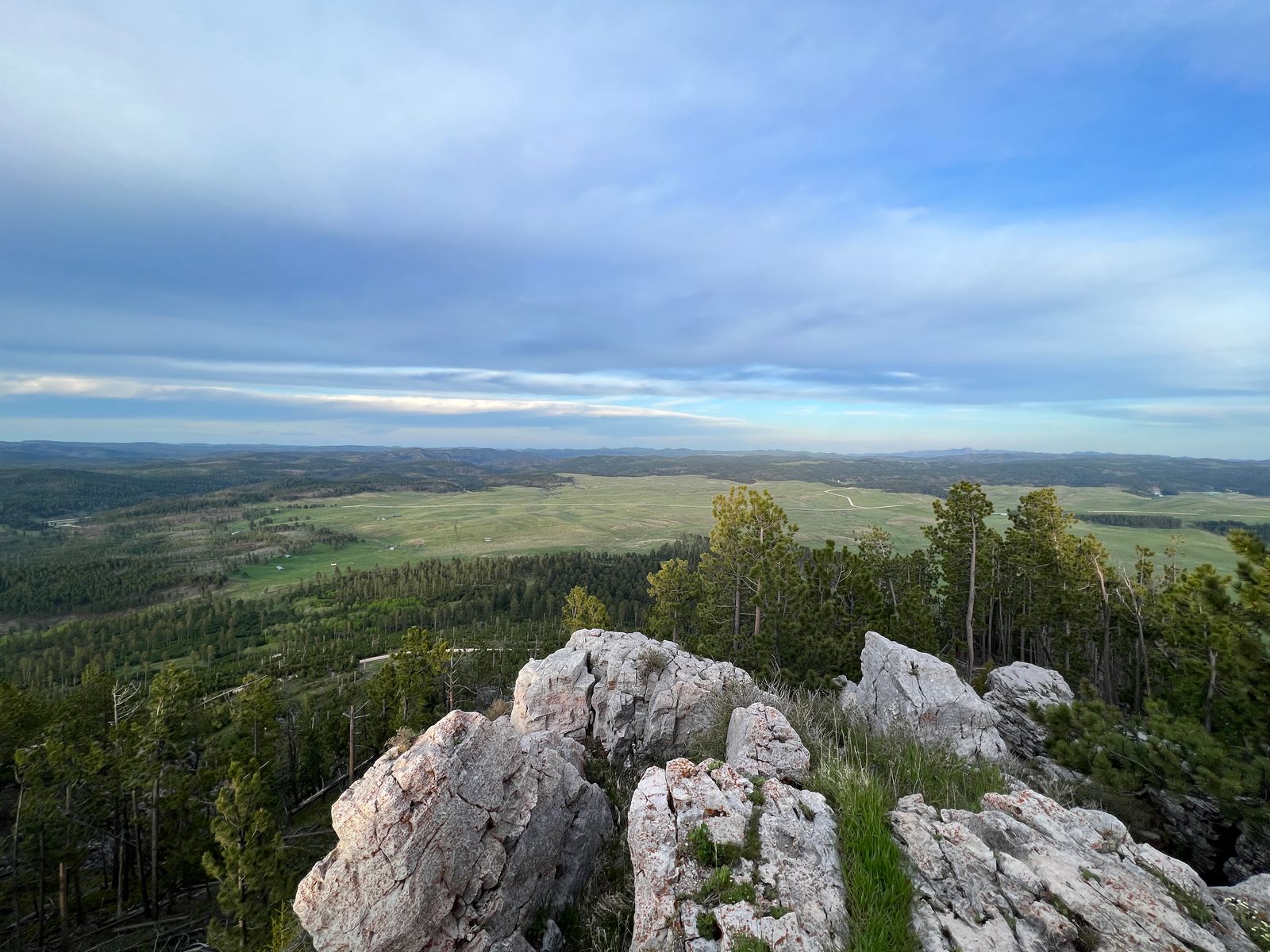

Visiting the Black Hills is like Easter to Lisa Mni. When she sees lion’s mane mushrooms, hazelnuts or timpsila (prairie turnip) popping up out of the ground or growing on a bush, it’s like finding treasure.
“‘Oh my gosh, you’re here. I’m so glad to see you,’” she says to her plants “relatives” when she spots them. “It’s an exhilarating feeling.”
Mni, Oglala Lakota, lives on the Pine Ridge Reservation where these plants don’t grow naturally. So she travels to the sacred site, Pe’ Sla, a high mountain prairie 50 miles west of Rapid City, South Dakota. Mni said Pe’ Sla “is part of who we are as Lakota.” The land that looks like a bald spot in the heart of He Sapa, also known as the Black Hills, has been a place of ceremony and prayer for thousands of years — and still is today.
But on Feb. 27, the U.S. Forest Service approved an exploratory drilling project directly adjacent to Pe’ Sla and on the Rapid Creek Watershed, putting the land’s ecosystem, water and Native ceremonial sites at risk. On March 9, the South Dakota Department of Agriculture and Natural Resources received an exploration notice of intent from Pete Lien & Sons, the company behind the drilling project titled Rochford Mineral Exploratory Drilling Project. The company is now ready to begin operations to search for graphite material.
Mni said the drilling will disrupt her family’s foraging.
“I feel like that opportunity to be able to go out and get our foods on the land is disappearing all the time,” she said. “And because we’re Indigenous, we come from the land. The land makes us who we are.”
The wildlife and plant life in the Black Hills are significantly diverse. And the religious and cultural significance of Pe’ Sla to Native Americans is akin to Jerusalem’s significance to Muslims, said Taylor Gunhammer, lead organizer for NDN Collective’s Protect the He Sapa campaign.
“It is a place that is essential and innate to Lakota, and all of Oceti Sakowin, spiritual and cultural identity,” said Gunhammer, a citizen of the Oglala Sioux Tribe. “This drilling project by Pete Lien & Sons is making the request of Indigenous peoples, once again, to give up our land and culture and right to religious freedom for someone else’s economic benefit.”
The Pete Lien & Sons’ Rochford Mineral Exploratory Drilling Project was proposed in June 2024. The plan approved by the U.S. Forest Service Mystic Ranger District in February says the company will drill up to 18 holes, 3 inches in diameter and 1,000 feet deep, vertically or at an angle up to 45 degrees. Each borehole site will be 30 by 50 feet and will require almost a mile of temporary road, according to the project’s decision memo.
Mystic District ranger James Gubbels estimates in the memo that the project will affect 98 acres of Black Hills National Forest land. It also includes that workers will operate around the clock, which will result in 24 hours of bright lights and noise that could disrupt wildlife.
In an email to Buffalo’s Fire, a United States Department of Agriculture spokesperson said a forest service minerals specialist will “monitor field activities” and ensure that Pete Lien & Sons follow the environmental protection measures laid out in the operation plan.
One of these measures protecting wildlife limits drilling activities during bat pup season (June 15-Aug. 31) and hibernation season (Oct. 1-April 30). The northern long-eared bat and the tricolored bat, both federally endangered species, live in caves near the proposed drilling sites.
To protect the Rapid Creek Watershed, the decision memo says drill sites must be at least 300 feet from streams. And Pete Lien & Sons is required to plug and cap all boreholes after operations are complete. Restoration of the drill sites is ensured by an $100,000 reclamation bond paid by Pete Lien & Sons, which ensures the state has sufficient funds to restore the site in case the drilling company doesn’t.
But these measures are paired back compared to other drilling projects on National Forest land because Pete Lien & Sons’ drilling project is categorized as “short-term” and “low-disturbance,” according to the USDA spokesperson.
The project is estimated to last less than a year. On this condition, the Forest Service granted Pete Lien & Sons a categorical exclusion. This waived the requirement of an environmental assessment or environmental impact statement, which would identify any environmental effects the proposed project could have and extend the public and tribal consultation period.
Under federal regulations, categorical exclusions are not supposed to be granted if operations impact cultural sites or a watershed.
The drilling sites are on the Rapid Creek Watershed, which provides water to Rapid City, the Ellsworth Air Force Base and communities and reservations on the Cheyenne River. The decision memo says the drilling operations will have “no adverse effects” to Rapid Creek because the operations are temporary.
“This drilling project by Pete Lien & Sons is making the request of Indigenous peoples, once again, to give up our land and culture and right to religious freedom for someone else’s economic benefit.”
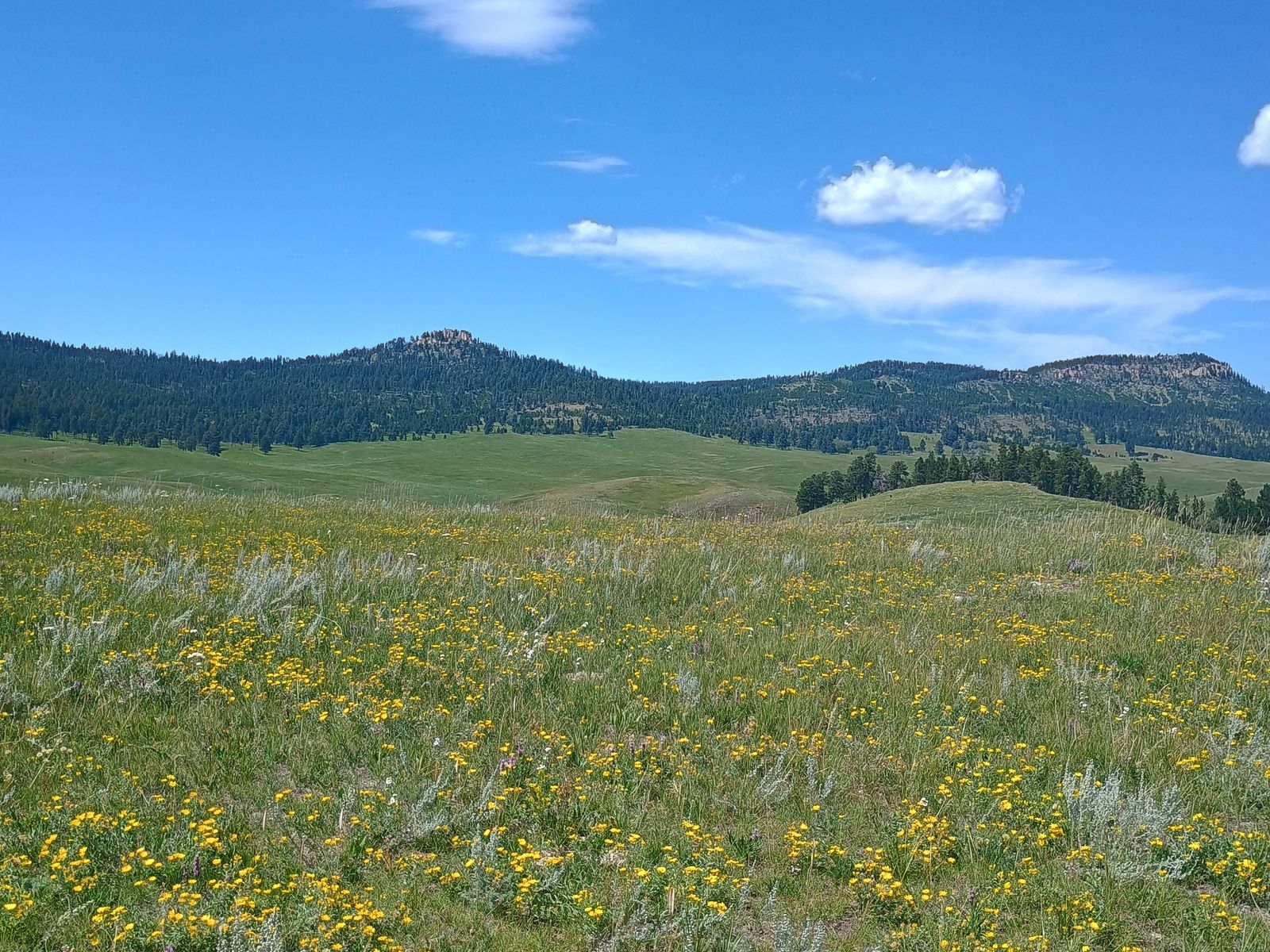
The decision memo doesn’t mention Pe’ Sla. Gubbels says in the memo, “There are no known Native American or Alaska Native religious or cultural sites within the project area.” The USDA spokesperson told Buffalo’s Fire in an email, “No activities are planned on Tribal trust lands, including Pe’ Sla.”
The Black Hills Clean Water Alliance says otherwise. The map provided by Pete Lien & Sons shows the project’s drilling sites outside of Pe’ Sla boundaries, which were agreed upon in a Memorandum of Understanding between the Forest Service and tribes in 2024. But a map of the proposed drilling operations made by the alliance using coordinates provided by Pete Lien & Sons shows one site within those boundaries.
Plus, the alliance says the actual area that needs to be protected from drilling operations, which includes noise, lights and traffic (usually 24 hours a day), should be larger. The alliance shows a two-mile buffer on its map. Most drilling sites are within that buffer zone. Yet, the alliance emphasized it is opposed to all drilling in the Black Hills, even outside this two-mile buffer.
Protected Indian trust land also lies within the Pe’ Sla boundaries. In 2012, four Sioux tribes — Rosebud, Crow Creek, Shakopee Mdewakanton and Standing Rock — raised $9 million to purchase nearly 2,000 acres of Pe’ Sla. In 2016, the Bureau of Indian Affairs placed that land (plus 200 acres) into federal Indian trust status to protect the land from development.
“They recognized that due to the unique cultural significance of the Pe’ Sla area that this situation was different, that this is a special place,” said Gunhammer. “But now, unfortunately, the Forest Service, Black Hills National Forest, has managed to look past all of this very, very well documented history.”
Lilias Jarding, executive director of the Black Hills Clean Water Alliance, told Buffalo’s Fire that the project is “obviously not OK” because of its proximity to Pe’ Sla. She said the Forest Service ignored this when they approved the project without an environmental assessment.
“They’re going to be going in blind,” she said, “because they haven’t looked at the situation in a variety of ways — culturally, ceremonially, environmentally and socioeconomically.”
Michael Golliher, senior mine planning engineer for Pete Lien & Sons, said no drill sites are on Pe’ Sla and that he wasn’t aware of a two-mile buffer. He said the decision memo lays out all the necessary environmental protections and referred all other inquiries to the Forest Service website.
Conservation and Indigenous organizations, including the Black Hills Clean Water Alliance and NDN Collective, along with community members like Mni, oppose the project and are calling on the Mystic Ranger District to withdraw drilling permission.
Mni, who submitted a letter of opposition to the Forest Service in May 2025, has been vocal about her opposition. But she said she’s preparing for the worst.
“Even if you’re screaming and red in the face, a lot of times, we still aren’t heard,” she said. “And it’s so frustrating.”
But Jarding said a withdrawal is still possible, even this late in the game.
In 2024, the federal government halted gold mining in the Black Hills. Former Secretary of the Interior Deb Haaland granted a mineral withdrawal for 20,000 acres of the Black Hills National Forest after an exploratory gold drilling proposal drew public opposition. The mineral withdrawal, Public Land Order 7956, protects the land from mineral exploration and development for 20 years. The protection does not extend to the Rochford area where Pete Lien & Sons plan to drill.
“The public outcry was so great and the issues were clear enough that the Forest Service proposed protecting the area,” said Jarding, who was part of the opposition in 2024. “So that came out of the blue. Nobody expected that, at least not the public.”
Jarding said she hopes the Pete Lien & Sons project will draw the same public attention from Natives and non-Native alike. Gunhammer said NDN Collective is asking people to take action to stop the drilling project.
Mni said she’s preparing for the drilling operations to disrupt her foraging, finding “fallback spots” outside of the Black Hills. At the same time, she’s inviting more people to join her and her family on their foraging trips, teaching others to care for the land.
“We have to learn how to work together,” she said, “especially if it’s for the land.”
References
- 1.
- 2.
- 3.
- 4.
- 5.
- 6.
Corrections
The article has been updated to clarify that the Black Hills Clean Water Alliance is opposed to all drilling in the Black Hills, even beyond the two-mile buffer on its map.
The article also originally misidentified Michael Golliher as Michael Gubbles and incorrectly spelled the last name of James Gubbels.
Gabrielle Nelson
Former Environment Reporter
Sharing Is Caring
This article is not included in our Story Share & Care selection.
The content may only be reproduced with permission from the Indigenous Media Freedom Alliance. Please see our content sharing guidelines.
© Buffalo's Fire. All rights reserved.
We provide independent Native-focused reporting that gives our communities the context and the facts they need to make informed decisions.

Respect The Fire
At Buffalo's Fire, we value constructive dialogue that builds an informed Indian Country. To keep this space healthy, moderators will remove:
- Personal attacks, harassment, or hate speech
- Spam, misinformation, or unsolicited promotion
- Off-topic rants and excessive shouting (All Caps)
Let’s keep the fire burning with respect.