











Skipped elections, tossed ballots: How addressing press freedom gaps could fix voting access issues across Indian Country
Harvard Kennedy School collaborates with IMFA, Buffalo’s Fire on democracy conference

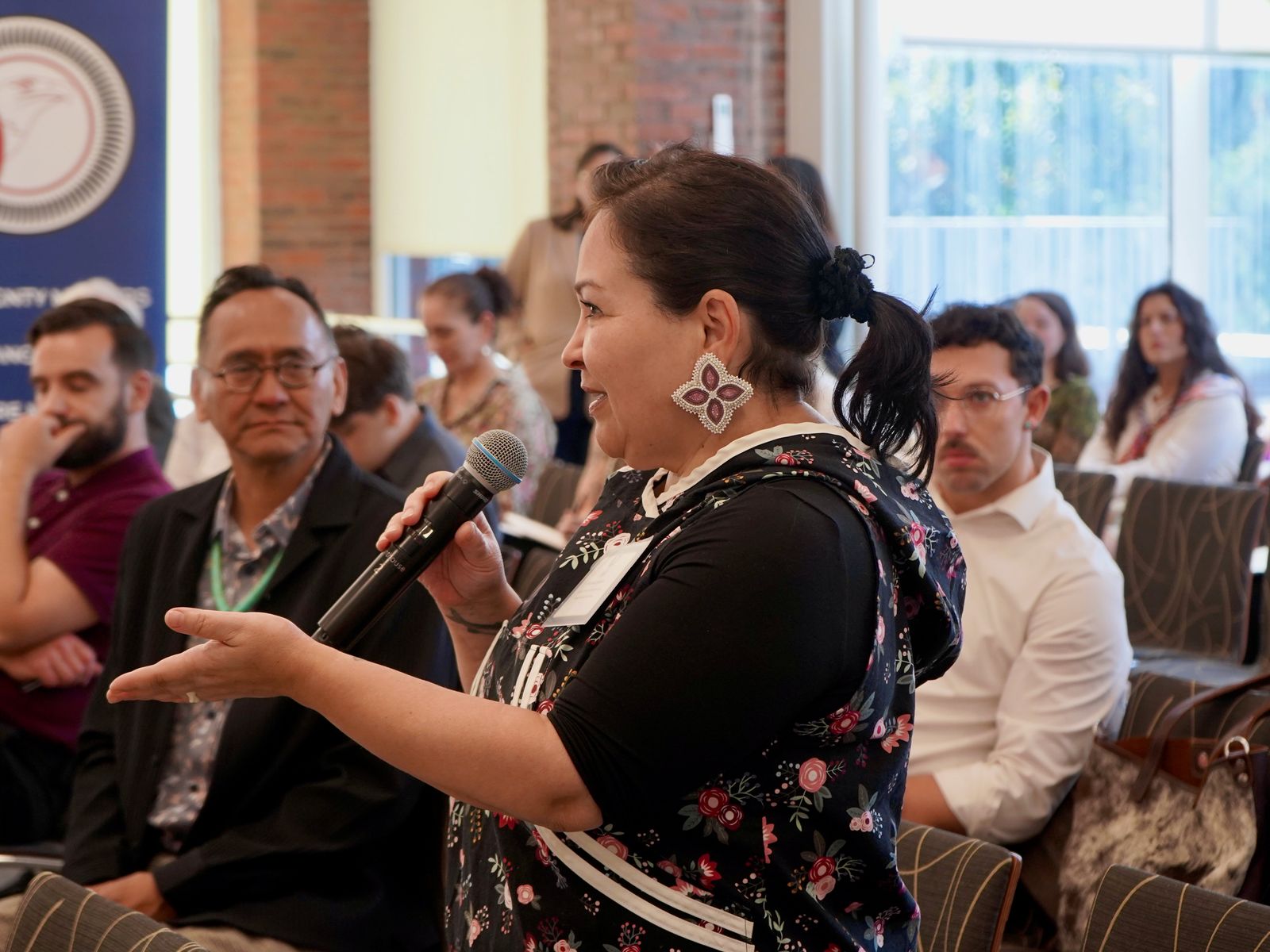
The message from journalists and voting rights advocates at Harvard was clear: Press freedom and secure voting are intertwined Native American issues and both are in a deficit.
Experts who work from Native American communities on broad policy, elections, tribal government and journalism convened last week at the Harvard Kennedy School to discuss the dire conditions Native people face trying to get their votes cast and having their stories amplified through trusted media. The link between electoral access and free press standards in tribal nations comes as global press freedoms hit a 25-year low.
Voters need information as part of the electoral process, and so do local reporters.
“Native journalists face a monumental barrier to even attaining facts about tribal government operations,” said Jodi Rave Spotted Bear, founder and editor-in-chief of Buffalo’s Fire. “That's because the majority of tribes do not have culturally relevant codified laws to ensure tribal citizens or local Native media even have access to necessary records that better inform our communities, or to hold leaders accountable.”
Buffalo’s Fire and the Indigenous Media Freedom Alliance collaborated on the voting rights and press freedom symposium “Democracy in Indian Country” in partnership with the Harvard Kennedy School’s Project on Indigenous Governance and Development, the Harvard University Native American Program and the Harvard Kennedy School Ash Center for Democratic Governance and Innovation.
"As collaborators, we organized this event with an understanding of the keen synergy between journalists and voting rights advocates,” said Spotted Bear. “We all have a stake in upholding civil liberties in our communities by sharing information so people can be involved in governmental decision-making. It doesn't matter whether it's a tribal, county, state or a national election. We all need to know where to vote, and we must understand the barriers to voting. We also need facts on candidates and the issues they represent."
Participants in the discussions said quality trusted media has become hard to find and noted that community members are being harmed by misinformation on social media. The result is a deepening trust gap in public institutions, they said.
“Unfortunately, too many people, including tribal government leaders and officials, take to Facebook to get their messages to the public,” Spotted Bear said. “We all know Facebook does not have fact-checkers. We can all benefit through the growth of local media where trusted and independent media outlets can verify information before it's circulated or printed.”
In an August 2026 report on voting conditions across Indian Country, the Native American Rights Fund looked at voting trends for Native people during the 2020, 2022 and 2024 elections. NARF presented its research at Harvard and asserted that barriers for Native voters are intentional due to decades of exclusion and underinvestment in tribal infrastructure.
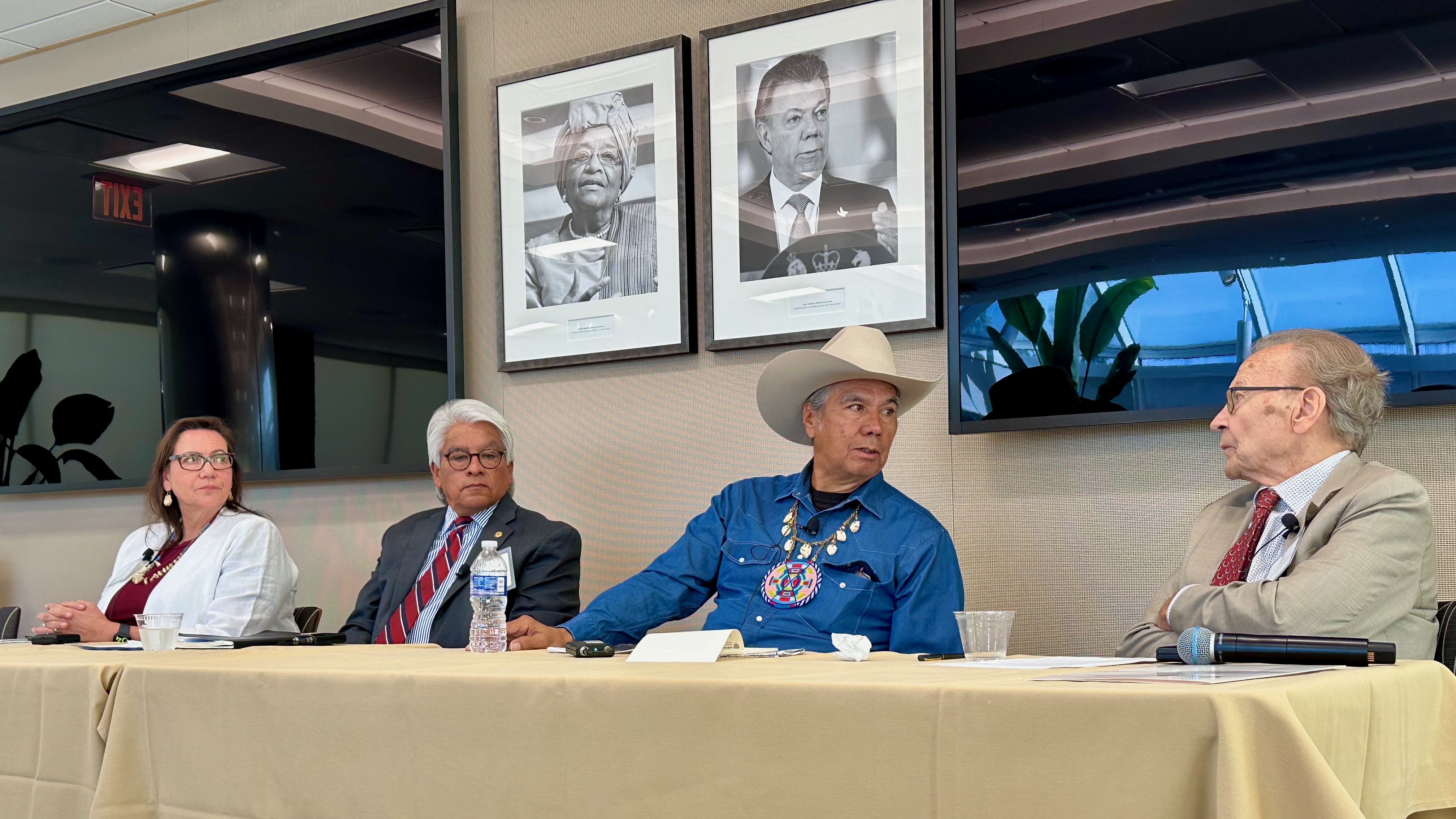
NARF attorney Jacqueline De León, from Isleta Pueblo, gave an overview of those barriers. “Geographic isolation, unreliable mail service, nonstandard addressing systems, limited internet access, and inadequate polling resources all combine to make voting harder in heavily Native American counties than anywhere else in the country,” she said, reading from the report. “The consequences are measurable.”
Other speakers affirmed that view and gave direct examples from their work in tribal communities in Montana, South Dakota, Alaska, Oklahoma, Wisconsin, New Mexico, Arizona and North Dakota. Voters in those states face distinct local challenges to cast their ballots, but overall they share barriers to candidate information and key election details that ensure they can vote.
As a result, many people are skipping elections or having their ballots tossed, according to Michelle Sparck, the director of Get Out the Native Vote, a voter resource group under the Alaska Federation of Natives. In 2022, in Alaska's first-only mail-in ballot election, more than 16% of Native voters had their ballots denied, said Sparck, a citizen of the Qissunamiut Tribe of Chevak.
This year, rapidly shifting news on mail-in ballot rules prompted by President Donald Trump’s executive order on March 31 caused confusion that led to lower voter turnout in Alaska’s Aug. 18 primary, she said.
Rural Alaska Natives depend on mail-in voting to cast ballots. Three days after the Alaska primary, the U.S. Postal Service issued a final rules notice announcing it would allow federal oversight of mail-in ballots before states could send them to voters. That determination was then reversed on Sept. 14 by the U.S. Supreme Court. Sparck’s team is still advising voters to act early to get their mail-in ballot and, if possible, deliver it in person to early voting sites, which open in Alaska 15 days before the Nov. 3 election.
“We can all benefit through the growth of local media where trusted and independent media outlets can verify information before it's circulated or printed.”
These are the kinds of information gaps in Indian Country, created in the absence of reliable fact-based news sources, that were discussed at the Harvard conference.
Thomas Patterson, a professor of government and the press at Harvard’s Kennedy School, acknowledged possible violations of the Voting Rights Act across Indian Country, noting there is a parallel between what Native voters face in 2026 to the problems Black voters have casting ballots in some southern states.
“Look at Pine Ridge Reservation,” Patterson said. “Voter suppression wasn’t reserved just for the White South.”
Patterson moderated the panel “Pillars of Democracy — Freedom of the Press and Voting Press,” a discussion with Mandan, Hidatsa and Arikara Nation citizens Tex Hall and Spotted Bear, who shared points of view relevant across Indian Country. Tribal sovereignty policy expert Regis Pecos, former governor from Cochiti Pueblo, was also on the panel to share perspectives from New Mexico.
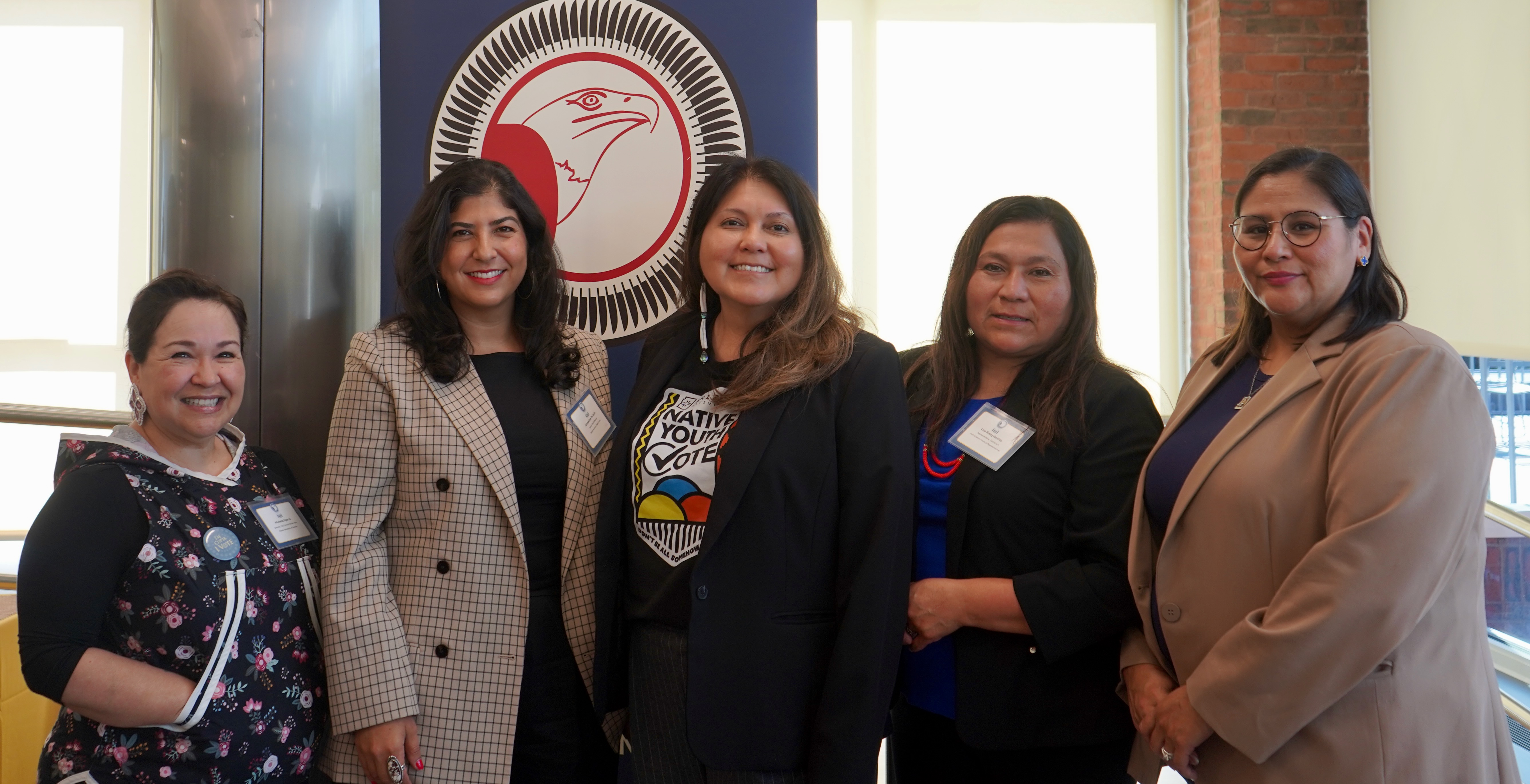
Hall shared that an information gap caused him to miss a critical deadline in the MHA Nation tribal chairman election. He said the election board changed the date for candidate application packets and posted the notice only in its office and on its website. “I depend on the newspaper, the radio, or the post office,” Hall said. “That all failed.”
The election board disqualified him, and the MHA Nation Supreme Court denied his appeal.
“Tribes are mirroring the federal government by passing stuff without the public or giving the press information about changes,” Hall said. “Because their approach is, ‘We know better.’ That’s the cookie-cutter constitution the federal government has provided for our tribes.”
U.S. treaty laws create shields that let tribes block information about government business from their own citizens, and journalists are mostly excluded. Spotted Bear told the Harvard group that only a handful of 575 federally recognized tribal nations have codified legal protections for freedom of information.
Spotted Bear founded IMFA to address press freedom in Indian Country. Buffalo’s Fire, published by IMFA, covers local and rural Native news and sovereignty issues affecting tribal communities. Reporting on these stories helps raise awareness of “the importance of freedom of information, and the current lack of it, in our Native communities,” she said.
Each tribe determines how it shares information with the public, and many do so through communication departments within tribal governments that do not operate under free-press standards. This has resulted in tribal official censorship, reporter self-censorship and governments that lack independent oversight.
Meanwhile, Hall is now out of options to run for tribal chair in the MHA Nation. He said a free press might’ve helped his cause, at least by keeping him informed of the basic information he needed to register as a candidate.
“I didn’t expect this to be a free press issue, no,” he said. “They’ve always posted news, but there was nothing in our tribal paper about this election update.”
Hall served in 2003 as the president of the National Congress of American Indians, where he presided over a tribal free press resolution, the only such resolution out of 5,500 standing documents. Current NCAI executive director Larry Wright, who attended the Harvard democracy symposium, said the 23-year-old resolution could be updated and brought back up for further discussion at NCAI’s 2026 fall meetings in October. Wright, a Ponca Tribe of Nebraska citizen, said it would be up to NCAI’s tribal-leader membership to make it a priority.
Shaun Griswold
Staff Reporter
Sharing Is Caring
This article is not included in our Story Share & Care selection.
The content may only be reproduced with permission from the Indigenous Media Freedom Alliance. Please see our content sharing guidelines.
© Buffalo's Fire. All rights reserved.
We provide independent Native-focused reporting that gives our communities the context and the facts they need to make informed decisions.
Respect The Fire
At Buffalo's Fire, we value constructive dialogue that builds an informed Indian Country. To keep this space healthy, moderators will remove:
- Personal attacks, harassment, or hate speech
- Spam, misinformation, or unsolicited promotion
- Off-topic rants and excessive shouting (All Caps)
Let’s keep the fire burning with respect.