





Report details wide disparity between Native American and white health in South Dakota
Examining the systemic barriers, mortality rates, and the proposed tribal-managed Medicaid solutions aimed at closing South Dakota's life expectancy gap

The health disparity between Native American and white South Dakotans is among the largest racial or ethnic health gaps in the nation, according to a new report from a foundation that advocates for equitable healthcare.
Native Americans in South Dakota die prematurely from avoidable causes at a rate of 1,089 deaths per 100,000 people, which is the highest rate of any racial or ethnic group in the nation, according to the 2026 State Health Disparities Report from the Commonwealth Fund.
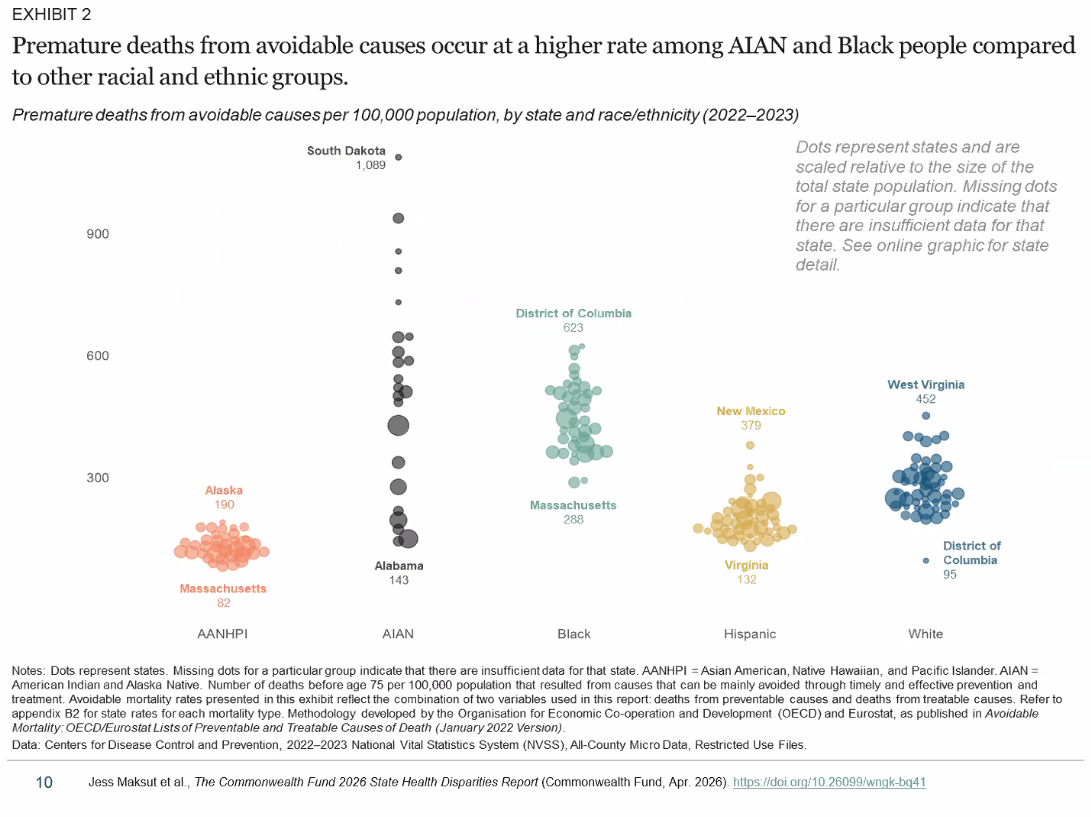
That’s five times the rate of white South Dakotans. Preventable causes include infectious diseases, treatable conditions and accidents such as vehicle crashes and drug overdoses.
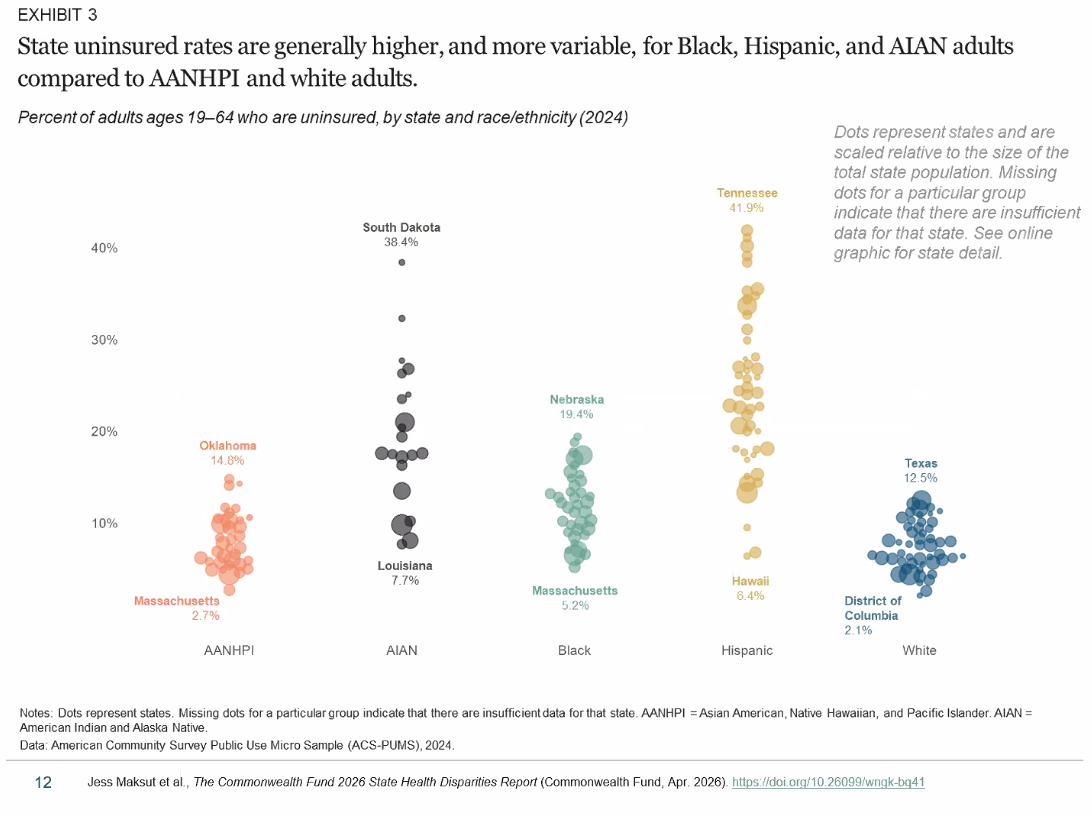
State data shows half of Native Americans in South Dakota die before age 58. The median age of death for white South Dakotans is 80.
Health disparities in SD are ‘completely addressable,’ organization leader says
The report analyzes 2023–2024 data on health care access, quality, use of services and outcomes across racial and ethnic groups in all 50 states and Washington D.C. South Dakota ranked last for Native American health among 21 states with sufficient Native American population data.
Even when income, insurance and access are similar, disparities persist, said Commonwealth Fund President Joseph Betancourt.
“As a primary care physician, I know what happens when care is out of reach: Conditions that are manageable become crises, and people have poor health outcomes and ultimately live shorter lives. This is unacceptable and completely addressable,” Betancourt said.
Native American health system performance in South Dakota ranked in the lowest percentile nationally. White South Dakotans experienced the best care in the state, scoring in the 79th percentile among all population groups nationally.
The report found states with stronger health systems also have smaller disparities and said targeted policy changes could help, including:
- Funding housing, early childhood education and food access programs.
- Ensuring affordable, accessible coverage.
- Strengthening primary care in underserved communities.
- Protecting preventative services.
- Ensuring equitable use of digital health tools and artificial intelligence.
Tribal-managed Medicaid model and targeted programs could be ‘quite effective’
About 38% of Native Americans in South Dakota are uninsured — a key driver of disparities.
“Coverage is not the only thing that matters, but it is really the first thing that matters,” said Commonwealth Fund Senior Scholar Sara Collins, adding that states that expanded Medicaid have improved access. South Dakota voters approved expansion in 2022. Tribal members are exempt from federal Medicaid work requirements.
South Dakota officials, lawmakers and tribal leaders will launch an Indian Medicaid Managed Care Task Force later this year, which tribal officials hope will improve outcomes and efficiencies for tribal members.
In a managed care model, tribes could contract with the state of South Dakota to direct federal Medicaid dollars into a pool of funds for healthcare. An entity of the tribes’ choosing could negotiate costs with off-reservation providers and coordinate care for tribal members who seek care on or off tribal land.
“Focused actions like that can really improve disparities we see across the country,” Collins said.
David Radley, senior scientist on the report, said efforts to address health outcomes and access among Native Americans in Oklahoma have “made a difference.” Tribal governments there have invested heavily in clinics, hospitals and medical education.
Betancourt said progress in South Dakota will require high quality care and coverage to be “woven together.”
Radley added that health systems in rural states must be “built around rural places” to address coverage gaps and workforce shortages, including expanding telemedicine, improving licensing, and training more community health workers.
Makenzie Huber is a lifelong South Dakotan who regularly reports on the intersection of politics and policy with health, education, social services and Indigenous affairs. Her work with South Dakota Searchlight earned her the title of South Dakota's Outstanding Young Journalist in 2024, and she was a 2024 finalist for the national Livingston Awards.
South Dakota Searchlight is part of States Newsroom, the nation’s largest state-focused nonprofit news organization.
Makenzie Huber, South Dakota Searchlight
Sharing Is Caring
This article is not included in our Story Share & Care selection.
The content may only be reproduced with permission from the Indigenous Media Freedom Alliance. Please see our content sharing guidelines.
© Buffalo's Fire. All rights reserved.
We provide independent Native-focused reporting that gives our communities the context and the facts they need to make informed decisions.
Respect The Fire
At Buffalo's Fire, we value constructive dialogue that builds an informed Indian Country. To keep this space healthy, moderators will remove:
- Personal attacks, harassment, or hate speech
- Spam, misinformation, or unsolicited promotion
- Off-topic rants and excessive shouting (All Caps)
Let’s keep the fire burning with respect.