






Legislators plan to learn about Native American health care, emergency services, disability care
Lawmakers establish task forces to study tribal Medicaid models, emergency service sustainability and disability waiver programs ahead of 2027

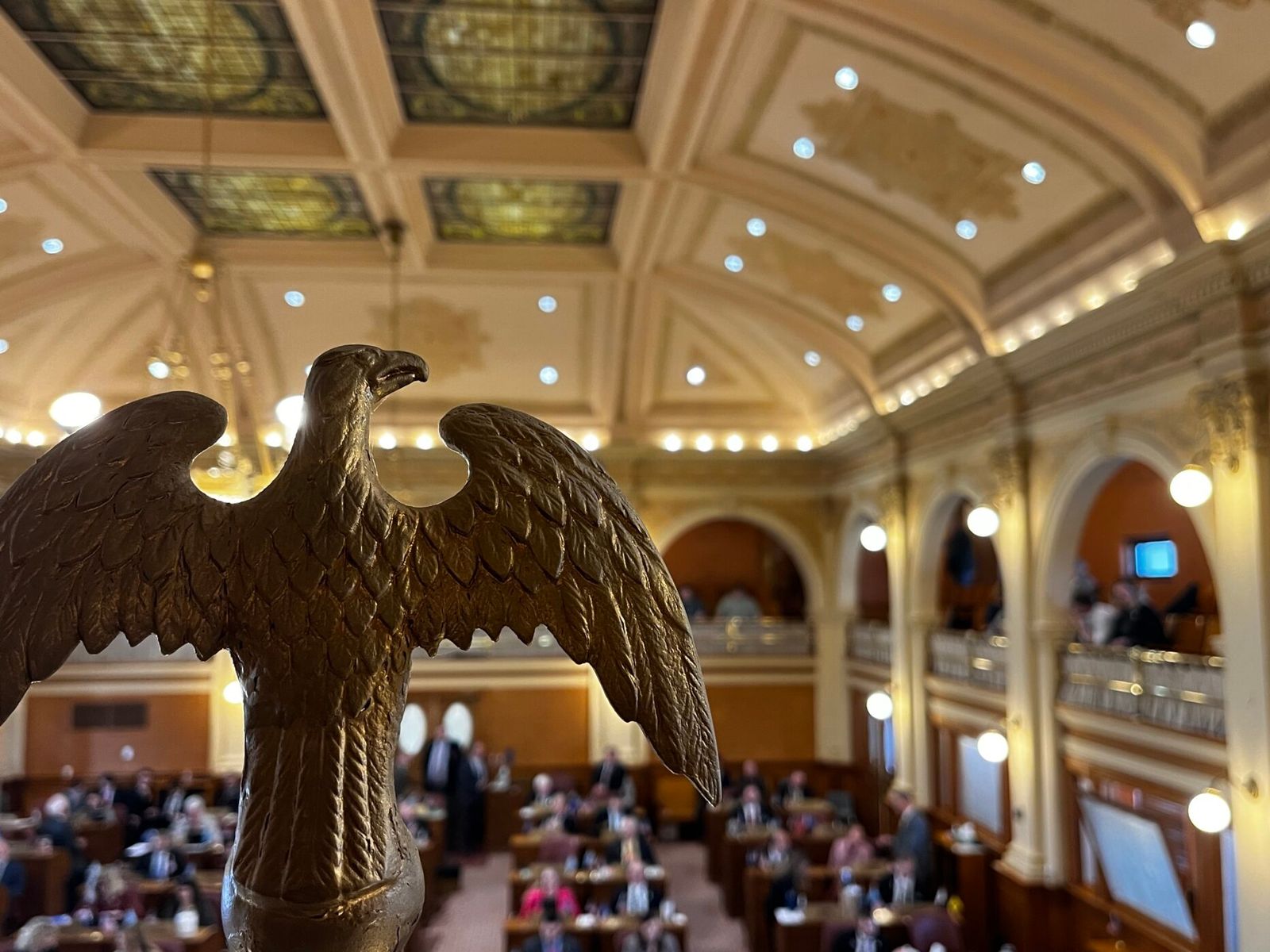

South Dakota lawmakers plan to learn more about emergency medical services, Native American health care and services for disabled people ahead of the next legislative session.
After the annual session ends in March, legislative leaders typically identify a few issues to delve into as “summer studies” before the next session in January. This year, lawmakers adopted legislation creating a committee and two task forces, and the legislative Executive Board decided Monday against creating any additional summer study committees.
Several lawmakers are also on the governor’s Correctional Rehabilitation Task Force, which was created last year and will continue meeting ahead of the 2027 legislative session. That group is seeking ways to reduce the number of people who return to prison after their release.
“It seems like we have plenty of work to discuss and move forward with next year,” said Rep. Brian Mulder, R-Sioux Falls.
Tribal-managed Medicaid model ‘better than our current model,’ sponsor says
One of the task forces created by the Legislature will study “the creation of Indian Medicaid managed care entities.”
Rosebud Sioux Tribe President Kathleen Wooden Knife called on lawmakers at the beginning of the legislative session to support tribal efforts to establish the model, which she said has the potential to improve outcomes and efficiencies for tribal members on and off the state’s reservations.
In such a model, tribes could contract with the state of South Dakota to direct federal Medicaid dollars into a pool of funds for health care. An entity of the tribes’ choosing could negotiate costs with off-reservation providers and coordinate care — including preventative care or incentives for healthy habits — for tribal members who seek care on or off tribal land.
“When we stand together for health care, our Sioux Nation tribes, working with the state, can bring the strongest health care resources to the table to improve health care for Native Americans,” Wooden Knife said.
Rep. Will Mortenson, R-Fort Pierre, is a member of the Cheyenne River Sioux Tribe and is co-chair of the State-Tribal Relations Committee. He introduced the bill to create the task force this session, saying it was a product of the committee and tribal communities.
“It has the potential for significantly improved health outcomes, and I personally believe that it fulfills the treaty obligations for health care in Indian Country better than our current model,” Mortenson said during the session. “A lot of tribal members wind up on state Medicaid rolls, and the state’s obligation it was never intended to be.”
The state Department of Social Services will lead the task force through November 2028, with four members of the Legislature among the members appointed to the task force.
Legislature creates multi-year committee overseeing Medicaid waiver programs
Senate President Pro Tempore Chris Karr, R-Sioux Falls, introduced the bill this session that will create the Developmental Disability Service Delivery Committee. The committee is a product of a summer study last year focused on improving efficiencies between the state and community support providers.
The committee will be tasked with reviewing South Dakota’s Medicaid waiver programs, which allow elderly or disabled people to receive Medicaid-covered care in their homes instead of institutions, and how the state Department of Human Services operates the waivers.
Recommendations made during last year’s summer study “will take time,” Karr said during the session, adding that the extended, dedicated committee will oversee the continuity and impact of waiver changes and improve transparency about the state Department of Human Services’ changes.
The committee will meet through 2029.
Task force to study how to make emergency medical services ‘essential,’ sustainable
South Dakota doesn’t recognize emergency medical services as “essential” under state law. That didn’t change this legislative session, after a legislator-led summer study on emergency medical services concluded last year that the state should add the designation. A legal designation of “essential” would put the onus on state or local units of government to guarantee availability.
Instead, lawmakers passed a bill that will create a task force to examine financially sustainable options for counties and cities to support emergency medical services if they’re designated as an essential service.
Rosebud Democratic Rep. Eric Emery, who works in emergency medical services, introduced a failed bill in 2025 to designate ambulance services as essential and to collect fees from convicted drunken drivers to pay for it. He was a prime sponsor of this year’s legislation.
“South Dakotans already rely on EMS as an essential service, and it’s the responsibility of the Legislature to make sure that infrastructure is sustainable,” Emery said during the legislative session.
School insurance costs floated as research topic
Legislative leaders plan to request a few research papers from the Legislative Research Council on additional topics. One suggestion included understanding and addressing the rise in school district insurance costs in recent years.
House Majority Leader Scott Odenbach, R-Spearfish, said he’s been researching the topic on his own, but believes a paper from research staff “could make a possible bill much easier.”
The study topic was suggested by the House Education Committee, said House Minority Leader Erin Healy, D-Sioux Falls. The committee heard concerns about school district insurance costs contributing to higher school budgets and higher property taxes to fund those budgets.
“It’s a topic of conversation we’re going to have to address sooner or later,” Healy said.
The Legislature’s Executive Board will finalize issue memo topics at their next meeting in April.
Makenzie Huber is a lifelong South Dakotan who regularly reports on the intersection of politics and policy with health, education, social services and Indigenous affairs. Her work with South Dakota Searchlight earned her the title of South Dakota's Outstanding Young Journalist in 2024, and she was a 2024 finalist for the national Livingston Awards.
South Dakota Searchlight is part of States Newsroom, a nonprofit news network supported by grants and a coalition of donors as a 501c(3) public charity. South Dakota Searchlight maintains editorial independence. Contact Editor Seth Tupper for questions: info@southdakotasearchlight.com.
Makenzie Huber, South Dakota Searchlight
Sharing Is Caring
This article is not included in our Story Share & Care selection.
The content may only be reproduced with permission from the Indigenous Media Freedom Alliance. Please see our content sharing guidelines.
© Buffalo's Fire. All rights reserved.
We provide independent Native-focused reporting that gives our communities the context and the facts they need to make informed decisions.
Respect The Fire
At Buffalo's Fire, we value constructive dialogue that builds an informed Indian Country. To keep this space healthy, moderators will remove:
- Personal attacks, harassment, or hate speech
- Spam, misinformation, or unsolicited promotion
- Off-topic rants and excessive shouting (All Caps)
Let’s keep the fire burning with respect.