






The Daily Spark
Small sparks from Indian Country, built to catch fire
Umatilla Tribes honor 170th anniversary of Walla Walla Treaty
The Confederated Tribes of the Umatilla Indian Reservation commemorated the 170th anniversary of the 1855 Walla Walla Treaty during their annual Treaty Day celebration on June 13, according to Underscore Native News. Events included a parade, featuring floats and horses and tribal citizens in regalia, along with a Veteran’s Memorial Program, exhibits, lunch and a formal Treaty Day program.
Jeanine Gordon, special assistant to the president for Native American Outreach at Whitman College and CTUIR citizen, served as grand marshal. Gordon emphasized the treaty’s lasting impact, saying, “We are the treaty.” CTUIR General Council Vice Chairman Michael Johnson highlighted the importance of preserving treaty rights for future generations. The event was the first Treaty Day celebration since 2023.
Cherokee potters blend tradition and innovation in Mud Daubers workshop
A new generation of Cherokee potters is building on traditional practices while developing contemporary approaches through Didanisisgi Gadagwatli, or the Mud Daubers Community Workshop, in Cherokee, North Carolina, according to The Daily Yonder. Led by renowned Eastern Band of Cherokee Indians potter Tara McCoy, the three‑month intensive workshop teaches ceramic skills such as digging and processing clay, hand‑building and firing methods.
Levi West, first place winner in traditional pottery at the 112th Cherokee Indian Fair, credits the program with igniting his passion for ceramics. “I wanted to beat her, not because I want to be better than her, but to make her proud,” West was quoted as saying. The workshop is supported by the Museum of the Cherokee People. Dakota Brown, director of education, said the program’s growth reflects a community commitment to preserving and evolving Cherokee art forms.
Oklahoma Freedmen fight for recognition amid Juneteenth observances
Thousands of descendants of people enslaved by Oklahoma’s Five Civilized Tribes continue to seek full tribal citizenship, even as Juneteenth marks emancipation nationwide, according to The Associated Press. While the Cherokee Nation still fully recognizes Freedmen descendants as citizens, other tribes including the Muscogee and Choctaw nations, have restricted citizenship to those with “by-blood” ancestry, excluding many Freedmen.
The Muscogee Nation Supreme Court is expected to rule this year on a case challenging the tribe’s 1979 constitution that limits citizenship to “by-blood” members, a move that could open membership to thousands more Freedmen descendants. Advocates say the fight is about more than citizenship — it is also about setting the historical record straight.
Rez Rockerz hosts first summer music camp for LGBTQIA+ Indigenous youth
Rez Rockerz, a grassroots music and arts camp founded by community organizer Maria Cree, is holding its inaugural session June 23-27, according to KXNET. The camp aims to offer a safe, affirming space for Indigenous youth from the Turtle Mountain community — especially girls, LGBTQIA+ and Two-Spirit youth — to explore music, storytelling and culture. Campers learn instruments like drums and guitar, create personal zines and attend workshops focused on emotional expression.
Cree, also a co-organizer with the arts group Red Willow Collective, said the camp is about fostering connection, healing and belonging.
First Nations communities face displacement as Canadian wildfires spread
The wildfires that have burned 9.6 million acres across Canada since mid-May have forced the evacuation of approximately 40,000 people, more than half of whom are from First Nations communities, according to reporting by Grist. Nearly 34 tribes in almost every province have been affected, with the largest concentration of fires in Manitoba, Saskatchewan and Alberta.
According to Grist, evacuees are having trouble finding accommodations. The Canadian Red Cross secured around 3,300 hotel rooms and standby shelters for an estimated 32,900 registered evacuees in Manitoba and Saskatchewan. “We are calling on all hotels and accommodations in Winnipeg and across the province to open their doors to displaced First Nations families,” Grand Chief Kyra Wilson of the Assembly of Manitoba Chiefs said.
Lander Fish and Wildlife office spared from federal cuts after tribal advocacy
The U.S. Fish and Wildlife Service’s Lander Conservation Office will remain open after a push by the Eastern Shoshone Tribe and Shoshone and Arapaho Fish and Game Director Art Lawson reached U.S. Interior Secretary Doug Burgum, according to WyoFile. The office was one of seven federal facilities in Wyoming slated for closure as part of the Department of Government Efficiency’s downsizing plan.
Burgum confirmed the decision during a June 11 Senate Energy and Natural Resources Committee hearing, saying the Lander office will stay staffed and operational. The General Services Administration also notified the office and property owner that the federal lease would continue. This marks the second time in 43 years that the Lander office has avoided closure following tribal advocacy.
Blackfeet schools use heavy metal music to support student mental health
Browning High School and Buffalo Hide Academy on the Blackfeet Reservation are offering a new 18-week class that uses heavy metal music as a tool for suicide prevention and grief processing, according to reporting by Montana Free Press. The course, developed by the nonprofit Firekeeper Alliance, teaches students to analyze subgenres like death metal, grindcore and doom metal while encouraging open discussions about trauma and mental health.
Students also write their own songs and engage with professional musicians. They can earn credit and stipends for working at Fire in the Mountains, a heavy music festival scheduled for July 25-27 on the reservation. Proceeds from the event will support local suicide prevention programs. “It provides us with the tools to be able to deal, to face our anguish and not just be a prisoner to it,” said lead teacher Charlie Speicher.
Taos Pueblo announces July powwow details
The Taos Pueblo Powwow is scheduled for July 11-13 at the Taos Pueblo Powwow Grounds on Buffalo Pasture Road in Taos, N.M.
The three-day event, themed "Creating Connections Between Youth & Elders," will feature dance and drum competitions, vendors, food and handgames. Festivities begin Friday, July 11, with a Gourd Dance at 2 p.m. and the first Grand Entry at 7 p.m. On Saturday, grand entries are scheduled for 1 p.m. and 7 p.m. The final Grand Entry is Sunday at 1 p.m.
The event’s head staff includes:
- Masters of Ceremonies: James Edwards (Pawnee) and Leslie Trujillo (Taos Pueblo)
- Arena Director: Corey Reeder (Wichita/Cheyenne/Kiowa/Diné)
- Headman: Ronnie Lodgepole (Chippewa Cree)
- Head Lady: Ontarra Arrow White (Lemhi Shoshone)
- Southern Drum: Big Thunder of Comanche, Okla.
- Northern Drum: Bad Canyon of Wellpinit, Wash.
Dance categories are open for all ages, from Tiny Tots to the Golden Age division for dancers 60 and older. Competitions include Northern Traditional, Southern Straight, Grass/Chicken, Fancy, Northern Buckskin, Southern Cloth and Jingle.
No drugs, alcohol or firearms are permitted. Camping and RV spaces are available without hookups.
For more information, contact the Taos Pueblo Tourism Office at 575-758-1028. For vending inquiries, call 505-376-3702 or email taospowwow@gmail.com. Handgame information is available from Samuel J. Smith III at 575-770-2890.
Historic Native hospital restored to honor nation’s first Native doctor
The Dr. Susan La Flesche Picotte Hospital in Walthill, Nebraska — the first hospital built on a Native reservation — is being restored as the Dr. Susan La Flesche Picotte Center. According to the Flatwater Free Press, an all-volunteer effort raised more than $6 million for the project. The center honors Picotte, the first Native American to earn a medical degree in the United States. She opened the hospital in 1913 after treating more than 1,200 patients across the Omaha reservation.
A private dedication event is scheduled for June 21, with a public open house on the following day. Once operational, the center will provide health services including urgent care, behavioral health care and disability services. There will also be cultural spaces on site for art and entrepreneurship.
North Dakota governor plans visit to Sisseton-Wahpeton Oyate Tribe as part of statewide tour
North Dakota Governor Kelly Armstrong announced plans to visit the Sisseton-Wahpeton Oyate Tribe later this year as part of a broader effort to meet with all five tribal nations in the state during the summer and fall, according to the Wahpeton Daily News. Armstrong said the visits aim to foster collaboration and strengthen relationships between the state and tribal nations.
The conference, hosted by the North Dakota Indian Affairs Commission, included representatives from the Mandan, Hidatsa and Arikara Nation, Spirit Lake Nation, Standing Rock Sioux Tribe, Turtle Mountain Band of Chippewa Indians and Sisseton-Wahpeton Oyate Nation. Stronger partnerships between the Sisseton Wahpeton Oyate Tribe and the North Dakota State Government aim to support tribal communities while addressing shared challenges.
Juneteenth commemorates the end of slavery and ongoing pursuit of equality
Juneteenth, originating June 19, 1865, in Galveston, Texas, marks the end of slavery in the United States, when General Gordon Granger announced freedom for enslaved people in Texas through General Order Number 3. The order declared “absolute equality of rights” between former masters and former slaves, transforming their relationship into one of employer and hired laborer.
Juneteenth is observed nationwide and internationally as a day to commemorate African American freedom, emphasize education and achievement and encourage reflection and community gatherings. The celebration has grown to include events ranging from picnics and speeches to weeks or months of observances. According to juneteenth.com, the day’s increasing popularity reflects a maturing acknowledgment of this history’s continuing influence on society.
Shinnecock to host annual celebration over Labor Day weekend
The 79th Annual Shinnecock Indian Powwow will take place Aug. 29–Sept. 1 at the Shinnecock Powwow Grounds in Southampton, New York. The event features drum and dance contests, food, arts, crafts, and over $50,000 in prize money.
Grand entry is scheduled each evening at 7 p.m. from Friday to Sunday and at 12:30 p.m. Saturday through Monday. Admission is $20 for adults and $10 for children, elders and military.
Free parking is available. More information, vendor forms, directions, campground details and FAQs are available here.
65th annual Kiowa Apache Blackfoot Society celebration set for August
The Kiowa Apache Blackfoot Society will hold its 65th Annual Ceremonial Celebration from Aug. 1-3 at the Apache Tribal Dancegrounds near Fort Cobb, Oklahoma, according to an event flyer.
- Friday, 6 p.m.: Society flag raising and all-gourd dance program.
- Saturday: Rations, 10 a.m.; Herbert Tselee flag & cedaring, noon; Blackfoot Ceremonial, 1-5:30 p.m.; gourd dance, 6:30-10 p.m.
- Sunday: Randolph R. Whiteshield flag, 1 p.m.; Blackfoot Ceremonial, 1-6:30 p.m.; gourd dance, 6:30-10 p.m.
Outgoing Princess Anna Whitewolf will hand the crown to incoming Princess Anna-Belle Banderas. Co-hosts include the Kiowa Tia-Piah Society, Oklahoma City Pow-wow Club and Apache Tribe Princess Club. Horseshoe and 3-on-3 basketball tournaments are planned.
Study finds Native American deaths undercounted in official records
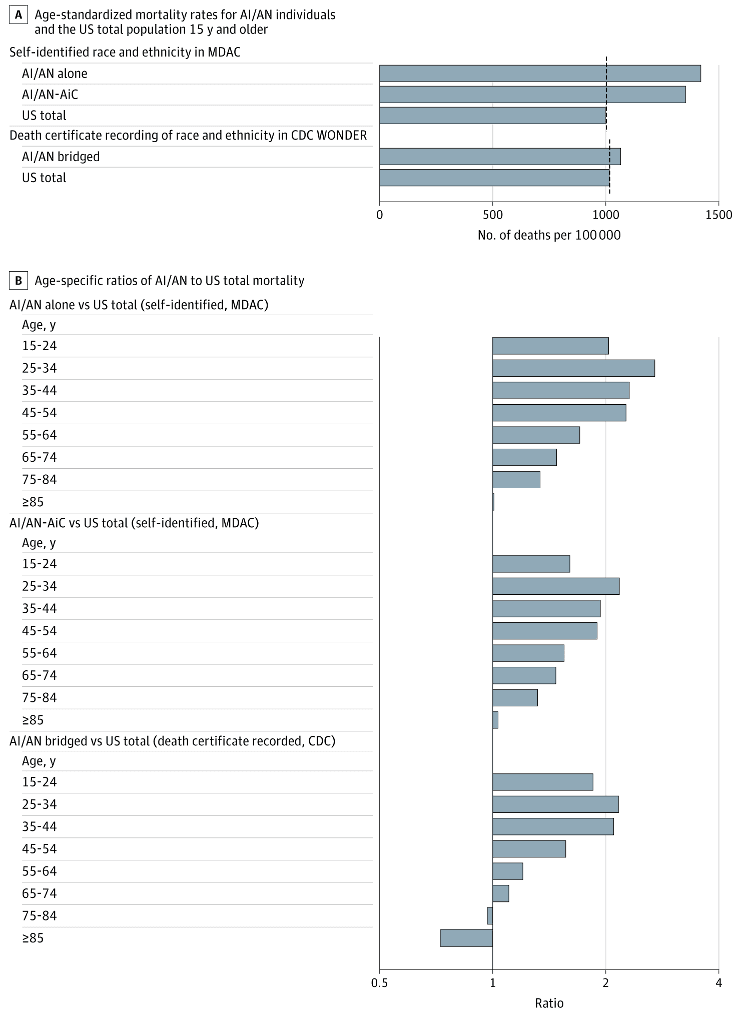
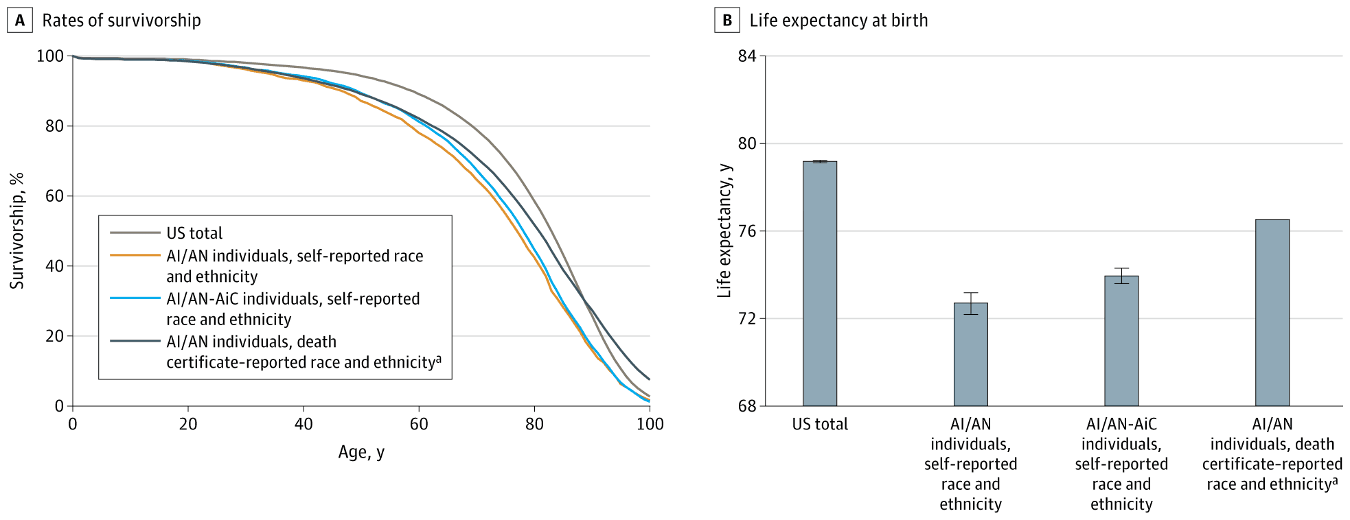
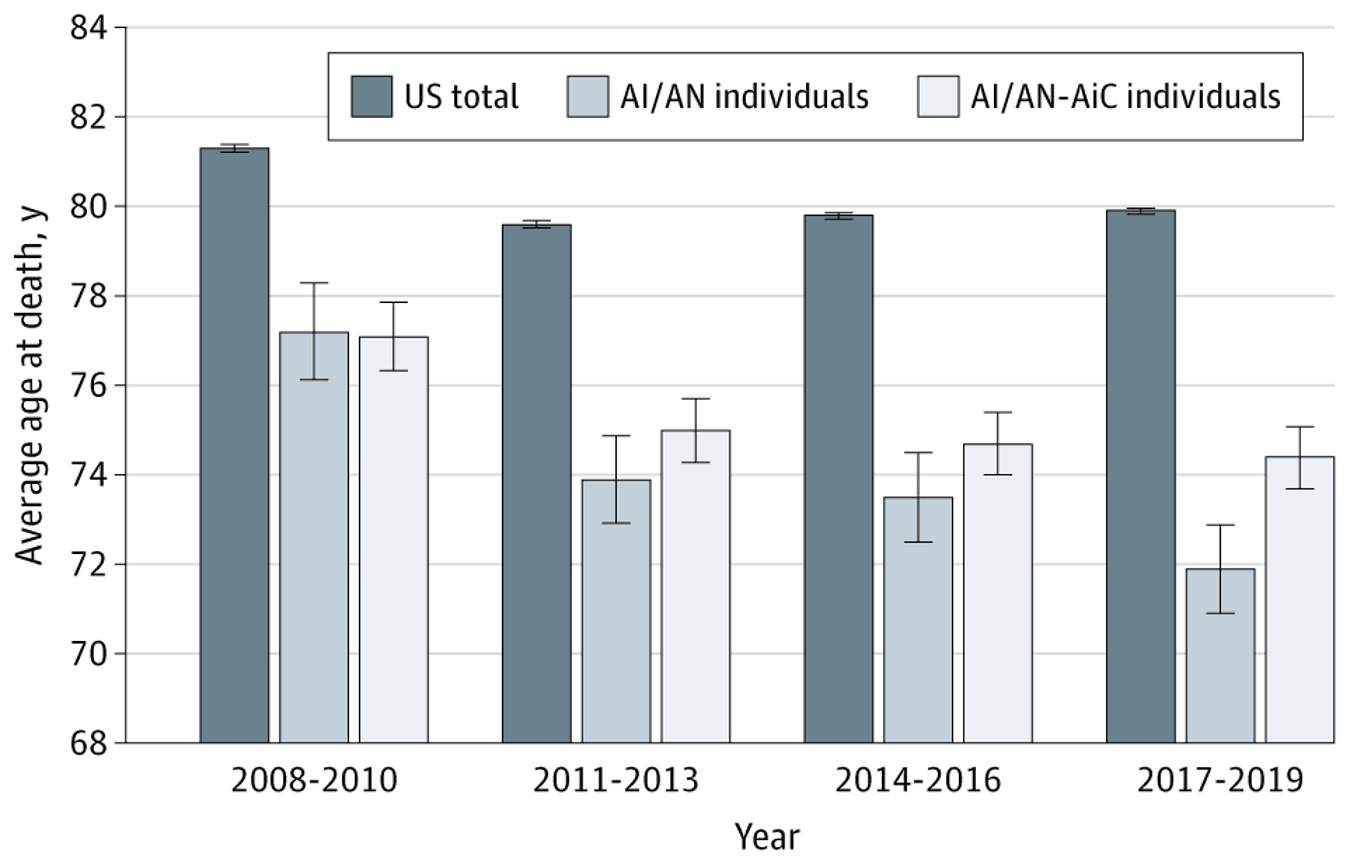
A new study published in the medical journal JAMA finds that official U.S. death records underestimate mortality and life expectancy gaps for American Indian and Alaska Native (AI/AN) populations. According to a summary by the Boston University School of Public Health (BUSPH), the analysis revealed that death certificates for at least 41 percent of AI/AN individuals misclassified their race, most often as “white,” resulting in a statistical erasure of Indigenous mortality data.
The study showed that AI/AN life expectancy was 6.5 years lower than the national average — 2.9 times the gap reported in official vital statistics. AI/AN mortality rates were 42% higher than the national average, compared to only 5% higher in uncorrected official data. The research highlights the need for accurate data collection and greater investment in AI/AN health, according to study lead author Jacob Bor, an associate professor of global health and epidemiology at BUSPH.
See also: American Indians in North Dakota die 22.5 years younger than white residents.
Bismarck Documenters to present at Wisdom & Watecha lunch event
The Bismarck Documenters, powered by Buffalo’s Fire, will present at the Sacred Pipe Resource Center’s Wisdom & Watecha event on June 20 from 12 p.m. to 1 p.m. Wisdom & Watecha is an Indigenous version of a lunch-and-learn series that encourages community members to share knowledge, stories and skills.
The Documenters program trains residents to attend and report on public meetings to improve local government transparency and accessibility. Lunch will be provided.
The event is at 925 Basin Avenue, suite 2, in Bismarck, North Dakota. For questions, call 701-663-3886 or email native@sacredpipe.net.

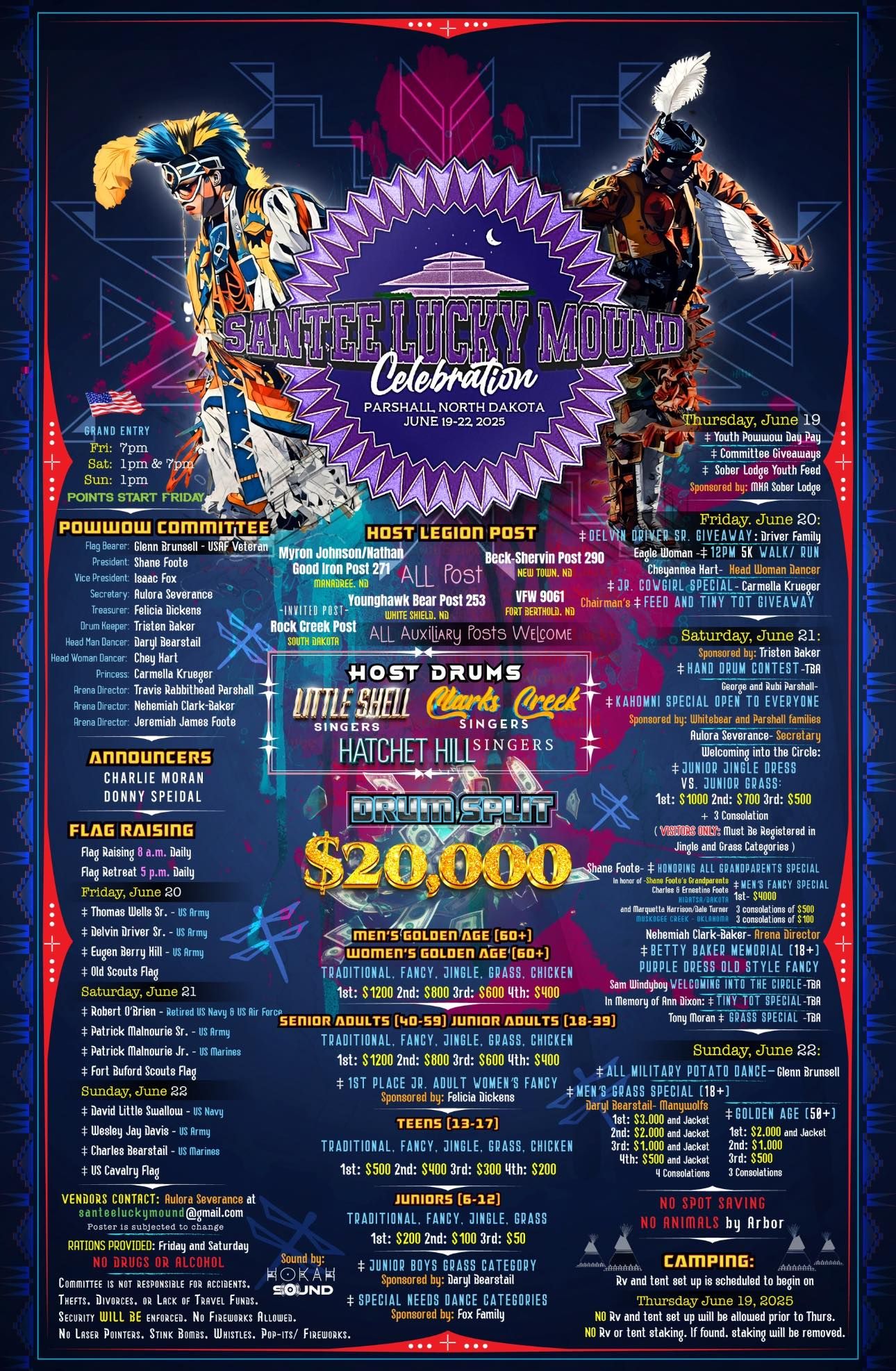
Santee Lucky Mound Celebration set for June 19-22 in Parshall, North Dakota
The annual Santee Lucky Mound Celebration will take place June 19-22 in Parshall, North Dakota. The event will feature grand entries, dance specials, contests and giveaways sponsored by various community members and organizations, according to event organizers.
Grand entries are scheduled for Friday, Saturday and Sunday, with youth points beginning Thursday. The celebration will include a variety of dance specials and contest categories for all ages and abilities, along with daily flag raising and retreat ceremonies.
A diabetes program blood sugar screening will take place June 20 from 5 to 7 p.m. Vendor sign-up is closed. Camping opens June 19, with no early setup or staking allowed. Security, safety rules and a substance-free environment will be enforced.
Native Playwrights PDX highlights Indigenous voices in Portland theater
Native Playwrights PDX, co-organized by director Amber Kay Ball, Confederated Tribes of Siletz Indians, and Lofanitani Aisea, is creating space for Indigenous theater makers to share modern Native stories in Portland, Oregon, according to Underscore Native News. The initiative launched its first staged reading of Aisea’s play “Fo’i Lole” on June 7. It was performed by an all-Indigenous cast.
“Fo’i Lole,” a Tongan creation story, centers femme and queer goddesses. Aisea said the story offers a platform to foster community connections. Native Playwrights PDX also plans to provide resources, host focus groups and develop new works to address underrepresentation in theater.
Trump administration withdraws from Columbia Basin salmon restoration agreement
President Donald Trump withdrew the United States from the Resilient Columbia Basin Agreement, a 2023 plan to restore salmon populations and support tribal energy projects in the Pacific Northwest, according to the Associated Press. The agreement, supported by Washington, Oregon and four American Indian tribes, was designed to pause decades of litigation over dam impacts on salmon and invest more than $1 billion toward fish recovery and clean energy development.
Trump criticized the agreement as “radical environmentalism” that risked breaching four Snake River dams. Tribal leaders, environmental groups and Democratic lawmakers condemned the move, warning it threatens salmon recovery and tribal treaty rights. Yakama Tribal Council Chairman Gerald Lewis said the decision reflects a “historic pattern of broken promises to tribes.”
Coushatta Tribe hosts moccasin-making workshop to preserve tradition
The Coushatta Tribe of Louisiana recently held a moccasin-making workshop to help preserve and share cultural traditions among its members, according to the American Press. Missy Stanford, director of the tribe’s Heritage Department said the goal of the workshop was to connect tribal members of all ages to their ancestral past through the craft of moccasin making.
The workshop was led by Caspie Abbey, from the Hidatsa, Mandan, Dakota and Crow tribes, and her husband, Donovan Abbey, a member of the Coushatta Tribe from Mandaree, North Dakota. Together they taught nearly 20 participants the history, artistry and techniques of traditional moccasin making. They emphasized the importance of passing the skill to future generations and noted the cultural significance of moccasins, which are used for powwows, special dances and ceremonial purposes.
Yurok Tribe completes largest land return in California history
The Yurok Tribe finalized the largest land back deal in California history this May, regaining more than 47,000 acres of ancestral lands along the lower Klamath River watershed, according to Underscore Native News and ICT. The area, acquired through a partnership with Western Rivers Conservancy, includes the Blue Creek Salmon Sanctuary and the Yurok Tribal Community Forest, doubling the tribe’s land holdings.
The land transfer, 23 years in the making, covers 73 square miles and will be managed by the tribe for ecosystem health and sustainable forestry. Western Rivers Conservancy purchased the property for $56 million and provided $3.3 million from carbon credits to the tribe to support restoration efforts.