





















Tribal radio stations signal need for editorial independence
Proponents point to nonprofit licensing, constitutional reforms and financial security as the way forward



Loris Taylor remembers how her family gathered around her grandpa’s transistor radio one day in the 1970s and heard a Flagstaff, Arizona, station include Chinle in its weather update. For the Hopi preteen growing up in the village of Oraibi, the idea that any major market would even mention a Native community blew her mind.
“You never heard about tribal communities, there was just this giant black hole,” says Taylor, now CEO of Native Public Media, a nonprofit organization that provides support services to Native radio and TV stations.
Florence Hare, executive director of the Native American Community Board in Lake Andes, South Dakota, also recalls those lean days half a century ago, when there were hardly any tribal radio stations and learning and sharing information were done person-to-person.
“We relied on our traditional oral history,” she says.
In the decades since, the radio landscape for Indian Country has expanded. Roughly five dozen tribal radio and TV stations — nine in the Dakotas — exist in the organization Taylor now leads.
But for all of this growth, tribal media often lack independence. A 2018 Indigenous Journalists Association survey of tribal news producers found that 32% of the respondents usually had to seek approval from government officials before publishing stories. The majority of respondents also reported that tribal government officials or other political interests often determined the news in the tribe-controlled publications. More than half of respondents said their tribe tries to control tribal media through budgetary restrictions sometimes to always, and 51% said stories about tribal affairs or officials go unreported due to censorship, either always, most of the time, or at least half of the time.
“When journalists avoid investigating power structures, which includes tribal governance or law enforcement and things like that, it leads to us overlooking maybe policy failures,” Taylor says. “Or maybe there's corruption, and we're not reporting on it, where we allow our leaders to face less public scrutiny.”
All this can paint a bleak saga, but stations have shown that through nonprofit licensing, constitutional reforms, and financial security, independence is possible.
Incorporating freedom from the get-go: Licensing
Before a station can broadcast, it must acquire a radio license through the Federal Communications Commission.
Stations on or near reservations tend to be licensed by tribes, educational groups or nonprofits. It helps their independence if they aren't licensed to a tribe.
“When you're stuck not knowing who you are, not knowing what your values are, there becomes a lot of confusion and people remain sick.”
“The FCC expects the licensee to maintain independent control over programming and station operations,” Taylor said in an email to Buffalo’s Fire.
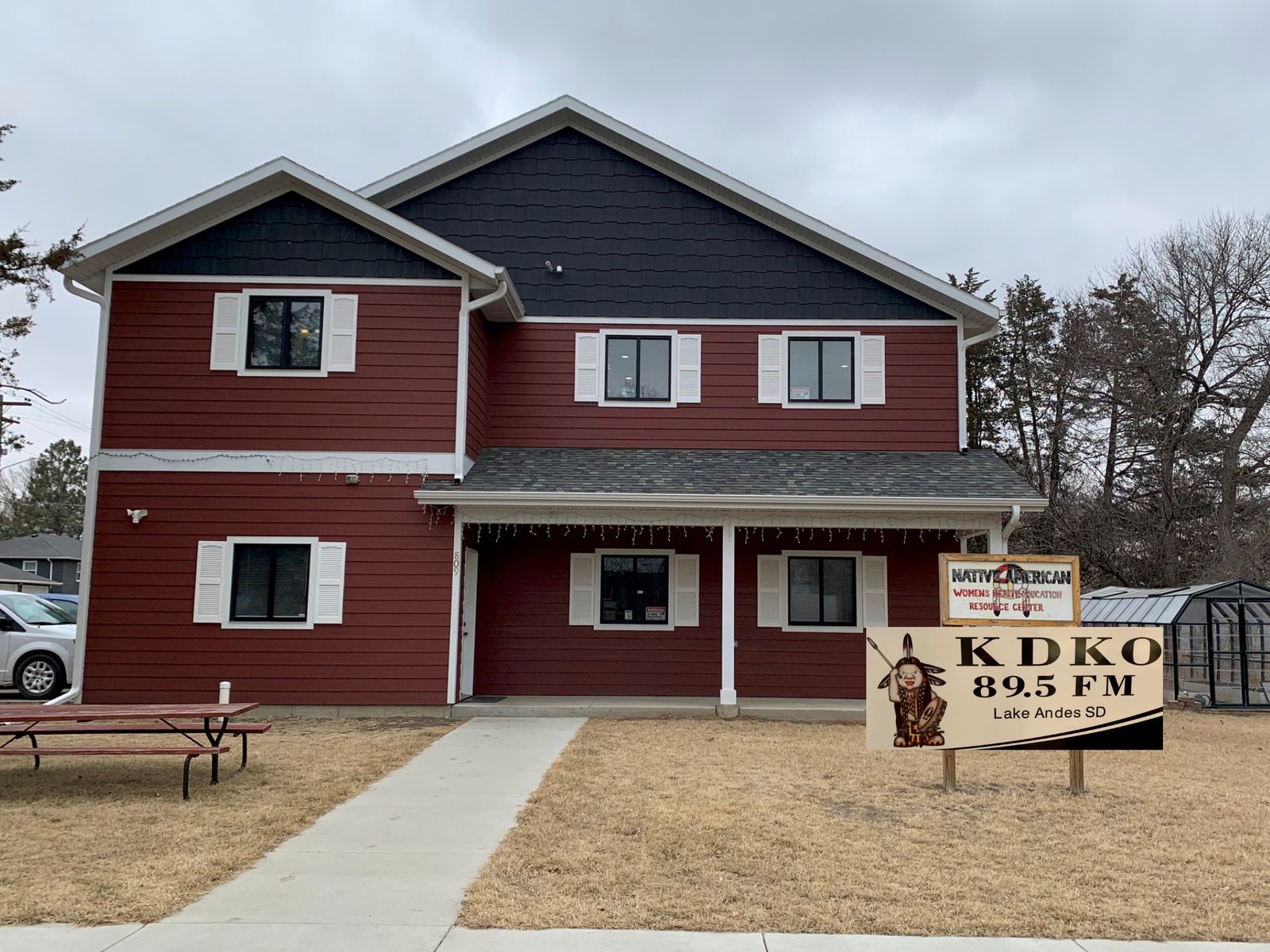
Licensed to the nonprofit Native American Community Board, KDKO in Lake Andes, South Dakota, launched in 2009. NACB’s founder, the late Charon Asetoyer, wanted the station to be independent of the Yankton Sioux Tribe or any other outside governance, and envisioned it as a community resource for women’s health, preventing domestic violence, Dakota language lessons and local news.
Station manager Jim Stone says he tries to get people to come into his studio to share their views on local issues, including politics, but many outspoken tribal citizens decline, perhaps for fear of retaliation.
“Which is strange because people have no problem expressing a lot of opinions on Facebook, on social media,” he says.
Stone says he also brings in journalists from South Dakota Searchlight to talk about their latest reporting, shares stories from regional newspapers and airs public radio programs, such as “This American Life,” to keep KDKO from being simply “a jukebox.”

In an email to Buffalo’s Fire, NACB’s Hare asserted that KDKO’s licensing “absolutely fits” with Asetoyer’s vision for independent media to “protect the health and human rights of Indigenous Peoples,” saying the station “was designed and created with the intention of minimal interference and control by outside government.”
Once a licensee is established, it’s pretty much set in stone unless the station is sold or the license revoked. A nonprofit or educational organization serving the tribe is arguably more independent than the tribe would be if it held the license, though station leadership also factors into the equation.
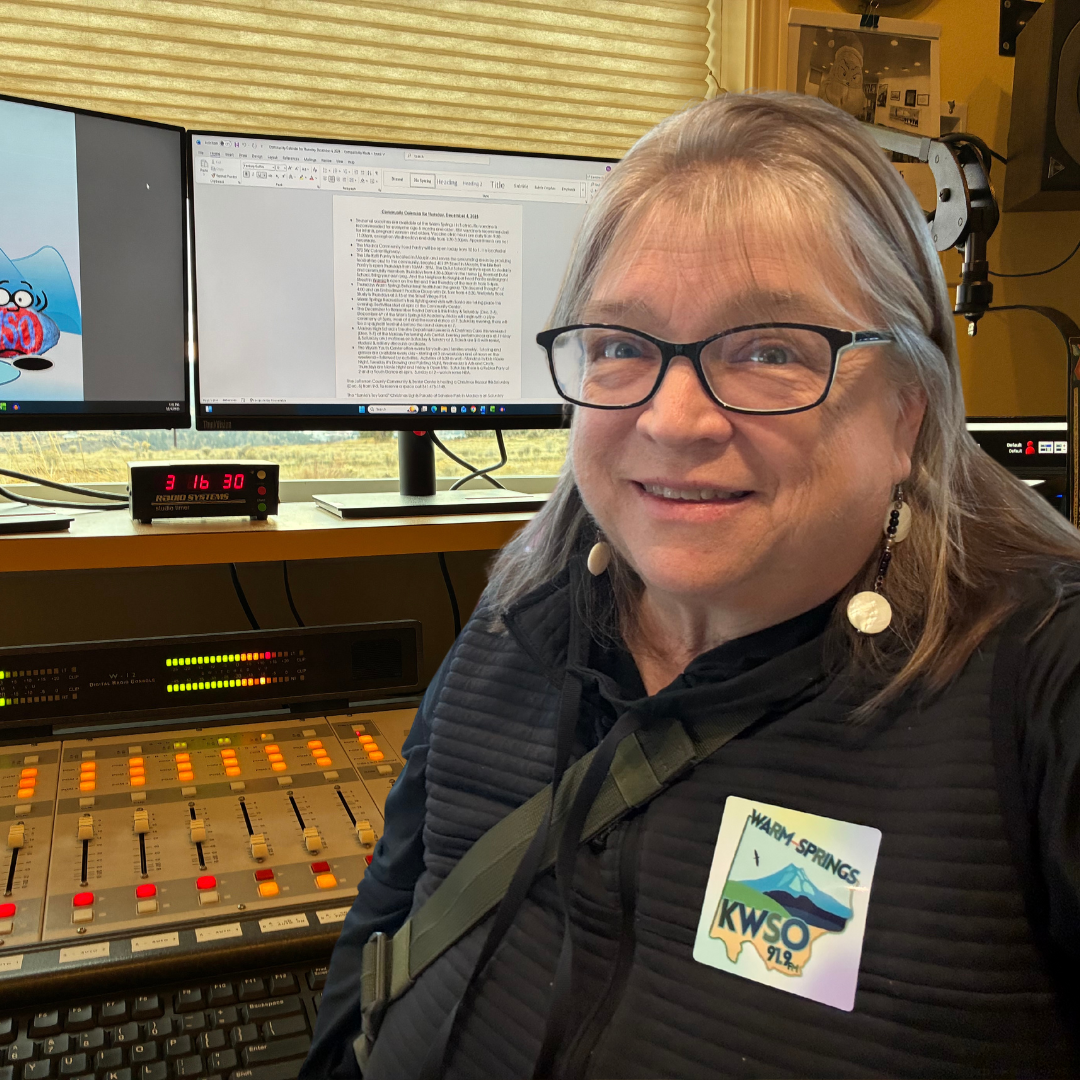
Sue Matters, station manager of the tribally licensed KWSO in Warm Springs, Oregon, told Buffalo’s Fire that she doesn’t have much editorial interference from the Confederated Tribes of Warm Springs and that she doesn’t “feel like we’re bossed around too much to do specific things.” She added: “I also don’t ask permission.”
Koahnic Broadcast Corporation, too, was founded as a nonprofit when it was incorporated in Alaska in 1992. “That provides journalists the freedom to be able to report on issues that are important to the Alaskans and Alaskan Natives,” said Jaclyn Sallee, Koahnic’s CEO and president. “And so it is important to be independent and to assure that there's no influence on reporting about any certain tribe, so there is that assurance.”
“When you think about free press, we have free press as independence from the council.”
Koahnic owns KNBA, a radio station in Anchorage. Its program distribution service, Native Voice One, shares programs like the daily talk show “Native America Calling” and the newscast “National Native News” with 200 stations across the U.S., including tribal stations. “There are certainly issues we've taken up that tribal leadership wishes we wouldn't,” Art Hughes, executive producer of “Native America Calling” told Buffalo’s Fire in an email, mentioning Lumbee recognition, disenrollment and free press crackdowns.
Free of tribal council’s pursestrings: Financial independence
Generating a steady flow of outside money can also help a station with editorial independence. With little or no reliance on tribal government funds, Native stations aren’t susceptible to financial retaliation by those in power.
KKWE is licensed to the Minnesota nonprofit organization White Earth Land Recovery Project and is financially independent of tribal administrators, according to the station manager, Maggie Rousu. “I think that without added censorship, we’re able to deliver more truth,” she says.
Rousu recalls how one day on “Talking with Terry,” a morning program that generally airs news, weather, Ojibwe language lessons and “bad jokes,” the crew discussed a tribal citizen who had unsuccessfully attempted to get information from the tribal finance department. “So we did a little thing about transparency within our tribe,” Rousu says. “Other stations would not be able to do that.”
Station managers and program directors can regularly fundraise and seek underwriters to support locally produced content, ideally drawing on audience support. This usually takes the form of pledge drives during regular broadcast times. And the less a station relies on the tribal government for funding, the more it can operate without fear of having its funding cut or withheld in response to editorial decisions.
Financial independence also frees up station managers to budget for staffing, equipment repairs and upgrades without having to make ongoing requests to their council.
Rousu says that while KKWE relies on donors, the station serves one of the poorest reservations in Minnesota, which means there’s not much direct financial support from local listeners, “so a lot of our donor base comes from off the reservation.” People who “have streamed our station” contribute from as far away as New York, Maine, and California, she says.
Matters says the station she manages, KWSO in Warm Springs, Oregon, has relied on “good support from local businesses in the form of underwriting” for about 40 years. “Popular sponsorships include Madras High School Sports broadcasts,” she said, adding that business support directly allows KWSO to offer listeners local youth sports programming as well as Koahnic’s “Native America Calling.”
Unlike much of mainstream public radio, Matters says, KWSO doesn’t rely on pledge drives for membership support: “But we have consistently used on-air mentions to encourage folks to support the station.”
Limitations caused by rescission
While financial stability remains a challenge to community radio stations’ sustainability and independence, one of the biggest hurdles has been the rescission of public media funding.
Last year the GOP slashed $1.1 billion from the Corporation for Public Broadcasting, ending all federal support for NPR, PBS and their member affiliations, which many tribal officials and station managers condemned.
While President Donald Trump characterized the rescission in the title of his May 1, 2025, executive order “Ending Taxpayer Subsidization of Biased Media,” critics said smaller community and tribal stations would bear the brunt of the cuts, hobbling their ability to provide community programming and timely weather and emergency alerts. Many stations — including those on reservations — received CPB Community Service Grants, but with CPB’s board of directors voting to dissolve the corporation in January, those stations must now seek new sources of funding.
“We can't have a thriving media ecosystem if we don't have the communications infrastructure to distribute the information or to fully participate, like in public discourse.”
Rousu says KKWE has felt that sting. The loss of CPB funding cut her station’s budget by 44%. Rousu says it costs $360,000 a year to keep the station going, and it has already reduced its workforce from four to two-and-a-half staff positions. Asking the tribal council for financial support is not something she wants to do.
“That is a big question that we need to bring to our board of directors, because what if we're not sustainable?” Rousu says. “What do we do? Do we keep our office positions and let the tribe apply to buy the license? I'm hoping that will not come to something like that. Because when you think about free press, we have free press as independence from the council.”
For now, the Bureau of Indian Affairs has helped fund KKWE’s operations to offset the loss of CPB funding, and Rousu has budgeted for a new sales and marketing person. She figures this person could bring in between $125,000 to $200,000 a year, on top of the $20,000 in underwriting support they get each year: “So if done right, we should be able to supplement a large amount.”
Seeking private donations and applying for grants from foundations and corporations will also be part of KKWE’s budget strategy going forward, Rousu says, as a means of keeping the signal active and the station independent.
But other tribal stations may come to rely heavily on the same officials they cover for financial support, a dangerous arrangement for journalistic integrity.
New initiatives aimed at helping rural and tribal stations affected by CPB’s shutdown continue to emerge. The Roundhouse Foundation created $1.5 million in collective support grants, and $10.3 million in one-time BIA grants have also been made available for stations.
KWSO has successfully rebounded from the rescission with help from those grants. The station also received some high-profile media attention after losing federal funding. “That led to a tremendous increase in sustaining memberships,” Matters says. “We went from about a dozen sustaining members to about 112.”
As a result, the station was able to provide more local news stories, elder feature programming, daily information, website stories and social media posts.
Historically, KWSO received 40% of its funding from the Confederated Tribes of the Warm Springs, 40% from the CPB and the remainder from donations and underwriting. Matters says she’s exploring some strategic planning as KWSO marks its 40th anniversary this year, and she believes that whatever happens, the tribe will have its back.
“I’m not concerned about editorial independence,” Matters said, when asked about possibly needing more financial support from the tribe someday. “They don’t boss us around, we contribute positive things to the community and they consider us an asset.”
“There are certainly issues we've taken up that tribal leadership wishes we wouldn't.”
Since 2004, Native Public Media has worked with stations owned by tribes, operated by tribal schools or led by nonprofits governed by tribal members. It encourages these licensees to adopt strong journalistic practices while remaining free of tribal government influence or that of a distant, consolidated media company. It provides its members training in First Amendment rights, emergency communications preparedness and underwriting, and has recently partnered with the Arizona Community Foundation to create funds for rapid response and long-term sustainability.
At the same time, Koahnic’s Sallee said they haven’t escaped the funding issues caused by last year’s rescission. She said KNBA has provided fee reductions to stations struggling without BIA grants, and she has found Congressional allies in people like Mike Rounds (R-SD), who, after the rescission, helped make $9.4 million in reallocated federal money available to Native stations.
Stations can call on their listeners for other emergencies, as KDKO learned five years ago. After an arsonist burned down the station, a GoFundMe campaign helped it rebuild at its original location. On top of the insurance money and “generous” support from the Shakopee Tribe, Hare said, community donations poured in, exceeding $16,000.
Native Public Media’s Taylor says all of this is promising, but its potential is limited if tribes lack strong broadband services. A report by the U.S. Census Bureau showed that in 2021 only 71% of homes on tribal land had broadband access, compared to 90% of nontribal homes.
“You can't have a media ecosystem if you don't have broadband access,” says Taylor. “It's sort of like water rights. And we can't have a thriving media ecosystem if we don't have the communications infrastructure to distribute the information or to fully participate, like in public discourse.”
Constitutional reforms
Of the 575 federally recognized tribes in the U.S., about two dozen tribes address freedom of information through some form of a transparency code. That needle hasn’t budged for decades. Advocates who lobby tribal leaders to adopt press freedom often encounter indifference or pushback.
Sallee says tribes may be slow to act for a number of reasons.
“It may be because tribes do not want information disclosed about their tribe, maybe it's something controversial that they want to review,” she says. “Or they’ll ask that stories not be submitted or aired if they're not shown in a positive light.”
For Taylor, it may also be a matter of translating the concept to more traditional-minded leaders.
“I think it's hard to dovetail the Western idea of free press into the customary practices of communication and information,” she says. “I know that Hopi people used to have village criers. They would climb up on the highest roof, and they would share information about planting, about kids that were born, about ceremony, even about values or teachings. And we need to come from that premise.”
“Without added censorship, we’re able to deliver more truth.”
Taylor suggests that a large representative body, such as the National Congress of the American Indians, could be compelled to initiate a broader discussion. (A 2005 University of Montana graduate thesis quotes veteran Native journalist Mark Trahant on the NCAI’s passage of a free press resolution in 2003; while he regarded it as essentially powerless, Trahant said its passage showed that at least they were “thinking about it.”)
Input could also be sought from tribal representatives and organizations such as the Indigenous Journalists Association. In addition, the Native Media Freedom Alliance, which publishes Buffalo’s Fire, is currently working with several tribes and independent Native newsrooms to address local information systems.
“I think there’s two advocacy lanes for tribal nations adopting press freedom,” IJA board member Angel Ellis told Buffalo’s Fire in an email. As a Muscogee journalist, Ellis has had her share of free press struggles, which were shown in the 2023 documentary “Bad Press.”
In 2015, tribal officials stripped Mvskoke Media of its free-press privileges. Ellis and her fellow journalists had exposed wrongdoing by the leadership, and the tribal leaders said the paper was overly focused on negative coverage. But the journalists managed to put free press on the ballot, and voters passed it in 2021 with roughly 75% in favor.
“Both lawmakers and the citizens who elect them will need information before laws can be adopted,” Ellis told Buffalo’s Fire. “For example, a free press law could also have companion laws like FOIA or open meetings,” she said. “They will also have decisions to make as to what level of protections they want to adopt. Will codified law suffice? Could constitutional protections work better?”
Ellis said tribal citizens need the same understanding but also need to feel empowered to “make the ask” of their leaders: “It can take a long time, so they may have to strategize around election forums to make these asks.”
Advocates for a free press want further changes to help bring transparency and accountability to tribes, but not at the expense of journalistic integrity.
KKWE’s Rousu would be open to hearing feedback from tribal officials on the station’s reporting, but she says she wouldn’t waver on independence: “I don't believe in letting the tribal council censor any information.”
She believes independent media has the power to heal.
“When you're stuck not knowing who you are, not knowing what your values are, there becomes a lot of confusion and people remain sick,” she says, adding that a tribal station can carry programs that benefit the tribal community, such as shows about health care, language preservation and public safety. “So we do have a lot of programs that are directly related to identity and who we are as a people.”
References
- 1.
- 2.
- 3.
- 4.
- 5.
- 6.
- 7.
- 8.
- 9.
- 10.
Sharing Is Caring
This article is not included in our Story Share & Care selection.
The content may only be reproduced with permission from the Indigenous Media Freedom Alliance. Please see our content sharing guidelines.
© Buffalo's Fire. All rights reserved.
We provide independent Native-focused reporting that gives our communities the context and the facts they need to make informed decisions.
Respect The Fire
At Buffalo's Fire, we value constructive dialogue that builds an informed Indian Country. To keep this space healthy, moderators will remove:
- Personal attacks, harassment, or hate speech
- Spam, misinformation, or unsolicited promotion
- Off-topic rants and excessive shouting (All Caps)
Let’s keep the fire burning with respect.