






Lumbee Tribe to receive federal recognition after 70 years of state distinction
National Defense Authorization Act passes Senate, affirms tribe’s federal services

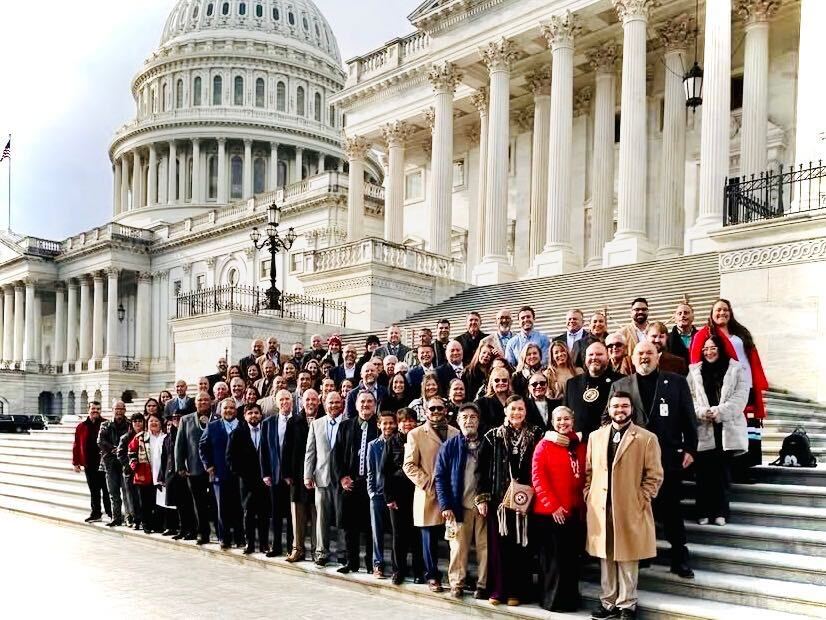
The U.S. Senate voted 77-20 on Wednesday to pass the National Defense Authorization Act, or NDAA, which secured the Lumbee Tribe of North Carolina's federal recognition as a tribal nation. President Donald Trump is expected to sign the $900 billion bill into law as soon as this week, which would make the Lumbee the 575th federally recognized tribe in the nation.
“This is a very surreal moment,” said Lumbee Tribal Chairman John Lowery in an interview with Buffalo’s Fire. “We worked very hard to get here. Our ancestors fought for this for decades and I'm just thrilled that we finally have achieved this goal of ours and we're about 140 years behind. But I'm just thankful for all the support, all the efforts, not just presently but those in the past as well.”
The bill extends federal recognition to the Lumbee Tribe of North Carolina and makes its citizens residing in Robeson, Cumberland, Hoke, and Scotland counties eligible for services and benefits provided to members of federally recognized tribes.
“This moment represents the culmination of more than a century of collective struggle and resilience by the Lumbee Tribe of North Carolina,” Courtney Chavis, executive director of the Lumbee Tribe of North Carolina’s Sovereign Equity Fund, told Buffalo’s Fire. “Generations carried this fight forward despite repeated setbacks, and today that persistence was finally honored with full federal recognition. This is about restoring what was unjustly denied in 1956 and affirming the Lumbee’s place among the sovereign Tribal Nations of this country.”
The Department of the Interior and the Department of Health and Human Services, as directed within the bill, will consult with the Lumbee to determine needed services. According to the Lumbee, the tribe has 55,000 enrolled citizens, making the Lumbee the 5th most populous tribe in the United States and the largest tribe east of the Mississippi River. The Interior Department may take existing Lumbee land into federal trust for the benefit of the tribe.
“Federal recognition brings access to critical resources like health care, education, infrastructure, and the ability to place land into trust–all of which strengthen the Tribe’s ability to shape its own future,” Chavis added.
North Carolina assumes criminal and civil jurisdiction over all criminal offenses and civil actions that arise on lands owned by or held in trust by the Lumbee Tribe, unless jurisdiction is transferred to the U.S. pursuant to an agreement between the tribe and the state. The Lumbee Fairness Act was introduced by Senator Thom Tillis (R-NC) and is co-sponsored by Senator Ted Budd (R-NC) and 18 additional co-sponsors.
The Lumbee Tribe of North Carolina has been a state-recognized tribe for decades, since Congress passed the 1956 Lumbee Act. The tribe sought federal recognition in the 1980s through the U.S. Department of the Interior’s Office of Federal Acknowledgement, which evaluated the historical and genealogical claims of applicants. The department denied the claim, citing the 1956 Act.
“For 137 years, the Lumbee Tribe have been fighting for federal recognition, and today the federal government has finally honored that promise,” said Sen. Tillis in a statement on Wednesday. “President Trump traveled to Robeson County and pledged to get federal recognition done. He kept that promise and showed extraordinary leadership. With the Senate passage of the NDAA, the Lumbee Tribe of North Carolina will now achieve full federal recognition and access to every federal benefit they have earned and deserve.”
Not everyone in Indian Country is celebrating, however.
“Today’s federal recognition of the Lumbee will open new doors; arguably, some good doors, for the Lumbee, and some not so good doors, a route to circumvent established federal process,” said Danielle Finn, the director of the Indian Nations Gaming and Governance Program at the University of Nevada Las Vegas’s William S. Boyd College of Law. “By bypassing the established formal recognition process set by the U.S. Department of the Interior, a precedent is now made. Many believe this precedent now undermines the historical and legal standards that are required for tribal nations.”
According to the DOI, a group applying for federal recognition must meet seven mandatory criteria set by the agency, proving continuous identification as an Indian entity, a distinct community and political authority since historical times (or 1900 for identification, 1934 for others in proposed changes), with clear governing documents, descent from a historical tribe, unique membership not primarily in other tribes and no prior termination by Congress.
"With the passage of the National Defense Authorization Bill, this basically tells other non-federally recognized groups that there is now another way to achieve their end goal, and they can do it by sidestepping the usual procedure,” Finn added.
The tribe’s ability to lobby through Congress, to avoid the normal process in receiving federal recognition, has been questioned by other tribal nations as federal recognition provides millions of dollars in funding for Native American programs. In January, President Trump signed an executive order directing the DOI to approve federal recognition of the Lumbee Tribe of North Carolina. Last year, during the presidential campaign season, both Trump and Kamala Harris commented that they would support federal recognition of the tribe.
“Every sovereign Tribal Nation in this country has been required to prove its identity, lineage, history and continuous governance,” said Principal Chief of the Eastern Band of Cherokee Indians Michell Hicks in a statement on Dec. 8. “The Lumbee have not met any of those standards, and their repeated refusal to undergo federal verification threatens the credibility of the entire process.”
The Eastern Band of Cherokee has had a decades-long history of opposition to the Lumbee’s effort to gain federal recognition, said Suzan Shown Harjo. Harjo, Muscogee and Southern Cheyenne, received a Medal of Freedom in 2014 for her decades of advocacy for Indian Country. “It's done,” she said of the Lumbee’s effort to gain federal recognition. “It’s no longer something that anyone can try to influence. Congress has acted, and if the United States wants to have a relationship that's formal with the Lumbee, then they have it.”
“That’s what they have with all of us, whether it’s from a treaty or a series of treaties and laws and executive orders — the way most of us have a relationship with the U.S. defined,” Harjo added. "This is now the Congress’s and the President’s alliance and their due process on behalf of the United States — they are now a federally recognized tribe.”
“They demonstrated who they are as a people in many ways,” Harjo said, citing the Lumbee’s effort to interrupt a Ku Klux Klan rally in Maxton, North Carolina.
Harjo also spoke of the Poarch Creek Indians, who gained federal recognition in 1984, and then built a casino on top of burial sites of Muscogee people and have kept the remains of 57 people. The Muscogee Nation of Oklahoma has filed a lawsuit against the Poarch Creek Indians, asking for the destruction of the casino at Hickory Ground and the return of human remains.
"Will the Lumbees desecrate land like Poarch Creek, or will they honor the lands and history of other tribes now that they have sovereignty as a federally recognized tribe?” Harjo said..
As for the Lumbee's future, Chairman Lowery said the tribe is looking forward to consultation with the federal government. “There's a lot of different programs of services out there, and we want to be able to access help from the different agencies in regards to education, healthcare, economic development, land-in-trust,” he said. “We're looking forward to finding out about the different program services that are available for us to go ahead and tie them into our government that we already have."
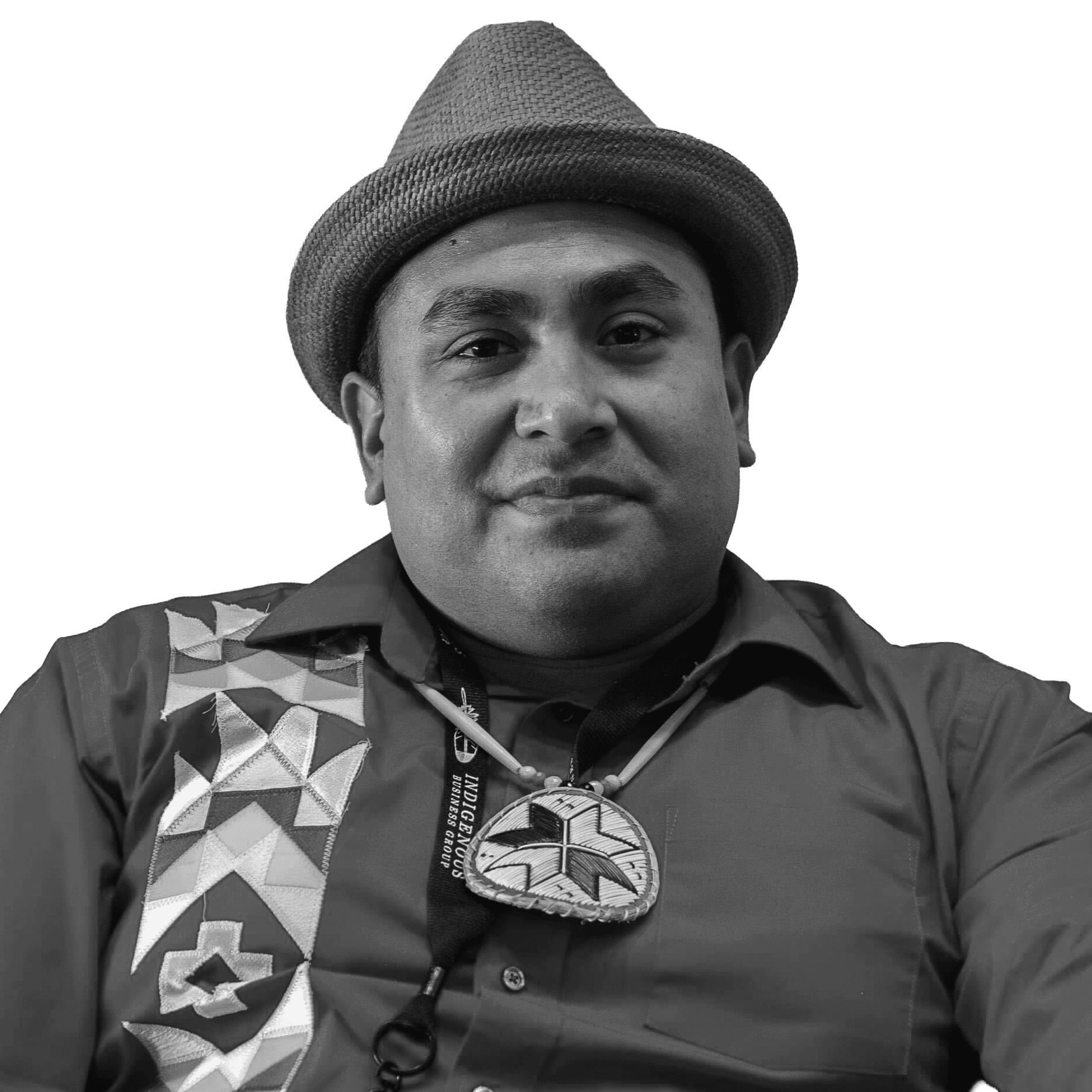
Darren Thompson is an award winning multimedia journalist enrolled at Lac du Flambeau Band of Lake Superior Chippewa, where he grew up.
Darren Thompson
(Lac du Flambeau Ojibwe)Former Reporter
Sharing Is Caring
This article is not included in our Story Share & Care selection.
The content may only be reproduced with permission from the Indigenous Media Freedom Alliance. Please see our content sharing guidelines.
© Buffalo's Fire. All rights reserved.
We provide independent Native-focused reporting that gives our communities the context and the facts they need to make informed decisions.
Respect The Fire
At Buffalo's Fire, we value constructive dialogue that builds an informed Indian Country. To keep this space healthy, moderators will remove:
- Personal attacks, harassment, or hate speech
- Spam, misinformation, or unsolicited promotion
- Off-topic rants and excessive shouting (All Caps)
Let’s keep the fire burning with respect.